Christy O'Connor: Cian O'Neill nod an intriguing start for Cork hurlers
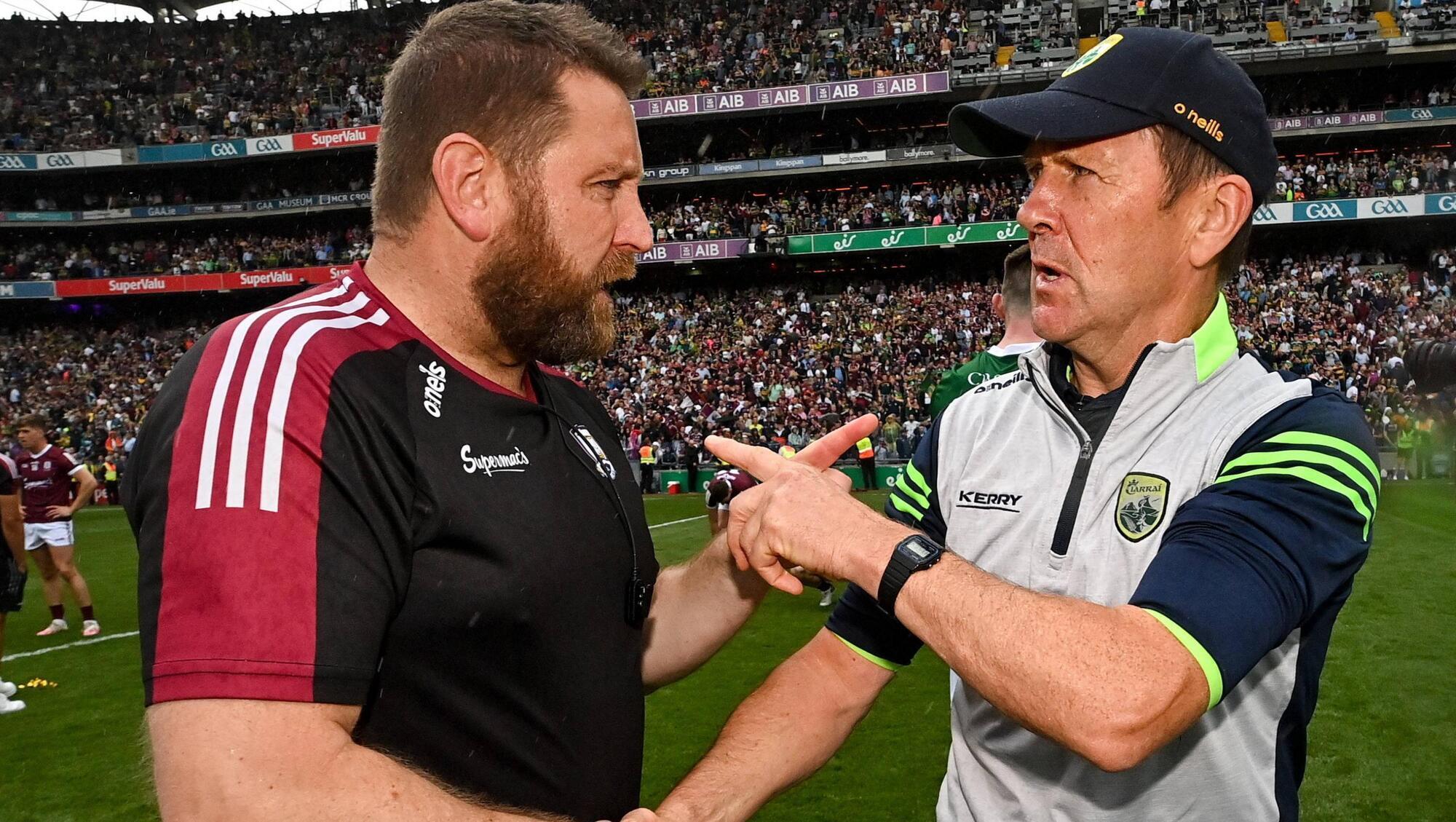
TOGETHER AT LAST: Kerry manager Jack O'Connor and then Galway coach Cian O'Neill after the 2022 All-Ireland SFC final between the counties at Croke Park. Pic: Ramsey Cardy/Sportsfile
Outside of an All-Ireland final, what the Limerick players have always looked forward to most the day after a championship game is analysing and dissecting their own personal data.
Did they hit their target? Did they exceed it? If they didn’t though, excitement is tranquillised by the fear of what’s potentially coming.
Trepidation accompanies the potential consequences because accountability is king. Video analysis-review sessions normally supposed to last half an hour regularly stretch over an hour.
That isn’t an hour of endless clips – it’s constant conversations. Hard, awkward, ruthless conversations, led by John Kiely. Why did that happen? Explain in more detail why it happened? Normally, it doesn’t happen again. If it does, Kiely is held accountable.
Limerick have long been governed by clarity and accountability. Everybody within the Limerick set-up knows their job, and are enabled, and trusted by Kiely, to do that job to their upmost ability in a High Performance environment.
And nobody is trusted by Kiely more than Paul Kinnerk, who has pushed Limerick’s tactical superiority, power, aggression, relentless tackle counts and skills execution under pressure, to the highest levels imaginable.
Read More
Kinnerk is the standard that every GAA coach is chasing. In an interview in 2021 with Phil Kearney around applying a games-based approach to High Performance coaching in Ireland, Kinnerk spoke about the influence coaches like Cian O’Neill and Donie Buckley had on him, especially in how their approach was so strongly aligned with his coaching philosophy.
Having coached teams to seven All-Ireland senior titles (he was with Clare in 2013), Kinnerk will now go up against O’Neill, one of the highest-profile GAA coaches in the history of the game, for the first time ever on the elite inter-county stage.
Having been involved with eight different senior inter-county teams across the last two decades, nobody has more coaching experience than O’Neill. His portfolio is even more impressive because of how it has stretched across both codes.
And having been recruited now by the Cork hurlers, the brief that has landed on O’Neill’s table is one the most difficult, but attractive, jobs of all.
It’s even more appealing for O’Neill on a number of fronts. For a start, it takes him off the long and winding road as he lives and works in Cork City.
Going back into an elite hurling environment for the first time in 14 years increases the challenge – but helping to guide Cork back to an All-Ireland would be the biggest achievement of O’Neill’s storied career.
The connection with Ben O’Connor extends back to their time together with Newtownshandrum, where O’Neill was a coach for two years in 2009 and 2010.
O’Neill’s appointment now does show some introspection and willingness from O’Connor to think outside the box. On the otherhand, O’Connor had to be willing to adapt, evolve and develop, especially when Cork didn’t have an identifiable head coach in 2026, which was down to O’Connor.
Niall O’Halloran only lasted a few weeks. A potential clash of ideas, culture or philosophy between him and O’Connor should have been thrashed out long before Cork went back training. Twelve months on, O’Connor and O’Neill have to be on that same page from day one.
The O’Connor/O’Neill partnership is so interesting because both men have such different personalities. For it to work, it needs to a mutually beneficial interdependent relationship. O’Connor will benefit from the massive learnings of this season, but he will also prosper from the direction of a coach who has been operating at an elite level for two decades.
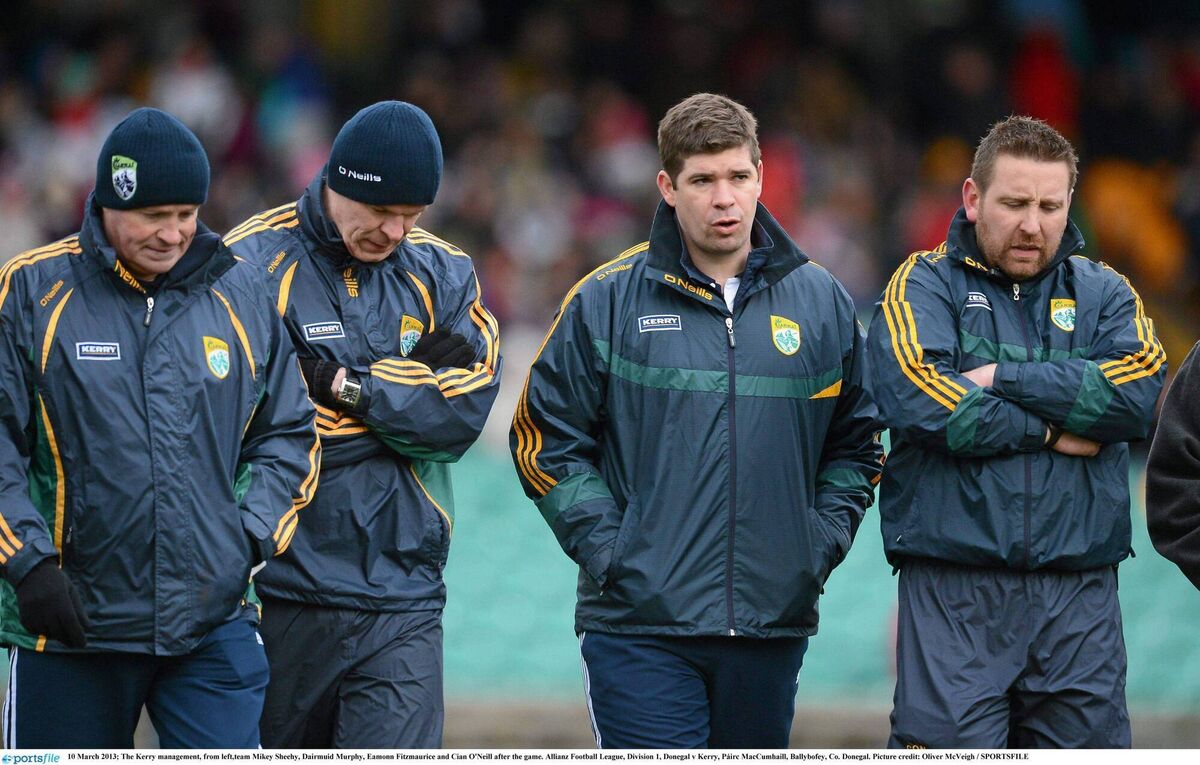
Similarly, O’Neill will also need that guidance from O’Connor and his management team, just like O’Neill required that same technical instruction from Liam Sheedy, Eamon O’Shea and Michael Ryan when he first joined the Tipperary set-up in 2008.
As well as his background, every strand of O’Neill’s expertise at an elite GAA level has been immersed in football since he was last involved with an elite hurling team at the outset of the last decade.
O’Neill is a far more experienced and worldly coach now. He has always been willing to learn but his coaching principles won’t have changed. He is smart and intelligent enough to be able to tailor his coaching strategies, schemes and designs to adapt to a game that has evolved beyond recognition in the last 15 years.
O’Connor and the rest of the management can step in around imparting, analysing and interpreting the minutia of detail, but the coaching environment is also constantly changing at inter-county level.
In an interview before this year’s All-Ireland football final, Paul Geaney outlined how there was such a greater division of coaching responsibility in the Kerry set-up in comparison to when O’Neill was last with Kerry between 2013-’15.
“Back then, he (O’Neill) was probably doing everything,” said Geaney, “whereas everyone involved in the coaching ticket now has a job to do and they all have input.”
Kerry though, did have huge coaching IQ and experience in their setup through Jack O’Connor, Kieran Donaghy, Pa McCarthy, Aodán Mac Gearailt and James Costello. The Cork backroom doesn’t have that experience but they will benefit hugely from O’Neill’s instruction around structure and preparation. And the players will be the biggest beneficiaries.
Three of O’Neill’s core coaching pillars revolve around role clarity, role acceptance and role execution. Clarity and execution are central tenets of any High Performance environment but role acceptance has been an obvious issue for some Cork players in recent years.
O’Neill’s input will also be critical around culture and values, especially in promoting how every aspect of preparation – technical, tactical, psychological – must be blended into the same message. O’Neill will provide the framework but he needs to be trusted by O’Connor. Just as importantly, the manager will need to be trusted by his new head coach.
Accountability has to be king. It clearly wasn’t in 2026. Not having a lead coach always had the potential to create mixed messaging. Cork’s hurling wasn’t as sharp as it needed to be throughout the summer. Their scoring levels dropped. The goals dried up. Certain players weren’t trusted. Others were indulged.
Something has to give. Playing personnel needs to change. Players on the periphery need to be given their chance. Cork’s coaching and tactical IQ needs to improve. Management need to step up to the levels required if Cork are to win an All-Ireland.
O’Neill certainly isn’t a panacea to all those issues. Still, his appointment is a solid start on Cork’s long road back to the only destination they want, and need, to arrive at.
A collection of the latest sports news, reports and analysis from Cork.
CONNECT WITH US TODAY



Be the first to know the latest news and updates