'What was all the fuss about?': The Point and a purpose for Limerick great Ciaran Carey
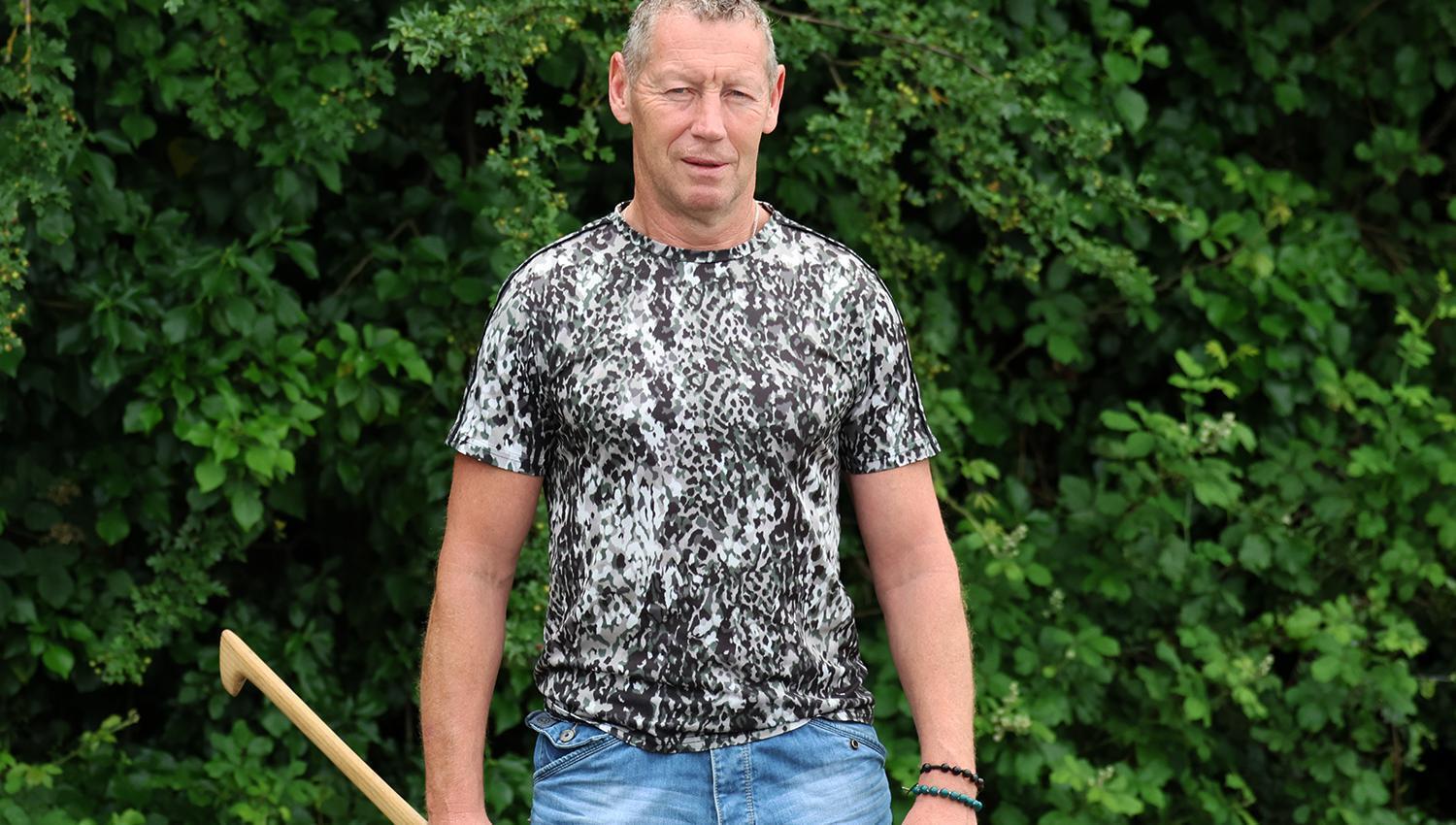
Ciaran Carey: Former Limerick Hurling Star
All these years on from The Point and so much about him is different yet so much about him remains the same.
He still leads, like he did that day. He still inspires, still lifts and saves others, still making plays that make all the difference.
Only now he does it far from away from the roar or the eyes of the crowd. And only now, all these years on from that score in the last do-or-die championship hurling would know, it really can be a matter of life or death.
We meet him in his workplace, though maybe that’s not the best term for it as he doesn’t view what he does as work, more like a calling. Ciaran Carey Counselling Services, based on the fringes of Limerick city, is an outreach service, both in-person and online, where people requiring mental health and addiction support can go.
Carey has been in the field of helping others for more than 15 years now. He started out helping in a homeless hostel in Limerick city, sparking an interest in studying and qualifying to be a counsellor that led him to work with addicts in residential treatment centres like Cuan Mhuire out in Bruree. In recent years he sensed there was a need to offer an alternative kind of service.

“What’s unique about this is that it gives people another option,” he says. “A lot of people absolutely do require residential treatment, whether that’s a month, three months, or whatever. But sometimes when other people hear that something is residential, they baulk at it – ‘I’m not going in there!’ Whereas when they hear about our recovery programme and how it’s nice and quiet and under the radar and it allows them to still go on with their life, they’re more receptive to it.”
Read More
It’s still a commitment. Every Monday and Wednesday for 10 weeks you’ve to see Carey or one of his fellow counsellors, as well as meet with a group on Friday nights. That’s not to mention the three family conferences during that span, or the two years of aftercare.
You can see why people go there, to him. It’s in the name. Carey cares. He has an affable, earthy, empathetic manner. Once upon a time he was them too.
The last time we met Carey was 15 years ago, back when he was starting out in the caring game and soon after his own full recovery; although Carey had confessed to being an alcoholic as far back as 1998 in a newspaper interview the morning of a Munster championship match, he’d continue to struggle for years afterwards.
During the boom he worked in the building trade for a friend when suddenly it went wallop. No job meant no income, routine, confidence, self-esteem, reason to get out of bed. “I was idle for over a year and a half,” he’d tell us, “going off my head.” And so he can relate. “When you’re in that well, when you’re in the shit, when you’re in that quicksand, it can feel like there’s no way out,” he says now. “I’ve seen people who have done Mondello Park on the mental health circuit; they’ve been everywhere around the block.
“But what I notice here is if you show people that you really care, it can be a game-breaker. When you let them see that you really care and that you’re really interested and honest and really respectful, breakthroughs can happen.” He knows only too well, and has to come to accept, that sometimes they don’t. He learned early enough in this game not to keep a scoreboard of the losses, otherwise you’d lose all hope or energy to fight for the wins. “Addiction,” he says, “isn’t going to just say bye, bye now, I’m going to Cancun’ and leave you alone. It is a killer.” He remembers how it used to have a grip of him. Being the week and the year that’s in it, our conversation brings up Ger Loughnane which prompts Carey to recall a time in the early 1990s when the Clare man was a selector with Munster.
“I used to love the Railway Cup, playing with the likes of [Brian] Corcoran and Lohan and getting a crack against the likes of DJ [Carey], [Brian] Whelahan, Gerry McInerney. And this particular year when we met up for the first time in UL, Loughnane gave this lovely speech, namechecking myself and Corcoran. That was on the Tuesday, ahead of us going up to Belfast and Casement Park on the Friday, and I was really bulling for it.
“But then I went drinking on the Wednesday. We were due to get a bus at the Kilmurry Lodge Hotel on the Friday. Ciarán never got there. That was the first time the drink really dripped into the hurling.” Even years later, when he’d pick up his third Railway Cup medal, he’d still have regrets about that lost weekend when he was meant to be in Casement Park with Loughnane.
But he’s also seen addiction overcome, overpowered. Recently a man from Limerick now working abroad finished his online programme, two years now free from gambling. Carey himself is now decades on from his last drink.
When he was stuck in that bed after that economic and then emotional crash, he was full of self-loathing. “I hated myself. I thought I was worthless which gave me reason to stay drinking.
“But eventually I had to see that for the lie it was. I had to become my own mythbuster. Because when you do engage long enough, you can crack the lies and then see the light. And what we try here is to arm people with coping mechanism and skills to show them a new blueprint of how to live life without addiction and without hating or hurting yourself.”
***
He says we’re the first person this week to mention The Point to him but it was going to be someone. Every few days, no matter where he goes, it’s going to come up. Only last month he was in Doonbeg, playing some golf, which along with the gym has in recent years become part of his own blueprint to keep away the blues, when he heard a familiar voice. Just after Carey’s drive off the tee, Davy Fitzgerald, passing by in another playing party, made “some comment about ’96!”
’96. The Point. As another legend could have said about it, as long as young men from Clare and Limerick will match their hurling skills against each other, the story of Ciarán Carey and The Point will be told and that will be forever.
A few months before Limerick’s breakthrough in 2018, the Limerick Leader ran a poll to adjudge what was the county’s top sporting moment. The Point topped it, finishing ahead of the All Blacks being vanquished in Thomond Park and everything else.
Even Clare people have a certain fondness and regard for it. Brian Lohan described it as “an iconic score.” Loughnane made a point of going into the Limerick dressing room after the game to laud them and Carey in particular; “It had been a terrific game and occasion and though we had been beaten, I felt enlivened.” Anthony Daly, a captain and winner of two All-Irelands and three Munster titles noted in his autobiography that “the most memorable match I ever played was a game we lost”.
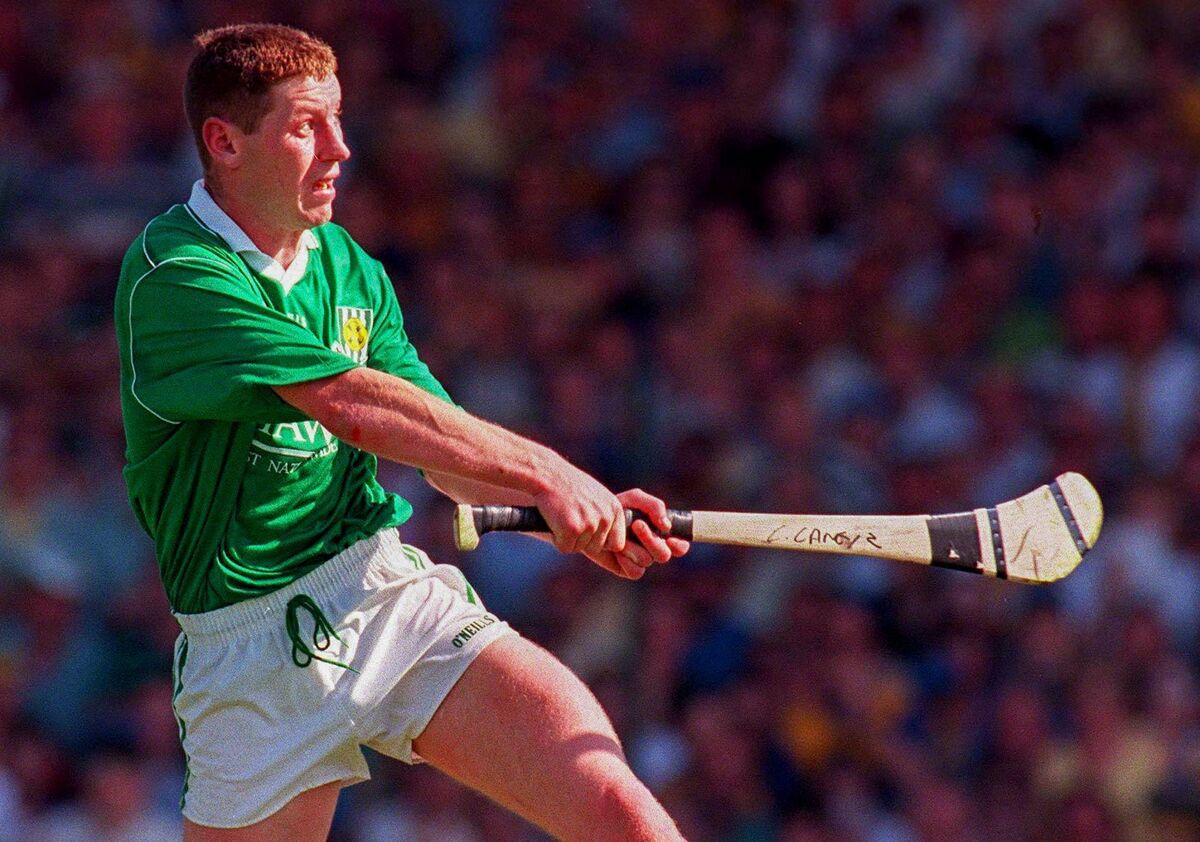
So naturally people bring it up when they’re in Carey’s company or orbit. And though as a player and a man he was much more than that moment – “Sometimes,” he laughs, “I’ve said to myself, ‘Jesus, did I score any other points other than that one?!’” – he has no issue with it.
“It inevitably comes up. Last week we had a man here from Cork. ‘I was in the stand that day,’ he said. ‘It’s all compliments. It’s all meant well.” Even amongst Clare fans? Again, he laughs. “Usually they say ‘You stopped our three in a row!’ And my answer is, ‘No, we were the ones who should have done the three in a row!’ “But I suppose it has stayed in the memory because of the match, the heat, the stakes, the rivalry at the time and the time of the game that it happened.
“We were playing the All-Ireland champions in our backyard. We knew how good Clare were. But we also felt deep down that we had the measure of them.” Clare had led for most of the game. Entering the last five minutes they were still three points ahead in a low-scoring game. But then came a Patrickswell blitz. First a point from Barry Foley, then one from Garry Kirby, then another from Foley again. “The game was in the melting pot then,” says Carey, “which meant the next puckout was huge.” Carey had started that day at centre back before playing minutes at midfield. By the time Davy Fitzgerald was winding up to launch that puckout, Carey was at the number six spot again with a wilting Ollie Baker, still reeling from a hard hit from Mike Houlihan earlier on, in his shadow.
“The first thing you wanted was to make sure they didn’t get it. And the best way to eliminate the chance of the breaking ball and it ending up with them was to catch it clean!
“It was Baker who contested it. But at that stage he was bollocked. He couldn’t run – when he saw me going, he was like, ‘No way, I’m not following him!’ “I was gone at that stage. In my head I was thinking, ‘A free. Surely someone will take me down if I go on a run and Gary will put it over the bar.’ But the longer I was going I could smell the opportunity was presenting itself. I was aware I had caught it twice and knew if I was going to point it, it’d be off the right because I could smell [Fergal Hegarty] on my left without even looking.
“So all I did was drop the left shoulder, jink left, our man [Hegarty] took it and ended up on the ground. I then moved onto the right, and thankfully it went over.” It was Carey’s sixth time playing Clare in championship, and the fourth time he had emerged victorious. “We won most of the battles,” he observes, “but they probably won the war.” While Limerick lost their two All-Ireland finals, Clare went on to win theirs. How was that for Carey? Again, he won’t lie.
“It was like a dagger into me. They were across the border, a team we felt – knew – we were as good as. So it would have hurt a lot.
“At the time hurling was number one in my life. It was fucking everything. But now, I often smile and go – What was all the fuss about?!
“I’m nearly blasé about it. I sometimes have a bit of tug-o-war internally and a part of me goes, ‘Why aren’t you still animalistic about it?’ But I suppose coming out of the journey I’d go on myself in the field of mental health and addiction and the devastation and hurt I’d experience and later witness, it put all into perspective for me. What was all the fuss about?! But look, if I didn’t have the outlook and steely mentality I had at the time, I wouldn’t have been as consistent as was. And I probably didn’t verbalise at the time just how much I loved it. I absolutely loved it.” He still does, just in a different way. He’s not coaching this year, having taken many teams over the years, including the Patrickswell team that won the county senior title back in 2019. But he continues to follow the sport closely.
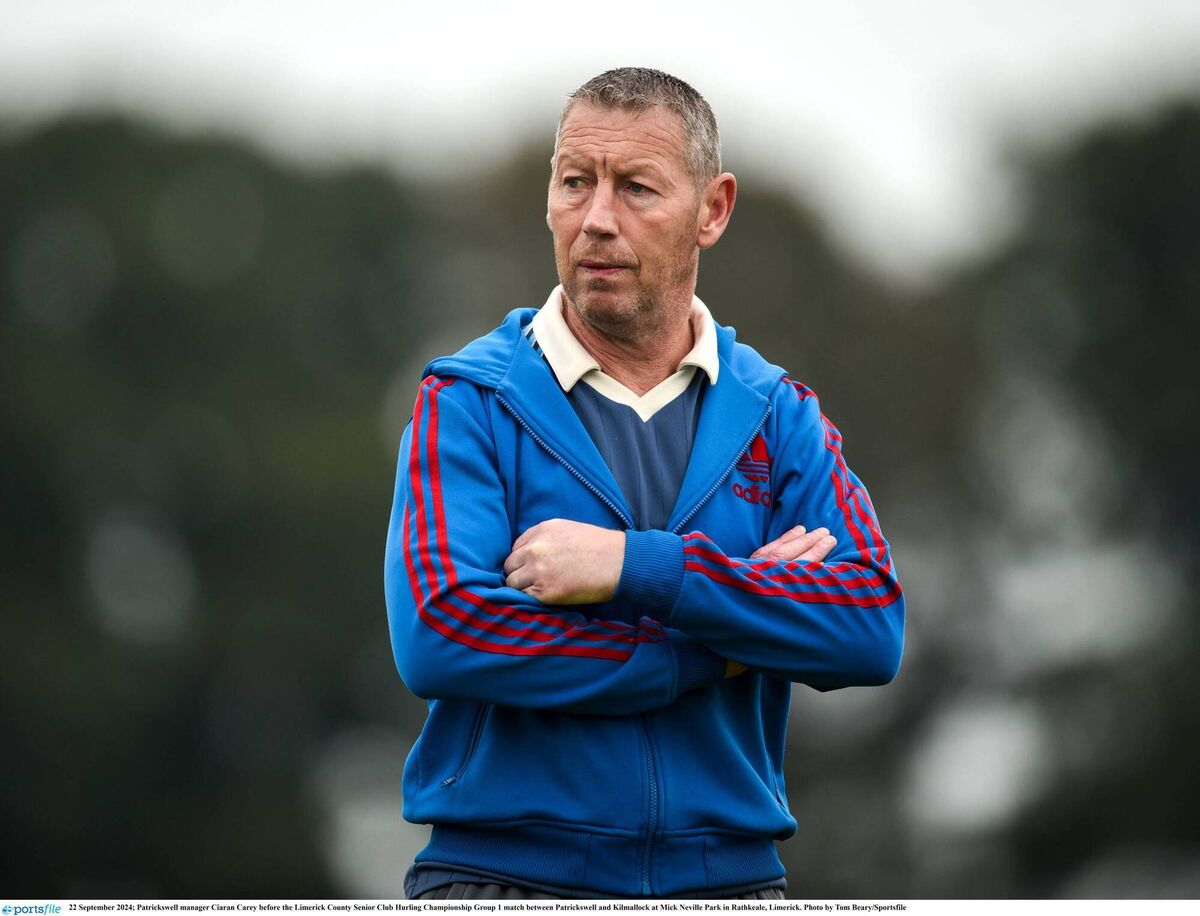
He’s frustrated with what fouling, or rather tackling, is permitted. “I remember when [Donal] O’Grady [who Carey served as a selector in 2011] was coaching the tackle, he’d go, ‘Eitleán! Eitleán!’ You know, hands out, like an aeroplane, to hold the man up. And he was right. But now teams are at this craic [does a swimming motion], pulling and grabbing. Octopus tackling. Or octopus fouling, more like it. It drives me bananas.” Still he goes to the games with Miriam, like to see their daughter Sarah, now married with four children to Tom Condon, captaining the club having won the county intermediate championship last year. And he continues to keenly watch Cian, as in Lynch, his nephew.
He wouldn’t really have taken him to the side through the years for any special coaching; for a year or two he was involved with the club U14s but again no special tutorage was required. For Carey, soccer, a sport he himself played through his county career, was more fundamental in developing Lynch into the hurler he’d become. “What he can do from his shin to his toes, a lot of that comes from soccer – the way you have to present for the ball, shimmy, drop the shoulders, pull the hand-break quickly.” Lynch and Limerick, he finds, are re-energised after the lull of the past two seasons. “They’re humming again, though not for as long as they normally would. But I think it’s coming. I think they’re as dangerous as they ever were. They have the wisdom, the experience, and I think they now smell blood.”
There’s more All-Irelands in them.
Carey never got his but he can appreciate all he gained in his time. He often bumps into Gary Kirby, either at the local golf society or at mass or at the shop. “And all it takes is a look and a smile.” Though it’s so long since they last played together, and though they were such different personalities even then, they can still share that moment because they shared so many others.
Like that comeback and That Point in ’96.
CONNECT WITH US TODAY



Be the first to know the latest news and updates