Kingdom's demolition a reminder that power is a curious thing
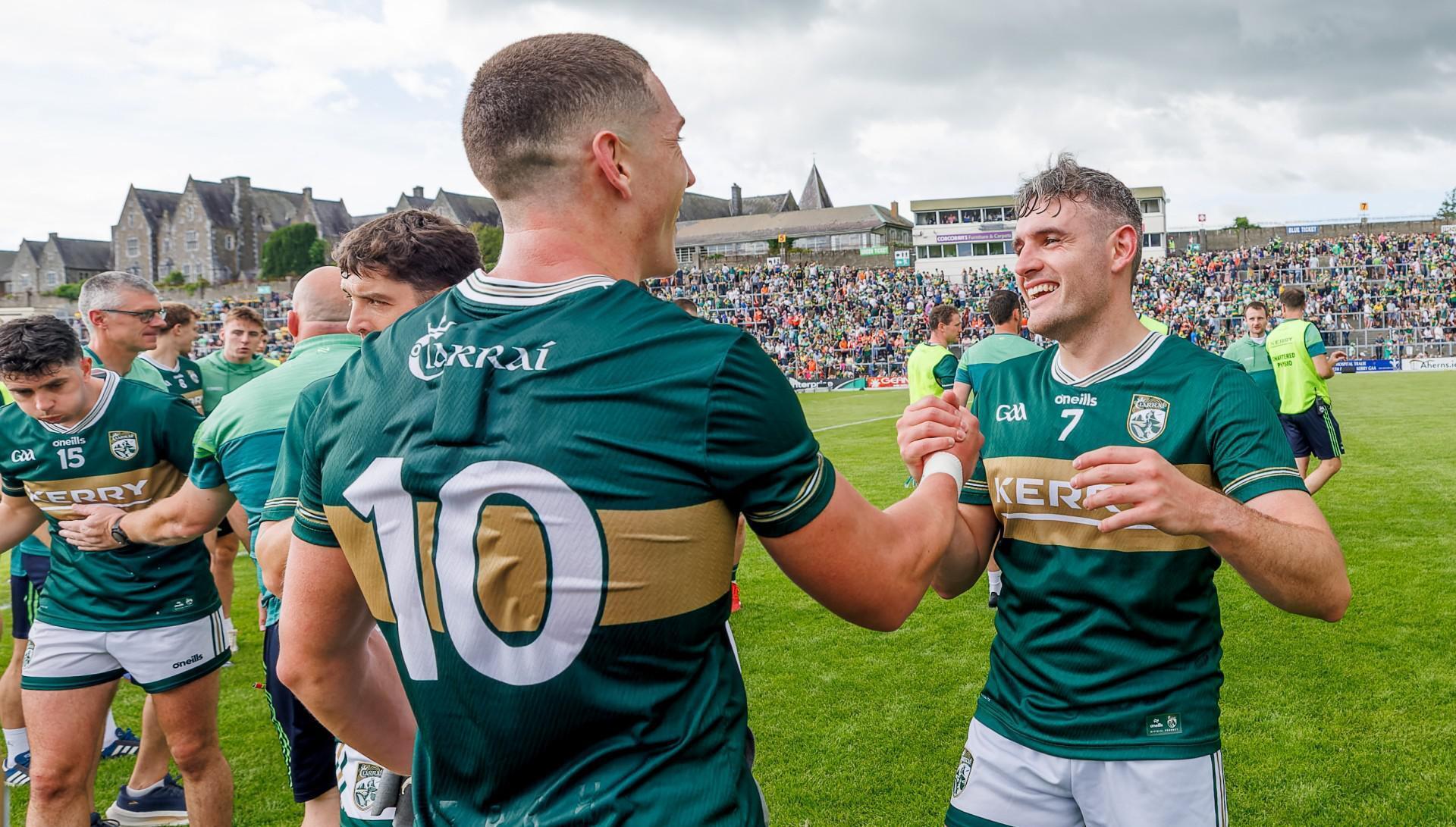
LAND OF SMILES: Kerry's Joe O’Connor and Graham O’Sullivan after the game after the game. Picture: James Crombie/Inpho
It was early in the second half, as a jinking David Clifford cut inside and Dylan Geaney flicked the ball into the arms of a rampaging Joe O’Connor, that the old idea from political philosophy about power crept into our mind.
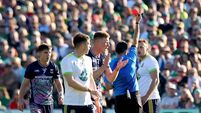
Armagh entered the field in Fitzgerald Stadium for a pre-game stroll to a warm welcome from former team-mate Stefan Campbell, who was on punditry duty for the game and left consigned to a familiar face’s consoling embrace.
In the post-match press conference, a shellshocked Kieran McGeeney was briefly interrupted by Kieran Donaghy as shuffling Kerry players crept through the room on their way to the adjacent gym.
His former coach reached out a comforting arm and they stood to embrace, before the Armagh manager continued to pick through the pieces of a ruthless showing that served as a stark reminder about where the real power currently lies in the Gaelic football universe.
We could cite Niccolò Machiavelli or Mao to illustrate the concept, but it was best articulated by George R.R. Martin in the Game of Thrones canon, back when the series still reigned as a genuine cultural phenomenon. Basically, two characters discuss how power is a curious thing, framed by a riddle.
“Three great men sit in a room, a king, a priest and the rich man. Between them stands a common sellsword. Each great man bids the sellsword kill the other two. Who lives? Who dies?” Depends on the individual with the weapon, says the first. Sure hasn’t he the sword, the power of life and death.
“But if the swordsmen who rule, why do we pretend kings hold all the power?” Who really is responsible for a slaying, the executioner, the authority who ordered it or something else entirely?
The recipient of the lesson, like any rational man, decides he doesn’t like riddles at all. To which he is met with the ultimate truth: “Power resides where men believe it resides, it’s a trick, a shadow on the wall.”
The core claim is that power is not primarily a physical factor; it is a social fact. Look around. Governments, religions, money, great teams, they all depend to some degree on collective belief and acceptance. What Kerry inflicted here was far more than a 13-point hammering and the ultimate closing chapter of an entertaining trilogy across three gripping years. It was an assertion of dominance.
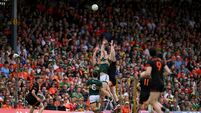
Because before David Coldrick threw up the ball, only for it to be claimed by Tiernan Kelly and denied a lodgement in the net by a poor Joe McElroy finish, the prevailing belief was that this blockbuster championship was wide open.
Several pundits and publications carried columns tipping Armagh to triumph, understandably. Almost everyone else anticipated a close contest. But two beautiful kick-pass moves, steeped in the tradition, shattered Armagh’s illusions in the first half and will plant a question in everyone else's minds.
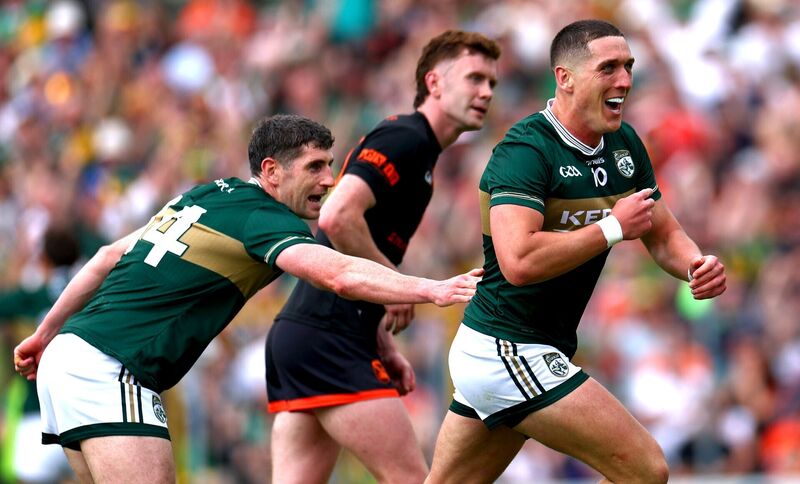
In the second half, the Ulster champions played like a team that knew they were against the reigning kingpins, rampant on their own patch. After O’Connor rifled the ball into the top corner, he pointed to his crest and held his arms aloft to the O'Sullivan stand. Clifford turned to the terrace and beckoned for more. A 24,648 crowd were left in no doubt about the current order.
This is despite the fact that Armagh had 29 shots to Kerry’s 27, missed four promising goal chances and kicked three two-pointers from nine attempts. Too many of them felt like efforts in vain rather than executed with belief, a desperate scramble rather than a calculated chase down.
In normal circumstances in the new game, a six-point deficit with the advantage of a slight wind to come is far from an insurmountable margin. But the sight of the green and gold, the aura of this side, ensures the challenge is as much psychological as it is tactical. A weary Armagh failed to summon the required defiance.
David Clifford was rightfully named Man of the Match. Still, this group have a system to match their stars. Mike Breen was magnificent as a ball-controlling six. Dylan Geaney gave a display of pure class with his creativity and finishing.
Shane Murphy retained 17 of 23 kickouts, bypassing the opposition’s press to get eight short kickouts away. He used both feet bravely to keep them guessing. Mark O’Shea caught or broke a kickout to a team-mate eight times. Eight. Talk about a monster in the middle.
Orchestrating all of it was Jack O’Connor, justifiably beaming afterwards at how the pieces are coming together. He saw the spark in training last week; it hinted at the firestorm that was on the way.
After 2025’s remarkable feat, he has managed to blend a stacked management team seamlessly while steering the squad through the mire of injuries, to the point where they now have several enviable selection headaches for next weekend’s quarter-final. How do you get Seán O’Shea back into the side? Who makes way for All-Ireland winning captain Gavin White? Can Shane Ryan come back into reckoning now?
Chinese philosopher Laozi once observed that when the best ruler's work is done, the people say: we did it ourselves. That is the highest compliment available to a manager too.
They march on to Croke Park with renewed conviction. Suddenly, the greatest worry for their future opponents, who harboured notions they could beat them, is convincing themselves they still can.
CONNECT WITH US TODAY



Be the first to know the latest news and updates