Maurice Brosnan on hurling: Limerick's live-wire sideline, Cork's puckout plan, and Galway's system
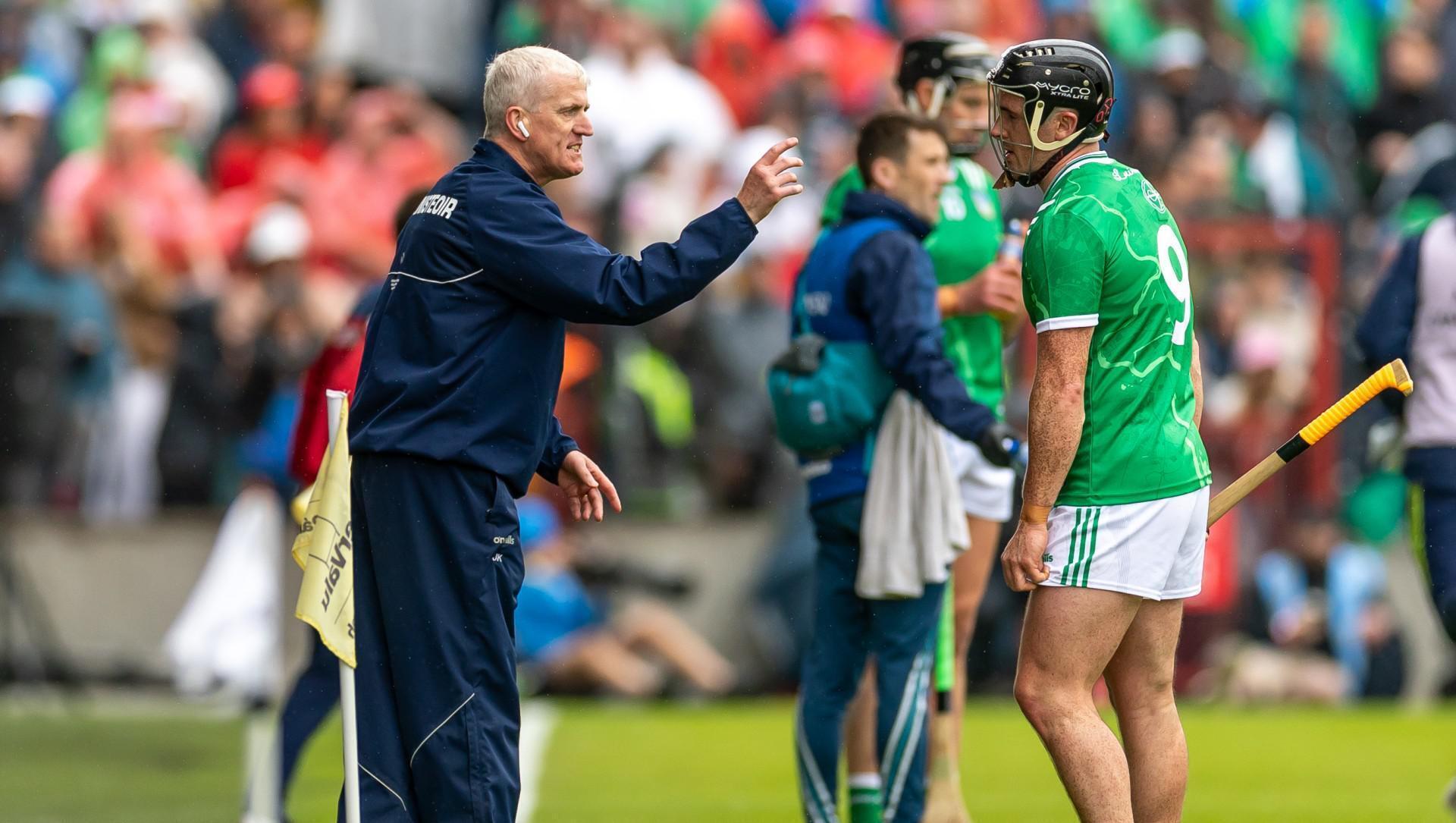
In a change from 2025, this season John Kiely is mic'd up on the sideline. He made sure to acknowledge that feedback during his post-match press conference. Pic: ©INPHO/Morgan Treacy
An important survey exploring the playing rules of hurling has been launched. Here is a selection of our submitted answers, with the additional benefit of being able to elaborate on some of the multiple-choice questions. It’s our column, after all.
Somewhat better.
The ball is being carried too much. This game needs more man-on-man contests. Hurling suffers from an excess of everything, too many shots, too many short passes, too many cheap scores. Innovative coaches have transformed the game beyond the imagination of any governing body.
Part of the allure in this pursuit is its wildness, the chaos and the carnage. Top teams are now programmed to escape that. This is a conflict the Hurling Advisory Committee must confront.
At the same time, players have never been as skilful or athletic. It is still capable of being an utterly breathtaking sport. A sensible way forward should be an acceptance that the raw materials are there to elevate this spectacle. Despite a dull championship so far, it is a magnificent game.
It can be even better.
Participation is declining in developing counties.
Nothing will serve the sport better than expanding its base and developing more competitors at the top table. At the elite level, the game is in a healthy place. But does it make anybody want to adopt it where they currently don’t widely play? Not based on the last century of evidence. The ultimate challenge is breaking new ground.
The hand pass rule. The steps rule. Cynical/deliberate fouling. The 13m clearance at throw-ins.
It comes up in conversations about officiating in every sport, but consistency is a pipe dream. Referees can’t make the same decision on different incidents because they are, well, different.
There are certain infractions that distort the game more than others. A more rigorous enforcement of these four would promote more direct play, fewer rucks, more contests and more goals. That’s a win.
Uncontested play: When the game becomes loose and unstructured, it leads to uncontested play and easy scores. The abolition of fast puckouts would allow teams to reset and restore some structure.
Fix the advantage: Five years ago, the new advantage rule for hurling presented at Congress was met with little resistance. The motion was passed and everyone got on with it.
Gaelic football’s version where advantage has no time limit and lasts, “until it becomes clear that no advantage has accrued,” could reduce stoppages and reward attacking intent.
Zero tolerance of holding the arm in the tackle: Moreover, zero tolerance of spare-arm tackling could drastically reduce handpassing and throwing anyway. How many handpasses are due to the reality that someone is holding the hurley arm? Make it a hurley-on-hurley tackling game and eliminate the need to handpass out of the stranglehold.
Hurling is not Gaelic football. Do we want to give teams another reason not to press the puckout? Will defences drop off and engage the full-back line eventually, forcing teams to walk into a trap?
A similar dilemma. Immediately, forwards would withdraw and condense the space. It could dumb down the spectacle.
Implement changes and review after one season.
The greatest lesson from the Football Review Committee is how to manage a notoriously difficult process. Rule changes have always been a contentious affair in the GAA. There is no perfect testing ground. They can be trialled in sandbox games or college competitions, but ultimately, the only full stress test is top-tier, competitive championship action.
Here are eight observations from the hurling championship.
Niall Ó Ceallacháin’s teams are consistently well-prepared with a profound understanding of how to stop the opposition playing and neutralise their primary threats. They have a proven ability to stop other teams.
On Saturday, Galway’s counter-strategy was simple: can you come and break us down? They flooded their defence and dropped Cathal Mannion and Tom Monaghan deep to ensure Dublin had to ask questions of them.
Jason Rabbitte was fouled for Aaron Niland’s opening two frees in Croke Park, but that outlet wasn’t always successful. While Galway may have some gripes about other aerial challenges or the call to penalise him for steps, they stayed patient with their approach and stuck to the gameplan.
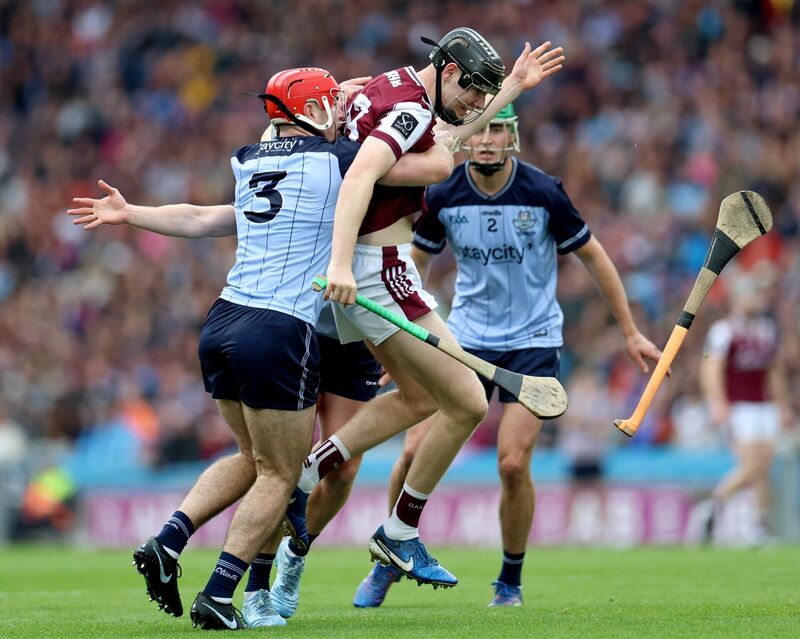
Remarkably, of Galway’s massive 4-29 tally, 4-15 came from turnovers. That is a natural byproduct of both teams’ retention on puckouts, retaining over 70%. Micheál Donoghue’s outfit were able to monopolise possession and fire 47 shots in total.
The paradox of modern hurling is how top teams, in particular Limerick, drop deep to establish a tactical foothold. Where once the orthodoxy was to push up, now it is about dropping back.
Why such a system works was illustrated by Galway's first goal. They persisted with their defensive setup and Dublin were pulled out of position with it. When Conor Whelan gathered possession after Paddy Smyth’s error, Dublin were completely exposed. Rory Burke broke into that inviting space and selflessly laid off to Darragh Neary at the back post.
It was a wretched end. As Tipperary cruised past Galway in their quarter-final meeting last season, the first man replaced was county legend David Burke. He retired from inter-county action soon after with four All-Stars and an immortal legacy.
The next to go off was his club-mate, Conor Cooney. The St Thomas’ man has been the most impactful player in the club championship for a decade and a mainstay in maroon, but the demand for transition always meant the 2017 All-Ireland winning contingent were vulnerable.
The 33-year-old came on to score 1-1 last weekend in the Leinster final. The man who started at full-forward for the county’s first-ever Leinster crown in 2012 was famously dropped for the All-Ireland final that year. Yet, there is a distinct nobility in sticking in and showing up - always.
Five-time All-Star Daithí Burke was immense last weekend, having endured a difficult 12 months with a persistent hamstring issue. But the only link left on the field from 2012 is Cooney. He is now a four-time Leinster champion. What a thing.
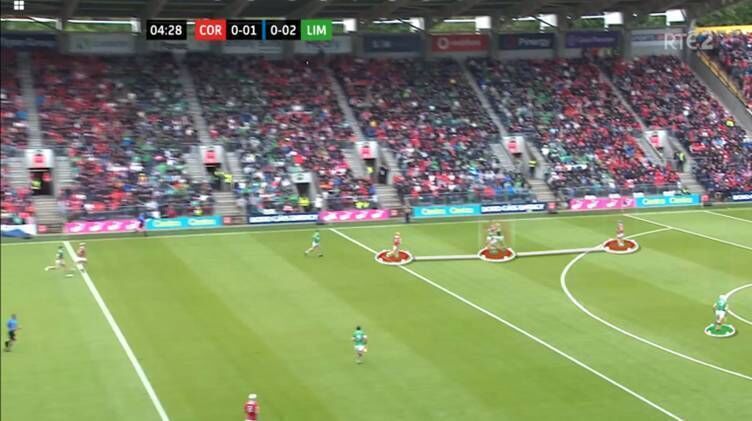
Some signals are harder to decipher than others, but it was still noticeable that for Cork’s first three puckouts on Sunday, Patrick Collins deliberately made his run past the left post before hitting the ball. All three went to that left side.
Like Pat Ryan before him, the Cork management evidently opted to avoid Kyle Hayes's wing at all costs. Cork actually put three puckouts over the sideline on the left side in the first half and scored from turning Limerick back over on all three. (By the way, is a sideline touch-and-go rule worth a trial?) Cork’s plan to disrupt Limerick’s typical defensive setup was clever. Facing a half-back line that typically holds its shape, the home outfit overloaded that left wing repeatedly.
In the end, Cork scored five points from their puckout and conceded 1-4. The margins that determine such outcomes were evident here. With five minutes played, Collins went to the left wing for the third time. Brian Hayes was there to weaponise his usual batting ability.
From the break, Diarmuid Healy and Shane Barrett were ready. It was three versus two on that wing. They broke and eventually, Hayes continued his run and raced in on goal. His rifled effort went just over the bar.
Collins was busy throughout. His first save, racing off his line to deny Cathal O’Neill after Aaron Gillane’s breakaway, was a brave stop that set the tone for what came after. As Limerick prepared for the trophy celebration and Cork stood in the middle of Páirc Uí Chaoimh with dejected supporters all around them, Nickie Quaid made his way through the Cork panel until he found Collins. They embraced. Game recognises game.
The minutes before throw-in are an exercise in reconnaissance for both management teams. Cork’s crew gathered on the arc at the city end and took stock of Limerick’s warm-up.
Before every game, they warm up with their respective lines, full-back trio together, half-back line, and so on. The fact that Cian Lynch was with Darragh O’Donovan and Adam English would have solidified in their mind what the late introduction of Shane O’Brien meant.
Limerick would have realised Seán O’Donoghue was going to renew his duel with Aaron Gillane as well. As a result, they started the game by being direct consistently. It didn’t reap immediate success, yet the margins are microscopic; that O’Neill goal chance came from feeding Gillane. Peter Casey won a free after sliding out in front of Damien Cahalane, only for Aidan O’Connor to miss it.
Nevertheless, Robert Downey’s positioning in front of the Limerick inside line made it a three-versus-two scenario repeatedly. The conundrum for Limerick was where to position their extra man.
Midway through the first half, John Kiely roared in from the sideline until O’Donovan came over to him. He spoke enthusiastically, gesturing to their own half.
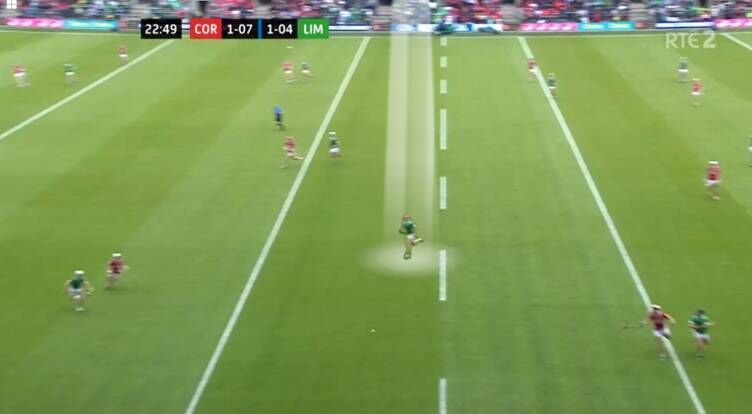
From that point on, O’Donovan sat slightly deeper. He was a leading contender for man of the match. The moment that crystallised Limerick’s shift was Barry Nash’s first-half point. O’Donovan gathered the ball, looked up, and saw Downey sitting. That meant a man must be free somewhere else.
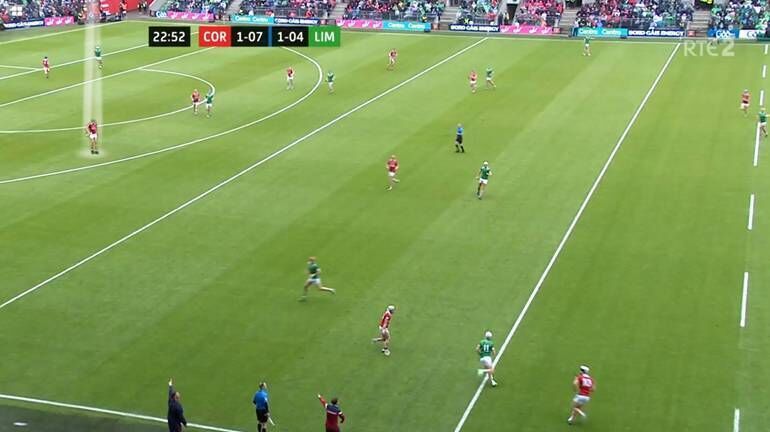
He popped to Lynch, who had Barry Nash in front of him in acres of space. He planted his feet and slotted it.
This team has always placed immense value on live data. During covid, Limerick's analysts booked hotel rooms close to stadiums because they couldn’t secure access to the ground. From there, they tagged and analysed data, in communication with a selector in the ground.
In a change from 2025, this season John Kiely is mic'd up on the sideline. He made sure to acknowledge that feedback during his post-match press conference.
“I’m really thrilled with our group up in the stand, the information they gave us was spot on. We had good calls, good decisions based on good information,” he said.
Analyst Seán O’Donnell has been a pivotal presence in their setup for years, although Kiely joked it was a different individual who was advising him.
“That is my mother at home I’m talking to. That line upstairs is not a very busy line, it is only when required.”
John Kiely was adamant. The sustenance of Limerick's showing couldn’t come from last year’s defeat. It is the work logged over the past eight months that stood to them, not some emotional crutch.
“Last June or July, whenever it was, if you depend on results that went against you 12 months ago to drive you forward today, that is not going to last. What is going to sustain us next week? What is going to sustain us the week after?”
Derry know that feeling. After three final defeats in a row between 2023 and 2025 as well as losing the 2021 final, they won the Christy Ring Cup with a five-point win over Kerry.
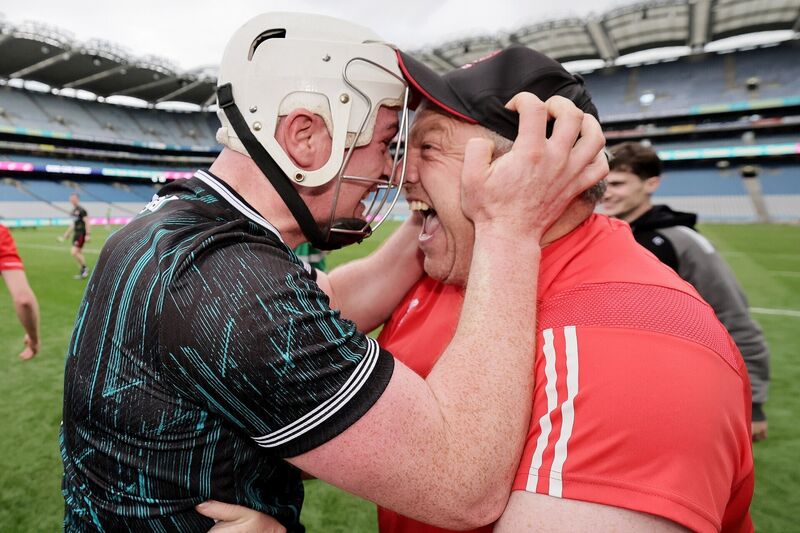
"We didn't dwell on the past,” manager Johnny McGarvey told the Derry Journal. “Last year we maybe dwelt a bit on previous games but this week what happened before was never mentioned. This was about today, taking THIS opportunity and we always felt that when we were in this game after 10 or 15 minutes, then Kerry would be spooked.”
They played with freedom rather than fear. It was their commitment to maintaining six forwards throughout that meant Jason Diggins couldn’t sweep as effectively. For their first goal of the game, they had six players inside Kerry’s 45-metre line.
A critical metric for several teams is turnovers in the opposite third. The simple reason for that is the attacking platform it provides. An opposing defence is caught wide open and vulnerable to lethal counter-attacks.
When Laois went long in the 54th minute of the Joe McDonagh Cup final with two points between the teams, Carlow were well set. Mark Dowling couldn’t collect the ball and John Nolan, as the extra defender, gathered possession. He was swallowed in a tackle and the sliotar slipped out.
Cillian Dunne was standing at the top of the small D when that tackle occurred. His sense of anticipation was immediate. By the time the ball broke across the square, he was rushing onwards and pulled first time to find the roof of the net. It meant his tally finished with an outstanding 1-6.
“I said it to him on Friday,” said manager Tommy Fitzgerald afterwards. “I sent him a message, I said, ‘You were made for days like this’ and he bloody backed it up today.”
Nickie Quaid’s immense saves. Cian Lynch bouncing the ball off a saturated surface while running at full speed. Brian Hayes’s clinical finish. Cormac O’Brien sliding along the ground to catch a dropping pass and offloading to Mark Coleman in stride. Peter Casey’s flicked strike to give Limerick the lead with the clock in the red. The idea that dismal conditions dilute talent to a similar level is nonsense. Good hurlers come out in the rain.
CONNECT WITH US TODAY



Be the first to know the latest news and updates