Maurice Brosnan: Galway's kickout issues, Heneghan's breakout, and Geaney's genius
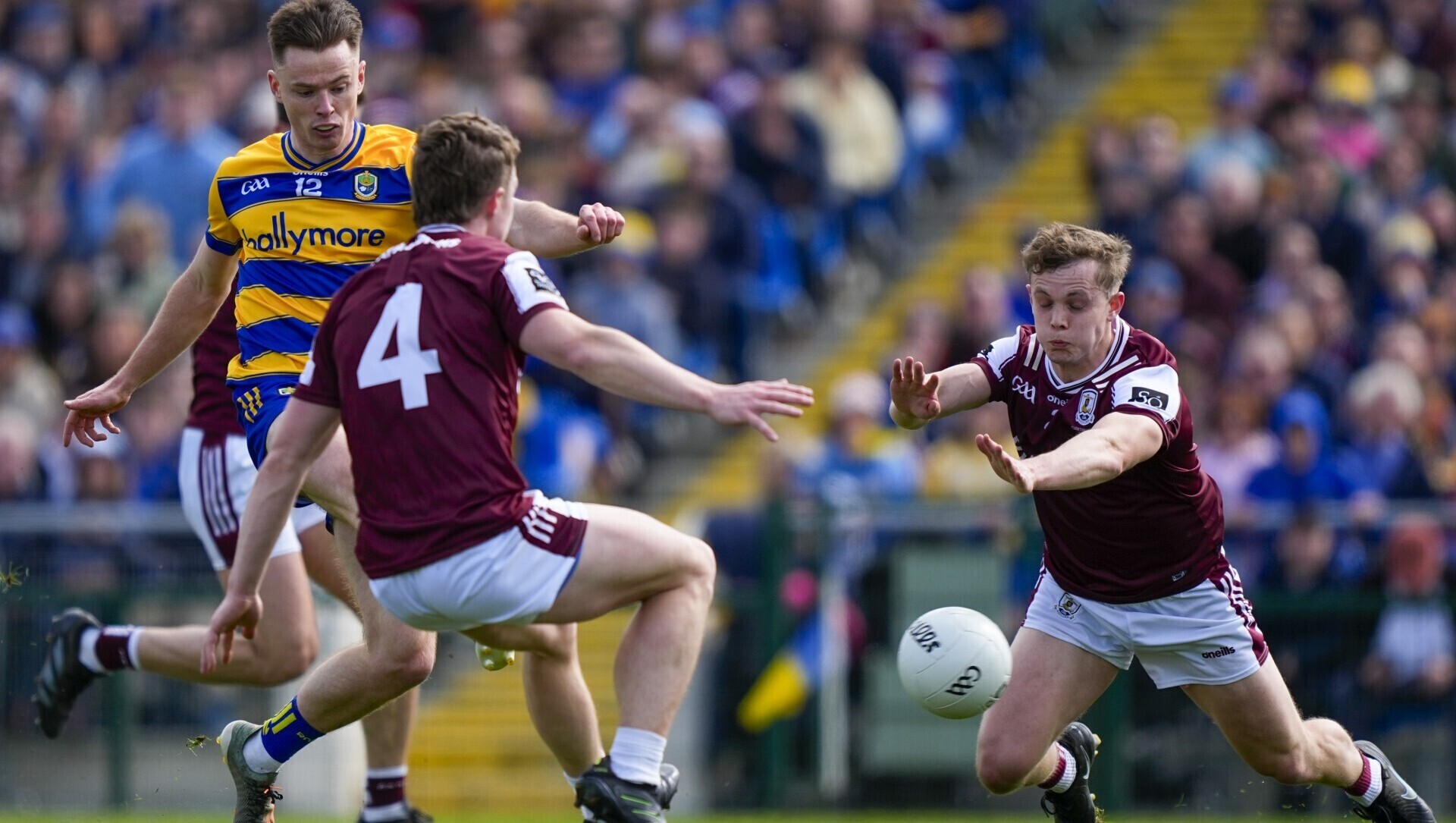
In league and championship this year, Darragh Heneghan has scored 4-9. That 21-point return has come from an astonishing 14 shots. Pic: ©INPHO/James Lawlor
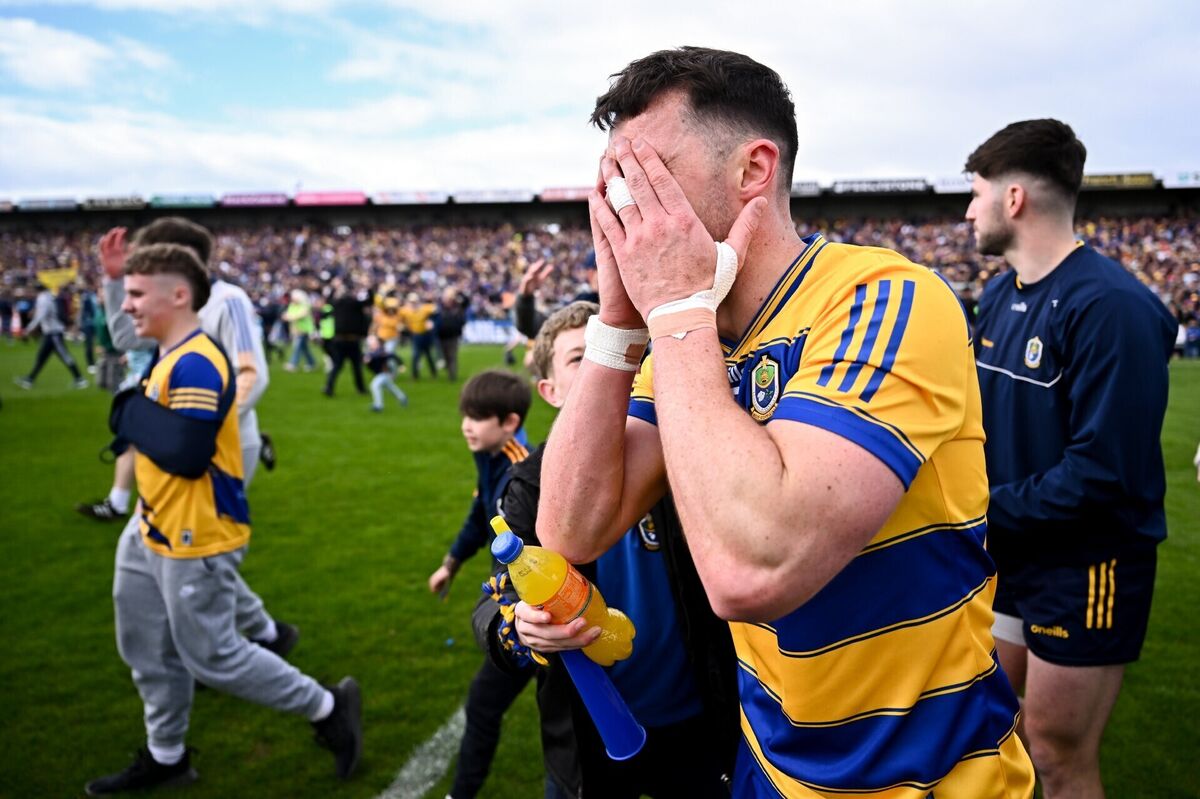
Roscommon captain Diarmuid Murtagh had both wrists strapped. The right was to cover a Whoop band, the left had a cryptic initialism and a simple instruction: WIN.
Yes, that is the obvious ambition of any footballer who took to the field last weekend. It is the sort of message that shouldn’t need reminding. As for the letters, it appeared to read “BGT”. The meaning of that particular code was not something the victorious stalwart was willing to share when he obliged in one final interview before an S&C coach peeled his GPS from the back of his jersey and he could carry the Nestor Cup into a raucous dressing room.
“That is a secret,” he said with a smile. “I will tell you some day.”
Cast into the same category as the meaning of Cian Lynch’s tattoos, another inquiry we were promised an answer to eventually.
In the furnace that was the Hyde last Sunday, simplicity proved to be the last refuge of conviction. The game is operating at a dizzying level currently with remarkable tactical innovation and yet the smallest details dictate so much. Galway don’t track a hard run and Conor Carroll gets a kickout away. Two Roscommon jumpers go for the one ball and Damien Comer goals.
Read More
So perhaps there is something to be said for Murtagh’s reduction of the sport to its bare essentials: win. At all times and at any cost, never forget that it is within grasp.
“I came off with cramp but seeing the lads push on there was special,” said their speedster Colm Neary. “I didn’t think it was gone because of the way we have been playing this year. Performance by performance, I was sitting there like, ‘these boys are capable of it.’ They showed it again.”
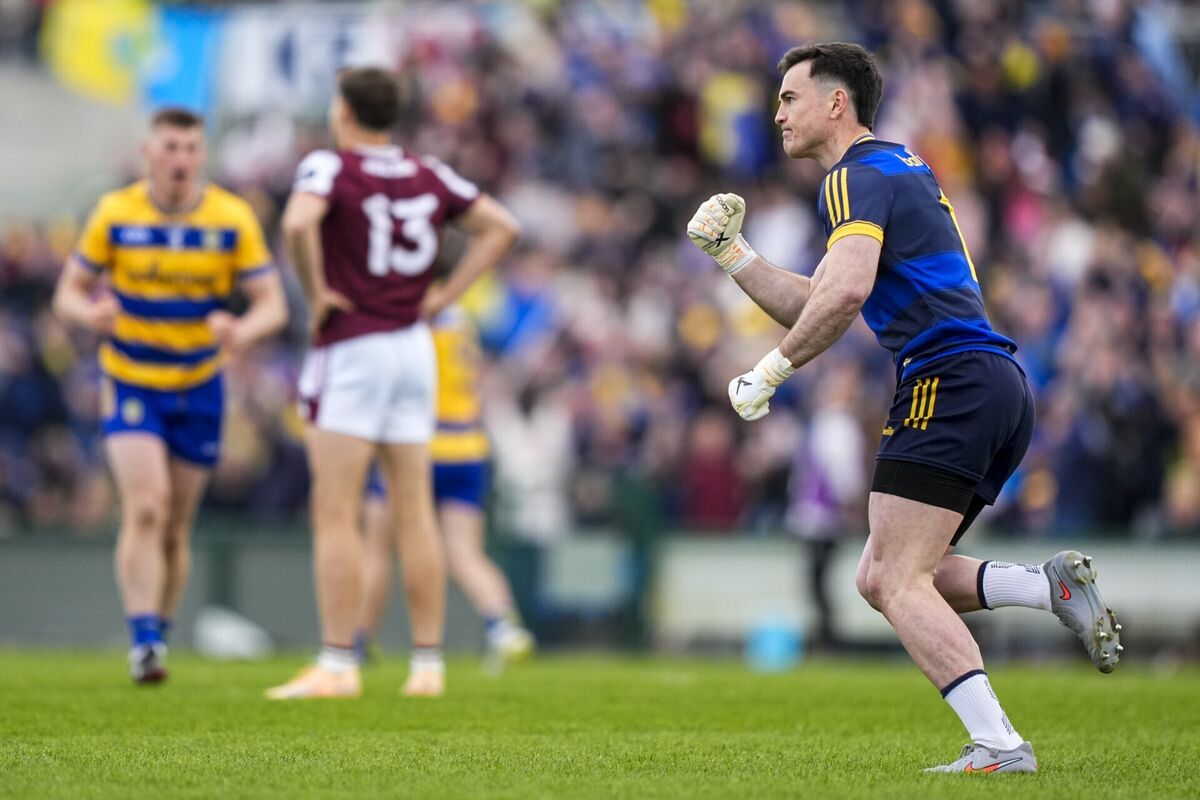
Galway roar out of the blocks and go eight points up midway through the first half? Run hard and bag a brilliant goal to claw it back. Caelim Keogh started off on the sideline near his own 45 and ran directly towards the black spot as soon as they won a short kickout. He was able to collect from Darragh Heneghan, give it back to him, take a thundering hit from Sean Kelly that prompted referee Sean Hurson to play advantage and jog back deliriously as Robert Heneghan buried the rebound into the net.
Keogh was marking Shane Walsh in the final minute when Galway desperately needed a two-pointer. As John Daly stood on the sideline, the defender pushed the brilliant shooter to let him know he was there. The duo moved to the 45 where Keogh moved like a crab, shuffling left and right to keep tabs on a man determined to add to his three two-pointers.
From the moment John Maher takes the ball to Walsh’s effort drifting agonisingly wide of the near post, Keogh never touches his opponent. It is an exercise in disciplined defending and pressure. He dived full length as it tailed wide, bounced up to jeer and seconds later shook his hand as a delirious pitch invasion swirled all around him.
When Damien Comer made the margin six with a sensational goal, it was sub Ruaidhrí Fallon who fished the ball out of the net and tossed it to his club-mate Carroll. Despite the havoc, the game was not over. Fallon made a lung-bursting break to the corner for the resulting kickout to secure possession. From there, they advanced and Paul Carey kicked a two to instigate their eight unanswered closing points.
In the days before the decider, Roscommon brought in guest speaker Fergal Guihen to talk to the team. The local man recently completed a cycling challenge which began almost two years ago and saw him travel over 30,000km across three continents to Australia.
The ‘Rossie to Aussie’ campaign was to raise funds for the Mayo Roscommon Hospice Foundation and NorthWest STOP suicide prevention services. His philosophy during that trek was elementary: one foot after another. Bit by bit, inch by inch.
“I am not cycling from Ireland to Australia,” Guihen said. “All I am doing is cycling from Roscommon to Dublin. Dublin to Paris. Paris to Munich.”
Like any great competitor, Mark Dowd’s players knew victory is as much about inspiration as it is an exercise in endurance. A never-ending desire to make the next hard run, a courageous willingness to shoot, a stubborn desire to keep going — these are the qualities that it takes to win.
Here are eight observations from the Gaelic football championship.
Who was marking Darragh Heneghan? That is not a simple question. It can be difficult to determine for a host of reasons. For those fortunate enough to be in attendance, there are 14 different match-ups to keep tabs on, as well as the scorers and off-the-ball incidents, all of which change quickly.
Those watching the live broadcast might see a replay of a potential pull on the arm before the footage cuts back to show Heneghan racing in on goal for his third score, without any explanation as to how he got there. It remains bewildering that broadcasters believe the live action they routinely miss while showing replays is not more important for viewers.
To identify who was tracking Heneghan, you would need to watch from behind the goal or from the wide-angle GoPro footage certain counties now use. This view shows the entire structure and setup in a way other angles simply do not.
For Darragh Heneghan’s very first shot that hit the post and led to Galway’s opening goal, he was marked by Sean Kelly. For their first goal which came from a kickout, Paul Conroy had him. For their second goal, his first, it was Daniel O’Flaherty who was bypassed on the 45.
For his first point, it was Dylan McHugh. Second? Cein D’Arcy. Their third goal was an interesting move. In this column’s predictions at the start of the year, it was suggested more teams would leave a kickout target in the three-up as an option for a fast, long restart. St Brigid’s and Conor Carroll used this strategy effectively with Shane Cunnane during their run to the club final.
As soon as Galway scored, Enda Smith had his hands up gesturing to be part of the three-up. At that point, Jack Glynn was on Heneghan and Smith was being momentarily tracked by Johnny McGrath.
This is the reality of a wing-forward now. With so many teams using their wing-backs to tuck in from the weak side, the match-ups are increasingly fluid. On rewatching the game, we realised McHugh - who we had initially assigned Heneghan duty - was actually tracking Colm Neary. The best way to control such flyers is to limit their supply. In that regard, Galway failed.
Carroll was able to clip away 13 short kickouts, retaining 12. Roscommon ultimately retained 81% of their restarts and scored 2-10 directly from them.
What Galway urgently needed to do was take away the left pocket where Carroll, as a right-footed goalkeeper, wanted to go. He went short to the other side once in the entire game, Roscommon lost possession and McHugh scored.
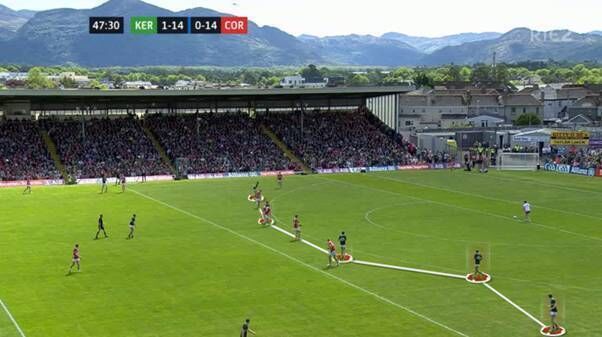
It was clear Galway’s plan was to press zonally first while picking up men as they progressed through each segment of the pitch. Early on, that approach was not working. It was here they needed to adapt. In Killarney on Sunday, Kerry eventually stationed five players around the arc in a bid to force Cork goalkeeper Patrick Doyle long.
Pádraic Joyce’s side get a lot right when they have possession. They have averaged 32 shots per game this season and limited the opposition to 26. Their primary problem, for more than a year now, has been on kickouts. They cannot secure enough of their own and in Sunday's Connacht SFC final, that was compounded by a porous press. It does not matter how good your attack and defence are if you consistently allow the opposition more phases of possession. On Sunday, Galway had 37 team possessions; Roscommon had 44.
Should someone man-mark Darragh Heneghan? The Michael Glaveys man is already the breakout star of the year. It was surprising that after impressive performances with his club and UL in the Sigerson Cup, he had not previously featured for Roscommon. Mark Dowd put an end to that by starting him in the FBD League earlier this year.
In league and championship, Heneghan has scored 4-9. That 21-point return has come from an astonishing 14 shots. His only miss was that effort from the throw-in that struck the post.
One of the unexpected benefits of the new rules is the new sounds they have brought to the game. A score from outside the arc is often greeted with the same collective burst. There is a pantomime quality to the calls of “BREACH” from the stand, a roaring chorus of: “He’s behind you!” And then there is that unmistakable crescendo when supporters realise a goal is on.
As soon as Cork corner-back Sean Meehan was turned over deep in his own half, the noise signalled the danger. Mark O’Shea broke away and fed Armin Heinrich, who was racing down the centre in a three-on-one. He tapped over. Anyone who knows Jack O’Connor will understand what he made of that call. In the same stadium against Roscommon during the league, Michael Burns popped over after an offensive mark. The camera panned to O’Connor’s face on the sideline, which was a portrait of annoyance.
Heinrich came off at half-time after appearing to jar his hamstring during Cork’s final attack of the half. That one moment should not detract from his remarkable progress this year. His club-mate Kieran Donaghy could clearly be heard constantly instructing him during the game from the same sideline. They are investing in a serious talent.
A striking feature of that play was David Clifford’s selfless role. As soon as the turnover occurred, the two-time Footballer of the Year ran back towards his own goal. In doing so, he pulled full-back Daniel O’Mahony with him, creating a channel of space for his team-mates to burst into.
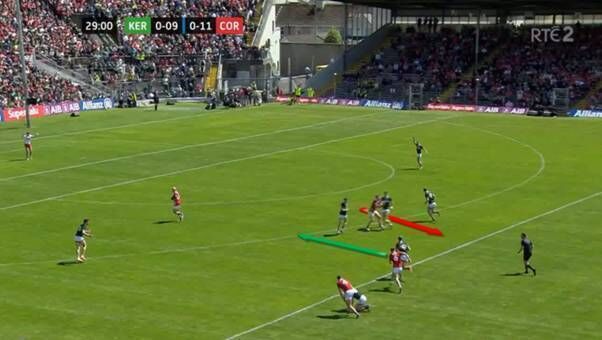
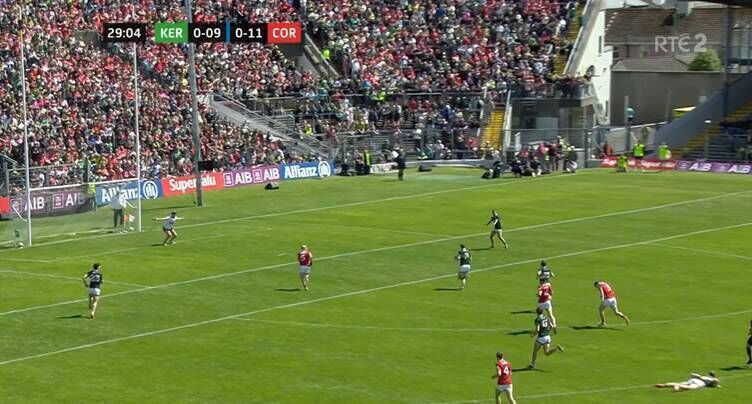
Kerry’s collective ability to do this repeatedly is awesome. Diarmuid O’Connor had one shot but finished with five assists. As much as they are brilliant individual players, they are a unit.
As became clear during Dingle’s All-Ireland triumph, Paul Geaney is much more than a player. He is an on-field coach, an innovator and a shot-caller. “Paul is like Kobe Bryant with his mindset,” coach James Weldon told this paper earlier this year. “His focus, his resilience, how deep a thinker he is about the game.”
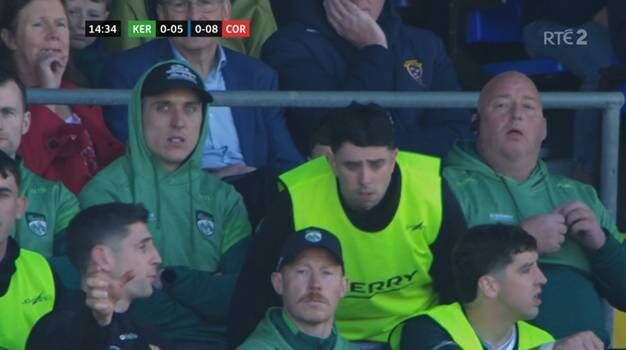
It was a blow for Kerry that their captain was ruled out before the Munster final throw-in on Sunday, but they still found ways to utilise that football intelligence. It was revealing to see kitman Colm Whelan sitting in the stand beside the injured Kerry players during the game. He was mic’d up and Geaney was constantly relaying instruction.
Goals per game in the 2025 championship: 2.07. Goals per game in the 2026 league: 2.63. Goals per game in the 2025 provincial championship: 1.9 Goals per game in the 2026 provincial championship: 3.2.
The calls for a four-point goal are growing fainter.
On the topic of breaches, David Clifford’s magnificent two-pointer from outside the 45 on his left foot has reminded us of a recurring query. When teams are penalised for a breach and a referee plays advantage, why do they race back up? Cork are far from the only culprits here, but we will use Sunday’s example as a case study.
Cork only have two up and the crowd let referee Paul Faloon know about it. He raises his hand to signal advantage. Kerry try to make the most of it and immediately call for a two-point shot. Luke Fahy races back over the halfway line to restore their three-up.
Why? Once the breach has occurred and the opposition has advantage, why bother? Teams should continue to breach until the end of the play. A free is coming anyway. In fact, they should bring all 15 behind the ball.
For the first time in five years, Tipperary started their Tailteann Cup campaign with a win. They saw off Sligo by two points at Markievicz Park, having lost to them by 16 and five points in the previous two seasons.
The home side staged a late comeback, with Pat Spillane kicking two two-pointers and missing with a third attempt to equalise, but Tipperary were full value for their win. This was the performance of a side with a clear understanding of what they are trying to do.
Shane Garland, brother of Monaghan forward David and former Rory Beggan understudy, gave a commanding display in goals. He raced off his line repeatedly as a sweeper-keeper, including right at the death to claim Spillane’s short shot.
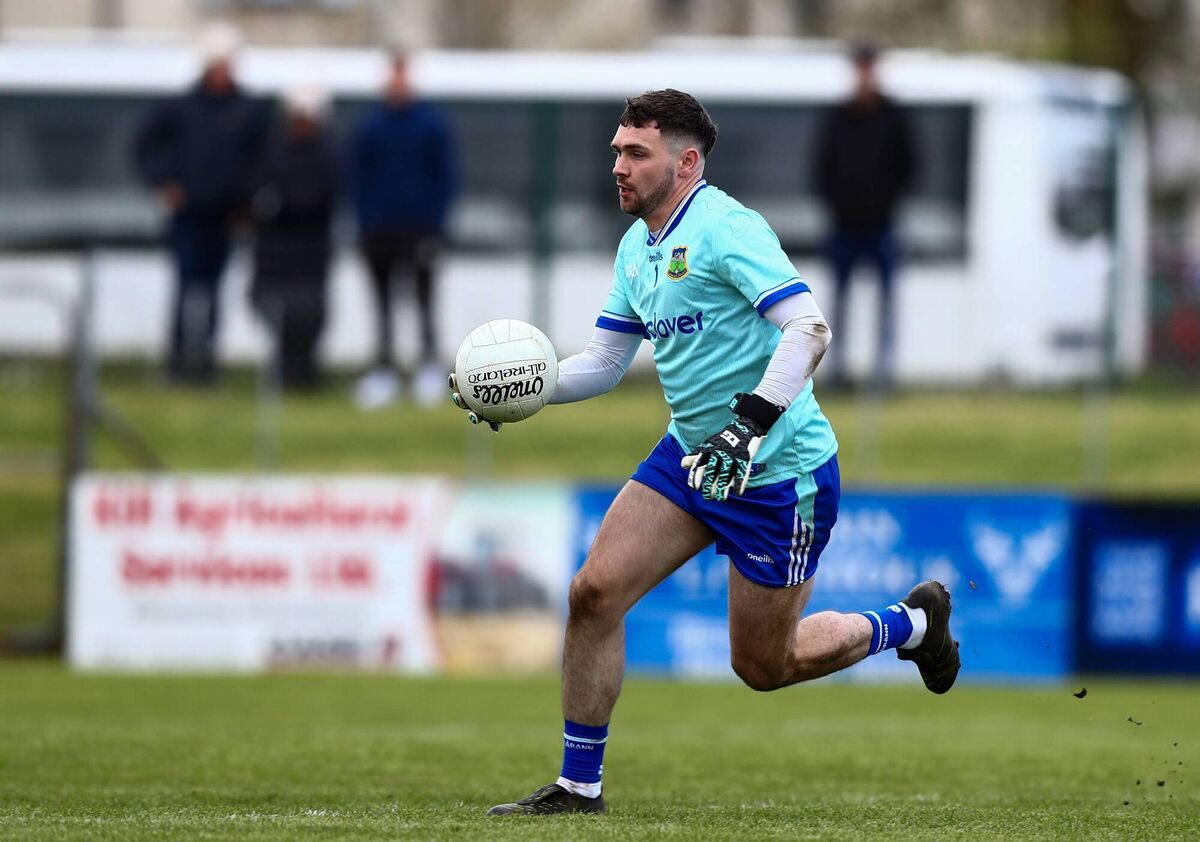
They went aggressively after shots from outside the arc with the wind in the first half, kicking four from ten attempts. In the second half, they used slow, controlled attacks to dictate the tempo of the game. A ‘blue ball’ set-play call proved particularly effective.
Tipperary retained 70% of their kickouts and won 48% of Sligo’s. They scored ten points from their own restarts and conceded just two. Much of that stemmed from a hard-working midfield duo in Joe Higgins and Paudie Feehan.
“They won some dirty ball there,” said a delighted Niall Fitzgerald post-match. “That, at the end of the day, gave us a platform to get some good scores ourselves and starve them of possession for long periods.”
On three occasions in Dy Hyde Park last Sunday, Galway were presented with a free-kick or sideline and simply launched it. The first came after Darragh Heneghan was penalised for over-carrying. Cillian McDaid went down clutching his knee and had to come off. Galway were fortunate that he seemingly suffered a head injury in the same play, as they had used all five of their substitutes at that point. Shane McGrath was able to come on as a temporary replacement.
Goalkeeper Conor Flaherty came out to take the resulting free. Galway opted for a bunch-and-break setup. No option presented itself, so Flaherty booted it long. In competing for possession, Roscommon actually breached. But two jumpers went for the one ball. One of them was Damien Comer’s marker, Eoin McCormack. John Maher won the break, sent Comer away and he scored an outstanding goal.
Perhaps that is why substitute John Daly went long with his late sideline towards Comer, Shane Walsh and Matthew Tierney. Galway lost the break but recovered possession, only for Dylan McHugh to drop a handpass. From the resulting counterattack, Roscommon won a 45 that Carroll converted.
The final free came after Darragh Heneghan went down injured. Galway called a spine, but there was no short movement. Daly went long again, they lost it and Daire Cregg kicked a two-pointer.
For that final free, Galway should have utilised goalkeeper Conor Flaherty, who had already advanced from his goals.
This has become a common tactic since the ban on back-passing to the goalkeeper. Rather than be down a man, the goalkeeper can kick to any of the 14 outfield players. Some teams even delay until the last moment so the goalkeeper can take the ball from a player who appears set to strike the free and then return it to him while he is still in space.
This is why when the ultimate goal remains alive, a defeat can still offer invaluable lessons.
CONNECT WITH US TODAY



Be the first to know the latest news and updates