Kieran Shannon: Connacht's greatest ever final has us all living in a Roscommon wonderland
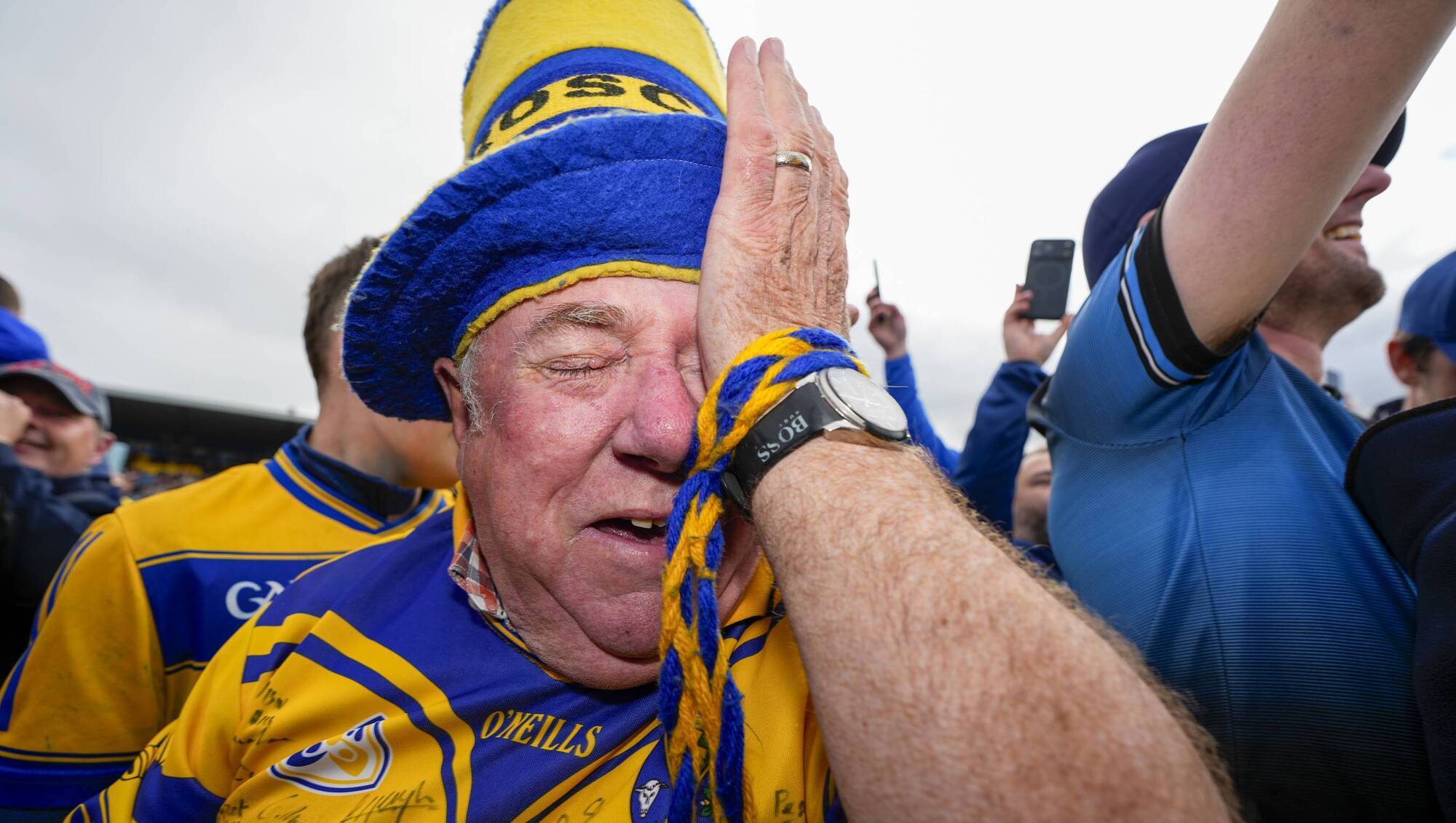
DREAMS ARE MADE OF THIS: Roscommon superfan, Willie Tiernan from Boyle, can't hide his emotion as the Rossies win the Nestor Cup on home soil for the first time in 25 years. Picture: INPHO/James Lawlor
After the hooter sounded in Dr Hyde Park last Sunday, Paul Earley, brother of the county’s greatest football son and a former All-Star in his own right, bounded up to the press box and declared to some former colleagues that they had just witnessed the greatest-ever performance and win delivered by a Roscommon team.
He could have gone further. As passionate as he is about Roscommon football, Earley has demonstrated a capacity to be suitably detached and objective and survey the general football landscape.
For decades he served as a co-commentator for various television channels. For a couple of years, he even managed the Irish International Rules team, including for the victorious series of 2013.
He’s taken in a lot of Connacht finals and championship games during his 61 years, stretching all the way back to when his brother Dermot inspired the county to four consecutive Nestor Cups in the late ’70s, even earlier. In all that time he could hardly have seen a greater Connacht championship match, certainly not a greater Connacht final, than last Sunday.
Because no one has.
The 2001 Connacht title still has a special place in the hearts of Roscommon folk, as evident by how the silver jubilee team was received on Sunday and mentioned by Diarmuid Murtagh in his acceptance speech.
But while that final had a great finish – three goals in the closing 10 minutes, including Gerry Lohan’s injury-time winner – what preceded it could hardly qualify as a great fare; the sides were tied at just 0-10 apiece entering that final stretch.
From 2006 to 2012 all eight Connacht finals were decided by two points or less and featured a series of standout moments: Conor Mortimer’s winning free in 2006 and winning goal (and celebration) in 2009, Éamonn O’Hara’s One Moment in Time goal in 2007, Donie Shine’s monstrous free-kick to break Sligo hearts in 2010, Cillian O’Connor’s exhibition of free-taking in the rain to torment Roscommon in 2011.
But none of those games threatened game-of-the-year contention.
Mayo’s comeback in the 1999 final in a drenched Tuam Stadium did but that said as much about the state of the sport back as it did about that particular match.
You probably have to go back to 1989 that required a replay and extra-time before Mayo edged Roscommon 3-14 for 2-13 for a Connacht final to rival last Sunday’s, and before that a string finals in the ’early 70s (1972: Roscommon 5-8 Mayo 3-10; 1973 Galway 1-17 Mayo 2-12; 1975: Sligo 2-10 Mayo 0-15).
Even then they could hardly surpass last Sunday for both quality and drama.
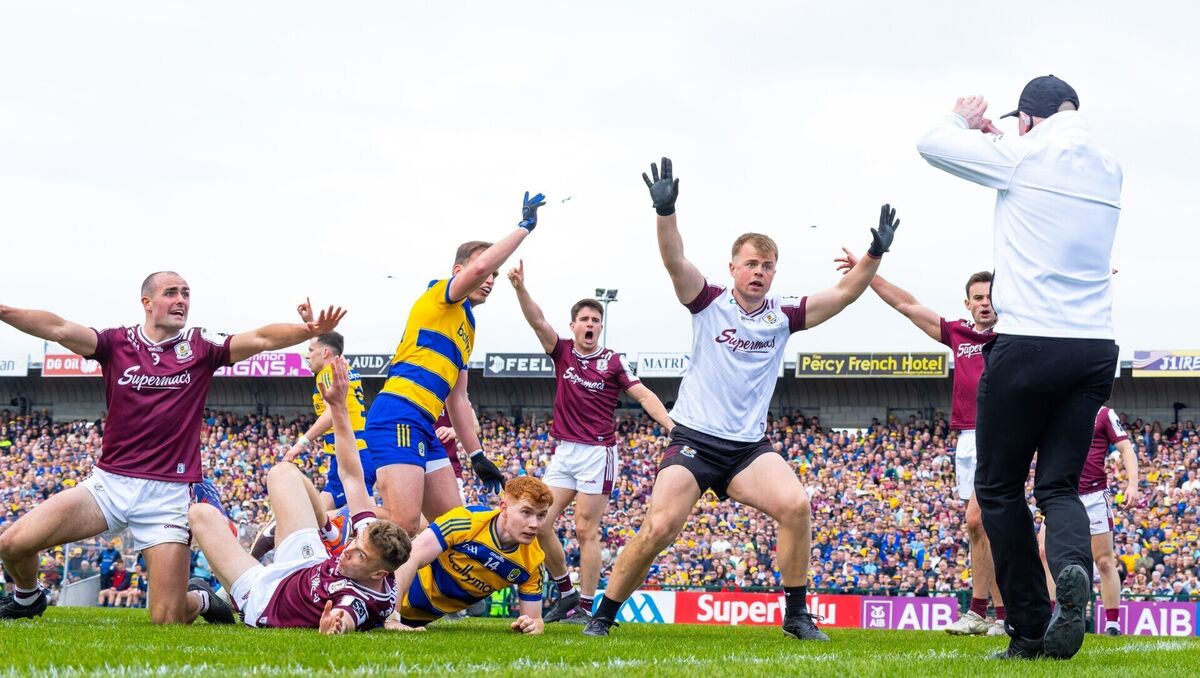
That Roscommon prevailed over a Galway team that scored 2-22 on the day and has contested two of the past four All-Ireland finals is testament to several parties.
First, yet again, the Football Review Committee chaired by Jim Gavin. Think of all the two-pointers we were served up on Sunday – 10 in all. If it wasn’t for the new rules rewarding such efforts with an extra point, would anyone other than Shane Walsh have taken on those shots? Would Roscommon’s remarkable late rally have been even possible without the existence of that arc?
But secondly, and most importantly, it is a credit to a Roscommon management led by Mark Dowd and tellingly coached by Gavin’s own right-hand man, Jason Sherlock.
Usually, a side of Roscommon’s profile dogs out a provincial final win. Think Clare in ’92, Leitrim in ’94, Westmeath in 2004, Sligo in 2007, Monaghan in 2013 and 2015; Tipp and Cavan in 2020: the most any of them coughed up in those final wins was 0-12.
Even the Rossies themselves when winning in 2001, 2010, 2017 and 2019 were contingent on holding their final opponents to 1-12 or less. On Sunday Galway scored a further 1-10 on top of that and still lost. Because this Roscommon team are geared to win shootouts, toe-to-toe, out in the open, no ambush required.
This summer over their three games they have racked up a remarkable tally of 10-68, 98 points in total, over three games, an average of 32.67 points per game. Only Armagh, with 100 points, have averaged or scored more – and they got the benefit of an extra 20 minutes for their game against Tyrone requiring extra time.
Shortly after Kevin McStay stepped down as the county manager after guiding the team to two Super 8 appearances, he identified in his book The Pressure Game the county’s then primary limitation.
“Skilful players, when they’re teenagers and younger men, never have to work hard enough on the physical side of their game. It’s been the big issue in Roscommon for as long as I have lived in the county, which is now almost 30 years… Two-thirds of our squad was not ready for the Super 8s. They hadn’t the bulk… Frees are a result of forward pressure. Roscommon did not have power. We did not have many direct line runners at all.”
Think of how direct they are in their running now, epitomised by Darragh Heneghan’s goal and reflective of the work they’ve done this past winter under the watch of former Kilkenny hurling S&C lead Mikey Comerford. They can cut through teams – top Division One teams like Galway and Mayo – point on the run, from range, whatever way you want or they need it.
Such style though is married with steel. After 20 minutes last Sunday they trailed 1-9 to 0-4. When Ryan O’Donoghue found the net in the semi-final, they trailed Mayo 1-8 to 1-3. On either occasion they could easily have thought – as they have before – that it wasn’t going to be their day.
But this seems to be their year. The minors also beat Galway in thrilling fashion, 3-12 to 1-17, in their final. The U20s then beat Mayo in extra-time in theirs, likewise, giving up 2-22 but scoring 5-16 themselves.
Sometimes a county gets on a roll like this, its various teams riding the crest of another. Wexford may not have won the 1996 hurling All-Ireland if their U21s hadn’t reached their final, just as those U21s probably wouldn’t have won Leinster if Liam Griffin’s charges hadn’t before them.
Since Gerry Lohan’s goal rocked the Hyde 25 years ago, Roscommon have made it to the last eight of the All-Ireland on seven occasions without ever making the last four. Donie Smyth, who retired this winter, recently said that was his biggest regret: that in all his years playing with the county, he never played in an All-Ireland semi-final.
But this could be his county’s year. An understated but key addition to the backroom team this year has been Richard Shanahan, a Dublin-based sport psychologist originally from Cork who in 2023 helped Monaghan reach an unlikely All-Ireland semi-final.
It’s a long time since the country has taken a team of Roscommon’s profile to their hearts. Malachy’s Monaghan commanded admiration more than affection while his native Fermanagh were more a one-summer wonder, as much as ’04 was a decade in the making.
But this Roscommon team with their running power and scoring power have the potential to both woo and wow us.
And have us all living in a Rossie wonderland.
CONNECT WITH US TODAY



Be the first to know the latest news and updates