Maurice Brosnan: Why Will O'Donoghue is central to Limerick system
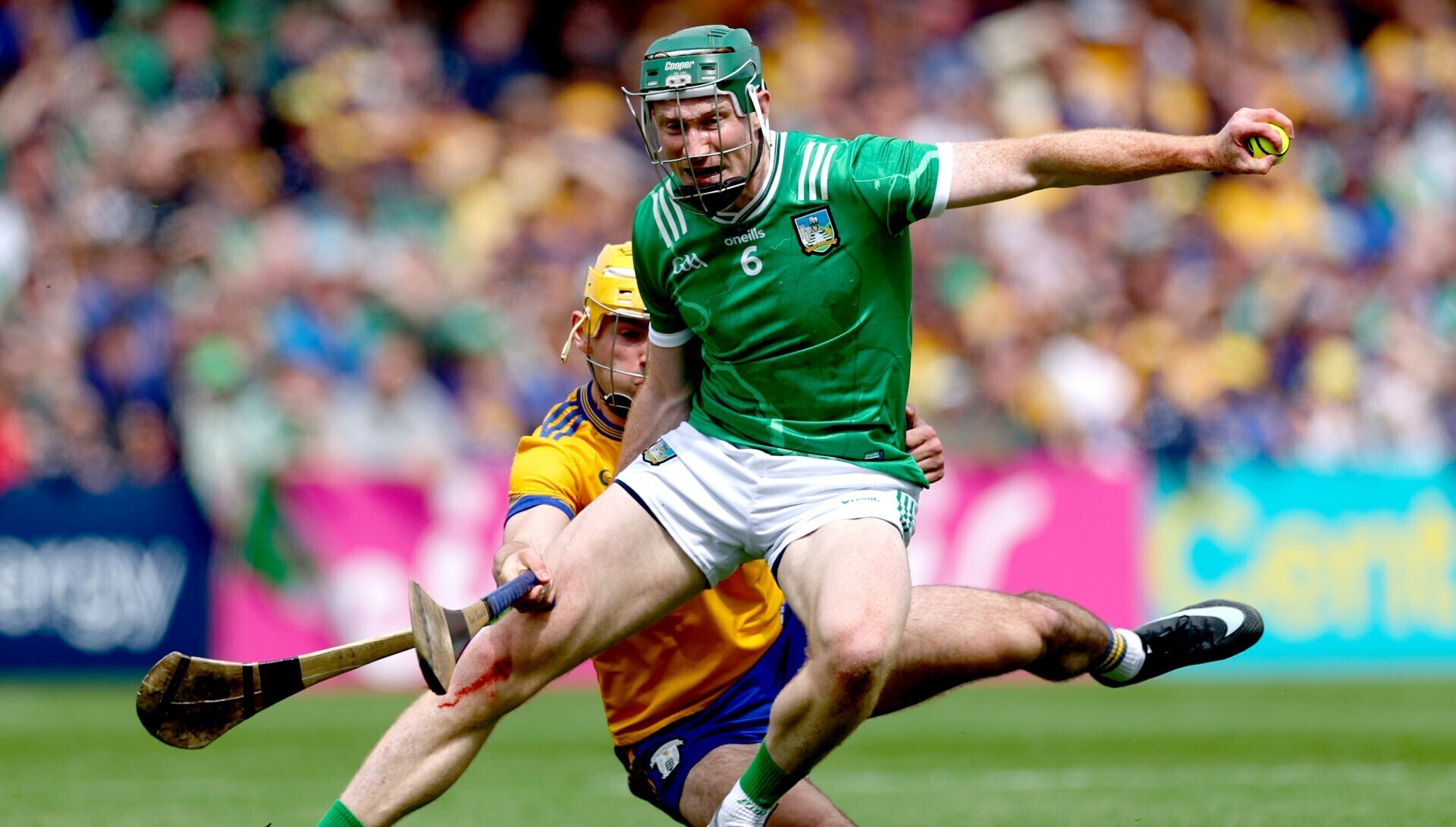
Centre-back Will O'Donoghue is a crucial component in the Limerick hurling machine. Pic: ©INPHO/James Crombie
The comparison is tiresome in so many ways but when it comes to discipline the disparity was noticeable: in the 2025 championship, Gaelic football saw four red cards. Hurling racked up 15.
Gaelic football is on course to eclipse that total, with Darragh McMullan (Armagh), Daire Cregg (Roscommon), and Liam Smith (Dublin) all sent to the line already, while hurling continues to bleed at a similar pace. What binds them both is that in 2026, to be reduced to 14 men is a heavy penalty.
Read More
The new rules and the eventual adjustment to ensure a team must maintain three players up even when down to 14 ensured that the punishment was absolute in that realm. To compete now with that sort of numerical mismatch is punishingly difficult.
In hurling, it is the new order that has precipitated this change. The game has become possession-oriented. Working the ball, short-stick passing, or hand-passing has led to a ruthless ability to pull a team apart. It is the same reason sweepers went out of fashion: it is harder to influence proceedings when the opposition refuses to pump the ball back to you.
That said, it’s not impossible either. Tipperary demonstrated that the extra defender still has its place in last year’s decider. As it happens, there is a legitimate case to be made that the four major hurling All-Irelands in 2025 were won by a team playing a sweeper (hurling and camogie, county and club). Several teams have succeeded while down to 14 in both codes recently, too.
Twelve months ago in these pages, we looked at how Cork resorted to all of the typical tactics to close out a game when down to 14 in the opening round clash with Clare. A lap of the posts to slow the puckout. Long to the same pod. A ruck. Force a throw-in. Force another throw-in. Start a row. Nothing worked.
Read More
They couldn’t stop the tide. It felt inevitable. And yet, another seismic red card came in that championship when Dublin’s Chris Crummey was sent off against Limerick after just 15 minutes. After that game, John Kiely explained how they attempted to leverage the numerical advantage.
“We used the extra man in a typical way that any team would, we had three-versus-two in the inside line, 99% of teams would do something similar," he said.
"We have no qualms about that, that's not a concern for me right now. Ultimately we were just not 100% sharp on the ball, we turned over balls we shouldn't have.”
Their extra body was in the full-back line, which made it man-on-man everywhere else. Interestingly, when Kilkenny’s John Donnelly was sent off against Galway, the Tribesmen opted not to do that.
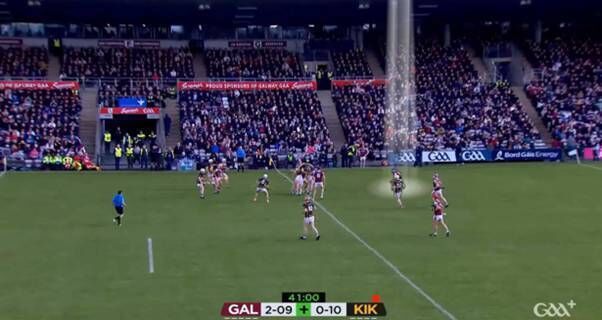
In their Leinster SHC opening round meeting, Galway left their extra body in the middle around the contest.
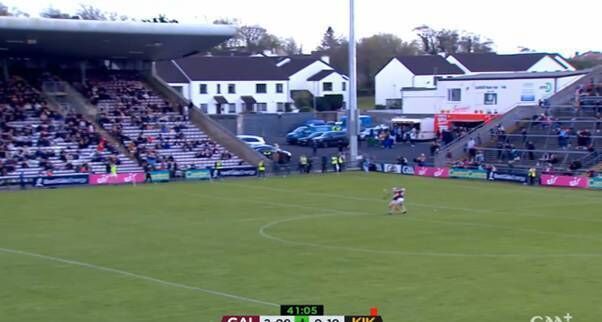
As a result, it was still man-on-man close to goal.
They did so for two primary reasons. The first is a fundamental trust in Daithí Burke’s ability to hold his own without any scaffolding or protection. As well as that, coach Franny Forde has meticulously crafted a new playing style as they’ve pivoted decisively towards a running game. This expansive approach allowed them to exploit the extra space in the middle.
Here are eight observations from the hurling championship.
Midway through the first half of Clare versus Limerick on RTÉ’s live broadcast, commentator Marty Morrissey missed the call. “Long puckout by Nickie Quaid.” That wasn’t what actually happened.
Clare’s Mark Rodgers had pointed and within seven seconds, Quaid had the fast restart away. He actually called for a sliotar from the umpire beside the post, who fished one out of his pocket and popped it to him.
Quaid fed Barry Nash who looked up the field and saw four Limerick forwards marked by four Clare defenders in the opposition half. He fired a ball up the line.
It was here where Limerick benefited from a well-drilled strategy. Two inside players made the same run towards the same line. It is something they have done repeatedly, including in the league against Cork earlier this year. Shane O’Brien benefited in a similar way.
GOAL 🔥
— The GAA (@officialgaa) March 7, 2026
A super start for @LimerickCLG as Shane O'Brien buries it !#AllianzLeagues #LIMvCOR pic.twitter.com/HnHyq2Oyfi
In this case, O’Brien was out in front and Aidan O’Connor trailed behind. O’Connor then popped it to O’Brien who raced away from Adam Hogan until he was brought down for a black card and penalty.
While there has been much justified criticism of Clare’s structure on Sunday, in this case they were still reasonably well set to defend O’Brien’s run. Wing-backs Diarmuid Ryan and Cathal Malone had dropped back to cover the goalmouth. The only thing Hogan couldn’t afford to do was bring him down. He made the fatal error.
There is a gaping difference between a pull-back and pull-down, as Tony Kelly learned later on. How you foul matters as much as whether you do.
Speaking last month, Cork defender Robert Downey stressed the importance of optics when it comes to discipline.
“The picture you are presenting to a referee is definitely something you can improve. I’m sure it is being worked on in every intercounty team across hurling and football because the tackle technique is something referees hone in on.”
Picking the most important player in this Limerick juggernaut is a bit like splitting hairs. Every time you look, another candidate pops up. Lynch the orchestrator. Gillane the finisher. Quaid the quarterback.
The reality is that John Kiely and Paul Kinnerk’s philosophy is about the system rather than any isolated individual. A crucial component within that machine is Will O’Donoghue.
Watching a Limerick game from behind the goal is a revelatory experience. The amount of communicating, organising, and covering O’Donoghue does is staggering. From the throw-in on Sunday, chaos reigned. Darragh O’Donovan broke his hurl. Diarmaid Byrnes immediately went long. Limerick were turned over. Clare were turned over. Limerick were turned over. Clare scored.
The Na Piarsaigh man was a critical anchor in all of that. He covered his man David Reidy until the danger moved close to goal, then he doubled back to the square. Thanks to that positioning, Shane O’Donnell’s turnover deep in Limerick’s half did not lead to a goal chance.
Just before half-time, O’Donoghue raced with Reidy to the sideline only to slip. Somehow, he managed to still flick the ball away. Clare were able to regather it and Mark Rodgers was able to race in on goal. Once more, it was striking how Limerick manned the centre and left players on the far side free to do so. Even still, it should have been a penalty for a jersey pull.
That central protection is a foundational part of their invincibility. O’Donoghue is integral to it.
Former Mayo manager James Horan, now of this parish’s Gaelic football podcast, is fond of stressing a particular point. A post-match press conference is about the message you are sending to your players, not the media. In that regard, John Kiely’s opening answer last weekend when asked about the absence of Lynch and Gillane was revealing.
“Listen, it is not about those guys. They would be the first to put their hands up. If we are depending on two guys, we are at nothing. The collective as a whole really responded well to our defeat last week on and off the pitch.”
In their last three games, Clare have had a total of 115 shots.
In their last three games, Clare have conceded a total of 110 shots.
On Sunday, Clare had 38 shots to Limerick’s 42. The expected score was a Clare one point win.
They lost by 15.
GAA+ year two, a flash review.
The GAA’s in-house broadcaster may have drawn understandable flak for their handling of this week’s Gaelic football draw, in particular, the advertised timing of it, but elsewhere, their technical innovations should be welcomed.
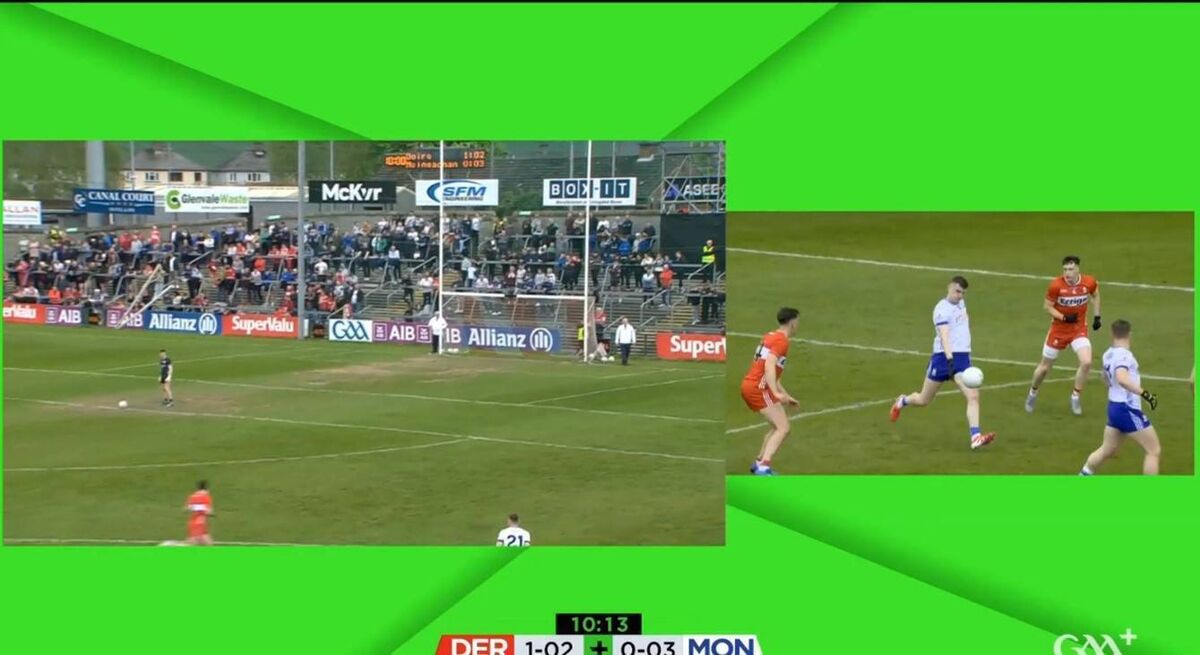
The use of a split screen for replays to capture the tactical urgency of kickouts and puckouts is inspired. One small quibble would be for them to use it even more routinely.
The roster of pundits is extremely strong now, while the deployment of two co-commentators last week for the Westmeath and Kildare SFC semi-final was superb.
Before Kilkenny played Wexford in the Leinster SHC, the broadcast panel gathered on the field. Clare’s All-Ireland winner Podge Collins noticed TJ Reid heading down the tunnel with the physio before the clash, but he was interrupted while relaying it.
“Every day. He does it every day,” stressed Richie Hogan. “He’ll be fine.” Reid went on to become the championship’s leading scorer.
The pre-game breakdown involving Eoin Cadogan and Seamus Hickey for that clash was sensational, a superb coaching clip for anyone so inclined. It started with a discussion about target men like Lee Chin or TJ Reid and evolved into a breakdown of the body positioning required to shackle them. From a side-on starting position to ensuring that the defender's back is between the goal and the ball.
Cadogan broke down the calls he shared with his goalkeeper, whether to “play it” (let the ball run through) or “stop it” (get it to ground). Hickey recalled from experience the danger of leaving a hurl in front of Reid, because of his freakish strength and tendency to bat it away as a delivery arrives.
On the topic of right ideas, it is heartening to see the Friends of Dublin Hurling are running a supporters’ bus to Saturday evening's game against Wexford. It comes after Leinster GAA last month announced a comprehensive range of new ticket offerings.
The hits keep on coming.
On this week’s podcast, former Antrim star Liam Watson let rip.
“A blind man would see what we are at the minute,” he said.
“Players are not happy. Confidence is at an all-time low. Everybody has seen the players report (threatening) strike coming out, which is wrong. I don’t agree with it. There is ways to go around it.
“Look what happened to Cork, they went into turmoil for a good few years after that happened. I just think the whole thing is in turmoil and I can’t understand how Davy Fitzgerald is still in a job.”
On the Sunday Game this week, another stalwart called for action.
“At the end of this, there has to be a serious review of all aspects of Antrim hurling,” said Neil McManus.
“How we manage our county, how we pick who is going to be in charge of our groups and the development. We have Gregory O’Kane who has put together a great plan for hurling development within the county. He is not receiving the support he needs to drive that forward.”
In a week that should be buoyed by the news that the county is planning further developments at its Dunsilly training base — with terracing, a floodlit 4G pitch, and a training pitch part of the next phase — the atmosphere remains toxic. Sunday's clash with last year's Christy Ring Cup winners London is a critical one.
Next month, a team of volunteers will make a 100km+ walk from either Páirc Uí Chaoimh to the TUS Gaelic Grounds/Semple Stadium or TUS Gaelic Grounds/Semple Stadium to Páirc Uí Chaoimh. It follows the route of the Munster SHC final and will finish on the morning of the decider. The event is in memory of Stephen Carroll-Roche and all proceeds raised will go directly to Cork Penny Dinners.
Donations can be made on idonate.ie.
CONNECT WITH US TODAY



Be the first to know the latest news and updates