Hurling observations: Tipp v Cork endgame shows thin line between risk and reward
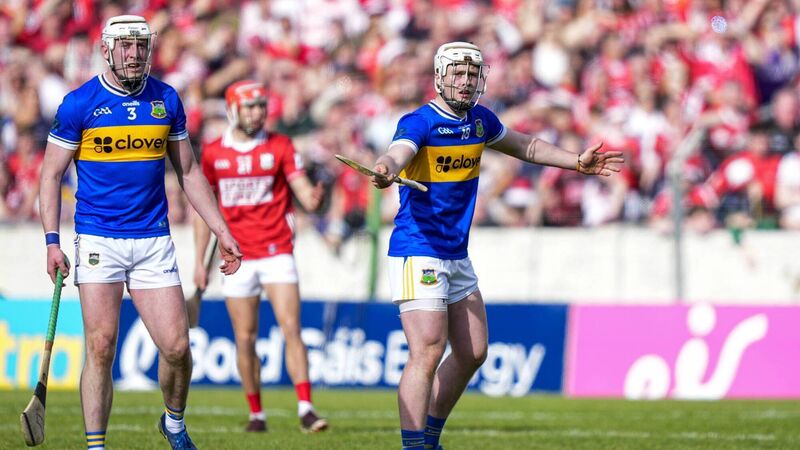
Tipperary had a dilemma with a late free in their Munster SHC defeat to Cork. Pic: ©INPHO/James Lawlor
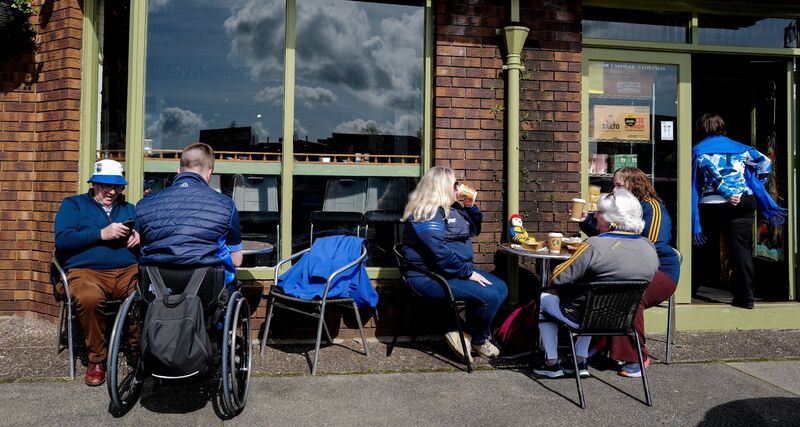
“Where’d ya go beforehand?” The eternal preamble of the giddy fan. When it comes to Ennis, the wonder is its lack of a straight line even if all roads eventually converge. There are all kinds of fitting preludes before the only show in town.
A crowd of 18,338 flocked to Zimmer Biomet Páirc Chíosóg, as it is now known, for the opening salvo of the Munster championship. They colonised the town first in a burst of colour and anticipation. When it comes to this matchday ritual, there are few places better equipped.
“Rodgers is out. Didja hear about TK?” Talk of Tadhg de Búrca’s injury troubles. All kinds of idle chatter with an unspoken acknowledgement that’s all it is. In the stadium, that speculative chat unspooled to the soundtrack of The Circus Ponies, who fittingly set the tempo with a Cardigans classic: My Favourite Game.
The turn at the motorway even has a Supermac’s now and it was rammed. From the moment you arrive at the ground’s car park, guarded like the vaults at Fort Knox, the sensory load is overwhelming. A nonstop thrum throughout the day. That evening, when the stands are vacated and the last few scribes are still typing away, the sound of music drifts over the wall while intermittent cheers filter through it. Hard to decipher if they were celebrating a score in the Tipperary versus Cork game, the Manchester City versus Arsenal game or just life itself.
Read More
Before, the mood was one of expectation. When it was announced that Shane O’Donnell would start, the roar in the shed rattled the roof, not for the first time. The sight of Brian Lohan prowling and barking his way around the blue and gold only stoked the fever.
Every great GAA town shares the innate ability to communicate its own sense of importance. Clones and Killarney have that imperial way of making it clear that great things have gone before and great things are destined to come again. They are privileged to host the game, but the game is honoured to take place in their rich company. Somehow, in the mind’s eye, the weather always seems to be in service of the drama.
Sunday was raucous. Despite diligent bag searches outside the entrance, a flare still managed to make its way in and ignite in the cloister end as referee Shane Hynes fired in the ball. He was momentarily delayed in doing so because instead of the typical four players standing in front of him to compete for the throw-in, he had six. Everyone in the vicinity was ready to run wild.
Such feelings and occasions are worth savouring. There is currently jaded talk about ticket prices or the season length or competition structures because this is the GAA and there is always talk of ticket prices and season length and competition structures. Do not lose sight of the fact that these are glory days.
The Munster hurling championship, in particular, has always brokered in mythology and romance. And somehow, none of it feels manufactured. It is all of this phenomenal noise that elevates our game.
Here are eight observations from the hurling championship.
As Cork sought to protect their advantage in the final minutes, Mark Coleman dropped back permanently to the edge of the square. Tipperary desperately needed to close a four-point gap. A late attack saw Hugh O’Connor booked for a pullback and the home outfit awarded a free, just outside the 20m line.
Eoghan Connolly immediately grabbed the ball. They then turned to the sideline to check what they should do.
This is the central question: It is in the final minute (Darragh McCarthy hit the free with 73:30 on the clock) with the score 1-21 to 0-28. Do you go for a goal or a point from the free?
It is not a simple decision. Score difference could be a crucial factor in the round-robin, so Tipperary had to be mindful of that. At the same time, are they likely to get another clear shot on goal in the final 20 seconds? Hardly. In which case, their best path to victory may have been going for goal, hoping to score and win the final puckout to force a late equaliser.
Read More
Then comes the second question. With 73:50 on the clock and three points up, what should Cork do with the puckout? More pointedly, should Patrick Collins go long or simply send the ball into the stand, press the sideline and bleed some time?
Again, these things are rarely as straightforward as they appear on a Wednesday morning. Cork won the puckout and the free, which would seem to vindicate their decision-making. Analysis shouldn’t be solely outcome-based, either. Had Tipperary won the restart, it would take a brave referee in Thurles to not afford them at least one more opportunity to force an equaliser.
These are the critical calls and scenarios management spend countless hours discussing. So much of these conversations surround the endgame. Do you opt to protect the lead or attack it? Where is the line between cuteness and cynicism?
Equally, there is a dignity in keeping things simple. As we watched the closing exchanges in the Ennis press box, a former inter-county hurler overheard our suggestion that Collins would put the final puckout into the Ardan O'Riain and scoffed.
“You can’t score from the stand.”
At the start of another immensely enjoyable episode of this parish’s Dalo's Hurling Show, Limerick’s TJ Ryan returned to a familiar theme.
“My bugbear is, when you are at home, the translation of the formation, the setup, who is picking up who was shockingly poor,” he said of the televised games on Sunday.
This sort of grievance is a familiar complaint for a significant portion of GAA fans. The reality is that portion isn’t significant enough. As long as the appeal to the wider casual fan holds, those sorts of nuances are not a priority. There is no doubt every broadcaster has the resources and intellect to analyse them if they wanted, but they clearly don’t.
It should be said, pundits are further hamstrung by not being in the ground. It was clear to everyone in Ennis on Sunday that Adam Hogan had been cut after the clash with Stephen Bennett and was leaving the field to receive lengthy treatment, but that particular incident looks different on screen. The same is true for shape or structure. So much is missed in the current broadcasting style. That is why coaches put such a premium on behind-the-goal views.
For example, why did Cork not go long when it became clear Tipperary were not deploying a sweeper last Sunday? Well, because they set up in a way that would have made it difficult to do so.
Frequently, Cork dropped seven defenders into their own half on their puckout. It meant they had to work the ball out as Tipperary had an extra man on the other side of the pitch. Whether it was the right or wrong approach is of course debatable, but it set the terms for what followed. Cork chose this.
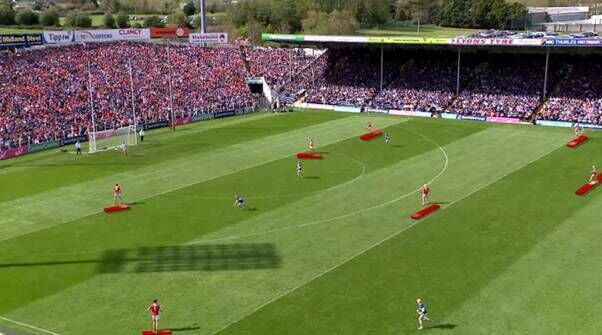
Doing so allowed Patrick Collins to split his restarts equally between short and long, 14 each. In the end, they scored 0-9 from their puckout and conceded just 0-2.
Manager Brian Lohan knew it was coming. He pre-emptively said post-match that he knew his side would get criticised for what they conceded against Waterford. It was four goals in total, but it just as easily could have been six with Aaron O’Neill’s inability to find Dessie Hutchinson with a late handpass squandering a goal chance and Éibhear Quilligan doing well to deny Patrick Curran as well.
Read More
A hat-tip to Ed Donnelly for a telling nugget in the superb match programme as well. “Clare have conceded 13 goals in nine games, recording two clean sheets,” he wrote. “No other Munster county conceded more than nine goals in their campaign to date.” Now 17 and counting.
One man’s free is another’s feck off ref. No one would doubt the talent of Lee Chin. But his treatment on Saturday divided opinion.
Kildare manager Brian Dowling thought the frees “were immensely soft.” Wexford manager Keith Rossiter argued there was a lot of off-the-ball stuff and “he was fouled five or six times.” Chin hit 1-12, including nine frees and a 65, from 19 shots in St Conleths Park. It was a towering individual display only bettered by Stephen Bennett’s 3-12 from 16 shots on Sunday.
After 41 minutes, Mark Fanning collected a loose ball under pressure. Chin came looking for it and collected possession on the wing. On one hand, there was a man on his back. On the other, he used his hurley to push him off. It could have been a fair either way yet the physicality felt fair.
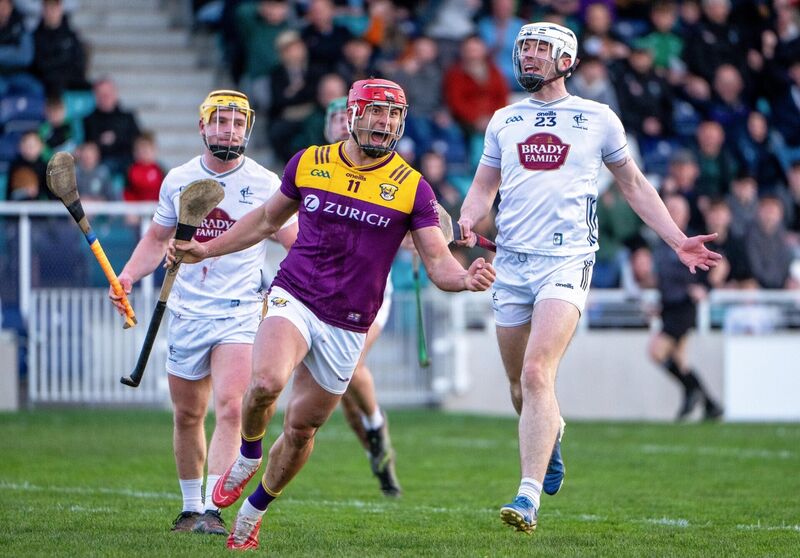
Chin managed to get up the field in support and almost hit a spectacular score. However, Liam O’Reilly did brilliantly to stay with him, apply pressure and attempt a hook. That led to a short shot. It summed up what was a hard-fought encounter.
When Daire Guerin was shown a yellow card by referee Micheál Kennedy minutes later for an obvious chop, there were howls of protest from the home support. Chin missed the subsequent free and Kildare were awarded a free from the resulting puckout, which was greeted with ironic celebrations from the terrace.
Who’d be a referee?
It happens almost every year. The annual tanking.
Since the inception of the round-robin format, the opening round of the Leinster hurling championship has always featured at least one heavy defeat. Galway beat Offaly by 12 points back in 2018. What undid them in 2019 was not beating Carlow by enough, the six-point margin denying them a place in the top three on score difference.
In 2022, Kilkenny hammered Westmeath by 16 points. A year later, the gap was 22 points. They beat Antrim by a remarkable 32 points in 2024. The difference between Galway and Kilkenny last year was 12.
In six iterations, Kilkenny have won their opening game with only Dublin troubling them. The final score in 2018 was 1-24 to 3-16.
The trend of a one-sided opener continued but the trend of Kilkenny wins did not. The 15-point difference, their biggest Leinster championship defeat since 1990, was the biggest beating of the weekend.
In the league, Galway averaged the most shots per game with 42. That trend continued on Saturday as they hit 41.
Their new fast-moving style with constant runners off the shoulder and flooding numbers in the middle has been a huge success so far. It is a nightmare to play against, particularly if you are down to 14 men as Kilkenny were after Mikey Carey’s black card and John Donnelly’s eventual red.
Such precise passing and movement is a hallmark of Franny Forde’s coaching. They maximise every possession and punish any lapse by the opposition. Galway scored a remarkable 3-12 from turnovers last weekend. Their opening score was a perfect example: one short shot saw them string together seven short passes, with Padraic Mannion involved at the start and end to eventually notch their opening point.
Throughout the Division 2 league campaign, Tommy Fitzgerald was at pains to stress Laois were operating at an inferior level. They had to be ready for what was coming down the tracks.
They lost out to Carlow 4-17 to 1-17 in the opening round of the Joe McDonagh Cup. It leaves them with a massive encounter with Antrim in the next round.
Fitzgerald clearly was trying to make a point to his players. However, after a question in the post-match about how Carlow were “bullying” Laois, he made a call to the county’s public.
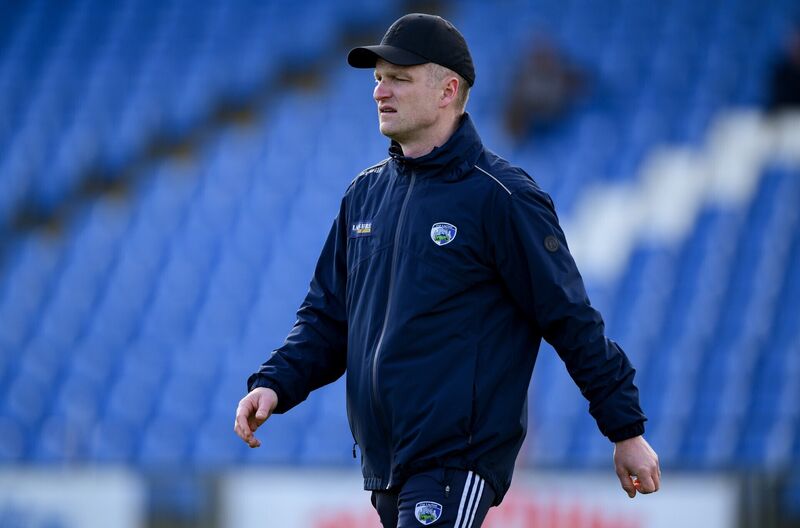
“Look, we are aware of where our strengths are and where our work-ons are,” he told Midlands 103. “They are good lads. They come in every evening and give us their all. It is really, really important that the Laois hurling public, we have to get behind these lads next week.
“We can’t go into a blame game or go into selves. Everyone is disappointed. No one went out to get that performance or that result today. These are good lads and they really love playing for Laois, they care about the jersey. They know that they let themselves down today. As a group, we did in terms of performance levels. We need to all pull together now. It is all on the line next Saturday.”
We’ll keep banging this drum as it is a feat worth acknowledging. Last Sunday, TJ Reid was terrific for Kilkenny, firing 1-8, including a penalty and seven frees. Should he hit a similar total again, he will surpass Patrick Horgan and become the championship's all-time leading scorer.
The Cork star retired with 23-683 (779) to his name. After a fierce back-and-forth with Reid, this time he will have no answering response. Reid’s total is currently 40-649 (769). The 37-year-old remains central to Kilkenny’s attack. As they prepare to face Wexford, the need for him to fire is as pressing as ever.
What a thing.
CONNECT WITH US TODAY



Be the first to know the latest news and updates