Maurice Brosnan: Bravery in Croke Park is understanding the risk and doing it anyway
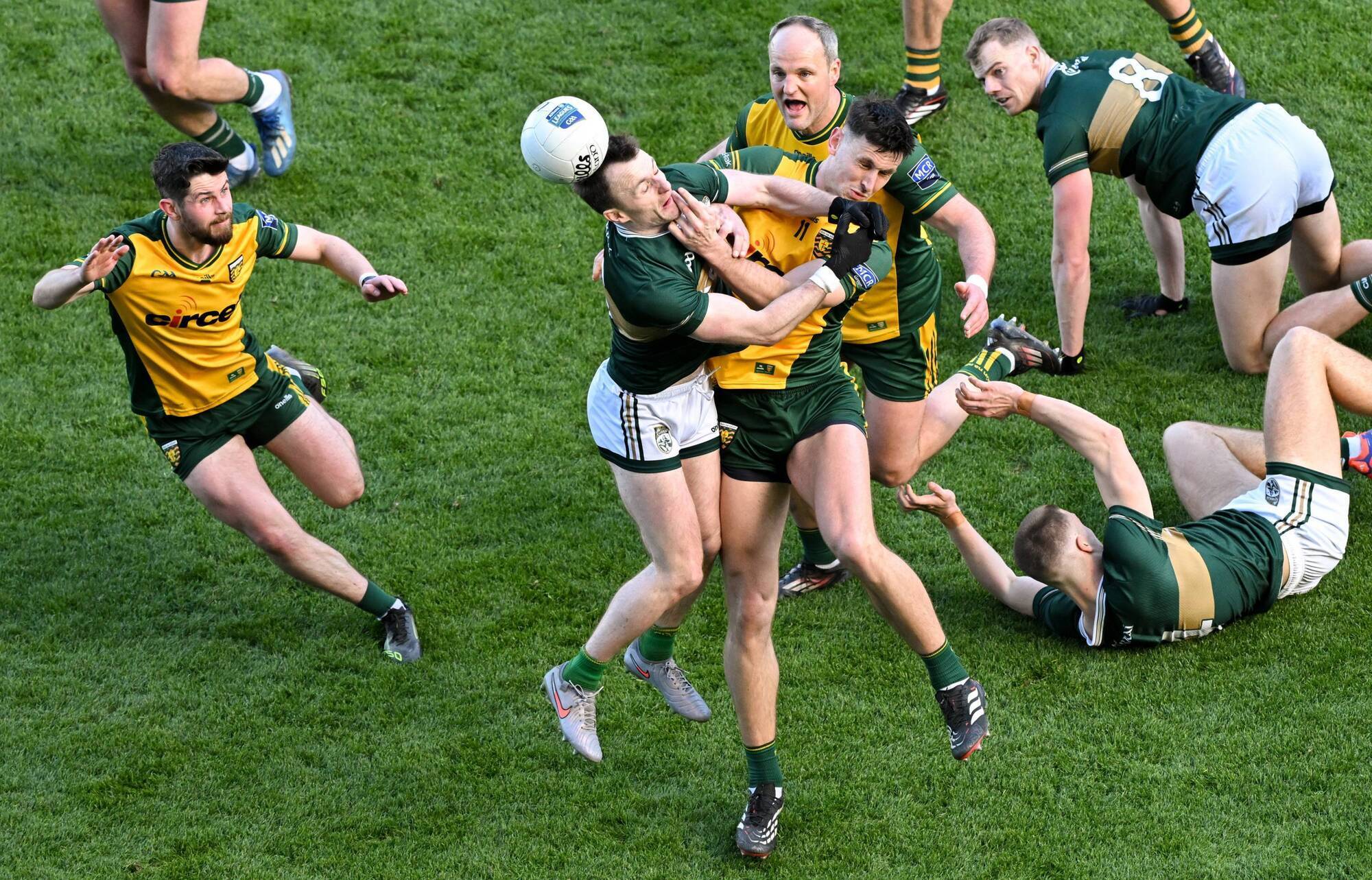
Michael Langan of Donegal and Tom O'Sullivan of Kerry collide during the Allianz Football League Division 1 final match between Kerry and Donegal at Croke Park in Dublin. Photo by Ramsey Cardy/Sportsfile
The annals of history have shown that the difference between bravery and stupidity can be determined by a confluence of factors. Croke Park saw the entire range of them, from calculated risk to impulsivity, as well as the singular factor most likely to determine the verdict: outcome.
There were 20 minutes left in the Division 2 final when Meath's James Conlon tapped over in what would become a remarkable substitution impact. His left-footed effort came after a rapid breakaway, with creative force Ciaran Caulfield eventually putting it on a plate. That score made it a one-point game. Meath wanted more.
Referee Brendan Griffin made for the 45-metre line. It was there that Stephen Sherlock brought down Ronan Ryan during the counter-attack. The Barrs man was sensational, kicking nine points from 11 shots to subject Séamus Lavin to an early substitution in the first half. Here, his new marker took full advantage of an opportunity to pull him the other way. Meath finished out the play with an advantage. They elected to spurn the one-point on the board and go for two instead. Sean Brennan strode forward, loomed over the placed ball and hooked it wide.
In isolation, it looked like a reckless gamble. A bird in the hand is worth two in the bush and all that good stuff. In context, though, the call made sense. Patrick Doyle’s kickout was under relentless pressure. Meath won over 50%. They just needed to make sure this effort went dead at a minimum. Two-pointers have been a potent source for them throughout the league and that ploy wasn’t going to stop now. They ended up kicking four compared to Cork’s one. You have to spin the wheel if you want to win the prize.
What would that call look like if Meath lost the one-score match? Just imagine. The central point is that Robbie Brennan and his management team are an incredibly intelligent unit that studies the odds and the technicalities. That is most clear in their management of the end-game which, time and time again, has been completely clinical.
Gaelic football has a complicated relationship with bravery. Too often, the term is used when the line between it and stupidity is blurred. Boot the ball in even if the defence is well set. Buckle up and play through needless pain even if it has long-term implications. Bash yourself against the rocks in the name of honesty.
The bold and the brave in HQ this weekend were the ones who were fully aware of how their wager could perish and did it anyway. The likes of Wexford looked at their half-time analysis and accepted that if the game continued in the same pattern, they would lose the overwhelming majority of the time. A seismic change was required.
They went ultra-aggressive with a kickout press, having been carved open early on by the gutsy Ronan Burns, they threw themselves on loose balls they had no right to win, they pursued goals in a bid to outdo Down’s efficiency. None of this was out of romance; this was cold necessity. They had to go for broke, even if it risked lethal exposure. It so nearly paid off.
Conlon’s last act was the latest instalment in a long list of Royal end-game exhibitions. Consider how they worked the clock at the end of the All-Ireland quarter-final triumph over Galway last year or the way they closed out the win over Derry in the opening round of the league.
With the clock ticking down, the forward duly accepted a black card in order to slow down any Cork attempt at creating an equaliser. Those who believe teams should rise above such gamesmanship fail to grasp the fundamental reality of the gig. Teams push the boundaries in all manner of ways; the game is rooted in the theories of economics just as much as any theory of sport. Play the percentages and do what it takes to win.
The onus to ensure there is no reward for that is on the rulemakers. Three of these finals demonstrated how they have failed in that pursuit. Time is a precious commodity in any sport and foisting the hooter system on Division 4 sides who hadn’t previously operated under it was unreasonable.
The recent hooter change was seemingly prompted by David Clifford’s awesome two-pointer just before half-time in the All-Ireland final. Down demonstrated that the situation will still occur in the current iteration and, more pointedly, that it can actively reward cynical fouling, precisely as was warned before the alteration anyway. It should not have taken this underwhelming finale to show that this version should not have been adopted. To make the change was foolish. To not fix it now? Unimaginable.
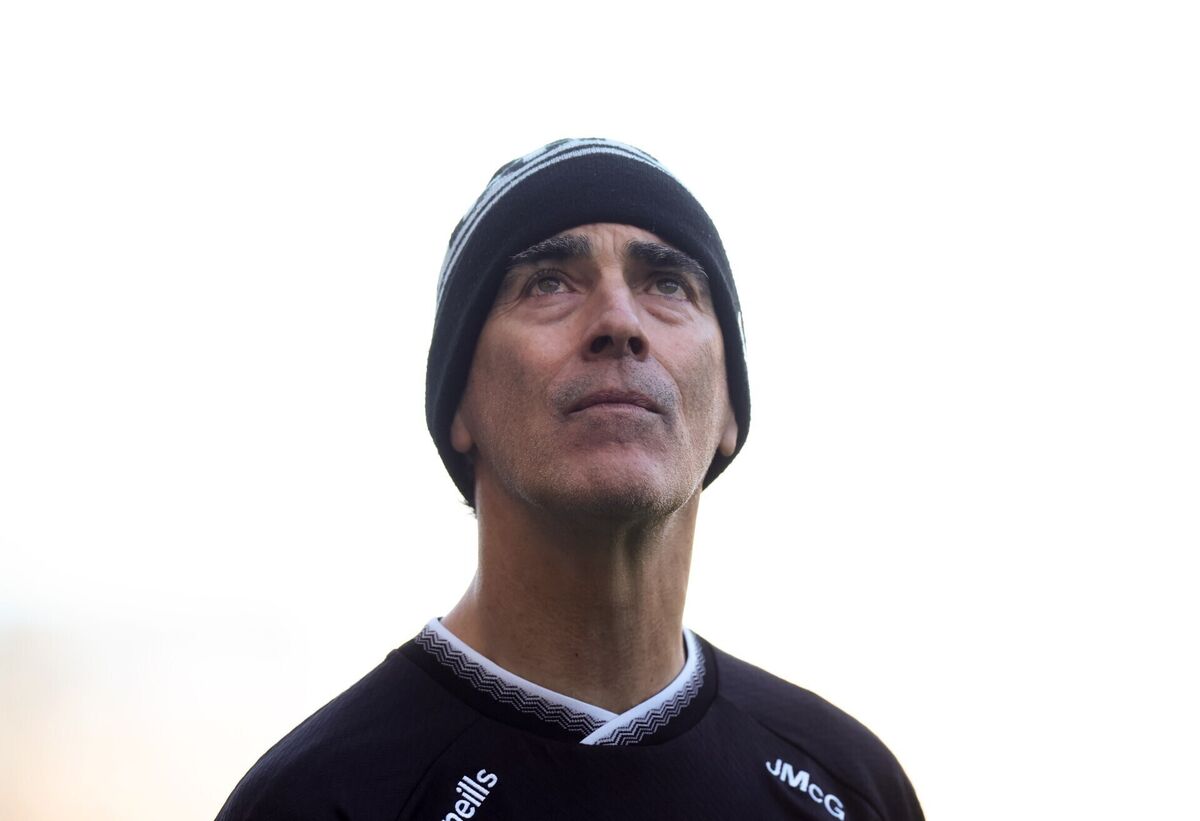
As for Jim McGuinness: a 13-point drumming scarcely suggests courage was a necessary component, but just look at the swath of gambles he made before throw-in: Finnbarr Roarty came out of the starting team having played for the U20s midweek. Caolan McColgan marked David Clifford instead of Brendan McCole, as anticipated. Jason McGee and Hugh McFadden started, bolstering their bulk in centrefield.
To cut off Kerry’s short restarts, a zonal four choked off the arc. Their two-point investment continued as they landed four in Croke Park. At times they do so by bringing out their goalkeeper to mark a Kerry forward so a defender was free further out the field.
There is an obvious danger that any number of these changes could backfire. Bravery is understanding that and doing it anyway. That willingness to trust the evidence of your preparation. In the media room beneath the Hogan Stand, Jim McGuinness sat with quiet relish until he was asked about the sense of satisfaction that comes when a bold move like that comes off. He fixed his typical intense eye contact on the speaker. He nodded. He laughed.
“What you are saying is if it doesn’t work, it is a disaster? That is the other side of the coin, you know.”
That’s sport. The messy and convoluted core of it. We are in the industry of residing up in Level Seven and assigning loose judgments of daring or folly to various acts. Where is the line? It would have been unwise had Donegal set up exactly like they did in last year’s decider here. It would have been equally unwise if Wexford had continued to play as they did in the first half. One won. The other lost. They were both brave. How it concluded shouldn’t diminish that truth.
CONNECT WITH US TODAY



Be the first to know the latest news and updates