How Ger Loughnane kickstarted our Laochra Gael passion
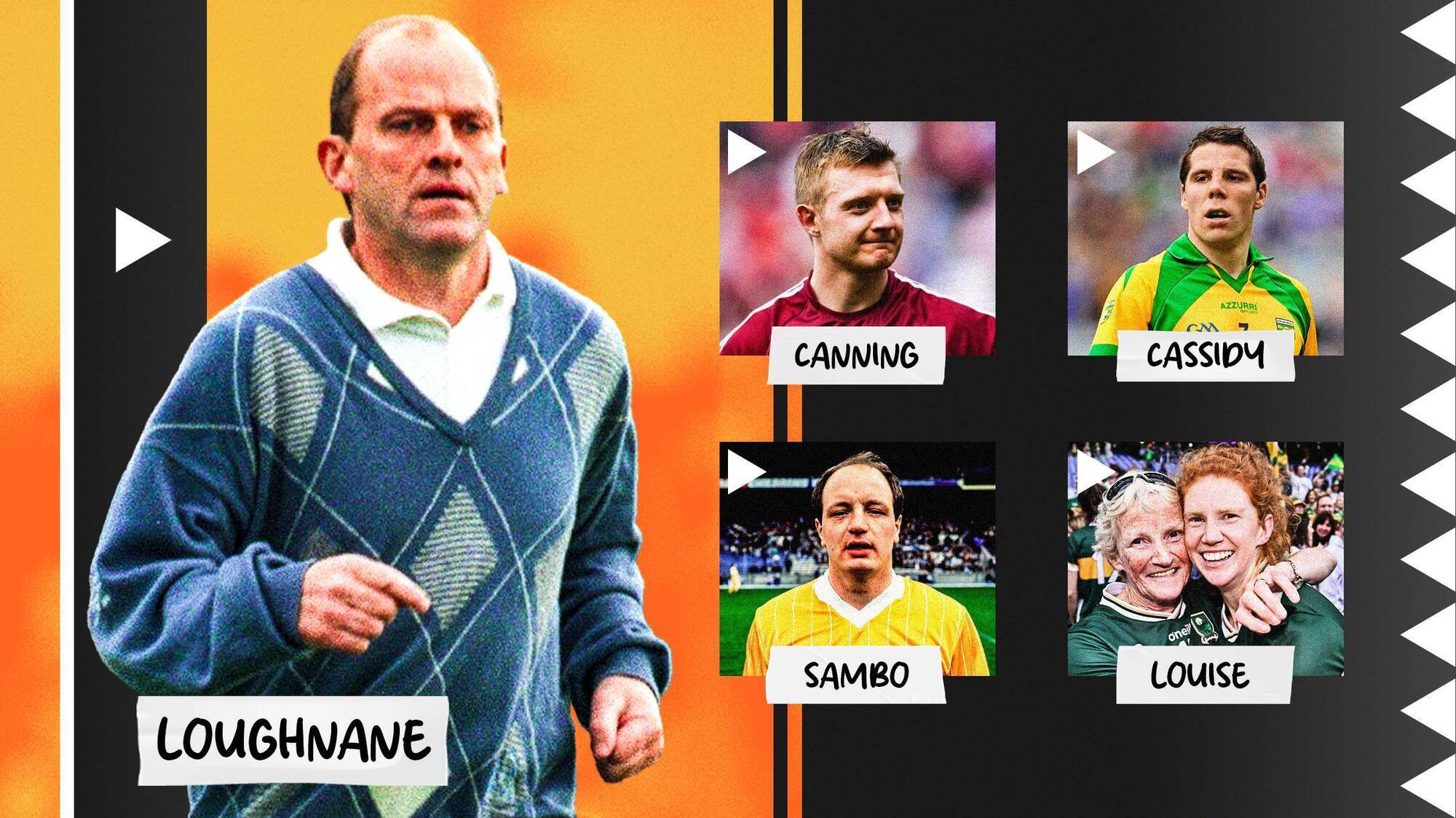
Laochra Gael, still a firm favourite after 25 years
THE FIRST episode of Laochra Gael aired on TG4 25 years ago this year, on May 28th, 2001. The subject and star of the opening show was the legendary Clare hurling manager Ger Loughnane, and the man himself uttered those striking words above in his very first anecdote.
You see, Loughnane was a supporter in the stand at the Gaelic Grounds in 1993 the day Tipperary destroyed Clare by 18 points in the Munster final. When Nicky English tapped over another easy score late on, the Tipp forward could be seen beaming broadly from ear to ear. Though English would later say he was smiling at a team-mate, Loughnane took it as an insult and vowed to exact revenge, as he outlined (as Gaeilge and in his own inimitable way) in Season 1 Episode 1 of Laochra Gael.
As introductions to new TV programmes go, this was gripping stuff. By the time the great Mícheál Ó Muircheartaigh came in as the programme’s first talking head, remote controls all over Ireland were placed firmly back on armrests, and that’s where they stayed for the duration.
And we haven't switched off since.
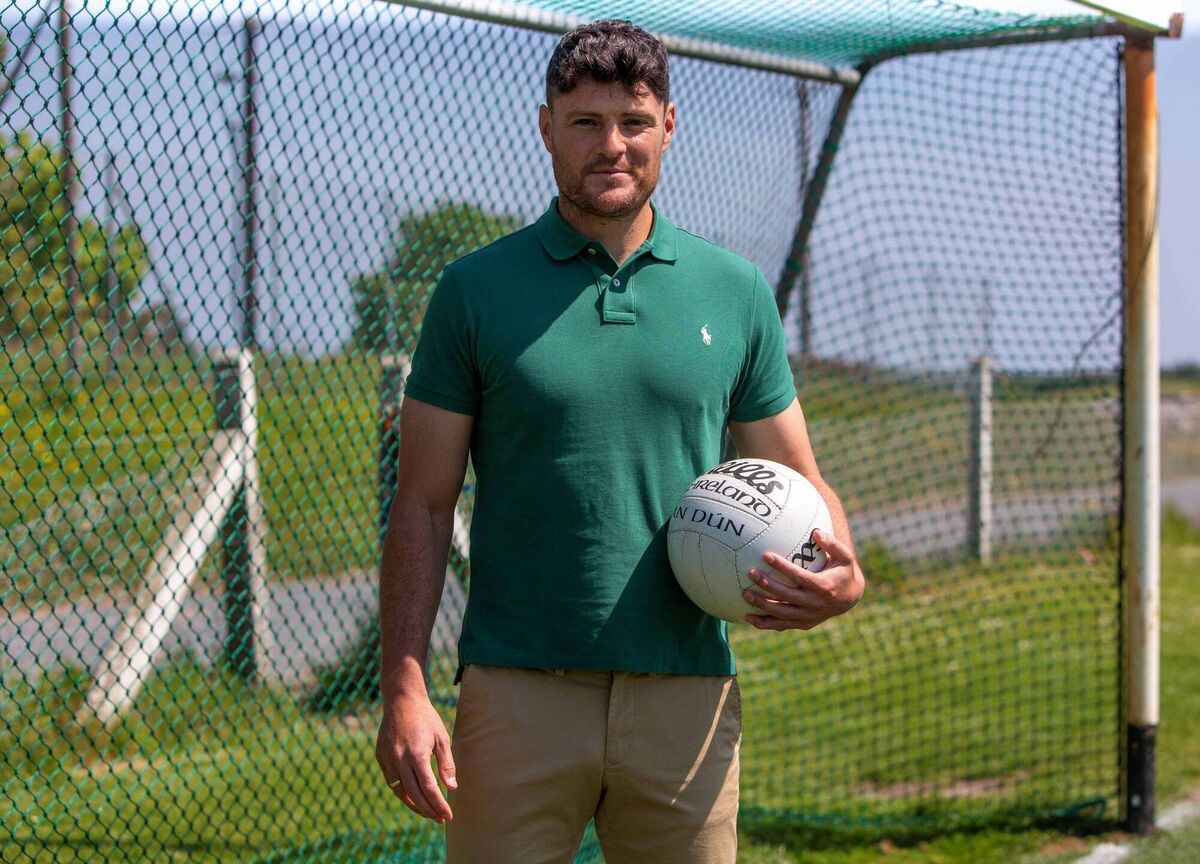
The 2026 season of the ever-popular Gaelic games documentary programme is already underway on TG4. Over the course of ten episodes, viewers will get an insight into the careers and lives of ten great football, hurling and camogie figures, including Conor McManus, Cyril Farrell and Louise Ní Mhuircheartaigh.
As the nation prepares to get stuck into another series, the show’s creator Irial Mac Murchú reflects fondly on the early days, particularly Loughnane’s Laochra Gael, which ranks as his own personal favourite out of all 209 episodes (and counting).
Mac Murchú is the owner and CEO of Nemeton, the Waterford Gaeltacht based production company that has supplied sports coverage to TG4 (then TnaG) since 1996. Nemeton, incidentally, is an ancient Celtic word meaning ‘sacred place’ or ‘sanctuary’.
“Loughnane was the highest profile GAA personality in the country at the time,” Mac Murchú explains. “He’s an Irish speaker (only Gaeilgeoirs featured in the first series) and he was happy to do it. We set out to make half-hour programmes but when we went to film with Loughnane, he gave us so much stuff that we went back to TG4 and said, ‘Listen, we’re going to give you an hour – we just don’t know what to leave out’.
“He gave us everything. He opened up completely. That’s why we picked him for the first episode.”
Back at the turn of the millennium, Loughnane, who moved into punditry with RTÉ after stepping away from Clare in 2000, was something of an outlier in terms of his willingness to speak about himself on camera. Mac Murchú believes that the Laochra Gael team have, over time, earned a reputation for handling people and their stories with care, which in turn has convinced more and more players to participate.
“Back in the early days there was no culture among the GAA community of speaking to journalists at all really, bar a few words after a match, and that was a challenge for us.
“Over the years it evolved into a matter of trust. Rule No. 1 with us is we will never ‘tabloidise’ a story. Never. There are times when somebody tells us something on the day and we look at it afterwards and say, ‘God, did they really mean to tell us that?’ There have been occasions when we checked back with them – ‘Is this okay?’ – and that is not common in television. But, for us, it's all about the trust.
“Now when you phone somebody and ask would they be interested in doing a Laochra Gael, I'd say four out of every five, without hesitation, say ‘yes’. And I put that down entirely to the trust built between our production team and the player and ex-player community. That is the single most important thing.”
That standing within the sport, along with the change from a half-hour to an hour-long format in 2018, has seen Laochra Gael evolve into what it is today: a show about strong human interest stories set against the backdrop of playing careers in Gaelic games.
“It's not just: here's Henry Shefflin, for example, and isn't he great, he won ten All-Irelands,” Mac Murchú explains. “Now the players have to be willing to tell us their personal stories, and they do.”
The end product clearly resonates with the public. The three most viewed shows of all time on the TG4 Player are all episodes of Laochra Gael: Terence ‘Sambo’ McNaughton of Antrim (S20 E1), Kevin Cassidy of Donegal (S19 E1) and Joe Canning of Galway (S21 E1). The full Laochra Gael anthology can be watched for free via the Player, providing us not only with easy access to documentaries on our favourite stars, but also a video archive of several decades worth of the GAA’s history.
“That was the first time Sambo had told his story to anyone,” Mac Murchú says of McNaughton’s heart-rending episode, which outlined the popular hurler’s difficult experiences as a child living with a speech impediment in 1970s Ireland.
“We had Ashling Thompson speaking about her mental health and her car accident. We had Kieran Donaghy talking about his own personal family situation growing up. Other players have spoken about alcoholism and depression. They're willing to share those feelings with us and if we didn't have that trust, they wouldn't.”
That one of the most universally liked TV programmes in the country is broadcast in Irish on an Irish language station cannot be overlooked, particularly in the context of the ongoing Irish revival we are witnessing at the moment. With Kneecap packing out arenas and pop-up Gaeltachts popping up all over the country, Irish is cool again, and Mac Murchú is proud that Nemeton and the Laochra Gael team, in conjunction with TG4, are playing their part.
“When we first started on TG4 it wasn't unusual for us to be asked, ‘Why is it in Irish? Why is it on TG4? Why isn't it on RTÉ?’
“But now you have a whole generation of people for whom it is completely natural and normal to watch GAA matches and GAA documentaries in Irish on TG4. It’s nothing strange to them. There is no language barrier. And then you have the next generation coming up and it's perfectly normal for them that these programmes are in Irish too.
“So I would like to think that we have contributed in some small way to the current level of interest in the language.”
Laochra Gael is entering its 24th series (it has been on our screens every year since its inception bar ‘03 and ‘09). Mac Murchú can say he didn’t foresee the show being so popular for such a remarkably long period of time.
“When we proposed it to TG4 there was no such thing as a GAA documentary on television. We're going back to a time when we had only just started covering the National Hurling and Football Leagues, which weren't televised before then, and the Club Championships, which weren't televised either. Nor was the LGFA or camogie. None of that was covered, not to mind doing documentaries on people.
“We never believed for a minute that we would be here 25 years on, and the demand for these programs is still insatiable. The audience is holding up really, really well. We've lost a few of the people that we featured at this stage (six of the first ten GAA personalities have passed away since their episodes in 2001). It has been mentioned in eulogies at funerals that the person was accorded the prestige of having a Laochra Gael done about them. We never dreamt of any of that.
“We love television and we love GAA. We're all up to our eyes in the local club here, An Rinn. That's what got us here really. There's GAA in us – it’s in our DNA.” These days the widespread popularity of Laochra Gael can be gauged in real time on social media every night a new episode is released. In this age of negativity, an age in which bad news sells and it pays to be critical, the positive reaction each show generates acts as a much-needed timeline cleanse. The GAA community often finds itself divided over a million little issues, but on Thursday night we all come together in a shared sense of admiration and meas for the hero being honoured.
All the way back in Episode 1, the bold Loughnane got philosophical when describing his emotions after winning that first, long-awaited All-Ireland with Clare in 1995.
“Is annamh i do shaol a mothaíonn tú mar a mhothaíonn tú tar éis Cluiche Ceannais. Níl aon smaoineamh eile i do cheann. Tá tú saor. Tá tú saor ó dhroch-smaointe.”
“It’s rare in your life that you feel like you feel after an All-Ireland. There are no other thoughts in your head. You are free. You are free from negative thoughts.”
Saor ó dhroch-smaointe. Free from negative thoughts.
Like watching an episode of Laochra Gael.
CONNECT WITH US TODAY



Be the first to know the latest news and updates