The Basketballisation of Gaelic football: learning that comfort is expensive when it leaves value on the table
X'S AND O'S: Basketball’s focus on analytics emphasises efficiency in every possession. That ethos is drifting to the GAA.

In basketball, offensive efficiency is measured in points per possession (PPP) a metric that has achieved unquestioned authority in modern NBA and EuroLeague front offices.
The logic is unrelenting: Possessions are finite, therefore every trip down court matters.
Analytics revealed a hierarchy of shot attempts with brutal clarity. Attacking the basket delivers roughly 1.2 to 1.4 PPP, three-pointers approximately 1.05 to 1.1, while mid-range jumpers languish below 1.0.
The infiltration extends beyond attack. Defences, once the bastion of man-marking grit and individual duels, now borrow heavily from basketball’s zonal architectures.
Three-four zones protecting the square, match-up zones that switch assignments fluidly based on ball movement, and system prioritised over individual confrontation.
Sideline kicks were once pauses in the action. Now they are productions. But here’s the question: Are coaches ready for the hooter? Many high-level basketball coaches catalogue end-of-game sideline plays for precise scenarios — down three with 12 seconds, down one with six.
The advantage is civilised: Timeouts, 60 seconds to draw diagrams, to ensure clarity of role. Gaelic football offers no such luxury, no timeout, no chance to advance position. The cognitive burden on players multiplies. Do we have our best ball-winners on the pitch? Do we have situational choreography rehearsed for this scoreline? When reflection is stripped away by pressure, has repetition made instinct reliable?
Imagine rehearsed sequences for every permutation: Down one with eight seconds, level with four, ahead by one with possession and six on the clock. Decoy runners, blocking patterns, pick-and-roll concepts adapted to GAA dimensions. Basketball coaches have refined these late-game chess moves for decades. Teams who prepare for them will steal seasons in tight finishes.
Gaelic football does not need to become grass-court basketball. It shouldn’t. The geometries differ too much. Because the arc curves closer to the basket, analytics prize the corner three in basketball. In Gaelic football, shooting from the corner or endline in open play should be avoided. No amount of analytical zeal can wish away spatial reality.
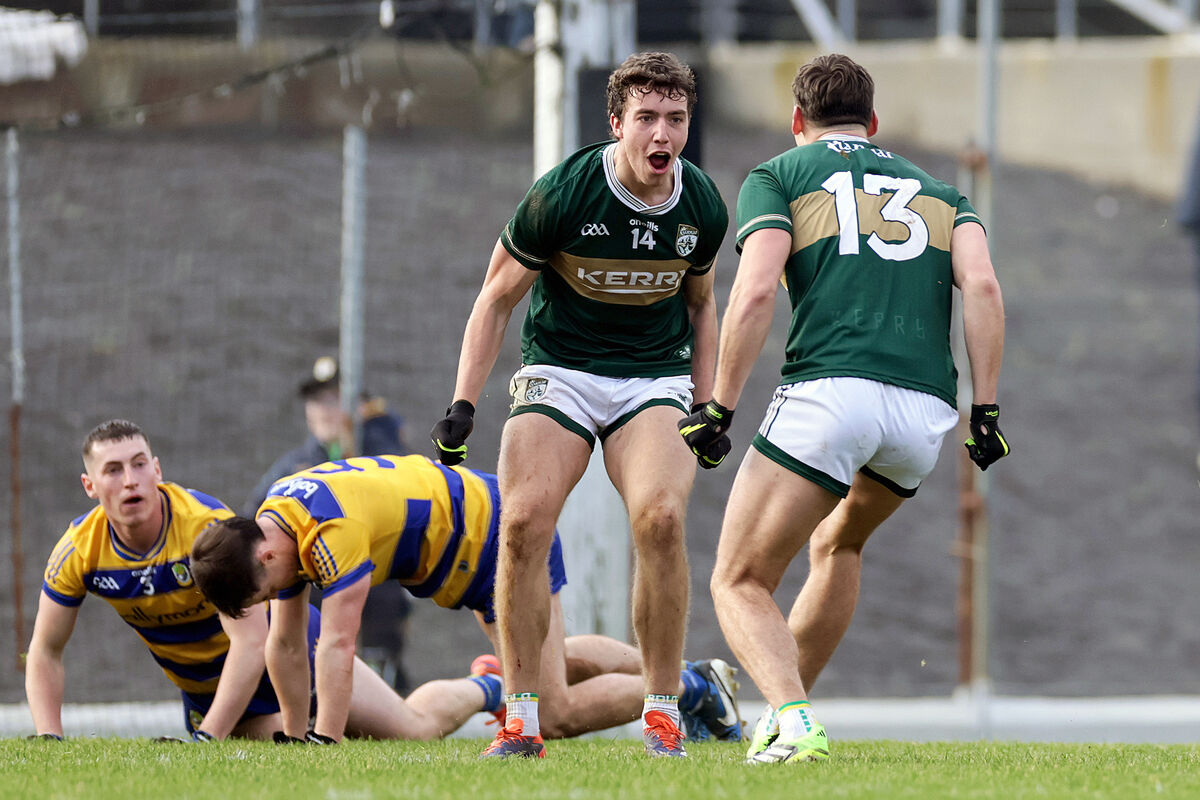
At Fitzgerald Stadium last Sunday, as the hooter sounded on Kennedy’s point, Gaelic football revealed its essential character. The clock delivered its absolute verdict — time expired, appeals irrelevant. But the play itself belonged to the game’s oldest instincts: A ball launched into chaos, bodies rising, hands competing, one man emerging with clean possession while the GAA world held its breath.
CONNECT WITH US TODAY



Be the first to know the latest news and updates