Paul Rouse: The building blocks of Dingle's incredible success
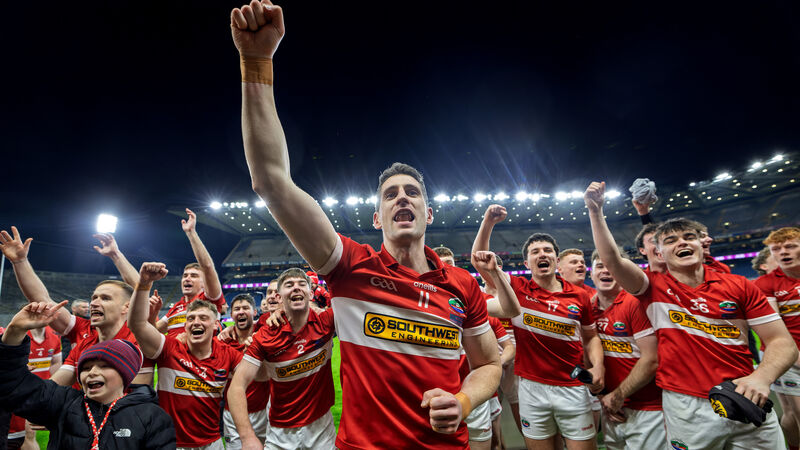
ECSTACY: Dingle’s Paul Geaney celebrates with teammates after the whistle in Croke Park. Pic: James Crombie/Inpho
There are many things to take from Dingle’s extraordinary victory in the All-Ireland club football final. The most obvious – and ultimately the most critical – is an understanding of how hard it is to win a championship.
Not just the All-Ireland championship, but almost any championship.
And in this instance, Dingle have managed to win an All-Ireland of outstanding quality. As Paul Geaney put it: “All these teams are champions. It's very difficult to win this thing.” What they have achieved even since winning their provincial title lays bare the scale of their achievement.
There are few clubs in Ireland as well-organised and as well-coached as St Brigid’s. The generations of work that have built their facilities and produced yet another group of skillful, intelligent players is a tribute to their love of football.
In Ballyboden St Enda’s, too, there are many people who have given much of their lives to develop their club. It is a huge resource to have that many members in a growing suburb – but it is also a massive challenge and they have worked assiduously to promote Gaelic games.
That their fine home-grown players were supplemented by the guts of a quarter of a team drawn from excellent footballers who had joined from other counties saw them emerge from Dublin as the favourites to win the All-Ireland.
To beat the latter in a semi-final in Páirc Uí Chaoimh and the former in a final in Croke Park required the tank to be absolutely drained to the extent that both games looked lost and winning them took to the last seconds of injury time in extra time.
It is one thing to have the ability, clarity and courage to empty the tank in an end-game, but it’s how the tank was filled in the first place that is most interesting.
How exactly did Dingle get themselves into the position to win an All-Ireland club championship in January 2026? This when they hadn’t even won a Kerry county championship since the 1940s – and even then had included players from Lispole and An Ghaeltacht in those victories? Why was the 77th year since the 1948 championship the one that brought glory?
The outpouring of emotion and pure joy of the last few days and weeks has clarified something of the years of endeavour that have preceded this success. Paul Geaney has spoken brilliantly on how – back in 2018 – the Dingle footballers met in the Díseart after his Uncle Sean became their manager. On that day, they set reaching Croke Park as their target. It was indeed a shot at the moon.
And the years between 2018 and 2025 brought their own share of heartache – Paul Geaney’s explanation: “Bit by bit over the years, you learn from defeats and you keep coming and you keep coming.”
Except that’s not what happens for a lot of teams. They don’t keep coming back, they don’t overcome the setbacks, the desire expressed in a meeting of goal-setting fades away to memory.
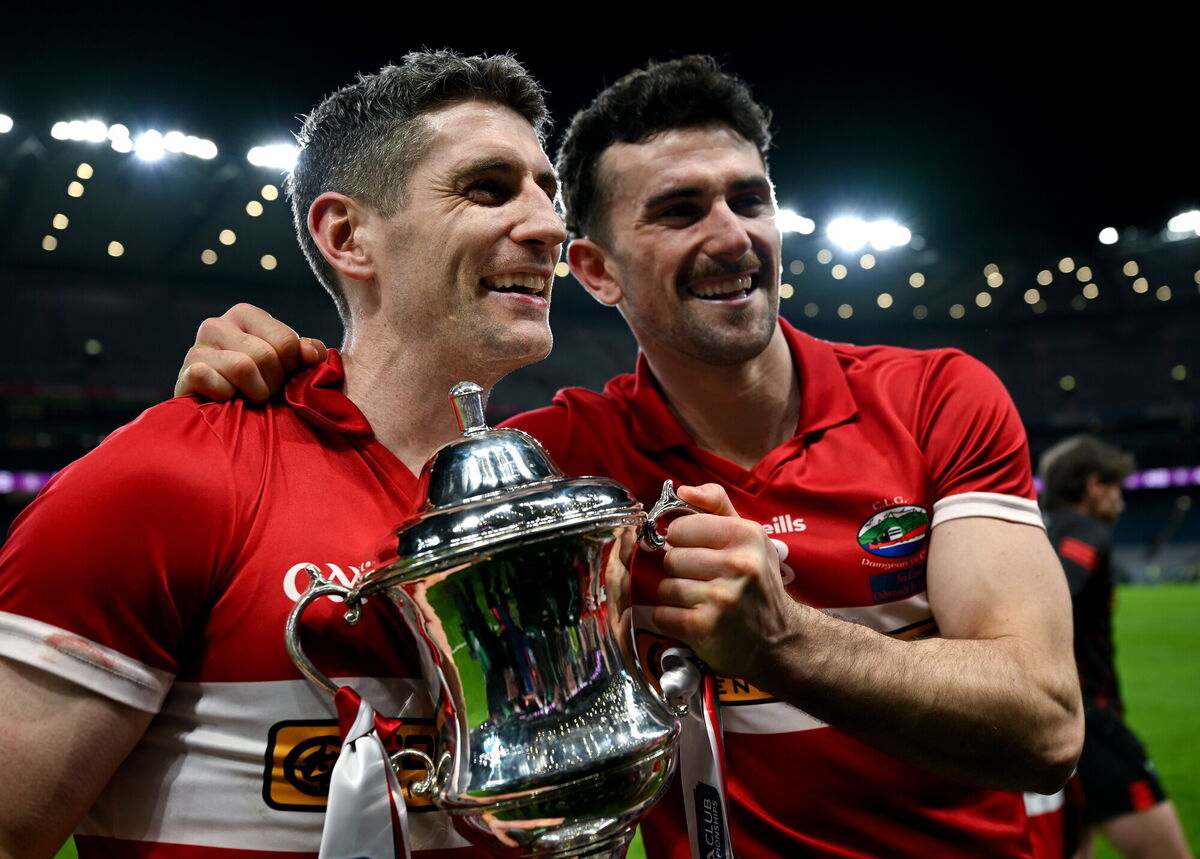
The margins between victory and defeat are so fine that logic can easily be scrambled: It may be that not even the people involved in this success can fully understand or fully explain why it has happened. Or at least they may need the remove of time to get a good view of what has happened.
None the less, looking from the outside, it would seem that there are a few straightforward points to make, based on what Dingle have done:
If you cannot even imagine competing with those who have beaten you in the past and who continue to beat you, how will you even conceive of the change necessary to move from failure to success? To resign yourself to excuses before even starting, to be overwhelmed by the idea of the opposition, is arguably the worst type of defeat.
There are intelligent football people at the core of what Dingle have done. Ambition without a realistic plan for progress is almost always doomed to failure. The next thing then is to have the capacity to change the pan when circumstances change. There is no better way to kill ambition than to spend years chasing your tail.
And intelligence is also vital in the heat of battle: it is what allowed Dingle recover from the grave disappointment of conceding a two-pointer in the last minute of battle. The reset in the minutes before extra-time was no accident.
No team can travel the road that Dingle have travelled without making football the priority in how players and managers live their lives. Mark O’Connor and Gavin Curran and Mikey Geaney are just three examples of this – but there is nothing surer than every person involved in this success made decisions to choose football above other options.
That is not to say that there cannot be other priorities – amateur players don’t have that luxury and family comes first. But making decisions that privilege playing football is essential.
Most clubs struggle to get out of their own way. This is manifest in everything from appointing managers to developing facilities to financing teams. This is ultimately the responsibility of the club executive. Without leadership (both in terms of vision and practicality), no club can thrive. Even the money raised to support this team demands incredible endeavour – as well as the support of a community that has been galvanised.
It is not just the brilliance of the players that matters, it is also their character. Dingle’s very best players did it when it mattered. They led on and off the field. Clubs are ultimately defined by their players. Dingle’s players did it when it mattered.
Losing matches after you feel like you have no more to give is a cruel blow. It is hard to go back and start again, to find more to put in the tank. Dingle have suffered enough narrow defeats over recent years for them to have slipped back into the pack in Kerry, while the best of their players heading into retirement.
And this is where the squaring of the circle brings us right back to the very beginning: it is incredibly hard to win a championship. And even to properly try.
CONNECT WITH US TODAY



Be the first to know the latest news and updates