Christy O'Connor: Eamon O’Shea now has to let his head rule his heart
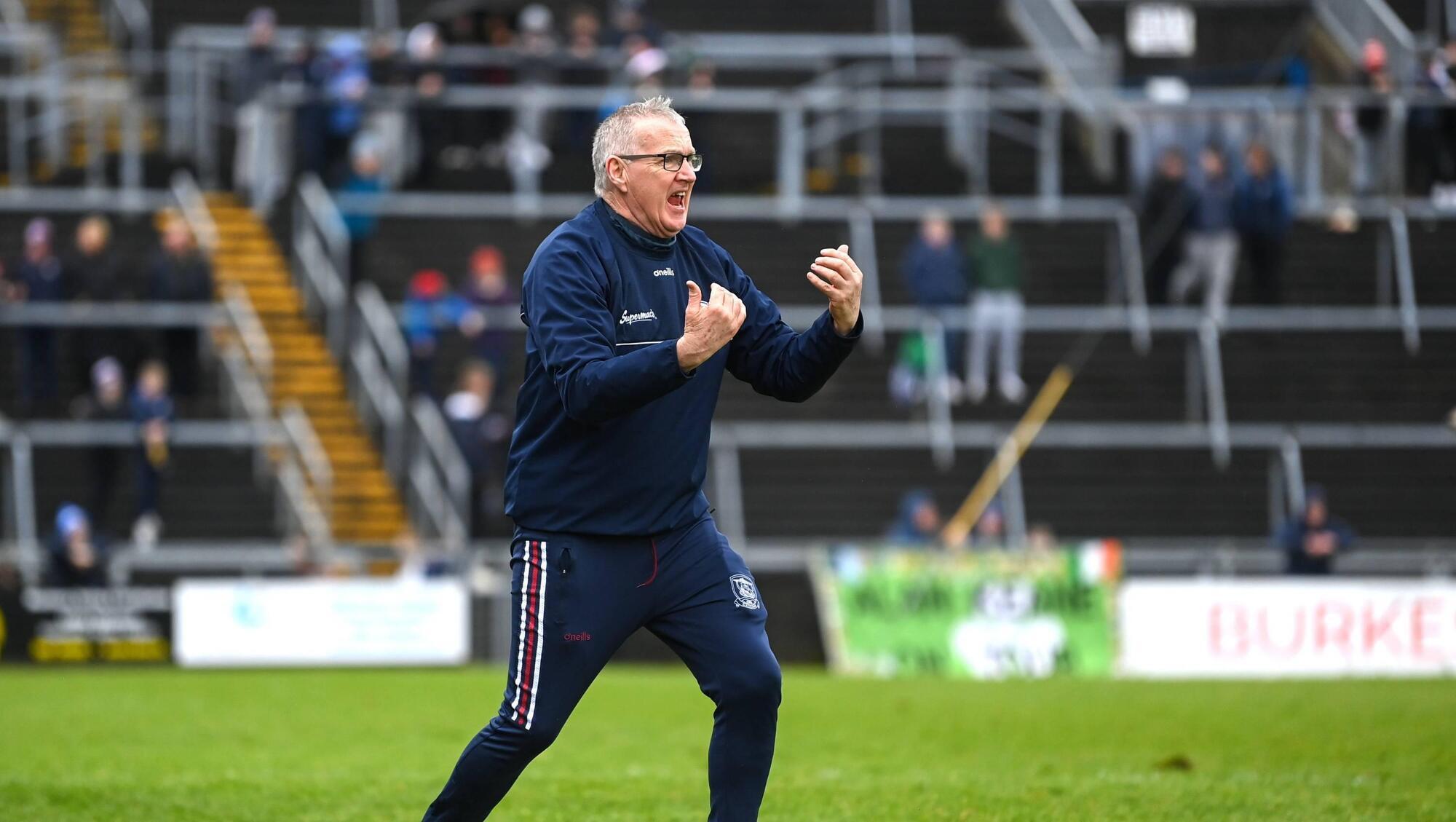
FROM TIPP TO GALWAY: Galway selector Eamon O'Shea will have to let his head rule as he leaves long journeys to Tipperary behind for a stroll over the road to Pearse Stadium. Pic: Stephen McCarthy/Sportsfile

When Eamon O’Shea spent nine years involved with Tipperary, during three separate stints as coach and manager between 2008-21, the biggest drain on his time was the travel involved. Getting out of Galway city first was an ordeal in itself before the long and winding road to Thurles even began to stretch out in front of O’Shea.
Thurles was over two hours away, a circuitous navigation through bad country roads and small towns. It’s a gruesome trek for motorists, but O’Shea always saw that long-haul journey as an opportunity to reconnect to his own personal history, reminding him of how it framed the very essence of who he is.
“When I cross the bridge from Portumna into Tipperary, I am in a different place,” O’Shea said to Keith Duggan in 2023. “It is interesting and it certainly is a magical thing. That journey is a bloody nightmare for people. But I’ve always liked it. The coming and the going. So, I never simply ‘drive through’ Tipperary. It is the home place. I never take that for granted.”
O’Shea often elaborated on the deeper meaning of that journey, of how the ghosts of Tipp’s glorious and decorated past rattled around his head as he went about shaping Tipperary’s future. His work as a professor of economics, an academic and epidemiologist specialising in gerontology took O’Shea all around the world, but hurling, history and his roots always brought him back to Tipperary.
When his time on the ground there as a coach with the senior team finished after the 2021 All-Ireland quarter-final defeat to Waterford, O’Shea appeared ready to depart the inter-county stage. He was 63 by then. He had nothing left to prove as a coach but O’Shea privately admitted in 2022 that he fancied one more cut on the big stage. And it was inevitable that that role would be with Galway.
Having lived in the city for over four decades, O’Shea has been intrinsically connected to Galway hurling in an off-Broadway capacity since first getting involved with the NUIG Fitzgibbon Cup team in 1993 after two of his economics students, Jamesie O’Connor and Eoin Garvey, approached O’Shea after a lecture and asked him to coach the team.
O’Shea was a driving force with NUIG for years before first getting involved with Turloughmore in 1997, and maintaining that connection by intermittently assisting Turloughmore over the years. O’Shea also coached Carnmore in 2003 before he and his wife Edel began driving a whole new culture and standard in Salthill-Knocknacarra once their kids began playing with the club.
By then, O’Shea had made his name as an innovative and outstanding coach with Tipperary. After he stepped down as Tipp manager in 2015, Galway made multiple entreaties to get O’Shea involved but the timing or context was never right.
When Micheál Donoghue was part of O’Shea’s Tipperary backroom team in 2014 and 2015, they used to travel to Thurles together. O’Shea was a constant sounding board and confidante to Donoghue. Both became close friends and Donoghue tried hard to get O’Shea on board in his last two years of his first term in charge in 2018 and 2019.
O’Shea did a couple of guest sessions with Galway in 2018 before Donoghue made a big push to recruit him full-time at the end of that season. Donoghue thought he finally had his man but O’Shea returned to Tipp once Liam Sheedy was reappointed as Tipp manager in the autumn of 2018.
The huge cultural differences in style and attitude between Galway and Tipp had been a factor in O’Shea deciding to remain on the outside of the inter-county scene with Galway, but the courting process was much easier by the time Henry Shefflin approached O’Shea in the autumn of 2023.
O’Shea had retired from his full-time role in NUIG. His work with Tipp was done. His son Donal was part of the Galway squad, which strengthened O’Shea’s emotional investment. And the challenge felt just right.
It’s a different game now, but the appeal of trying to halt another machine (Limerick) excited O’Shea in the same way that trying to halt the Kilkenny juggernaut had in the 2000s. It looked like a perfect marriage, but the chemistry just wasn’t right.
O’Shea and Shefflin’s hurling philosophies didn’t align. O’Shea was shaken by the experience of such a disastrous 2024 season, but Donoghue wanted him on board. So did Donoghue’s right-hand man, Franny Forde, who had played under O’Shea at NUIG and Turloughmore, and who had always regarded O’Shea as one of his biggest coaching influences.
O’Shea didn’t want 2024 to be his last possible contribution on this stage, but the shorter road was also appealing at this stage of his life. O’Shea’s home in Glenard in Salthill sits just above the north side of Pearse Stadium, a short stroll a few hundred yards down the hill. The stadium has a long established reputation as a black-spot for traffic gridlock, a boiling pot of frustration for supporters after matches. But O’Shea can make it door to door on foot in three minutes flat.
That’s a far handier spin than Thurles but now for the first time in championship, O’Shea will have to let his head rule his heart.
When Cork lost to Tipperary in the 2020 Munster football final, one of the sorest points of that defeat extended far beyond silverware - the real loss was the developmental opportunity to play another top-four team (Mayo) in Croke Park in an All-Ireland semi-final.
It’s always unfair to make comparisons but when Cork were last a force at this level under Conor Counihan, they were the most regular visitors to Croke Park outside of Dublin; after winning the Division Two League title in Croke Park in 2009, Cork won three successive Division One titles there between 2010-12. In those same four seasons, between 2009-2012, Cork played 10 championship matches in Croke Park.
Losing their footing in Munster after 2012, and then losing their Division One status in 2016 - and failing to get it back ever since – are the obvious reasons why Cork have been such infrequent visitors to Headquarters in the meantime. When Dublin did play in Division Two for one season in 2023, their league meeting against Cork that spring was in Páirc Uí Chaoimh.
Cork’s last win in Croke Park was against Galway in a qualifier in 2013. In the intervening 12 years, Cork have only played seven championship games in Croke Park, all of which they lost; against Dublin (2013, 2019 and 2022), Mayo (2014), Donegal (2016), Tyrone (2019) and Derry (2023).
When Cork last played Dublin in Croke Park, in the 2022 All-Ireland quarter-final, 12 of the players which featured that afternoon had never played in Croke Park before. It showed when Dublin cruised to an 11-point win.
At least that inexperience isn’t as much of an issue now as Cork get ready to face Dublin in Saturday’s All-Ireland preliminary quarter-final; of the 20 players which featured last weekend against Roscommon, only five have never played in Croke Park before.
It's a huge challenge, but one of the massive positives that a win against Dublin would now present to Cork is the guarantee of two knockout championship matches in Croke Park for the first time in 12 years.
In a new championship with new rules and new frontiers being crossed every week, one of the boons has been some of the outstanding individual scoring performances in that environment.
That potential was first showcased in the spring when Limerick’s James Naughton hit an incredible 4-12 against Waterford in the league, a tally that broke Frankie Donnelly’s record (4-11 for Tyrone in a Dr Lagan Cup game against Fermanagh) for the highest individual scoring feat in an inter-county game.
Nobody has gone close to repeating Naughton’s feat in the championship but a handful of players have racked up some outstanding individual tallies; Westmeath’s Luke Loughlin clocked a whopping 1-17 in the Tailteann Cup against Antrim.
Loughlin’s total was buttressed by five two-pointers but his haul still took him to within one point of Cillian O’Connor’s individual championship record of 4-9 for Mayo against Tipperary in the 2020 All-Ireland semi-final.
However, Loughlin’s total saw him surpass the individual scoring feats of Dublin’s Johnny Joyce (5-3 versus Longford in 1960) and Fermanagh's Rory Gallagher (3-9 versus Monaghan in 2002).
He may have recorded less than half of Loughlin’s tally but one of the standout individual scoring performances this summer was Conor Love’s 0-9 (0-8 from play - all white flags) against Wexford in the Tailteann Cup recently in Croke Park.
Love first showcased that scoring potential in a brilliant performance against Down in the Ulster quarter-final in April when registering 0-5 from play. Love always had huge ability but he is a player that has thrived under the new rules. A completely different type of forward to Seán Quigley, it’s been a long time since Fermanagh produced a player with Love’s scoring ability.
Kildare, Fermanagh’s opponents in Sunday’s Tailteann Cup semi-final, have some good man-markers and they’ll have earmarked Love as a priority match-up. Because as he showed against Wexford, Love has the capacity to cut loose in Croke Park.
A collection of the latest sports news, reports and analysis from Cork.
CONNECT WITH US TODAY



Be the first to know the latest news and updates