Paul Rouse: The Prem is back, was it ever away?
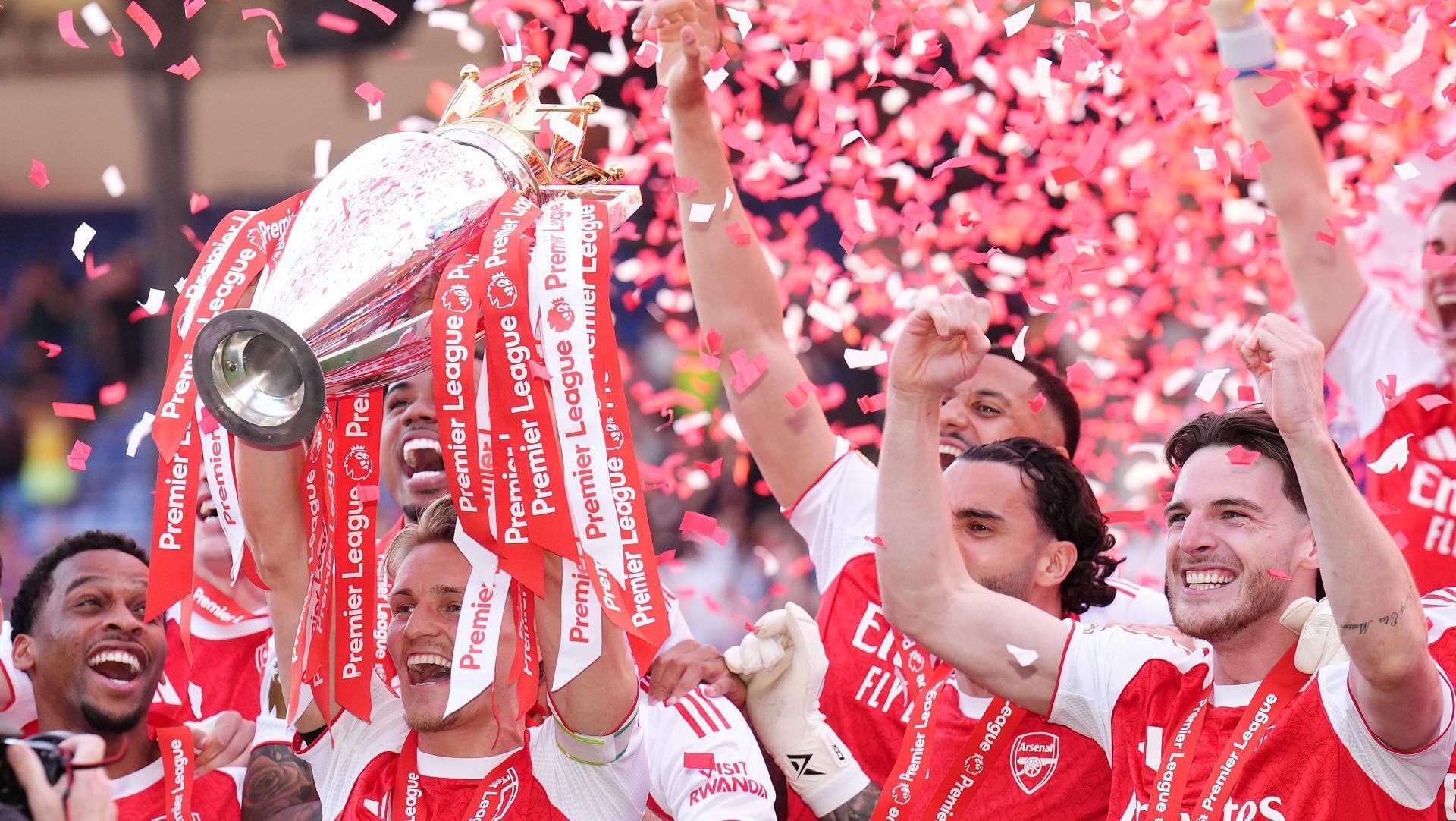
Arsenal's Martin Odegaard lifts the Premier League trophy. Pic: John Walton/PA Wire.

It is not really the case that the Premier League is back.
It is better to say that it never went away.
More than being just a soccer competition, the Premier League is a vast, unending exercise in the production of entertainment. It stretches across continents and involves much more than what happens between the whistles that begin and end matches.
By the same logic, it ploughs on in the weeks between the last day of one season and the first day of the next. There are end-of-season tours and pre-season friendlies.
Most of all, there is the relentless determination to win the struggle for attention.

The great lesson of 20th-century commerce is the essential importance of capturing people’s attention and monetising it. And the Premier League is superb at it.
To the extent that an inconsequential pre-season friendly between Leeds and Manchester United is better marketed than the GAA’s own All-Ireland finals.
All the while, the churn of transfer speculation is vital to engagement. Even in this summer of a World Cup that last five weeks, transfer stories of the Premier League cast a long shadow.
Many of these were inventions, others were the mere flying of kites, still more were aspirational.
There is little better way to capture the interest of a fan of any club than to venture the arrival of new talent or the potential loss of a beloved stalwart.
Again and again, the power of the Premier League is revealed by the daily torrent of stories about transfers.
Of course, this power is truly understood when the biggest clubs actually buy players. In the middle of the World Cup, the Aston Villa forward Morgan Rogers signed for Chelsea for £117 million. It was the most expensive signing in Premier League history.
This was followed shortly afterwards by the Nottingham Forest midfielder Elliot Anderson signing for Manchester City for £116 million.
On the face of it, the scale of the money paid appear to underline the claim that the Premier League is the “best league in the world”.
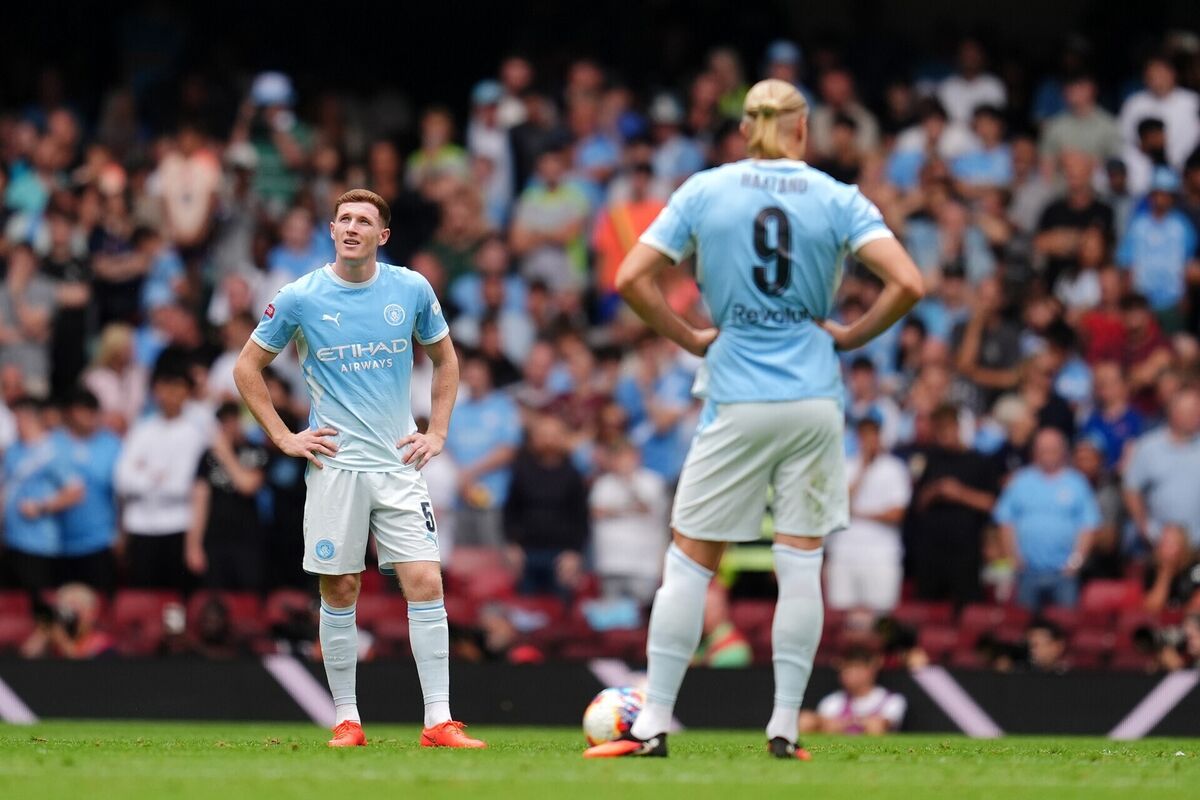
By most metrics this is a sustainable claim. Teams from the Premier League proliferate in the latter stages of European competitions, the wages paid across the league are higher than in any other country, the global audience for games continues to grow and greatly outstrips its rivals.
And yet the “best league” claim comes with caveats and complications.
Neither Anderson nor Rogers lived up to the hype that accompanied their presence in the recent World Cup.
They both had their moments, and Anderson in particular ran around a lot, but neither would come close to a Team of the Tournament. Perhaps both will age successfully into something they currently are not.
As things stand, England’s two best players – Harry Kane and Jude Bellingham – both play in other leagues, with Kane playing in the Bundesliga with Bayern Munich and Bellingham in La Liga with Real Madrid.
Indeed, with the exception of Erling Haaland, it is arguable that the top ten icons of today’s soccer all now play in leagues other than England.
This is particularly the case since Rodri signed for Barcelona, where he will play with Lamine Yamal.
Meanwhile, Vinicius Jr. and Kylian Mbappé are also in Spain, Messi is in America, Ousmane Dembele is in France, Michael Olise is in Germany and so on.
There is regular speculation that – particularly because of the capacity that social media holds to allow individuals generate their own brand – people who love soccer are drawn now to follow stars rather than clubs.
And the celebrity and earning capacity of the greatest stars is undoubtedly enormous to the point allowing for greater autonomy than ever.
This is true only to a point, however. The great institutions of English soccer are its clubs, symbols of the cities where they are based.
And the real potency of the Premier League lies not in its star players, but in its rivalries, its traditions, its deep reach into and across generations.
The role of identity is exceptionally potent. There are multiple overlapping identities in most lives and – for many people – sport plays a significant part in this.
People identify with clubs from their local area in England or with the clubs followed by family and friends if they live elsewhere in the world.
The traditions of Irish people following English and Scottish soccer teams dates back to the formation of the first leagues back in the 1880s.
Indeed, Irish people are among the many millions who are provided by English soccer clubs with the dominant cultural experience of their lives.
This is something that can routinely be sneered at. The question is asked as to how people can say ‘we’ about a team in a city in a foreign country that they may never have visited. This is to miss the point – identity is not something that is defined only by geography.
More than that, those who dismiss or condemn the Premier League must accommodate the reality that the success of English soccer and of the Premier League is rooted in a love of sport.
It cannot dismiss what is happening as being just the product of marketing or commercialism.
Instead, there is something truly authentic to be seen when players and supporters are immersed in the death or glory of a big game, when winning or losing is all that matters.
There will be loads of mediocre matches, great swathes of the season will be irritating, the promotion of gambling is appalling and the indulgence of narcissism is pathetic, but something which keeps pulling so many people back in, year after year, merits acknowledgement.
There are worse things to be obsessed about in this world.