Colin Sheridan: Mayo did something wonderfully unfashionable and trusted themselves
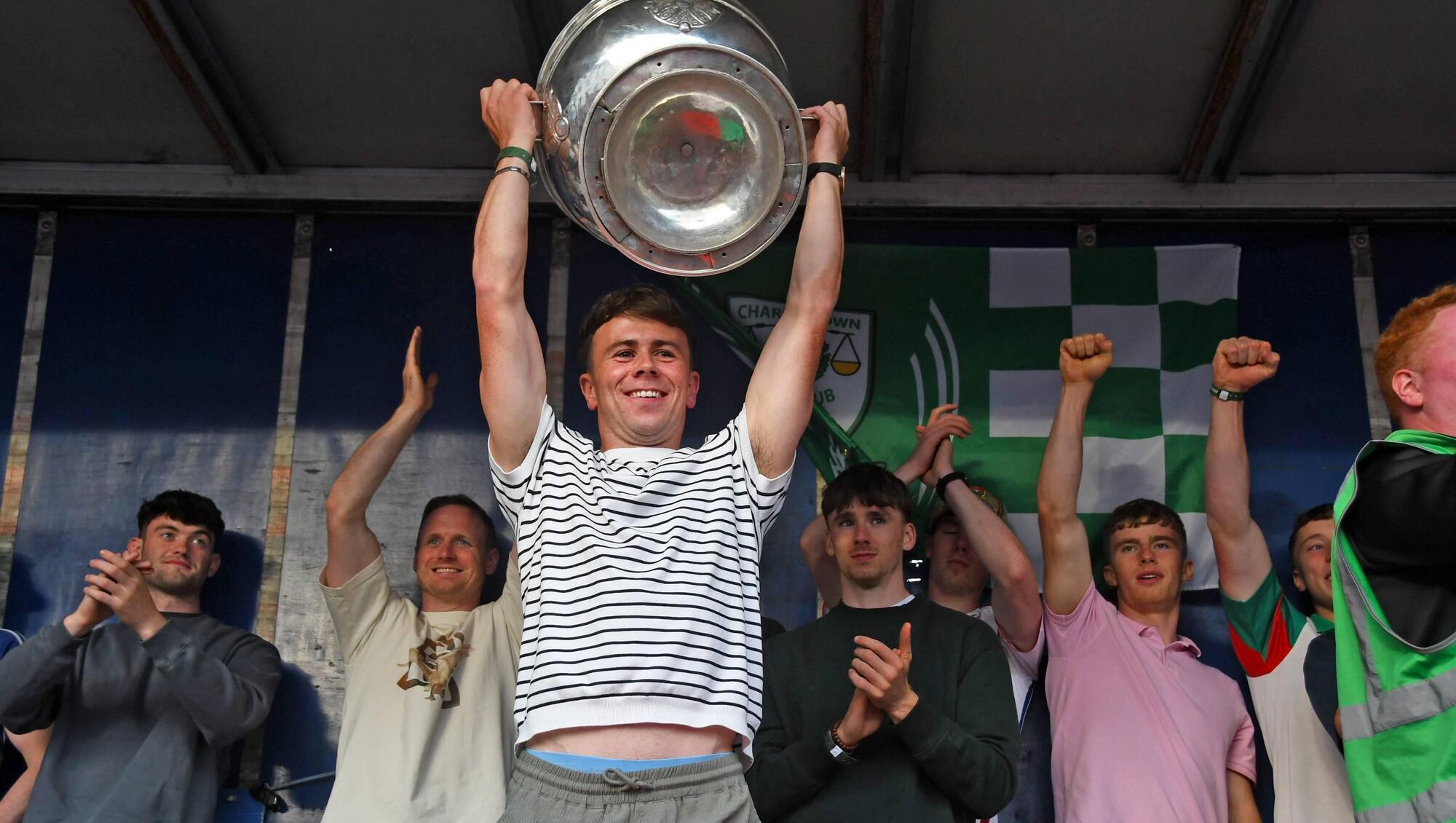
All Ireland Champion's Mayo Home coming to Charlestown with Paul Towey. Picture: John O'Grady.

This is, I promise, the last Mayo column for a while. Unless Wright Thompson rings looking for 8,000 words on background, in which case I reserve the right to spend the next fortnight on a high-stool explaining how a corner-forward from The Neale embodies the collapse of late-stage capitalism.
Success has a funny habit of making historians of us all. Seven days after Mayo finally climbed the mountain, the post-mortems have already begun.
Every podcast, newspaper column and clubhouse conversation is searching for the reason. The blueprint. The secret sauce. The moment the ten-year plan quietly clicked into place.
It is an understandable instinct. We like our sporting triumphs to feel inevitable. We prefer to believe that somewhere, years ago, a room full of clever people mapped all of this out on a whiteboard before calmly waiting for Sam Maguire to arrive in Castlebar on schedule.
Theo “the curse breaker” Epstein did something approaching that with the Chicago Cubs. Japanese football has spent decades pursuing its ambition of winning the FIFA World Cup by 2050 through coaching, infrastructure and player development.
Great organisations think that way. They build systems capable of producing success over and over again. Mayo should absolutely aspire to that.
The only problem is that it isn't really what happened here.
Nobody familiar with Mayo football over the past four decades could seriously argue that organisational serenity has been our defining characteristic. The Heave, parts one and two. Management rows. County board disputes. Player controversies. Reviews. Counter-reviews.
The Tim O'Leary saga. Shoe the Donkey. Underage debates. Mayo have spent almost as much energy arguing about football as playing it. They have survived - and often excelled - because of an untaught culture, rather than a strategic vision.
None of this is to diminish the enormous amount of good work done by volunteers, coaches and administrators over generations.
Nor is it to suggest structures don't matter. They matter enormously. Strong governance, player welfare, underage coaching and development pathways aren't optional extras. They are the foundations upon which counties should build.

In fact, one of the things Mayo unquestionably got right this year was physical preparation. The strength and conditioning programme was outstanding. The players looked capable of sustaining an extraordinary intensity deep into championship matches. That wasn't luck. It was expertise.
But preparation isn't the same thing as prediction.
Reading Keith Higgins' outstanding behind-the-scenes diary in the Irish Examiner, I found myself waiting for the great secret. The hidden tactical revolution. The moment somebody unveiled the football equivalent of cold fusion.
Instead, what emerged was something both simpler and far more human. A management team asking straightforward questions. Where can we hurt Kerry? How can we impose ourselves? How do we become even more of what we already are?
Then came perhaps the most revealing line of all. A week before the final, Andy Moran stopped another discussion about Kerry.
"Right," he said. "We need to stop talking about Kerry now. It's time now to focus on what we're going to do."
That isn't management consultancy. That's coaching.
Nor was there anything particularly fashionable about much of what followed. Moran's constant instruction throughout the year, Higgins reveals, was simply to "keep swinging." Keep shooting. Keep asking questions. Keep attacking.
Keep taking chances. In an era where Gaelic football has become increasingly obsessed with percentages, retention, risk management and avoiding mistakes, Mayo did something wonderfully unfashionable.
They trusted themselves. More importantly, their manager trusted them. And here's the part that risks getting lost amid all the celebrations. Andy Moran and his coaches only get to tell this story because it worked.
That's the uncomfortable truth about elite sport. Had Jack Carney's boot misfired. Had Eoin McGreal struggled against Paudie Clifford, had Mayo's relentless press been picked apart, had another couple of ambitious efforts drifted harmlessly wide, we'd probably be reading a very different analysis this week.
Naive. Too open. Didn't respect Kerry enough.
The same decisions would have become evidence of recklessness rather than bravery. The same philosophy would have been dismissed as idealism. The same interviews would never have been written because nobody commissions behind-the-scenes diaries after glorious failures.
That's what makes this story feel so refreshingly free of the LinkedIn nonsense that now infects so much sporting analysis.
There isn't a sense that this management team are pretending they solved football. If anything, Higgins' diary, and Moran’s humility iand honesty all week - conveys a group who understood that they were taking risks, making difficult calls and trusting players to deliver under extraordinary pressure. They knew they might look foolish. They swung anyway.
That's not a blueprint, it’s courage.
There will be reviews now. There should be. Mayo should continue improving coaching structures, governance and player pathways because championships shouldn't depend on exceptional generations arriving at the perfect moment.
But let's not confuse what should happen next with what just happened. This wasn't the triumphant unveiling of a secret document hidden in a filing cabinet for the past decade. It was something simultaneously simpler and much harder to manufacture.
A football county produced another outstanding generation of footballers. A management team recognised exactly what they had. And when the biggest game arrived, they didn't coach fear. They coached belief.
Sometimes, after all the strategic plans, leadership seminars and performance frameworks have been filed away, that's still the bravest thing anyone in sport can do.
Keep swinging.
UEFA deserves credit for drawing a line under Gianni Infantino's latest power grab. The reported threat to boycott FIFA competitions rather than allow the World Cup to become another asset class for private investors is a welcome reminder that football's greatest competitions are supposed to belong to the game, not investment portfolios.
The extraordinary reporting by Martyn Ziegler in The Times has laid bare just how far this proposal had advanced, and the political influences surrounding it. If ever there was a moment to tell FIFA that not everything can be monetised, this is it.
The difficulty for UEFA is that principles only count when they are applied consistently. For years, calls have grown for football's governing bodies to take meaningful action over Israel's continued participation in international football, with critics arguing that UEFA's own statutes are being undermined.
Yet the organisation has repeatedly resisted any suggestion of suspension or boycott, insisting that football should continue as normal. Daniel Lambert, chief commercial officer Bohemians, captured the contradiction in two devastating observations this week.
"Laughable stuff from UEFA," he posted on X. "They'll boycott further capitalism but not genocide and their own statutes being breached by Israel." In a second post, he added: "Just a few weeks ago the FAI told its membership boycotts don't work."
That final barb lands because it exposes a contradiction many supporters have long noticed. Boycotts apparently become an acceptable instrument when football's commercial future is threatened. They become impossible when confronted with alleged breaches of international law or UEFA's own rulebook.
None of this weakens UEFA's case against Infantino. Quite the opposite. If football's authorities are prepared to boycott FIFA to defend the integrity of the sport, they should be prepared to apply that same moral clarity elsewhere. Principles cannot begin and end with balance sheets. Otherwise, they are not principles at all.
Beth Coulter's dream professional debut suggests Irish golf has another genuine star in waiting. The 22-year-old from County Down could hardly have scripted a better start, winning the Women's Irish Challenge at Malahide on her very first outing in the paid ranks after edging Ayeon Yang in a playoff.
Coulter arrived with an outstanding amateur pedigree, including two Curtis Cup appearances, but translating promise into professional success is never guaranteed. Doing it at the first attempt, on home soil, hints at a temperament every bit as impressive as her talent. Irish golf may just have discovered its next headline act.
Franco Baresi did not simply master defending; he redefined it. The legendary AC Milan and Italy captain, who has died aged 66, was the cornerstone of Arrigo Sacchi's revolutionary Milan side and the standard by which generations of defenders have since been judged. He was a prince of a defender, who played as he looked - with nobility and grace - making anticipation and positioning appear effortless.
At a time when defending was often equated with brute force, Baresi proved intelligence could be football's greatest weapon. His influence stretched far beyond Milan, inspiring generations of defenders and leaving an enduring mark on how the game itself is played.