Colin Sheridan: Jim Ratcliffe’s comments a symptom of football's billionaire problem
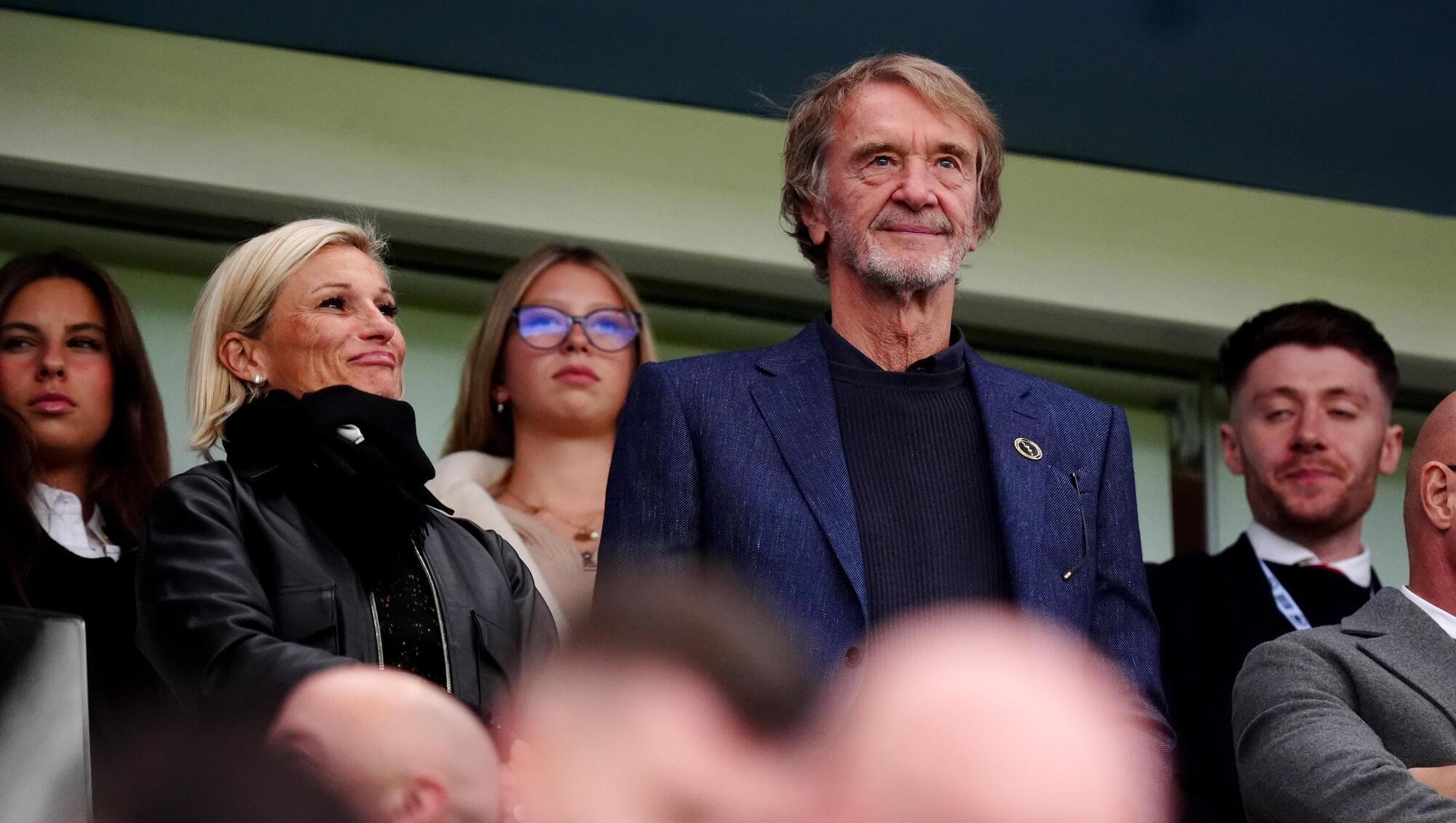
THAT'S RICH: Jim Ratcliffe, Ineos CEO and minority shareholder at Manchester United, alongside his wife Catherine Polli. Ratcliffe is resident in Monaco. Pic: Mike Egerton/PA Wire.

This week, football’s dark mirror shimmered once again, as billionaire co-owner of Manchester United Jim Ratcliffe put himself at the centre of a controversy that reflects the ugly truth of billionaire patronage of sports. His comments that the UK had - amongst other things - been “colonised by immigrants” have exposed - not just his own political blind spots - but a much deeper problem rotting at the heart of the beautiful game.
Ratcliffe, worth billions and resident in Monaco - a tax exile since 2020 - occupies one of the most powerful perches in English football. As head of INEOS he paid over £1bn for a 25–27.7% stake in Manchester United and effectively controls football operations at Old Trafford, even as the Manchester United majority remains with the equally disagreeable Glazers.
Last week’s remarks - that the UK has been overwhelmed by immigration, that the country has been ‘colonised’ - are not just morally egregious, they are dangerous. They echo the language of the far right, and were rebuked by political leaders, anti-racism groups, and fans alike. The UK’s own statistics show population changes that do not support his claims, and the club’s diverse supporter base has rightly expressed alarm.

Radcliffe himself is an economic migrant. This is the same man whose personal relocation to Monaco has deprived the British tax system of potentially billions - money that could help fund schools, hospitals, and yes, sporting facilities - even as his company seeks state support to protect jobs and secure contracts.
And make no mistake: Ratcliffe’s impact on football isn’t limited to disgraced remarks about immigration policy. Under his watch, Manchester United has undergone a brutal cost-cutting programme that has seen hundreds of jobs cut, bonuses for stewards and lower-paid staff scrapped, and long-serving workers pushed out - all while star players still pocket eye-watering wages of £300,000 a week or more.
The metaphor writes itself. While the richest 0.0001 per cent play with headlines and leverage over press conferences, it’s not the Harry Maguires of this world complaining - it’s the tea ladies, the stewards, the maintenance workers, the ordinary folk who make a club function day-to-day, whose livelihoods have been squeezed. At a club that once prided itself on community, loyalty and local identity, those cuts stink of something very far from free. Sport ought to be about joy, shared endeavour, about all of us - not just the very rich.
Read More
Football, and sport generally, should be the most democratic space imaginable: where children run and fall and score without regard for class or creed; where communities gather in collective exultation. But inviting billionaires like Ratcliffe into that world is like injecting heroin into our veins: it changes the chemistry of the organism. You don’t get health out of heroin - you get dependence, decay, hollow euphoria and, ultimately, emptiness.
It is not only Manchester United that should give us pause. Across the sporting landscape there are other avatars of plutocratic excess: Roman Abramovich at Chelsea, Donald Sterling in basketball, Dan Snyder in American football, and the Saudi Public Investment Fund’s involvement in Newcastle United. Some have been rightly excluded or sanctioned; others continue undeterred. The litany of ethical and human-rights concerns attached to these figures and institutions ought to disqualify them from any moral leadership in sport. Yet the money flows in regardless.
Billionaires don’t just buy clubs - they buy silence, they buy influence, and too often they buy respectability. They tell us that a fortune amassed can somehow be justified by the veneer of sporting success. But history shows us that enormous wealth - especially when built on tax avoidance, labour exploitation and political gerrymandering - rarely arrives ethically or morally. There has to be another way.
So let us be clear: Ratcliffe’s comments this week are abhorrent, yes. But they are the symptom of a bigger illness - the corporate capture of our sporting institutions by men who see football as another asset class, another vehicle for power, influence and privilege.
We should, as a sporting culture, draw a line. Not only should such figures be held accountable for their words, but for what they do to the communities sport claims to serve. We need structures that prioritise democratic ownership, that value people over profit, that make the game accessible to all - not just those whose bank balances dwarf entire cities. The GAA, too, for so long a bastion of community and inclusion, faces much more complicated choices as it courts increased commercial interest. We can’t pretend the association has not already had its head turned. As members, we should insist whatever integrity remains is preserved, whatever the cost to the “end product.” If that seems too idealistic, listen again to Baldwin: People who can’t make love, make money. Perhaps it’s time we reclaimed sport - and society - for love.
There are comeback stories, and then there is what Anthony Kim just wrote in the sands of Adelaide - an almost mythic arc of talent, turmoil and redemption that reads like a novel, yet unfolded in the unforgiving daylight of professional golf. Yesterday, Kim captured the LIV Golf Adelaide title, his first victory in nearly 16 years, producing a bogey-free nine-under 63 to finish 23 under par and out-duel the modern greats. Two decades ago, Kim was golf’s incandescent prodigy. Bursting from the University of Oklahoma, he won three PGA Tour titles and starred in the 2008 Ryder Cup, ascending to No. 6 in the world. His swagger was magnetic; his belief, unshakeable. But the narrative faltered. A ruptured Achilles led to a 2012 exit from the sport, and what followed was a descent that few athletes escape unscathed. Injury was just the beginning - what came after was darker. Struggles with drug and alcohol addiction, coupled with mental health battles, pulled Kim away from fairways and leaderboards and into a personal wilderness that lasted years. Sobriety and self-rediscovery didn’t come overnight. With the support of his family, Kim clawed his way back, returning to competitive golf as a wild card on the LIV Golf circuit in 2024. Early missteps might have deterred a lesser spirit - he failed to earn points and was even relegated - but Kim’s resolve hardened. He earned his way back through qualifying in early 2026, a testament to the quiet fortitude often overshadowed by past brilliance.
Then came Adelaide - not just a victory, but vindication. There have been very few “good news” stories to emerge from LIV Golf, but even the most ardent sceptic couldn’t but welcome Kim’s redemption. His journey from prodigy, through pain, to champion once more is one of golf’s most human stories: triumph isn’t measured just in titles, but in the courage to chase them again.
It must have felt like a very long winter away from the start blocks for Rhasidat Adeleke, but after seven months out of competition, the Tallaght AC star returned to the track at the Tyson Invitational in Arkansas on Saturday night and didn’t just race - she rewrote the Irish indoor 300m record, clocking 36.30 seconds to lower her own mark. As statements go, it was incredibly impressive. Adeleke’s blend of raw speed, power and relentless work ethic has been missing from the athletics scene, and it looks like now she’s back, firing on all cylinders. With the European track championships in Birmingham later this summer, it looks like the Dubliner is on track to race for the medals her talents deserve.
Galway footballers escaped Tralee on Saturday night with a dramatic draw, but their opening three performances in this year's National Football League serve as a perfect metaphor for a team that confuse as often as they inspire. Insipid for long periods against Mayo last month, they wasted enough scoring opportunities to win two games. Brave, if a little lucky against Armagh, they stole two points they barely deserved. Against Kerry, they completed a results hat-trick with a spirited comeback that hinted at the promise the team so clearly possesses. The league is only the league, but a shortened season has amplified the importance of winter form. The real Galway football team will - sooner or later - have to reveal themselves, otherwise another trophy-less decade will have passed.