Kieran Shannon: Pre-Tactical Age is over, it's time to bring back the maor foirne
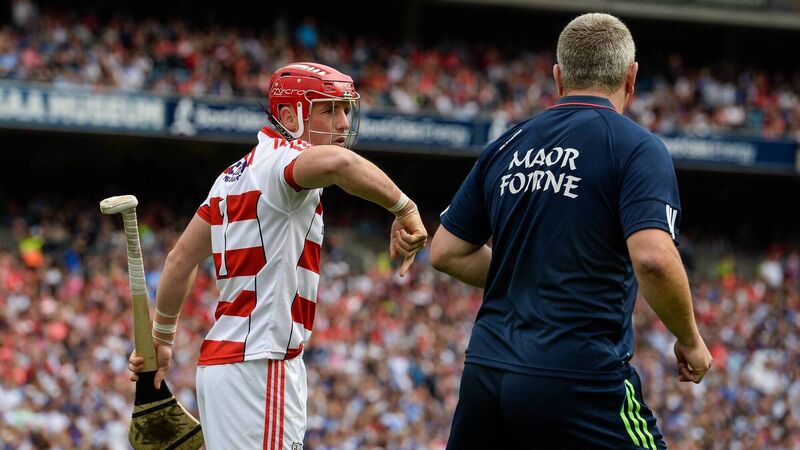
The abolition of the maor foirne rule at Special Congress 2021 upon the recommendation of the GAA’s Playing Rules Committee was a classic case of throwing the baby out with the bathwater. Pic: Piaras Ó Mídheach/Sportsfile

For all the current inter-county managers that have spoken out about the issue recently, probably the most telling comment was by a former bainisteoir over the weekend. Reflecting on both the toughest year of his life and the toughest day of his coaching career, Pat Ryan, in an interview with Denis Walsh of the , mentioned a thought that occurred to him while the Cork puckout and Cork team in general were undergoing a second-half meltdown.
“How can I get a message into Patrick Collins?”
In the same interview Ryan broached one of the biggest raps against him and one of the abiding images of the day: his four selectors around him on the line, desperately trying to diagnose and solve the crisis unfolding. Ryan understood the inference.
“There were too many fellas to make a decision.” For that he had a simple riposte. “I make the decisions.”
That power of his, though, had obvious – and unnecessary – limitations. About the only in-game adjustments he could make were through substitutions. “You were trying to drive fellas on from the line but we were just fighting fires everywhere.”
Ryan would have been one of the many thousands of Irish people who would have stayed up in the early hours to watch the Super Bowl. It wouldn’t have been to see Bad Bunny either. Ryan is a huge fan and student of the sport, a veteran NFL fantasy league player. Part of its appeal is its strategy as much as its physicality. How players and coaches can make adjustments in frequent consultation with one another.
Whatever about anyone wanting to turn Gaelic Games into association football as Ryan’s successor as Cork coach has implied, no one wants Gaelic Games to become like American football. Where the play is constantly stop-start and the teams huddle after every break in play.
But coaches like Ryan are putting too much into the game to not have a bigger say when it’s actually on. And the consequences of not having that say are too large as well.
Ryan finished up as Cork coach last August without delivering the All-Ireland he said would define whether his tenure was successful or not. While as a man and as a leader of men his character remained intact, his reputation as an in-game coach took a dent. Cork were largely perceived to have lost the final “on the line” – even though the men on the line were hamstrung.
The abolition of the maor foirne rule at Special Congress 2021 upon the recommendation of the GAA’s Playing Rules Committee was a classic case of throwing the baby out with the bathwater.
Outside of the Gregory Kennedy incident (when the Dublin selector not just interfered with, but intercepted, a Kilkenny free in 2019), the final moments of the 2014 Mayo-Kerry saga in Limerick, and Éamonn Fitzmaurice observing that in his time as Kerry manager, rival selectors Tony McEntee and Jason Sherlock would deliberately and “slowly withdraw from the pitch, disrupting goalkeepers’ appreciation of space”, what issue could you have with it?
Such a decision was not only taken without the proper respect and consultation being afforded to coaches who put so much thought and time into the association and their craft. It was informed by an outdated sentiment that football and hurling are at heart simple games and did not need to ape other sports that put such a primacy on tactics, typified by the glee to discard the water-breaks and the scorn that would greet Paul Kinnerk bringing out a tactics board during those covid times.
Of course players are and should be the ultimate decision-makers. That is the heart of Kinnerk’s coaching. Ciarán O’Sullivan, the coach of basketball National Cup winners Ballincollig as well as a keen student of Gaelic Games, has articulated in these pages as eloquently as anyone about the art and merits of developing good decision-makers and how coaches should design training sessions with that purpose in mind: after all the game belongs to the players, not the coach.
But even such an advocate of that approach has the mechanism in his sport to call five timeouts per game, and to speak to his players that many times again when his opposite number avails of that facility. You can only do so much on the training ground.
You can even only do so much at half-time. Within the game itself you need to be able to get a message into that player at the other side of the pitch, especially in high-scoring and rapid-moving games like hurling and football, more so than slower tempo and more stop-start games like soccer and rugby.
What we have at the moment is a farce. To circumvent the current rules and restrictions, some teams employ their team doctors and physios to act as de facto maor foirne, duly compromising such medical professionals and their ethical code of conduct. Are they getting the gig based on their medical or tactical expertise? Are they condoning and encouraging the feigning of injury?
Brian Cody infamously said he wasn’t one for tactics, but even he saw the necessity for a return of the maor foirne. “It was a terrible thing to change,” he’d say in 2022. “I'd say any manager would say the same thing. It's a huge loss to the matchday situation.”
The man he last shared a sideline with on All-Ireland final day was even more strident on the matter. “It’s illogical that you can have 30 players on a pitch with 82,000 people there and we can’t communicate with the players,” John Kiely said also back in 2022.
“The rules committee need to wake up and listen to the people and read the room here. The room is saying, ‘Ye need to move with the times.’” He even offered up the solution. “Give us four incursions in a half, that’s it. We’re done. That takes out all of the nonsense. You drop your ticket at the sideline as you’re going in. If you’re deemed to be doing something unsportsmanlike, like standing in space, you get your yellow card or red card and go to the stand. You lose all your other visits. We just need to get smart.”
Four years on and the association still hasn’t. At the weekend Johnny Kelly joined Ben O’Connor and his predecessor Pat Ryan in expressing his frustration with the “biggest issue” he now had as a manager. “This idea that we’re not allowed get a message onto the field in the fastest game in the world. Why not?” the Offaly manager mused last Sunday. “What’s wrong with getting a simple message to players to reshape their forward line?”
There would not seem to be any desire for a manager’s association to be formed to speak on their behalf on this issue and others; they have enough on, as well enough power in the eyes of some as it is. They do of course have the capacity to lobby their own club or county to propose a motion for Congress to reintroduce the maor foirne.
But really it should come from the recommendation of the association’s own management committee and playing rules group. They read the room wrong. The 20th century, which we can now safely call the Pre-Tactical Age, is long gone, never to come back. Bring back the maor foirne instead.