Kieran Shannon: Camogie stance on skorts is insulting its players and hurting the sport
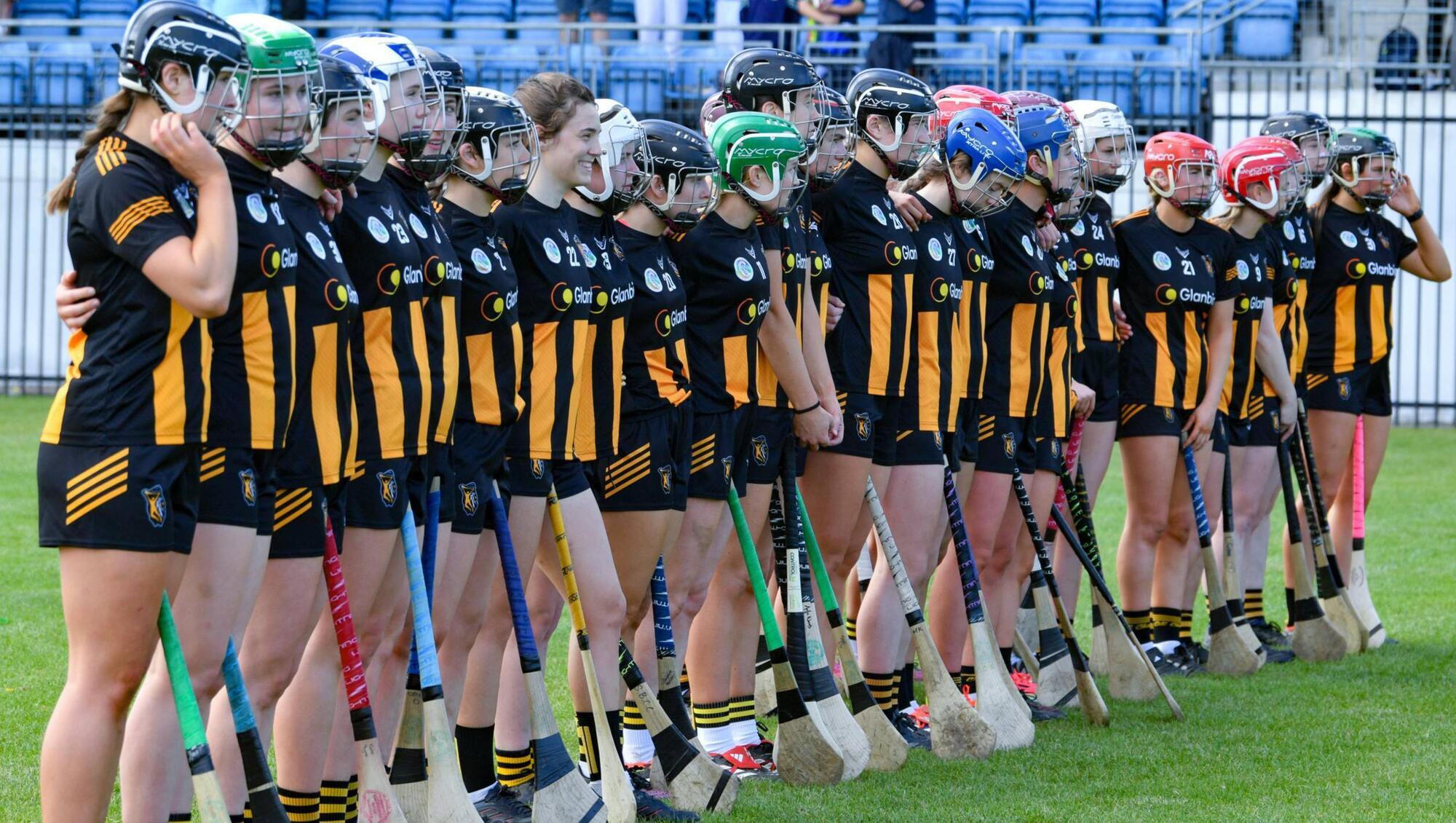
Kilkenny players wear shorts before the Leinster semi-final meeting with Kilkenny. Pic: Paul Lundy

They’ll say the rules are the rules and that they voted on retaining them as recently as Congress 13 months ago, but when you look at it the Camogie Association is actually contravening its own official guide.
On the very first page outlining its objectives and values, the association states that its raison d’etre is to “promote and develop” as well as manage the sport in Ireland and internationally.
The very next line – 2.2.b – says that it aspires to “promote the active participation of women in sport.”
A couple of lines further down and it says another objective is to “create a safe environment for our members and supporters”.
Then in section 2.3 it outlines the core values guiding the Association to fulfil those objectives.
“Inclusiveness.”
“Respect and welfare towards our members.”
All those objectives and values sound great in isolation.
Put them in the context of the skort shambles and they sound hollow. Hypocritical even.
Last weekend’s controversy hardly “promoted and developed” the sport.
Study after study shows restrictive gendered sports uniform considerably reduces rather than promotes the participation of women in sport.
Player after player has spoken publicly and passionately about how having to wear skorts makes them feel physically and psychologically uncomfortable, which translates to psychologically unsafe, the antithesis of the “safe environment” the association aspires to.
The dictionary definition of inclusiveness is “the quality of including many different types of people and treating them all fairly and equally.”
Yet the very people they should be treating particularly equally, the players, are not being treated either fairly or equally when their viewpoints on this issue are ignored or overridden.
That’s not showing them respect. That’s not looking out for their welfare.
Right there the association’s leadership – people like its CEO Sinead McNulty, its first-male president Brian Molloy who was appointed at that same 2024, its central council – has enough grounds to instruct the association to revise its stance on the issue and that it isn’t tied to it until Congress 2027.
Other sports in this country have similarly reminded itself of the bigger picture and its greater goal.
In the winter of 1979-80 Irish basketball was in a knot over the audacious move by the St Paul’s Killarney club to parachute two American professional players into their ranks and the national league. By being in blatant breach of the association’s six-week residency rule, Killarney were initially stripped off all points they had won on the court.
But as the issue dragged on and Killarney’s two Americans continued to play as they were entitled to until their club’s appeal was heard, the association’s new executive checked itself.
The stated objective of the association apparently was strikingly similar to Camogie’s: “to promote, develop and control the game”. The Americans were attracting unprecedented crowds and press coverage. They were raising the standard of the sport.
So the association came to a decision and its senses. By virtue of the objective of the association overriding any other regulation, Killarney could keep their Americans and points and league title. Their initiative, as bold as it may have been, was promoting and developing the sport.
McNulty and Molloy could do with coming to a similar realisation as Noel Keating and his fellow enlightened basketball officials did all those decades ago.
Right now the association’s stance on skorts is insulting its players and hurting the sport.
It’s over six years ago now since former Dublin captain Eve O’Brien gave a candid, long-ranging interview revealing her various frustrations with the sport’s governing body. One was skorts, which to her was symptomatic of a greater problem.
“We wear skorts, just because we’re women and we should be ladies. It’s a small thing but it’s very symbolic of the organisation that is quite traditional.”
O’Brien valued tradition; at the time she was working in the GAA museum. But she had an issue when traditions were outdated and even anti-player.
“We [the players] seem to be forgotten about a lot of the time,” she said. “That’s all there is, talk. It’s hard for players because we’re not at the tables, nor can we be. We have to train.
“The people often representing the players, like the county board – there’s a massive disconnect. If you go the camogie association – all the delegates, they’re not in touch with players.”
All these years on and still O’Brien’s words ring true, to the point that another Dublin player, Aisling Maher, over the weekend had to echo most of them.
Some things have changed since 2018; the GPA now encompasses camogie and ladies footballers. But the association’s response to last Saturday’s event indicates they’re putting little store on the findings of the GPA’s recent survey. And the vote at Congress 2024 – 54% in favour of the retention of skorts, in contrast to the 83% of players surveyed who favoured the option of wearing shorts and 70% who found skorts uncomfortable – would further validate O’Brien’s sense of that disconnect.
In a statement issued on Sunday night, the Camogie Association noted that sometime in the next fortnight – “mid-May” – the testing of skorts “for comfort, fit and design” would begin, consistent with the vote taken at Congress in 2024 and the establishment by Ard Chomhairle of a workgroup that would source a range of national and international manufacturers.
In the wake of the GPA survey and Blanchardstown stance though, it’s too little too late.
Rowing back wouldn’t be a sign of weakness but a show of strength.
Camogie is rightly conscious and proud of its history and tradition. Seventy years before the LGFA was founded, it was providing sport for girls and women when hardly anyone else – including the GAA – was.
And part of a sport’s tradition is its identity and distinctiveness. Shortly after his appointment as president and the vote on skorts at Congress 2024, Brian Molloy made the point that some delegates had spoken to younger players who wanted to retain the skort as they saw it as "part of their uniform playing camogie versus if they’re playing other sports”.
But that distinctiveness is not serving camogie or its players well. Molloy made the case that it “wasn’t unanimous” among players to have the option of using shorts. But it didn’t have to be unanimous. What has been evident to everyone is that the vast majority of players want to have the option of wearing shorts. It’s like the association is clinging onto a DeValerian notion of Irish femininity and comely maidens.
This is more than a player welfare issue at adult and inter-county level. It is also a safeguarding issue and contrary to the child-centred approach the Camogie Association and any governing body under the auspices of Sport Ireland would purport to adhere to.
Tess Howard, the British international hockey player who successfully persuaded her own national and international federations to give its athletes a choice between skirts, shorts and skorts, has written academic papers on gendered sports uniform. One, cleverly-titled ‘Practical, professional or patriarchal?’ found that three-quarters of participants surveyed saw schoolgirls stop playing sport because of sports kit or body image concerns.
Skorts were particularly unpopular as “doing energetic or big movements, they might ride up”.
Brian Molloy, in the aftermath of Congress 2024 which saw both his appointment as president as well as the defeat of the motions calling for the option of players wearing shorts, stated, “I would never get into a situation where I’m telling female players what they should wear.”
But he’s ignoring what those same players are telling him what they want to wear.
All those delegates at Congress give countless hours of their time to the sport and inadvertently the players and children who play it. In large they have been tremendous servants to the sport.
Long before she became the association’s paid CEO, Sinead McNulty dedicated much of her professional and voluntary life to helping kids participate and remain in sport.
“People have spent a long time fighting systems and processes [in women’s sport],” she said shortly upon her appointment as CEO in 2019. “I think a lot of those barriers are down or are coming down.”
There’s one needless one still in place though, Sinead.
Time to remove it. And to remember the association is there to serve the players – not the other way around.