Fogarty Forum: Pockets of time are priceless in football season
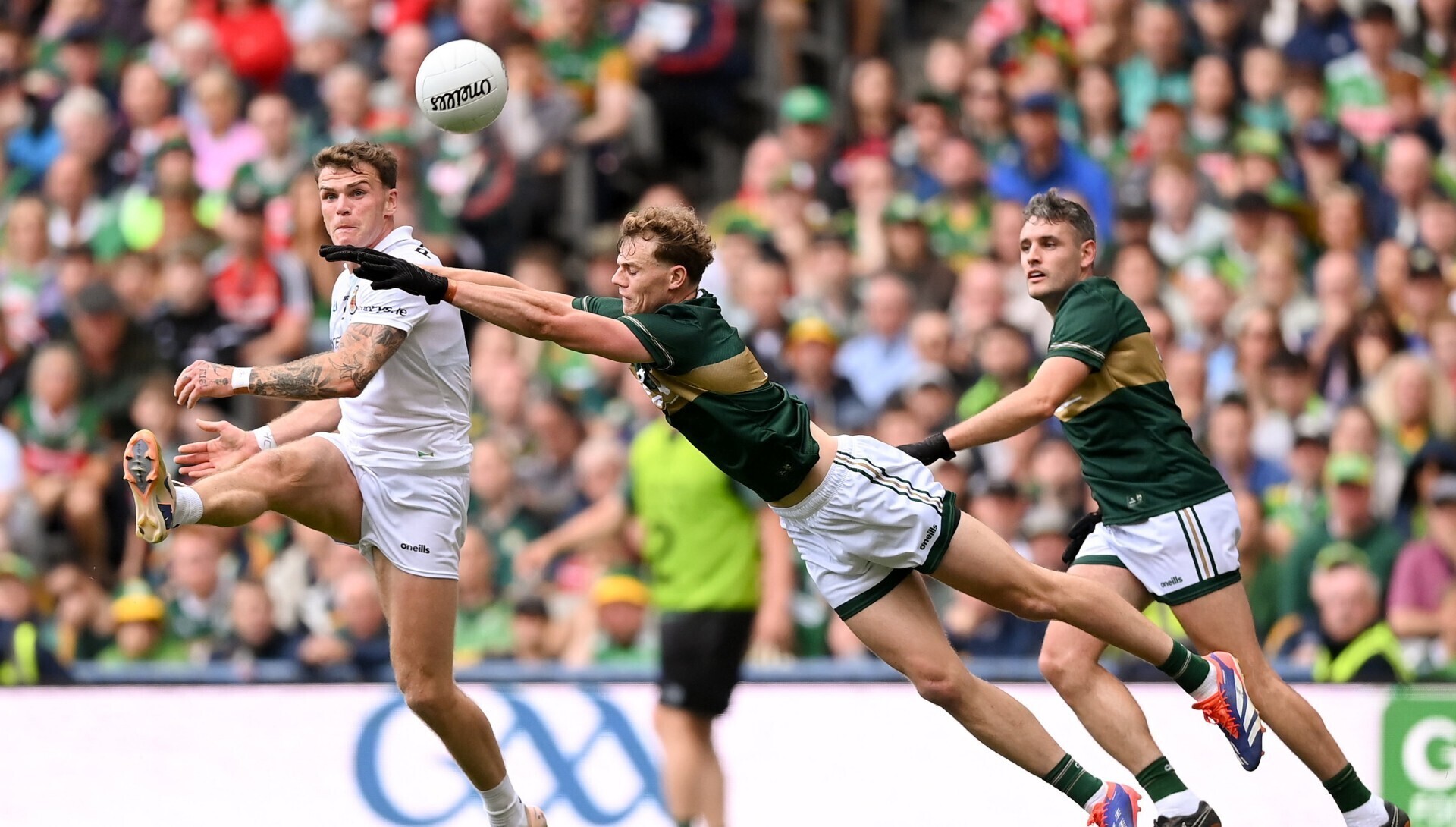
In a condensed season, Mayo discovered five weeks - owing to their Connacht semi-final defeat to Roscommon - in which to grow as a team. Pic: Stephen McCarthy/Sportsfile
Anyone who has watched The Coen Brothers' anthology of stories will remember Tom Waits’ Prospector character.
The movie has been on Netflix for the guts of eight years, but we won’t ruin the plot of the short story only to say that Waits is brilliant. From his typically husky version of to his utter determination to find gold, he and the glorious Colorado landscape make it a memorable tale.
'Mr Pocket' is how Waits describes the precious sliver for which he digs. “I’m gonna getcha. You can’t run away, Mr Pocket!”
“I got the almighty cinch on you, Mr Pocket.”
“Good night, Mr Pocket.”
Read More
Last week, we were reminded once again of how important finding meaningful pockets between championship games was to teams. In such a condensed season, Mayo discovered five weeks. Inadvertently, mind you. It was precipitated by a defeat in a Connacht semi-final. It mightn’t have been their bullion, but it allowed them to put foot to shovel before the All-Ireland series.
“Even with the Roscommon game, we regrouped really strongly that week and we’re actually very lucky we got a huge block of training after that,” said Mayo performance coach Rachel Sheehan. “A lot of it was just time. It just takes time for a new system to be implemented and integrated and for connections to be developed within a team.”
Time to train at the height of the season is cherished. “That three weeks we got after Donegal was a blessing, an absolute blessing,” said Jack O’Connor following June’s All-Ireland Round 3 win over Armagh in Killarney. “We obviously had a training camp, but there aren’t too many windows.”
O’Connor made it clear that it wasn’t a masterplan but weeks before that break he was talking about it. “There are a few fellas not a million miles off it, whether they are back or not for the Donegal game,” he said after the Munster final win over Cork. “Five weeks' time for the second round, we should have a lot of fellas back.”
Of the four All-Ireland semi-finalists, only Dublin didn't have a break between championship games of at least four weeks. Louth had 29 days between losing to Dublin at the start of May and beating them at the end of it.
Among the four losing quarter-finalists, Tyrone had a six-week breather between Ulster and beating Roscommon and both Cork and Galway had three weeks. Monaghan had two.
Donegal were outliers in the sense they themselves had four weeks between losing to Down in Ulster and beating Kerry and then three weeks to their defeat to Cork. And still that didn’t feel enough for Jim McGuinness who felt there wasn't enough time to train. There was more sympathy for Kieran McGeeney’s Armagh who had a six-day turnaround between their losses to Louth and Kerry.
Finding that space where possible in 2027 will be essential because the season isn’t changing. The All-Ireland SFC final is set to be July 25, the semi-finals two weeks before and so on.
Some of the margins are in-built. By virtue of their smaller provincial championships, the Connacht and Munster finalists will again have three weeks between their first and second round matches. Cork and Kerry could have just two games in the space of five weeks, three in seven.
The big three in Ulster – Armagh, Donegal and Tyrone – will avoid the preliminary round along with Derry as they have been drawn at that early stage in the past two seasons.
The big three in Connacht – Galway, Mayo and Roscommon – don’t have to leave the country for matches next season, while Dublin, Kildare, Louth and Westmeath are set to receive byes to separate quarter-finals.
It seems disrespectful to move on from a championship so quickly but even those who illuminated it are doing as much. On on RTÉ Radio 1 on Bank Holiday Monday, Mayo manager Andy Moran was expressing concern about the injuries his players may pick up this weekend as club championship takes off because of “the amount of partying” done last week.
His voice, which was all but gone at one stage in a monumental few days, was coming back and he was already planning. “What winning the All-Ireland does, what losing All-Irelands never did was (ask) what receptions are on next week, where do people want the cup around the world, team holidays, All-Stars, where do you fit these things in around and try and get a training load into them so they’re ready for the last week of January next year for the National League?
“You’d love to say you can down tools and enjoy it, but as a manager you don’t think you’ll get the same level of gaps that you would have from playing.”
The elation of a break. The ecstasy of gold. Finding Mr Pocket. The prospecting doesn't stop.
Attendances for All-Ireland ladies football finals have been challenged almost since they were arranged for the August Bank Holiday Sunday in 2022.
Understandably, there was pent-up excitement that year following the pandemic. A crowd of 46,440 turned up for the games, Meath defending their senior title against Kerry in the main event.
The numbers held up the following year when 45,326 saw Kerry overcome Dublin but the crowds have never been the same – 30,340 in 2024, 48,089 last year when Dublin were again involved and a disappointing 26,471 this past Sunday.
Even at that, it’s an improvement from 2012 when an attendance as small as 16,998 was recorded. But there was always going to be difficulties for Kerry’s following so soon after the men’s game.
Last week, LGFA president Trina Murray made a plea for supporters to turn up in Croke Park. “We have tremendous support across our social medias but we need them here on Sunday and it’s not just the dads, it’s the mums as well.”
As a participation sport, there is no doubt ladies Gaelic football is fast growing but from a spectator point of view it is not and Sunday’s senior final didn’t do it many favours. Getting neutrals to a game on a bank holiday weekend presents a difficulty too.
Of course, it doesn’t help that so many of its best players are currently in Australia. On the same weekend, it felt like the AFLW were sticking a finger in the LGFA’s eye organising the inaugural international game between Australia and Ireland.
Kerry’s Kayleigh Cronin and Paris McCarthy along with Galway’s Áine McCarthy were included in the Irish squad that lined out in Sydney. Would they have been involved for their counties on Sunday if the final was played earlier?
One learned observer of both the men and female codes has argued the LGFA are missing a trick by not bringing forward their inter-county championships to conclude earlier in the summer. They may just have to.
Heaven knows last Sunday week provided enough material to celebrate the new and distinctly improved game of Gaelic football.
The unbridled joy in the immediate aftermath of the final whistle – we can’t bring ourselves to say hooter, it sounds unedifying – would have been enough to honour a sport that feels oh so new in how it is played and the county that finally get to call themselves champions of it.
The GAA does some exemplary work around framing its games but in its montage of an historic day editing out Darragh Beirne’s early second-half point when he had fouled the ball with two consecutive bounces would have been the sensible move.
It brought to mind how the GAA gave the same treatment to a Conor Burke goal for Dublin against Kilkenny in the 2024 Leinster SHC round game in Parnell Park. At least one of the hand-passes in the build-up (Chris Crummey’s) was illegal yet it was held up by a virtuous score.
Speaking of double hops in this year’s football final, it has been claimed Seán O’Shea twice bounced the ball before his fisted point in the 23rd minute. It appears the Kerry forward didn’t have control of the ball as he was attempting to bring it into his possession with the first touch of the ball so on that count referee Martin McNally is absolved.
He missed the Beirne one but the GAA, with the benefit of review, shouldn’t have.