Letters to the Editor: Suzanne Crowe spoke up for Ireland’s voiceless
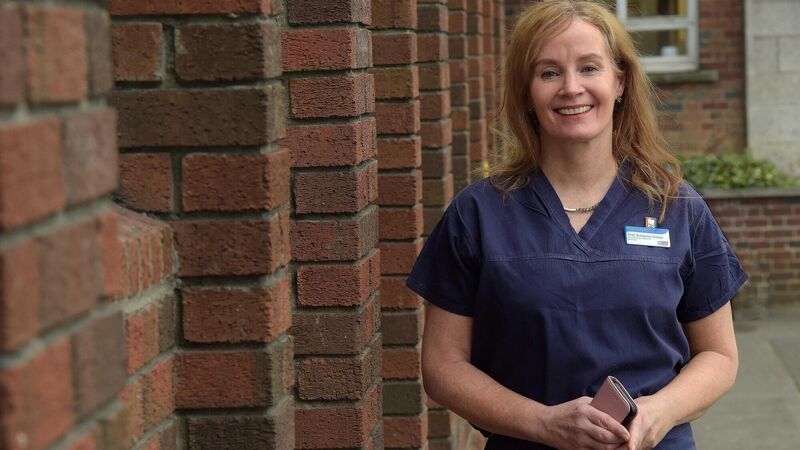
Irish Medical Council president and consultant paediatric intensivist and anaesthesiologist Professor Suzanne Crowe recently contributed an opinion piece to the 'Irish Examiner'. See link below. Picture: Moya Nolan
In response to the article about ‘talking back’ or ‘speaking up’ by Suzanne Crowe (Patients are failed by medical culture of ignoring those who speak up — Irish Examiner, April 23): I agree with her.
There’s a culture in Ireland where speaking up is frowned upon.
That’s why we have such an awful past, and even present, with horrific abuse scandals and more — the Grace case being the one at the forefront of my mind.
As a parent of a disabled teenager who has been under the care of 14 medical teams for his life so far, I have seen how people working in medicine are afraid to speak up, and parents are the same. We are often afraid of the consequences of relaying our concerns to a nursing manager or a doctor, we are afraid that our child’s care will be compromised. It is not an irrational fear, as it has happened to me and my son.
My son is extremely medically complex and requires 24-hour care.
He has severe/profound intellectual disability, Down syndrome, and an ultra-rare disease. He is non-verbal and a full-time wheelchair user. He is tube fed into his jejunum. He is on a tonne of medication, many of which are pain meds to keep him as free from pain as possible.
Having a disability definitely means that he is very often the subject of passive discrimination. This is very obvious in a hospital setting. There are so many little ways that he is discriminated against. He is not alone, I believe that everyone with a disability is discriminated against in some way or another.
Parents of children like my son often find ourselves having to ‘speak up’, also known as advocating. Our children are often forgotten about as they have no voice of their own, so parents like me have no choice but to be their voice.
We are sometimes made to feel as if we are being awkward or troublesome. But, in fact, most of us who care 24/7 for our kids at home are experts in their care, and good doctors and nurses know and appreciate that.
We appreciate that understanding and empathy more than they know. It’s about having compassion. These are important traits to have for anyone working in healthcare. But also — as Suzanne outlines — is bravery.
We need medics to speak up and make a stand if something isn’t safe.
Not after the damage is done, but before. Whistleblowers shouldn’t even exist because people should be listened to.
The new national children’s hospital is a good example where many doctors ‘spoke up’ but were ignored, as it is not in the correct location and it’s not open yet, and the most important co-location of all, a maternity hospital, is absent. So ill newborns are still going to be at risk of disability or death. Having to be transported from a maternity hospital to a children’s hospital is so risky for many newborns. Many doctors and other workers in healthcare spoke up and were ignored. Then it became obvious that if they did speak up, their jobs could be at risk.
Parents ‘spoke up’ too, but were also ignored. What would we know?
I think Suzanne’s daughter will go far, she did nothing wrong in school. ‘Talking back’, ‘speaking up’ or ‘advocating’ is something that our children are doing better than we did. I was afraid to ‘speak up’ in school, as to risk the wrath of the nuns was not worth it. My daughter is 21 and in college doing journalism and she is well able to stand up for what she believes in and to form her own opinions. I’m very proud of her.
My son will never speak, so I will have to continue ‘speaking up’ on his behalf. I appreciate those doctors, nurses, and allied healthcare professionals who advocate for him alongside me.
I read with admiration and some relief the article on whistleblowers by Medical Council president, Suzanne Crowe. I would like to ask her to take appropriate steps to ensure Medical Council inquiries revert to public hearings.
Public hearings were introduced as a direct result of the Caesarean hysterectomy scandal in Our Lady of Lourdes Hospital Drogheda, which came to light in 1998. I had the honour of working with the women and families concerned for several years, and understand how vital the change was for them and how hard they worked for it.
Public hearings for professional misconduct were suspended during covid, for obvious reasons. Online hearings are now held where neither doctor nor complainant attend in person. This is unsatisfactory for injured patients and families.
It reinforces the unhealthy secrecy surrounding bad doctoring and, in so doing, indirectly encourages it.
Public hearings help to normalise the raising of concerns and accountability in a way that is necessary to encourage whistleblowing. They need to return.
As a taxpayer contributing over 40% of my income to the State, I am compelled to ask: At what point does this Government acknowledge its systemic failures and commit to meaningful reform? While Ireland’s public services and infrastructure crumble, and families grapple with exorbitant mortgages, the self-congratulatory rhetoric of our leaders feels increasingly detached from reality.
Decades of mismanagement have left us with a healthcare system in perpetual crisis and a housing market that prices generations out of home ownership. Infrastructure projects like the National Children’s Hospital (€1.4bn or more over budget) and the delayed MetroLink exemplify fiscal recklessness. Yet the Government’s solution, selling off public assets and privatising essential services, prioritises short-term cash injections over long-term public good.
Natural resources, from offshore wind to minerals, are increasingly outsourced to private interests, eroding public ownership and energy security. Similarly, the privatisation of critical services has left households paying more for utilities and waste collection, while corporations profit and avoid taxes. Public-private partnerships, touted as efficient, often saddle taxpayers with hidden long-term costs and reduced accountability.
This short-termism has consequences. Households today require two incomes to afford what a single wage could secure in the 1970s, sacrificing family time and quality of life in the process. Meanwhile, our elderly population, many of whom built this State, face neglect, with inadequate homecare supports and nursing home scandals exposing systemic failures in their welfare. Our children, too, bear the brunt: Under-resourced mental health services and endless waiting lists for Camhs betray a generation in crisis.
Taxpayers deserve answers. Why must we pay world-class taxes for subpar services? Why are public assets and resources sold off for fleeting gains? When will those responsible for repeated failures be held to account?
Ireland’s social contract is fraying. It’s time our leaders govern for citizens, not private interests.
Humanity has never witnessed such atrocities before perpetrated on children; over 50% of the Gazan population is under 14 years of age.
Every day and night we see images of powerful missiles dropped on tents on purpose, with the deliberate intention of burning and shredding people alive. The Israeli government is intent on eradicating the Palestinian population. No food, water, or medical supplies have entered Gaza since March 2.
I find it disgusting that the Central Bank of Ireland (CBI) continues to allow Israel to market its sovereign war bonds in Ireland, and acts as the gateway for their sale throughout the EU. It is absolute nonsense that our Government cannot direct the CBI to stop this. This could be stopped in the morning under existing legislation if they had the will and stopped pandering to the US and the EU who have too much skin in the game, selling arms to Israel.
As an aside, the CBI’s code of ethics states the bank is an apolitical institution and staff should protect its apolitical position at all times. The code states that staff must not engage in any activity which could call into question this apolitical status or risk the bank being drawn into any political or public controversy.
Facilitating the sale of war bonds would surely be classed as political, and their absence of cop-on and continuing sale of bonds has and continues to draw the CBI into political and public controversy.
Thank you for publishing Séamas O’Reilly’s wonderful piece on the moral panic fomented around trans rights in Britain.
He cuts cleanly through the disingenuous rhetoric used to disguise the intentions of the transphobic few who deliberately whipped up and led a mob to protest the very right to exist of a tiny and vulnerable minority.
I echo his call to resist this “very British bigotry”.
It is time for us all to stand in defence of our transgender brothers, sisters, and children. Love wins.