Dorcha Lee: If we just keep pretending Ireland isn't really part of Europe, we'll be fine
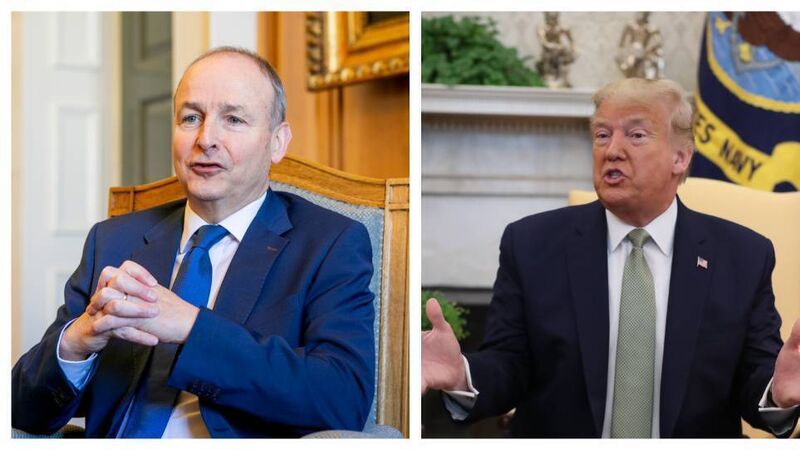
St Patrick’s week is now an institution in itself. It is a special opportunity for the leader of the free world to meet the Taoiseach of the day, Micheál Martin.
When An Taoiseach visits the White House tomorrow, St Patrick will be at his side to ensure that Micheál Martin will not be badger-baited like President Zelenskyy. I predict the meeting will go very well.
Former Taoiseach and defence minister, Leo Varadkar, neatly handled a difficult situation when he met president Trump back in 2019. When president Trump said that Europe needs to fork up for its own defence and stop ripping off the US taxpayer, Leo simply agreed with ‘The Donald’.
This was a standard message the president was giving to every European leader that came to the White House. The former taoiseach had no problem at all with Europe paying for its own defence, nor indeed have most Irish politicians, so long as Ireland is not involved.
Maybe Irish defence spending wasn’t even mentioned during their meeting. Or, better still, the former taoiseach persuaded the president that Ireland wasn’t really part of Europe at all. After all, the Gulf stream now comes from the Gulf of America to our western seaboard. We are all Americans now.
For some sentimental Americans, Ireland is special. The Emerald Isle is regarded as a kind of semi-detached paradise, permanently in orbit between the US and heaven, with great golfing, and comely maidens dancing at the crossroads.
The question in my mind, then, is, whether president Trump is one of those sentimental American golfers, perhaps like Bing Crosby, still wondering how are things in Glocca Mora.
St Patrick’s week is now an institution in itself. It is not just a chance for Washingtonians to wear the green, but a special opportunity for the leader of the free world to meet the Taoiseach of the day, Micheál Martin.
This is a unique chance for president Trump to state his worries and concerns to the real Taoiseach. The Irish public expect our Taoiseach to raise issues of concern also, and, being an honourable man, he will, but in a most diplomatic way.
In Washington the reputation of Irish diplomacy is legendary. Back in ’72, while on a visit to the State Department in Washington, I remember a plaque on the wall. It said: “An Irish diplomat could tell you to go to Hell, in such a nice way, that you would look forward to the journey!”
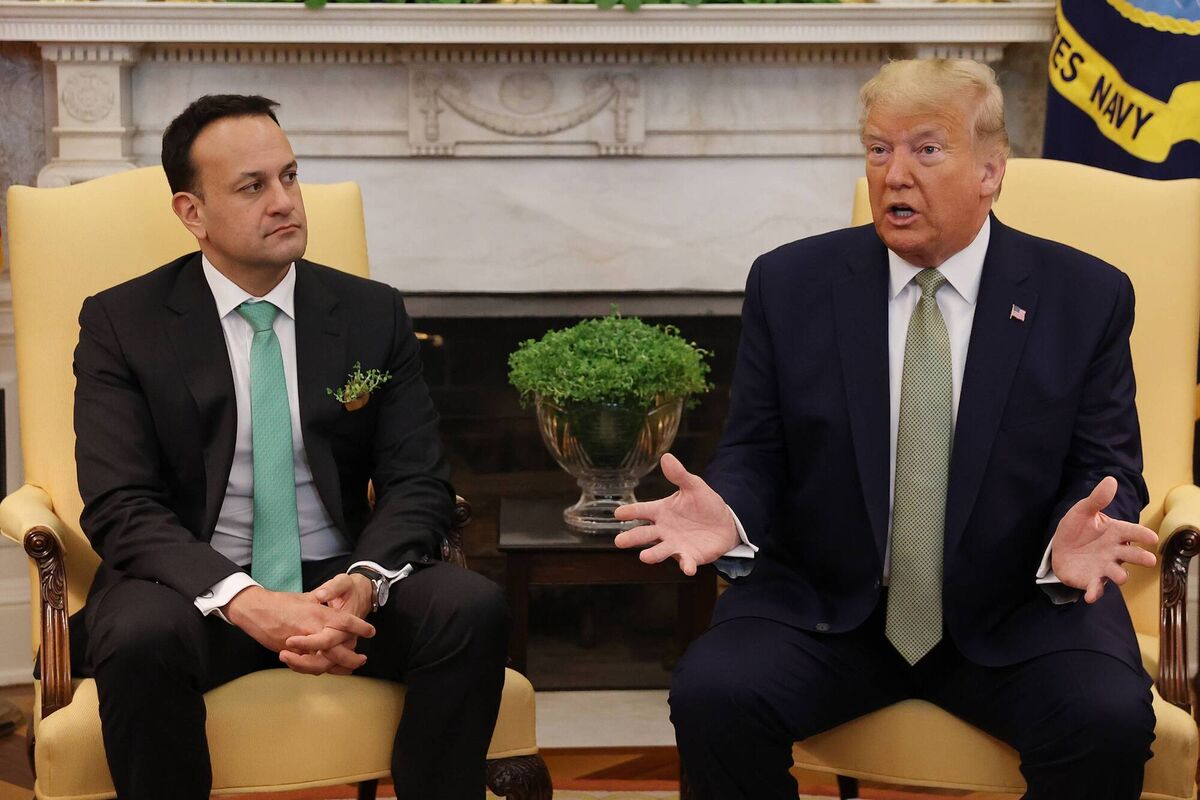
Of course, no visit to the White House would be complete without the famous photo call. President Trump and the Taoiseach, all smiles as the shamrock bowl is handed over. The elephant in the room is really a huge stuffed Irish wolfhound, dressed in green livery.
However, this dog has really had his day, having been militarily neutralised decades ago. It can no longer growl, bite or even bark. It is a very docile animal really, timid, always ready to offer a paw or wag its tail. Just press the play button. Very well behaved, not like the lively labrador president Putin had in his office when he met chancellor Merkel.
But, seriously, who in Europe is going to pay for our continent’s security? Of course, back in the sixties and seventies, when my American military friends mentioned Europe, they really meant Germany. Great! Germany can pick up the tab for European defence.
Since the seventies all US presidents have tried to get “Europe” to increase its defence spending. With the exception of Donald Trump, all have failed.
The most coercive attempt was made by president Nixon during his Reykjavik meeting with French president Pompidou in the autumn of ’73. Even then Nixon was not asking Europe directly to increase defence spending but to concede a favourable trade deal with the US, in acknowledgement of the US contribution to European defence.
Pompidou pointed out that trade arrangements between the US and Europe could only be done through the EEC (EU), while defence was a matter for Nato. Since the membership of the EEC and Nato did not fully overlap, it was not possible to put US-Europe trade and defence on the one agenda.
One EEC Member State, Ireland, was neutral. Then Nixon, at secretary of state Kissinger’s suggestion, threatened to withdraw the quarter of a million US service personnel from Europe, Pompidou, though very ill at the time, did not budge.
From the beginning of the Cold War, there was always a worry in the background that the US might not fully honour Article 5 of the Nato Charter, by which all members agreed to come to the defence of another member country, if attacked. Would the US really use nuclear weapons to defend a European Nato member country and risk nuclear retaliation by the USSR?
At that time the nuclear doctrines of both the USSR and the US were based on MAD, (mutually assured destruction). For MAD to work, both sides adopted a policy not to strike first with nuclear weapons. Since both sides had the strategic nuclear capability to wipe out the other several times over, Armageddon was avoided.
By the early seventies, the USSR had expanded their ground forces, so much, that the US feared Nato could not withstand a Soviet offensive in Europe without resort to nuclear weapons.
These fears abated with the collapse of the USSR in ’89. However, with the arrival in power of president Putin, a revived nationalist Russia began upgrading the Russian Armed Forces. But now Putin has changed Russia’s nuclear policy. He can authorise the use of tactical nuclear weapons in response to an overwhelming conventional (non-nuclear) attack.
When Trump launched his first election campaign in 2016, he said that the US would not help a Nato member country that did not commit to NATO’s 2% level of GDP on defence. Several of the smaller Nato countries became worried and began to rapidly increase defence spending towards, and even beyond, the agreed target.
When Trump was elected, he repeated his threat not to support ‘delinquent’ Nato countries. Annoyed with chancellor Angela Merkel’s cool response, he announced the phased withdrawal of 12,000 US troops from Germany, half of which would be located elsewhere within the Alliance. The US had 36,000 troops in Germany at that time.
During his first term, he had called for a study to be done on the implications of the US leaving Nato completely. The Biden Administration restored Nato’s confidence in US support, but the crisis in Ukraine intervened to reinforce Trump’s central message.
In the meantime, Trump will pressure his Nato allies to substantially increase defence spending, at June’s Nato Summit in the Netherlands. Trump is already talking about raising the current 2% level to 5% of GDP.
Ireland’s shamefully low level of defence spending remains at 0.2% of GDP, but let’s pretend to move the decimal point one click to the right. Hopefully Trump won’t notice. If he does, he can be reassured that the new Government will achieve its highest target level of defence capabilities, as soon as the Third World War is over.
Anyway, since Ireland is not really part of Europe, maybe we have nothing to worry about.
- Dorcha Lee is a retired army colonel and defence analyst
CONNECT WITH US TODAY



Be the first to know the latest news and updates