Mick Clifford: Will Listowel Writers' Week be the rock on which reunification flounders?

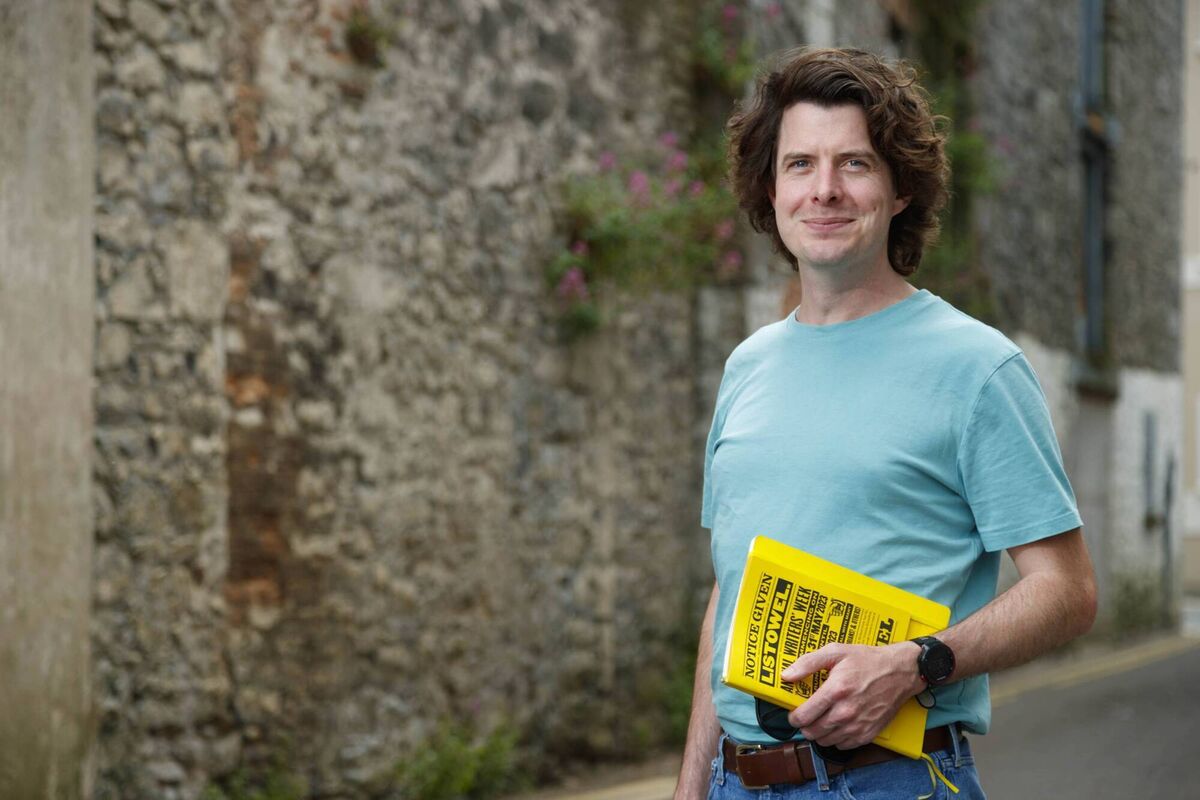
Stephen Connolly, who was curator for the 2023 Listowel Writers Week, has recollected of how he felt alienated and being told he “wasn’t really Irish”. Photo: Kerry's Eye
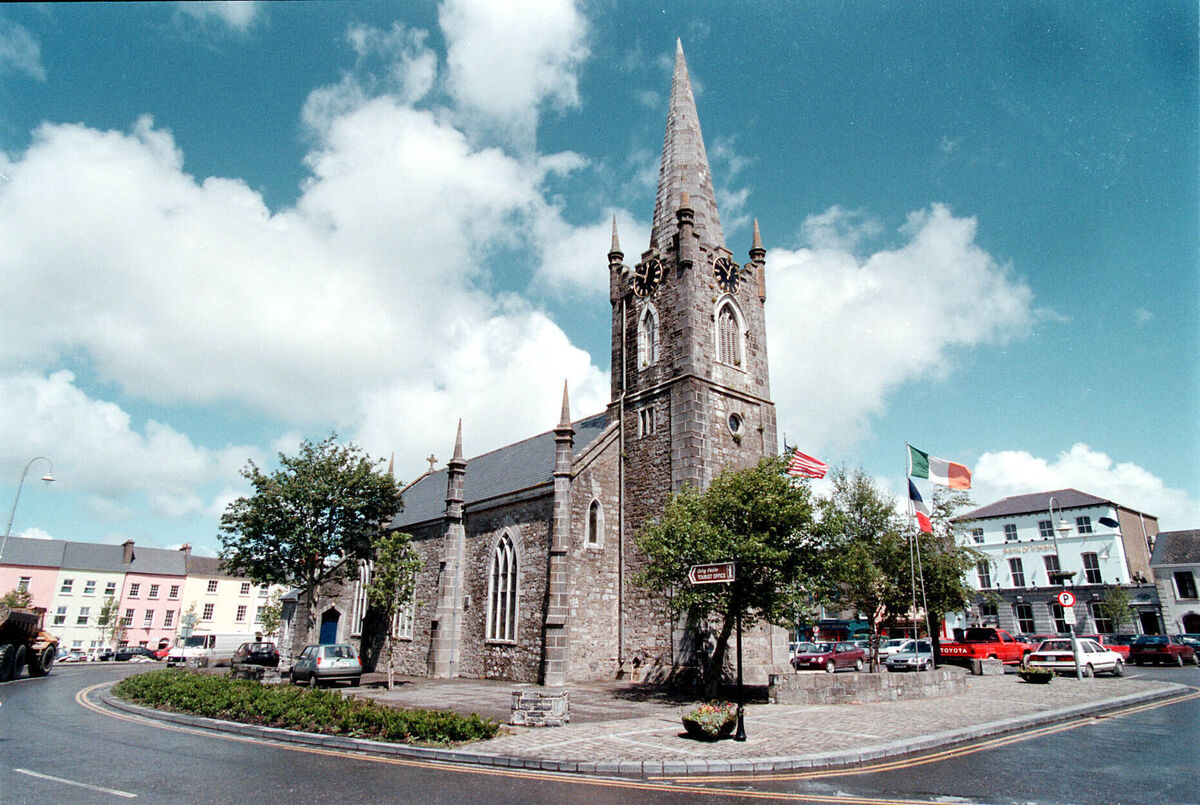
Listowel has found itself at the centre of a national — some would say international — incident.
The curator for the 2023 Writers Week festival in the Kerry town has hit out at reaction locally towards him, and specifically his northern accent and roots. The blast was delivered from Belfast, the city to which the now former curator, poet Stephen Connolly, has returned after a turbulent sojourn in north Kerry.
“I’m starting to feel like I can talk about what happened in Listowel,” he wrote in the Anderstown News of the festival which took place between May 30 and June 4.
Connolly’s recollection of how he felt alienated and being told he “wasn’t really Irish” prompted a dam burst from other northern writers, collectively pointing a finger at the south in general and poor old Listowel in particular. "J’accuse" was the sentiment expressed, and it wasn’t pretty.
Writers Week is the oldest festival of its kind, having been first held in 1971, organized by, among others, local writers John B Keane and Bryan McMahon. Those who knew it largely loved it as a location where writerly pursuits and interests were smoothly delivered with a thick froth of sociability. The festival wasn’t just in Listowel, but of Listowel.
In recent years, however, a few sour currents swept through the town, opening fissures that would have sent John B’s pen pulsing into mad action. As it turns out, it may well be Stephen Connolly who ends up writing a thinly veined fictional account of this modern fable from small town Ireland. Asked how he was now feeling about his time and troubles in Listowel, Connolly replied by email. “I’m writing a novel”.
The cross-border contretemps kicked off when Connolly described how bad things had got for him in the six months he had spent in North Kerry. He wrote about how during one festival meeting, soon after he was appointed, a man had said: “Could they not have got anyone Irish to do it?”.
Another person complained about the number of northern writers featuring by comparing the running of the festival to unionist gerrymandering of local elections in years gone by. Yet another, he says, told him at one point during the event: “I have been involved with this festival before and I just want to tell you that you’ve ruined it.” He also reported being welcomed by the majority of people, with the agitating led by a minority, locally.
The piece immediately prompted a gaggle of Northern writers to feel Connolly’s pain. Belfast author Michael Magee, whose debut novel Closer To Home has received rave reviews, concurred on Twitter, quoting Connolly’s line ‘could they not have got anyone Irish to do it’.
He went on: “The vast majority of people at Listowel were brilliant, a glorious town, but I saw firsthand how Stephen was treated, both by certain elements in the town and festival organisers, and it was a disgrace.”
The Co. Antrim actor, Seamus O’Hara, who starred in the recent, hugely successful An Irish Goodbye, echoed the sentiment. “I attended Listowel and it was a beautiful meeting of artists, however the ‘you’re not the right kind of Irish, please leave’ was strong”, he told the Belfast Telegraph.
Malachi O’Doherty, a journalist and writer who has written perceptively about divides on this island, weighed in, in the Irish Post. “I’m left wondering if this aversion to the outsider is symptomatic of something specific to Listowel, born of grievances that were deep even before Stephen Connolly arrived in town, or if it tells us that Ireland really is divided along the border and that a lot more work has to be done at acquainting the two sides with each other before unity can be taken seriously.”
Is Listowel to be the rock on which reunification flounders?
The reaction in Listowel to this outpouring — which was, as usual, hugely amplified on social media — has been one part bemusement, two parts horror. The town through its annual festival has garnered a reputation for not so much welcoming all comers as embracing them in a collective bear hug and carting them off to the nearest hostelry where lifelong friendships were forged.
Now this. Few with knowledge of the festival and its workings were willing to talk openly, but all were clearly miffed that their town is being portrayed as a bastion of anti-Northern sentiment.
Poet and writer Gabriel Fitzmaurice had no problem talking. He pointed out that he is not “local” in the strictest sense as he hails from the separate republic of Moyvane, but he does have a long association with the festival. He speaks highly of Connolly’s personal qualities, but wonders if things could have been done better.
“He did a good job,” Fitzmaurice says. “He brought down great writers from the North. Now, they did seem to huddle together. Normally when people come to Listowel they socialize a bit more, but that was no big deal. It is true that some people felt Stephen Connolly didn’t understand Writers' Week well enough. If he had worked more with the community things would have gone better.”
It is accepted widely within the town that he was working under constraints that were not of his making.
He was appointed the first curator of the festival in its history last December. He moved to Kerry in January, and was put up in accommodation in Lixnaw by Jimmy Deenihan, former junior minister, member of the festival board, and holder of five All-Ireland senior football medals.
Connolly settled into his new role but had less than a fortnight to come up with a programme. Naturally, he mined his contacts book and got a good number of northern writers on board, including Michael Magee, Lucy Caldwell, Paul Muldoon, Paul Brady and Wendy Erskine, all serious people in the literary world.
He added celebrity wattage with the selection of actor Stephen Rae to receive the John B Keane special achievement award. The preponderance of northern names led some local wags to label the forthcoming festival the ‘continuity writers’ week.
Opinion varies on how good a job was done by the curator. Most who spoke to the were complimentary of the quality of the programme, including the Northern writers. (One attendee pointed out that any suggestions that the Nordies huddled together could be attributed to the preponderance of them who were smokers, a subset in any social gathering these days which congregates together).
A more general criticism was that the festival was missing something, as if the Listowel had been taken out of Writers' Week.
“Going back a few years there was always a buzz around the place, a great sense of craic,” one regular attendee said. “There was nothing wrong as such this year but it was just flat. It wasn’t the same.”
Other differences were also commented on. The St John’s Art Centre in the town square, customarily a central venue for the festival, largely went unused this year. Some attribute this to the local fissures. There were no children’s events, which had regularly been a part of the festival.
And then there were a few small things that perhaps spoke of bigger problems. Guests at these kind of events are habitually presented with tote type bags, usually filled with books, local produce and mementos. The tote bag this year consisted of a bottle of water, a bag of crisps and a pen. The offering did not suggest a community coming together to put on a sparkling event.
Stephen Connolly can’t be blamed for all that. He wasn’t in situ last September in Listowel when the future was laid out on a day some have described as 'Black Friday'. A four-page report commissioned by the board of LWW, and funded by the Arts Council at a cost of €15,000, was published that fateful evening.
The main recommendation was to “discontinue some of the existing and dysfunctional ways of working including the various committee structures and the role of the festival chairperson”. The report also referred to an existing “toxic culture”. Once the report was hungrily read locally, all hell broke loose.
Up until that point, LWW was largely run by a committee that consisted of up to 20 local people. This operated in tandem with a board, which was set up to comply with corporate governance structures.
The committee collectively organized, made contacts, did the meet and greet and created a whole hinterland for the festival, as they had done since soon after John B’s vision began to take shape. The chair of the festival was drawn from the committee rather than the board.
Now this model was to be shown the road in the name of professionalizing the festival. The board, under the chair of local woman Catherine Moylan, adopted the report’s recommendations, fired the committee and retained the services of the report’s author, consultant Dermot McLaughlin, for the 2023 festival.
The town hasn’t known peace since. What ensued made the notoriously unholy North Kerry Junior Football championship look like an afternoon’s croquet.
Beyond, the ripples spread fast. Honorary president Colm Tóibín resigned in solidarity with the committee. Sixteen leading writers wrote to the Irish Times to express their dismay that the essence of Listowel was being dumped untreated into the Shannon waters.
The committee (the continuity committee?) continued to meet — despite having been disbanded. On a deeper level there was real hurt that the efforts of so many which had been invested with pride in the town were now considered surplus to the pursuit of some processed form of modernity.
In particular, the suggestion of a “toxic culture” got backs up. “There were some personality clashes between a small minority of members of the board and the committee,” one insider told the . “But to portray that as toxic had no basis at all.”
Beyond that there is a large degree of consensus that appointing a curator was a welcome idea, but ejecting the committee betrayed a complete ignorance of what Listowel was about. Committee chair Aidan Ó Murchú declined to comment on the situation beyond confirming that the committee was not contacted this year by the curator about any aspect of the festival.
Enter Stephen Connolly, the bright new shining curator, to a town divided. In correspondence with the by email, Connolly was asked whether he had been the victim of a split in the town rather than his Northern roots having anything to do with what he encountered.
“I think that the northern identity issue is a red herring,” he replied.
"There were people in the town who were raging about the restructure and it empowered them to say anything they wanted to me.
In an interview that Connolly did with The Kerryman on the eve of the festival he was asked about the split and any fall-out. “Nobody really said anything to me, at least not to my face. In terms of (local) resistance, I’m sure there probably was a lot going on in the background. But no one said anything directly to me. Perhaps it was a blessing in disguise.”
The chair of the LWW board, Ms Moylan, says that she believes this year’s festival was a success, even though, she claims, the actions of some people over the last year “seem intent on destroying it”.
She went on: “It often felt as if they wanted the festival to die with them rather than allow it to evolve and grow”. She denies that the committee were sidelined and says they were asked “to submit ideas to the curator”. (This is disputed).
In the aftermath of this year’s festival Stephen Connolly expected to be retained. He says that he had been told “I could expect to be able to plan for the next three years.” Catherine Moylan was reported to be in favour of his retention, but didn’t have the support of the board. He left and Ms Moylan completed her term as chair.
The new chair Tom O’Donovan is now moving to bind wounds. He has sourced a curator for next year, poet Martin Dyar, who will be officially unveiled next week once the cross border skirmishes have blown over.
“I would like to see members of the former committee appointed as directors,” O’Donovan says. “It’s a small town and we have to get on together. We will try to get local people and we will try to have a better gender balance. Some people have told me they would be agreeable to join once all this stuff is sorted out. They don’t want to be seen to be taking sides and that is understandable.”
With a parting of the clouds and a joining of hands, the fevered hope in Listowel now is that this year can be filed away as one that went missing. The smart money says that if Stephen Connolly does produce his Roman a Clef about the town in the near future he’ll have a job getting it onto the shortlist for the festival’s Book Of The Year. Or maybe not.
CONNECT WITH US TODAY



Be the first to know the latest news and updates