Paul Hosford: Why did Donohoe and English wait for issues to become public before coming clean?
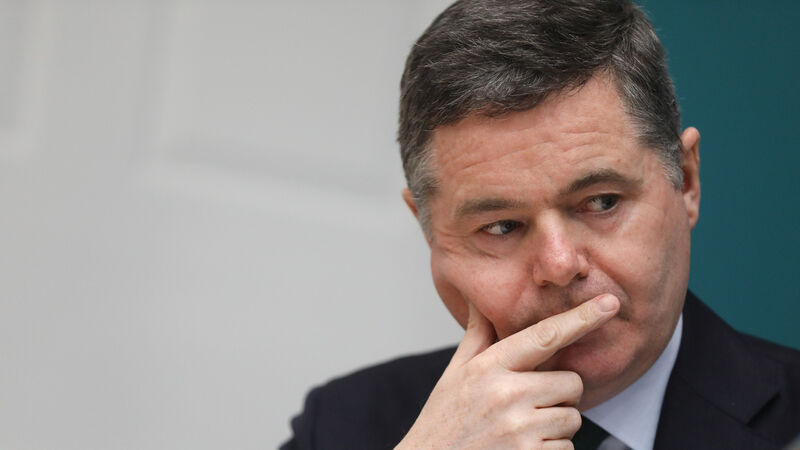
Paschal Donohoe is likely to account for his discrepancy in the Dáil this week or next, but Taoiseach Leo Varadkar doesn't see a need for Mr English to do so, now that he has stepped down from his ministerial brief. Picture: Leah Farrell/RollingNews.ie
During the early days of the Covid-19 pandemic, it was common for Paschal Donohoe to take the Friday press conference at Government Buildings.
Ostensibly, these briefings would focus on figures — those receiving social welfare, the costs, and so on — but the purpose of rolling out the Dublin Central TD as the country faced lockdown was clear: this is a time for calm, sensible heads and Paschal Donohoe was just that. Which makes the news of a Standards in Public Office Commission (Sipo) investigation into his failure to properly disclose work done for his 2016 general election campaign even more uncomfortable than it might otherwise be.
This is, after all, a man whose job it is to check the numbers, to ensure that everything checks out. If his paperwork wasn't up to date, is anyone's?
The fact that Mr Donohoe's discrepancy came to light just days after junior enterprise minister Damien English resigned over his failure to declare a previous home ownership on a planning application for his family home in 2008 makes this whole affair doubly uncomfortable. Mr Donohoe, in contrast with Mr English, faced the media over the weekend in a hastily arranged press briefing to explain his position, something Tánaiste Micheál Martin felt was satisfactory.
But questions remain about Mr Donohoe's failure to update his records in 2017 or to address the matter in November when he was told a Sipo complaint was coming. All too often, it seems to the electorate, politicians wait for matters to become public knowledge before coming clean. In Mr English's case, the planning application was 15 years old before The Ditch news website shone a light on its particulars. For Mr Donohoe, it was nearly seven years.
For all the protestation that the approach of both men shows a commitment to transparency, it certainly doesn't feel like it. Mr Donohoe, particularly, was asked questions about the donations in November and declined to account fully for them.
Both matters have been referred to Sipo and that investigation will be used to shield colleagues from further questions but may also shine a light on something even more important — whether Sipo has any real power to sanction either man. Mr Donohoe, as the minister overseeing the commission, has said he will recuse himself from any lawmaking around Sipo while the complaint is being investigated, but the fact that that legislation is needed tells its own story.
Mr Donohoe is likely to account for his discrepancy in the Dáil this week or next, but Taoiseach Leo Varadkar doesn't see a need for Mr English to, now that he has stepped down from his ministerial brief. The Taoiseach will hope that his party colleagues use the examples to doublecheck their paperwork.
CONNECT WITH US TODAY



Be the first to know the latest news and updates