Everything we know about Budget 2023 so far
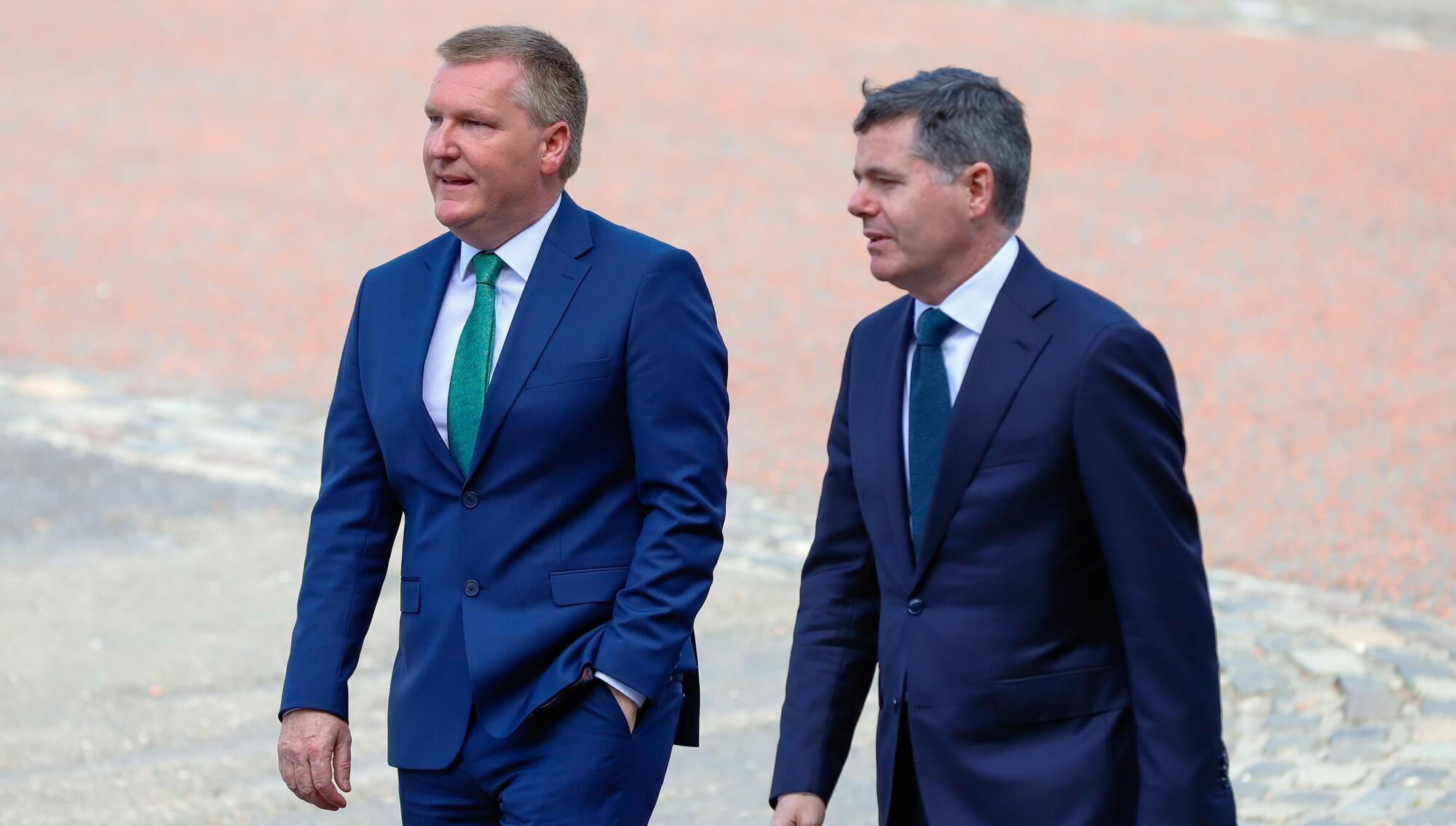
Minister for Finance Paschal Donohoe (right) and Minister for Public Expenditure and Reform Michael McGrath are expected to unleash a financial package of new spending measures and tax cuts of nearly €10bn in total. Photo: Damien Storan
With the budget just five days away, the final key decisions are now being made by Finance Minister Paschal Donohoe and Public Expenditure Minister Michael McGrath.
Facing the worst cost-of-living crisis in 50 years and the impact of a war in Europe, the challenge facing the Government is fierce.
It is expected to unleash a financial package of new spending measures and tax cuts of nearly €10bn in total, between new permanent initiatives and once-off measures to ease the burden of inflation.
While the full jigsaw puzzle of the budget is not yet pieced together, we already know a fair amount of what will be included in next Tuesday’s announcement.
Let’s take a look at the main measures:
Because of the cost-of-living crisis, the Government will be announcing essentially two budgets on Tuesday — the normal new levels of spending for 2023 and a series of once-off measures which will take effect and be paid for this year.
We know from the Summer Economic Statement that Mr McGrath and Mr Donohoe have a total package of €6.7bn in additional spending for 2023.
While this sounds a lot and it is, because of monies already committed last year and the cost of the new public sector pay deal (€1.4bn), the amount of unallocated or new money to give out is very small, at just €1.3bn. That is a lower amount than last year.
On top of that, we know because of healthy surpluses in the State’s coffers this year, circa €5bn to €6bn at present, the Government is set to unleash up to €3bn of that on once-off cost-of-living measures.
Described as the top priority of the budget aside from the cost-of-living crisis, reducing the cost of childcare will be a centrepiece of the announcement on Tuesday.
Parents are likely to see their childcare costs decline by €200 per month next year and a further €200 per month the following year on average, which would equate to a 50% reduction in costs to parents.
We know that the Government has decided against going down the route of capping energy bills as it was seen as an unfair boon to energy companies.
Instead, it will repeat what it has already done by issuing not one but three energy credits of €200, or €600 in total, over the winter months.
We also know that the fuel allowance is set to increase by about €5 per week from the current rate of €33 and more people will become eligible to receive it.
Recipients will also receive a €100 lump sum in a one-off payment before Christmas to help with the cost-of-living crisis.
It is also anticipated that the current cut to excise on petrol and diesel will be continued well into next year. Excise duty has been reduced by 20c per litre of petrol and 15c per litre of diesel. A reduction of 2c in the excise duty charged on marked gas oil is also in existence.
Mr Donohoe and Mr McGrath have rejected Leo Varadkar’s desired 30% tax rate but will again increase the point at which people will pay the higher rate of income tax. It is believed that the entry point will increase to around €39,300.
Workers earning €50,000 will save at least €500 a year on average. Mr Donohoe is set to increase the 40% income tax band by €2,500, meaning workers will not have to pay the higher rate on any earnings below €39,300.
We are also expecting the reduced Vat rate for the hospitality sector to be ended and return to 13.5% amid reports of price gouging by hotels, especially in Dublin.
There is also expected to be additional tax relief for landlords and renters but the mechanics of this are not settled.
One aspect to watch is what Mr Donohoe decides to do on PRSI, especially for the self-employed who have for a long time enjoyed reduced benefits compared to their salaried colleagues.
We know that calls for a €15 increase to the primary weekly welfare benefits have been ruled out as “too much of a stretch” with a sense the increase will be €10.
There is a strong expectation too that we will see a double Christmas bonus-style payment for welfare recipients delivered before the end of the year.
There is also a strong sense that the Government will deliver a bonus child benefit payment to all families, rich and poor, before the end of the year.
While there is some doubt as to whether Health Minister Stephen Donnelly will get funding for IVF treatment in the budget, he is likely to get money to allow him scrap hospital fees for adults and he is also hoping to get money to allow him get waiting lists under control.
The reduced fares on public transport which have proven to be highly successful and popular are to be extended. A 50% cut for the cost of tickets for those under 25 are "there for the long haul", according to sources.
It is expected that a further one-point reduction in the pupil teacher ratios will be included in the budget with Education Minister Norma Foley seeking more money for teachers and Special Needs Assistants.
Other things to watch out for are additional funding for the school transport scheme, which is in real difficulty. There will possibly be more money for school meals and books.
In higher education, Simon Harris is fighting for funding to reduce the €3,000 a year registration fees with some talk of the reduction being €250 this year.
However, sources have said he is looking to get a €500 reduction over the line.
With increased pressure on An Garda Síochána, Justice Minister Helen McEntee is seeking to increase the force by several hundred officers amid calls from Commissioner Drew Harris for more resources.
In light of the recent Commission report on the future of the Defence Forces, the Government has committed to a significant increase in funding. Simon Coveney has said Ireland is likely to increase its annual defence spending by at least €500 million in the coming years, but the amount for this year has yet to be finalised.
One of the major issues facing both Mr McGrath and Mr Donohoe is the cost of simply standing still. With inflation running at up to 10% in some sectors, the impact on the budget is significant before any new measures can be considered.
In health in particular with an annual budget of €22bn, the cost of standing still is well over €1bn and such pressures are leading to tensions with a strong possibility of services being threatened due to a lack of funding.
CONNECT WITH US TODAY



Be the first to know the latest news and updates