Elaine Loughlin: Simon Harris is losing control of the narrative over the Patrick O’Donovan saga
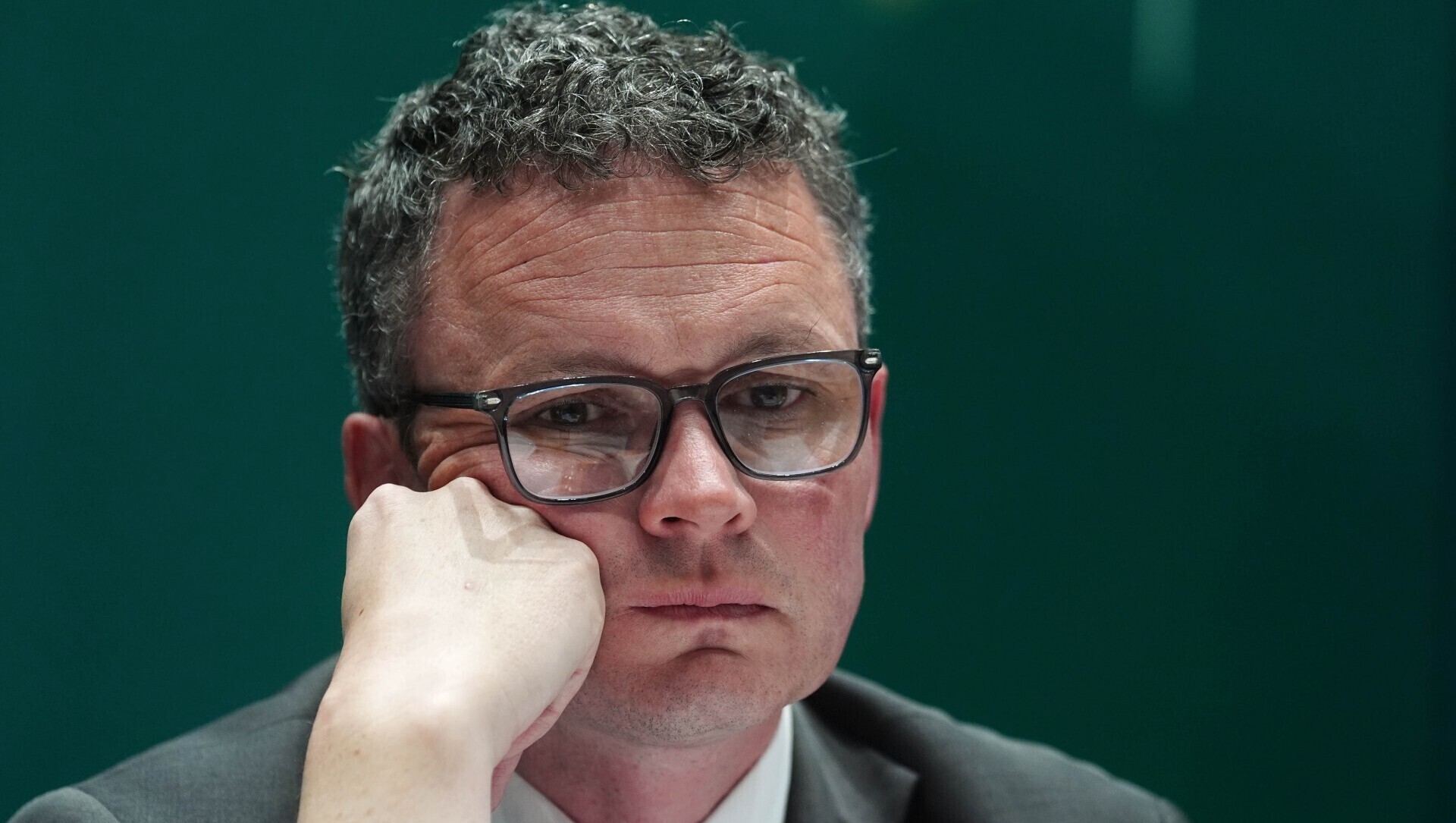
Since October 13, when Patrick O'Donovan fell ill at an EU presidency event in Limerick, journalists have endeavoured to get to the bottom of the phone call, the anonymous Fine Gael comments, and all that has spiralled out from it since. Picture: Brian Lawless/PA

Besieged by controversy and chaos, Simon Harris heads into his party's ard fheis unable to shake what should have been a one-day embarrassment.
The curious case of a phone call made to Patrick O'Donovan after he hit out at the "ultmate betrayal" of a party colleague's anonymous remarks has escalated into a three-week drip-feed scandal.
O'Donovan was readmitted to hospital late on Thursday night, and we wish him a speedy recovery. But the mishandling of events, which should be assessed separately to O'Donovan's health, has kept Harris in the spotlight for all the wrong reasons.
Since October 13, when O'Donovan fell ill at an EU presidency event in Limerick, journalists have endeavoured to get to the bottom of the phone call, the anonymous Fine Gael comments, and all that has spiralled out from it since.
The pursuit of basic facts has been stymied by an evasive approach taken by team Harris.
At a post-Cabinet briefing for journalists just hours after O'Donovan was taken by ambulance to hospital, the Tánaiste's spokesman was asked if there was any update on the minister's condition.
"No," came the response, followed up with: "I think there is a line that the department has issued, is that correct?"
Read More
When the Irish Examiner asked if the Tánaiste, who at that point was on paternity leave, had spoken to the minister, the spokesman responded: "Not that I’m aware."
Clarification was sought as to whether he spoke to him before he became ill. "Is there a suggestion he did?" came the reply.
Further inquiries were made by multiple outlets and it was eventually confirmed a number of days later, that yes, the Tánaiste did ring the minister after he had made his very strong feelings known to journalists about the anonymous briefing on his health and capacity to do his job.
There was another round of questioning and more evasive replies on what might have been discussed during that phone call, which took the minister out of the conference and held up the 'family photograph' of visiting EU telecommunications ministers.
At this point a damage limitation strategy should have kicked in. Simon Harris, as leader of Fine Gael, is perfectly entitled to call any member of his party if he is unhappy with their conduct or comments. He has every right to admonish a minister whom he believes went too far when speaking to the media.
If the Tánaiste, who has three distinguished former journalists among his advisers, came out and said this, it would have most likely silenced questioning journalists. Instead, the mystery of the phone call and the fallout from it remained unresolved.
Later, in dismissing suggestions that he had asked O'Donovan to stand down during the conversation, the Fine Gael leader described the call as "routine".
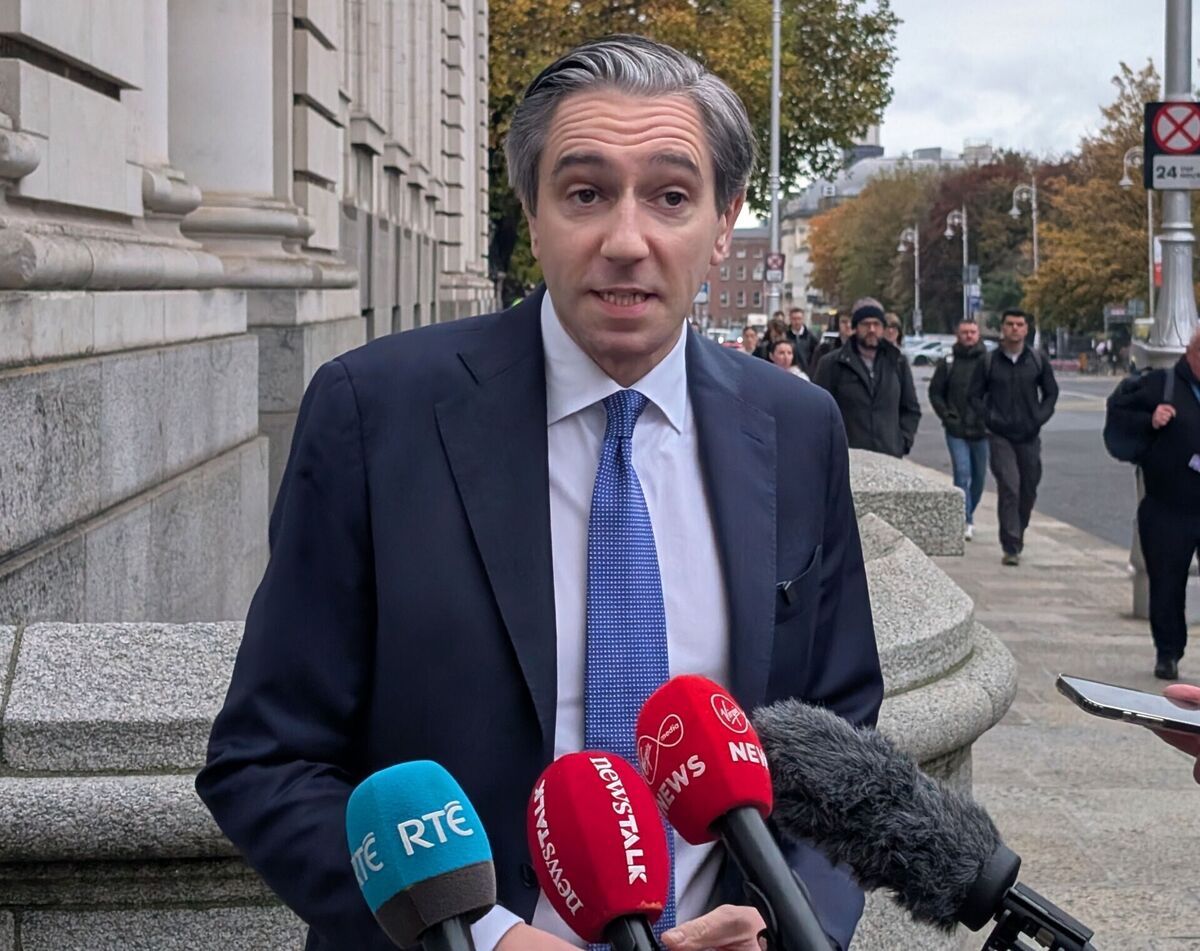
During this time, Harris's advisers stated that they had not been in contact with their boss, who was spending time with his family — and rightly so — yet Harris was breaking his own paternity leave to make "routine" calls?
It kicked the controversy into another week and led to more frustration when answers were not forthcoming.
The weekly post-Cabinet media briefing, currently held in the basement of Government Buildings, has traditionally provided journalists working in Leinster House with the opportunity to ask questions and gain an insight into the thinking of the leaders.
Previously, the briefing acted as a way to probe the Government representatives on pressing matters of the day and get an idea of the position of the Taoiseach and Tánaiste on issues leading the news agenda. This information was sometimes provided on a background basis to facilitate informed reporting, particularly in relation to sensitive issues.
The Government press secretary and deputy press secretary serve as the primary communication link between the Government leaders and the media and therefore speak for them.
In years gone by these briefings were often tetchy and protracted when political journalists went back and forth as they teased out the minutiae with the press secretary.
Exchanges between infamous press secretary Eoghan Ó Neachtain, who served under three Taoisigh between 2007 to 2011, were described as "interactive" by one long-serving journalist this week.
The journalist remembered:
During the Enda Kenny era, Feargal Purcell, another former Defence Forces member, was not shy of engaging in robust exchanges with members of the Fourth Estate but could provide an overview on the mindset of Government.
However, in recent times these briefings have become more perfunctory, with little illumination provided on the thinking within the coalition or the personal stance the leaders might be taking on issues.
This week, when journalists went back for a third round of questioning on the O'Donovan-Harris phone call saga, there was very little by way of new information.
Referring to two radio appearances, which threw up more questions than answers, the spokesman said he would not be adding to what the Tánaiste had said last week when pressed on many of the outstanding details.
Asked if the Tánaiste had spoken with O'Donovan to voice displeasure over the RTÉ funding issue, the spokesman said he was not aware of "the specifics of any conversations that the Tánaiste would have had with the minister".
Questioning then moved onto the re-allocation of responsibilities to minister Peter Burke while O'Donovan recovers.
When asked about the process behind shifting the responsibility from O'Donovan to Burke, the spokesman said: "I don't have anything to say in relation to that. The decision was taken in relation to minister Burke in consultation, obviously, with minister O'Donovan and in consultation with the Taoiseach."
Journalists jumped to query whether this consultation meant O'Donovan had been given a veto on who was selected to fill in for him? "Not that I am aware of". One exasperated reporter pointed out that not being aware of something does not answer the question.
Was O'Donovan informed that Burke would take up his responsibilities before the Taoiseach was consulted? "I'm not aware of that," came the reply.
The raised legitimately held concerns that perhaps the Tánaiste's spokesman was not being read in, which if the case, would ultimately impact the media's ability do its job.
If the person who speaks on behalf of the Tánaiste is not provided with the full details or is not aware of the stance the leader has taken, then the vital line of communication between Government and the press is broken.
The spokesman denied this theory, adding that the information available is always provided. "You may not like the answers that come back... but they are the answers nonetheless."
There is an element of truth in this, journalists are rarely fully satisfied with the responses politicians and their advisers spin.
But Harris's reluctance to be clear on the phone call; his decision not to investigate the source of the damning and hurtful commentary about O'Donovan; a vagueness around how Burke was chosen to take up responsibility for O'Donovan; and the level of engagement O'Donovan had in relation to the re-allocation of ministerial responsibilities; all provide multiple frayed strands that the media are still picking away at.
Often the easiest way to shut down a controversy is to put everything out in the open and take the heat for a few intense days, but team Harris have been squirrelling away the full details for weeks now.
Harris, who has always had a natural ability to manipulate and control the narrative in his favour, appears to be in freefall on this one, with many in Leinster House describing him as "rattled" by the debacle.
How has the Tánaiste, who for the entirety of his political career has been a confident media performer, not got a handle on this?
CONNECT WITH US TODAY



Be the first to know the latest news and updates