Shona Murray: Why the EU should seize the chance to build a closer alliance with Canada
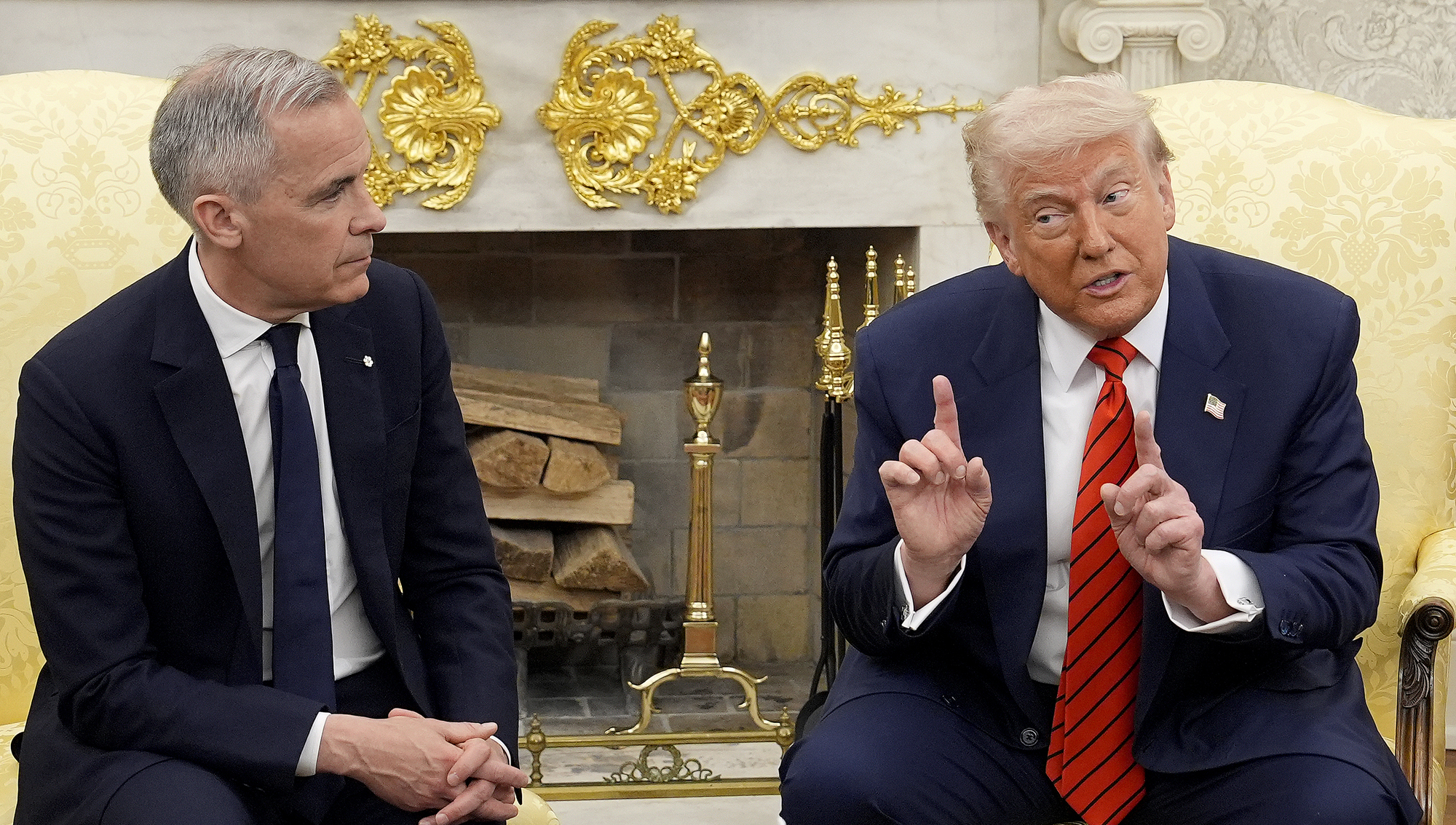
Canada's prime minister Mark Carney and US president Donald Trump at the White House in May 2025. File photo: Adrian Wyld/The Canadian Press via AP

The ambition for Canada to become an associate member of the EU should be grasped by both sides.
Although the definition doesn't exist — which presents something of an opportunity — on the face of it, it sounds as close to membership as a country can get without going through the enlargement process.
But it risks falling by the wayside due to bureaucratic bottlenecks and demands by powerful lobby groups, particularly as such an endeavour has never been explored before. In addition, the fear of retaliation from president Donald Trump could impede the plan from reaching its full potential.
Ireland and France gave into agricultural industry interests when they rejected the Mercosur trade deal with South America's economic trade bloc, despite the deal opening lucrative export markets for Irish pharma and tech.
Trump said it could be considered a “hostile act." Unsurprisingly, he threatened to heap “very serious tariffs” on Europe.
“If they do that, if I think it’s at all a hostile act, I will put very serious tariffs or stop trading with Europe on many things,” Trump said.
Relations between the US and its most reliable, steadfast allies — Canada and Europe — have never been as bad; and moreover, in a place of such volatility.
In August, Canadian prime minister Mark Carney had no choice but to walk away from Canada–US trade talks despite more than a year of negotiations.
When the talks fell off the cliff, the reaction by Washington was swift. The US imposed 50% tariffs on $20bn worth of Canadian goods.
Ottawa retaliated by matching the tariffs “dollar for dollar.” It was a massive decision by a Canadian premier given Canada exports 70% of its goods to the US. But he had no choice.
Last-minute demands by the US that Washington — among other things — could have a say and even restrict Canada's ability to strike trade deals with third countries eroded Canadian sovereignty. It also wanted Canada to automatically apply the same US tariffs to third countries. It effectively made Canada the 51st state in all but name.
Speaking after the collapse of the talks, Carney said: "You're at war when you're attacked — we got attacked."
He said:
"Early last year, in this room, I observed that the decades-long process of steadily increasing integration between our economies was over.”
Similarly, the EU is on constant tenterhooks over the mercurial Trump. Even when the mood seems relatively at ease — like Trump’s temporary moment of levity in Doonbeg when he announced the removal of tariffs from Irish whiskey — in an instant the mood can change.
European governments and EU officials wake up each morning with apprehension that Trump’s Truth Social media account might have moved markets and made major changes impacting them or the world overnight.
In recent months he announced the withdrawal of thousands of US troops from NATO territory, and the end of civilisation in Iran over social media.
Brussels kowtowed to US demands over trade when it gave into 15% unequal tariffs on European goods only.
Many governments cite the US-Israeli relationship for not applying sanctions on ethnic cleansing by Israeli settlers in the West Bank — for fear of retaliation. Some EU countries ended their relationship with the UNRWA — the UN agency responsible for Palestinians — after pressure from the US.
The lacklustre response to the US policy of dismantling the International Criminal Court and unjustifiably sanctioning several of its lawyers is also evidence of Europe’s hesitancy to confront the US when its policies are harmful to European democracy.
It does so not just for economic reasons, but in the hope — however futile — that the White House might stay on side to apply pressure on Putin to end his full-scale invasion of Ukraine.
Europe also needs the US to continue to supply crucial military intelligence to the Ukrainian army for targeting and defence purposes.
It makes sense that the transatlantic partnership for which the US was once the lynchpin should be saved.
The EU is — and should stay a union of rules — in particular relating to membership of its single market or customs union. But this moment of geopolitical turmoil requires new thinking.
Upholding values and interests in democracy, international law, humanity, justice, security and defence requires establishing much deeper partnerships from further afield.
Let’s hope the EU, namely the 27 member states, see the bigger picture and aren’t bogged down and captured by national politics, vested interests and disproportionate bureaucracy.
CONNECT WITH US TODAY



Be the first to know the latest news and updates