Terry Prone: Meta glasses deal with Vision Ireland smacks of a desperate bid for good publicity
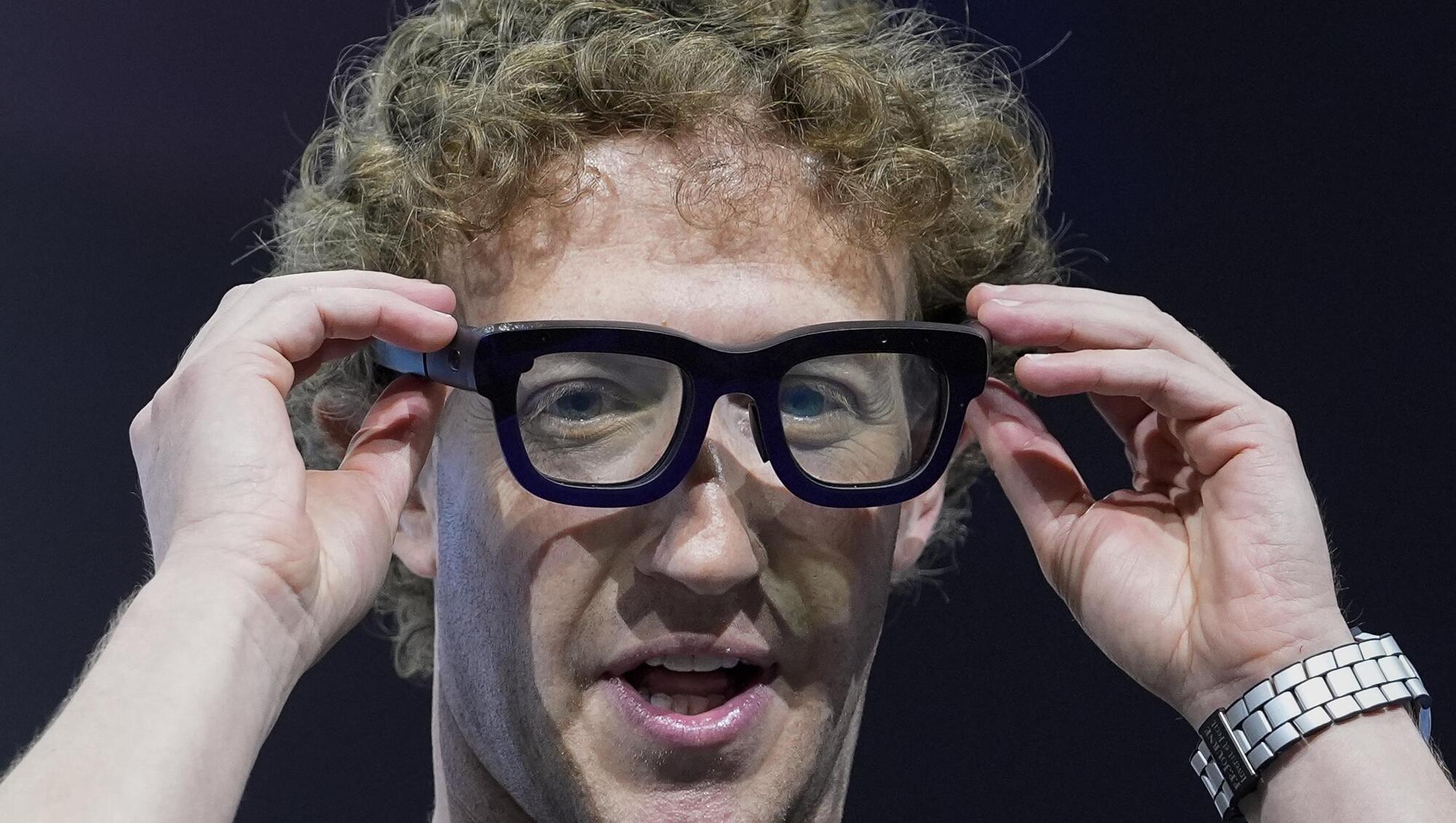

All together now, but softly: “Aaah.”
“Aaah,” as in “Isn’t that such a kind and generous thing to do?”
As in, “Oh, my goodness, can you just imagine the pictures of the delighted recipients?”
As in, “We need to think again, more positively, about those Meta lads, we really do.”
Not being cynical about it, but you can pretty much bet the house on it that such an outcome was in the back of some corporate head when Meta decided to donate 15,000 free Ray-Ban Meta AI glasses to Vision Ireland, one for every visually-impaired adult the national charity supports who wants one.
Vision Ireland’s CEO, Chris White, sounded positively giddy with delight in his comment to media, describing the technology as “transformative” and claiming that the glasses would give thousands of recipients “greater independence, confidence, and choice in their everyday lives”, adding that his charity was “immensely proud to lead the national rollout and help ensure this innovative technology delivers meaningful and lasting impact”.
Read More
Unequivocally solid buy-in there to the gift of an innovative technology that, up to now, has had quintessentially lousy PR.
Not suggesting the technology is not transformative — it is. The question is how it transforms the way people use glasses.
Some early adopters of the glasses got quickly creative with them.
The glasses have a built-in camera, and this facilitates filming people. Marvellous, altogether, except, perhaps, when the filming of the other people happens without their permission, or even knowledge. Which was done by users.
But it went further.
Some of them filmed people being bullied by third parties who just happened to be content creators who profited greatly from
the privacy invasion and personal humiliation involved.
It happened in Ireland, where so-called “creatives” made scenes in restaurants and other public places, later uploading the footage online, which meant that whether you told the disrupter to get the hell off your premises or laughed weakly and let them at it, how you reacted or failed to react was up there to be seen by anybody.
That the gadgets are widely described as spyware clearly has not deterred Vision Ireland from entering into a partnership with Meta, starting in the springtime, when the long-respected charity jointly hosted an AI glasses demo day in the HQ of Meta Ireland. Hands-on tutorials and round-table discussions of the experience. Sure why wouldn’t they?
Or, put it another way, why would they? One presumes that they figure this is a win/win. That acting as an extension of Meta to provide application, assessment, eligibility, and selection protocols, followed by what’s called “hands-on training with every pair”, all funded by Meta, is a good thing.
People who right now have little or no sight will, it is claimed, through the use of the Meta/Ray-Ban glasses, be able to read everything. Well, they won’t be able to read menus if they’re in England or Wales because restaurants over there have banned them. But that’s only a small drawback. It is, after all, a problem-solving technology.
Let’s say your mother is pushing 90 and not likely to be eating in England or Wales any time soon. Your mother has always been the smartest adult around, not least because of her resolute determination to read a good newspaper from cover to cover every day, which means she was always up to speed on every issue — international, national, and local. Her sight has deteriorated disastrously in recent years, however, and even devices provided by organisations like Vision Ireland haven’t worked sufficiently well to allow her to read her newspaper the way she wants to read it. Many families, hearing about the free Meta glasses, might believe her problems would be solved, but that’s not necessarily true.
The technology is fantastic, but arguably not fully evolved. It’s good for capturing discrete bits of information, which is why it would be good for reading menus (except in England and Wales) but it’s not going to easily read down through the columns in a newspaper, translate what it’s seeing, and tell it to the owner in real time.
In addition, we hear that it gets put off its stroke if you don’t frame the page in front of you correctly, which, if you can’t see the page properly for starters, is something of a disadvantage. It has to be constantly instructed, meaning you can’t sit down with the on your lap and tell your glasses to read from the lead to the small ads. And it’s not just newspapers — when it comes to reading a book, you (or your mother) might be better with the simpler facility offered by an audiobook.
But hey, the technology is evolving by the minute, and it may well be that the agreement between Meta and Vision Ireland includes research, allowing Meta to constantly improve the technology, based on the reported experience of visually-impaired Irish users.
If this is the case, no doubt each recipient of a pair of glasses will be assured by Vision Ireland and Meta that their technology won’t be able, without their written permission, to share research with Meta.
Indeed, maybe Meta’s generosity would extend to paying the visually-impaired users for their help, given that roughly two-thirds of Vision Ireland’s service users are over 65 and could possibly do with getting a bob or two for any valuable insights they help develop.
Not that the research would be the only benefit the new blind users would deliver to Meta. Before any of them slide the glasses over their ears, the prospective visually impaired users have already delivered considerable positive publicity to Meta. In fairness, the glasses, having done badly at first launch, have now turned into a success story.
Meta/Essilor Luxottica are selling them in their millions, which means a few thousand going to an Irish no-profit body is not going to break the bank. Plus, if you want to draw attention away from the technology’s misuse, and from Meta as a less than perfect organisation, putting a group like Vision Ireland’s service users front and centre is a great idea.
In the 1970s, when the US Food and Drugs Administration looked at research and decided saccharin was dangerous enough to ban, the manufacturers went to war with the FDA in the cleverest way possible. They lined up children. Little diabetic children who could not eat sugar, holding signs begging the authorities not to take the sweetness out of their lives.
The photographs were placed all over media, public opinion turned against the FDA and saccharin stayed on the shelves.
Association with an appealing demographic is a good move for any brand, and, nowadays, when the older demographic is growing apace, linking up with folks who are (a) elderly and (b) visually impaired is a definitively smart move for Meta.
Linking up with Meta is a rather more nuanced proposition. It is to be hoped that — over the long haul — the partnership is positive for Vision Ireland.
CONNECT WITH US TODAY



Be the first to know the latest news and updates