David O'Mahony: It's only when they're gone when we'll realise how much we need local papers
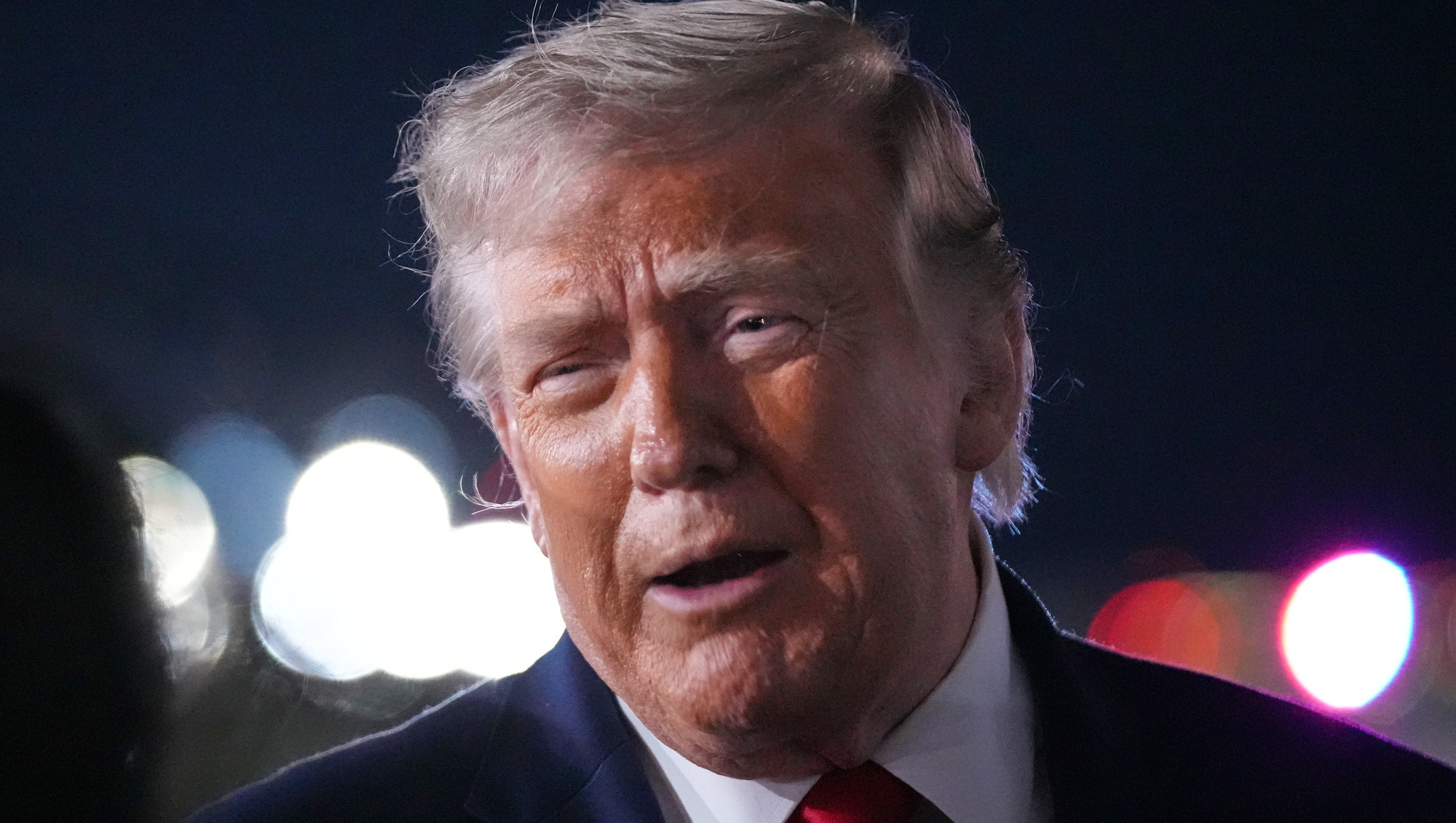
Small men are always frightened of the truth, and even more so when it comes from a woman, as evidenced by president Donald Trump's interview with NBC’s Kristen Welker last week. Photo: AP/Mark Schiefelbein

Blink and you’ll miss them.
I don’t mean the childhood years. Not this week, anyway — though Dagda knows they’re practically sprinting past me faster than the grey can sprout from my temples.
The summer holidays are approaching and at the end of them one of my kids will be in secondary school. I feel like it’s Sunday night, is starting, and I don’t have my homework done even though it’s a June weekday. But I digress.
I’m talking about news publishing and good journalism that’s not only close to but gets to the heart of issues facing communities.
We have been fairly lucky in this country — more than 2,000 newspapers have closed in the US in the past two decades or so, leaving some cities without any news source of their own. Local papers have closed here, too, such as the Wexford Echo group, but not to the same level of decimation.
Still, no country is immune, and it’s only when they’re gone that you realise just how much they contributed. That hyper local free publication that comes out every month might be the only way some community groups get their stories out there. And if they go, then what follows? A sea of sameness, with identical stories?
A former Examiner editor sent me a link recently to a photo project based in the States by Ann Hermes that seeks to document local newsrooms in America before more of them vanish. They show not only reporters in action, usually from behind a meticulously messy desk, but skills and sources in use that are increasingly rare, such as reviewing microfilm as part of a story.
It’s easy to bash the media. Sometimes the criticism is warranted, because you can’t hold public figures to high standards if you’re not applying them to your own work. Sometimes the criticism is nonsensical, like that restaurant prices are too high because the media keeps reporting that they’re high (I saw this one online during the week).
And yet, for everything it offers in terms of not only news and entertainment (and sport), the industry has never felt so polarising.
One only has to look at how Donald Trump raged at NBC’s Kristen Welker last week before walking out of the interview — well, stumbling — because she doggedly fact-checked the constant stream of detritus and baseless lies pouring out of his mouth about “rigged elections”.
Small men are always frightened of the truth, and even more so when it comes from a woman. All the more reason to keep pushing back against misinformation (see Shona Murray’s column today), lest we end up in Orwell’s , where you’re expected to believe whatever the party tells you to believe. That’s a cult, folks!
Remember that one of the fundamental aims and aspirations of journalism is to speak truth to power, or at the very least hold that power to account.
Yet sometimes you’d be forgiven, when looking at US press conferences, for wondering if we’ve slipped back into the world of Goebbels, the Nazi propaganda minister who once gave a press conference telling the media that they would be informed, but also instructed, in how they were supposed to disseminate that information.
I’ve worked in journalism for some 20 years (I had long hair when I started, look what it’s done to me), and been fortunate enough to have seen it at multiple levels.
I began as a reporter in what was then the and subsequently the before moving into the editing and design side of the industry with the and, for a time, in Abu Dhabi, then back to the in a different role.
There is, among others, a photo of a great pile of yellowing newspapers that tilts but doesn’t topple – the Leaning Tower of Journalism, you might say. Such was a staple of many newsrooms, and still is in many cases although less so in a world of hotdesking and hybrid work.
For me it recalls my days as a trainee reporter in the , where the paper’s library archive was, and I say this generously, chaotic, a mess of papers on shelves that spilled out onto the corridor.
Given that the building on Michael Street — long gone — wasn’t exactly gargantuan, this made for an unexpected obstacle course. But it was free, and accessible, and when you’re living in a city you’ve never lived in, being able to read the local news can help.
Although it can’t help you realise that when somebody in interview says “Ballygonner” they really mean “Ballygunner”. But then again, that’s the sort of local knowledge that gets lost when a community loses its newshounds, and suddenly you don’t have the right people to ask.
Another of Ann Hermes’ photos is a stack of metal inboxes standing behind a notice saying “stories to be written”. Every reporter knows there is an endless amount, much as everybody being interviewed has a story they think needs to get out there.
But if we don’t support our journalists, who’ll be there to write them?
- David O’Mahony is assistant editor, a historian, and a writer
CONNECT WITH US TODAY



Be the first to know the latest news and updates