Jennifer Horgan: Girls must learn to be simultaneously visible and invisible

L’Inconnue de la Seine (‘The Unknown Woman of the Seine’) became a fixture on artists’ walls after 1900 and the face of CPR simulators.

Do you remember them? The lists that would circulate around a classroom, an Irish College céili, the back of a school bus, carefully divided into category titles, bullet-pointed names beneath.
Best face.
Best ass.
Ugliest face/best body.
Best face/worst body.
Best tits.
The categories — as varied as the teenagers they described. A list of body parts. A list of objectified girls.
I remember not wanting to be on the list and, to the same degree, wanting to be on the list.
That’s the contradictory ground on which us girls and women stand — wanting to be seen whilst knowing that being too seen is bad news.
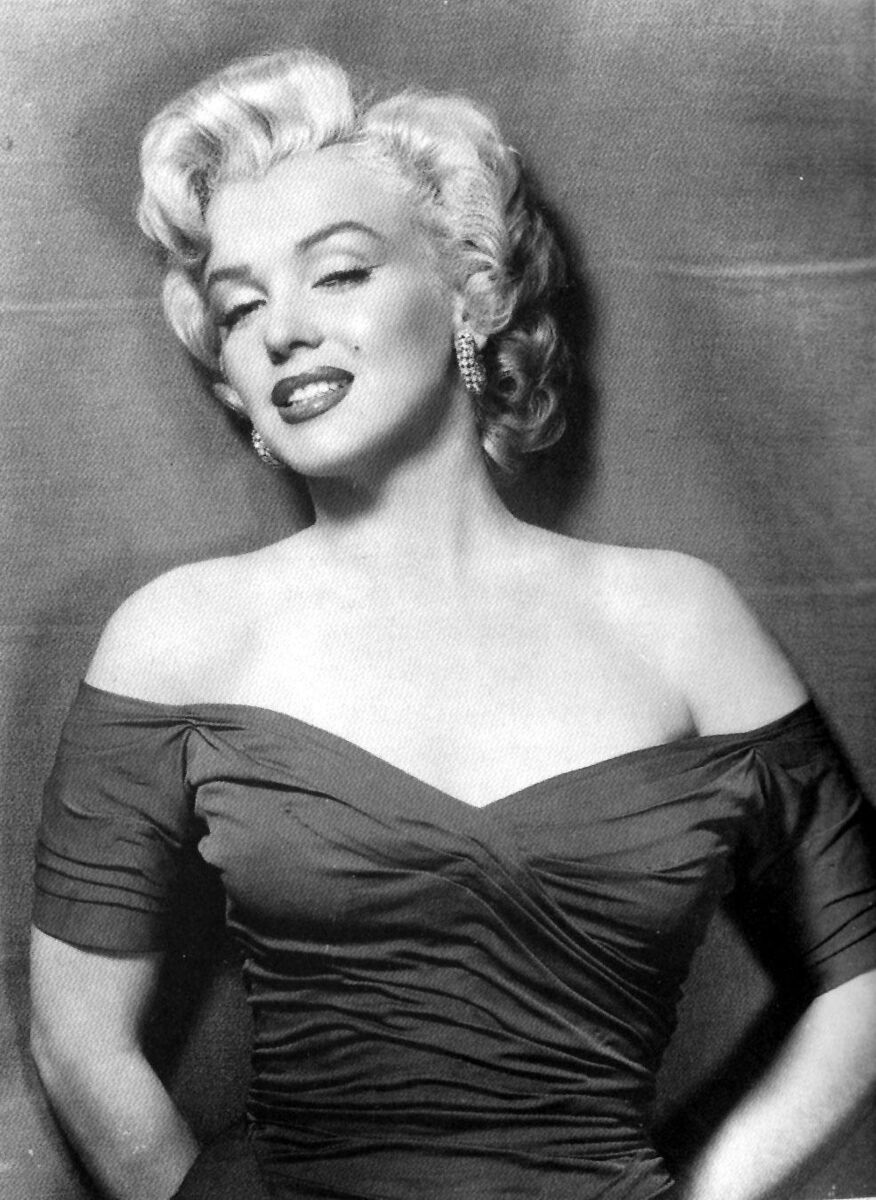
Amy Winehouse. Marilyn Monroe, Diana. They were all so intensely seen – and devoured.
I understood this fine balance at a very young age. The brief joy from being on the boys’ list was followed by a brutal realisation.
Standing out, you, the real you, got taken and reduced to a body part. The unlisted girl got to keep her name; you became the ‘best’ whatever.
And so us girls learn to balance. We focus on being seen in a world that judges on appearances, without becoming too seen — just visible enough to become just invisible enough.
I came across an article last weekend about an 11-year-old girl being called ‘very attractive’ by an old man at a party.
Her mother, the writer of the piece, regretted not saying anything, noticing her child’s discomfort.
What her article doesn’t acknowledge is that our world prepares every 11-year-old girl for that man’s comment.
By our rules of engagement, she should smile and say thank you.
That’s how we like it.
That’s why we all comment on little girls’ dresses and hair and smiles, right?
Little girls are made to feel just visible enough to feel just invisible enough — like every other little girl — and that feels safe.
, the series we’re all still talking about, provides the perfect example of this dance between visibility and invisibility.
What does Jamie’s sister, Lisa, do to cheer everyone up in the final episode? She changes her clothes. When her dad asks her if it’s new, saying it’s lovely, she says no, that she’s just wearing it differently.
She knows that as a young girl she is meant to be looked at, so as to stay invisible. This is simply what women do.
Look at me so you don’t see the real me, they say. Because the real me isn’t safe here — it never has been.
Lisa puts on a ‘nice top’ to offer her father a better day. She makes herself more visible and in so doing, looks to become invisible.
She wants to make her dad happy. She doesn’t want him to worry about her. It’s absolutely heartbreaking and beautifully, tenderly done.
This ‘look at me’ visibility/invisibility trick is taught early on, through a kind of cultural osmosis, to our girls.
It works just fine, but the dance gets muddled when we actually need to be seen and heard beyond a surface level — when our invisibility threatens our lives.
There is a ready-made metaphor for what I mean. It’s the story of a real girl, a teenage girl.
She became incredibly visible at a surface level and yet she completely disappeared.
Not only did she disappear, she made other girls and women disappear too.
This girl is the ‘Annie’ captured in Michael Jackson’s 'Smooth Criminal.'
You know the one — “Annie are you okay, are you okay Annie?”
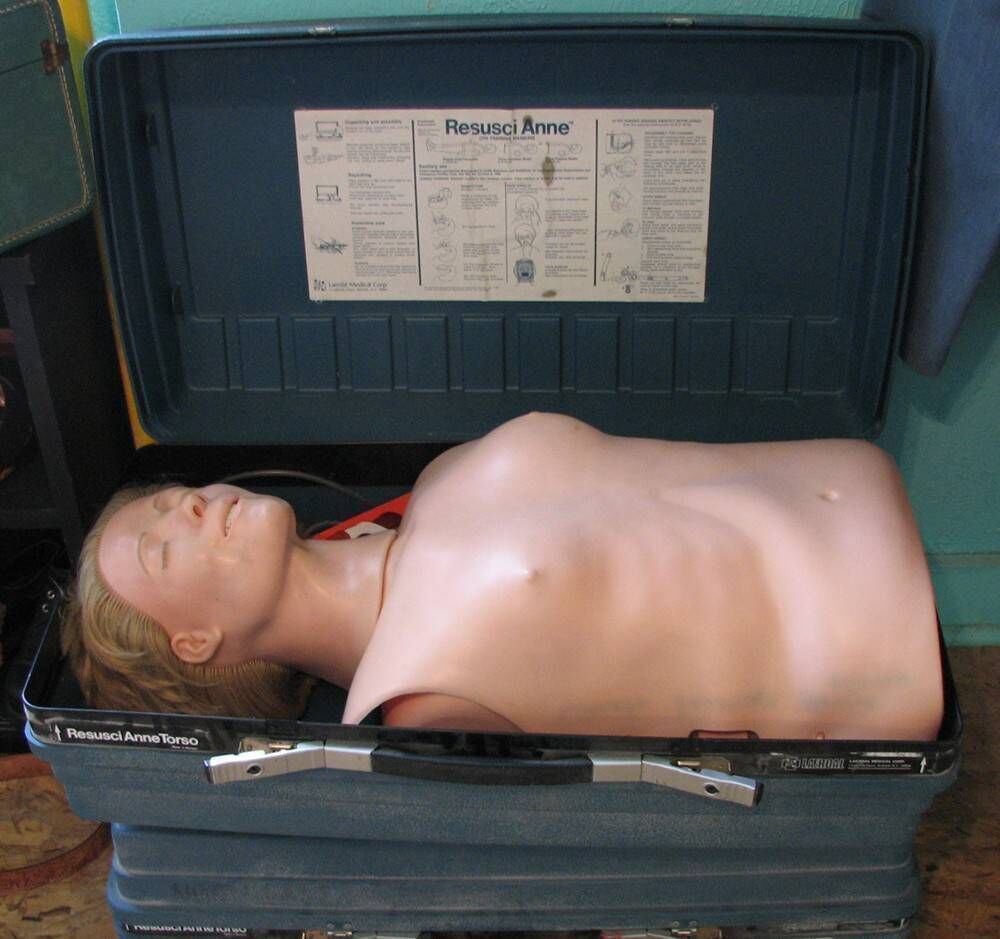
Annie is the CPR dummy, known as Resusci Annie and Jackson is referring to CPR training, when you must check that ‘Annie,’ the dummy, is unresponsive before initiating resuscitation.
The face of Annie belongs to girl found dead in the River Seine in Paris at the end of the nineteenth century.
A mask of her face was put on public display — a common practice at the time — but nobody identified her.
She became a kind of morbid meme for artists, seen everywhere.
In the 1950s, the American Heart Association’s CPR Committee manufactured dummies with her face, knowing male students wouldn’t feel comfortable kissing a male mouth.
The ethics of it are astounding. She was surely somebody’s loved one. Even if she had nobody, she was her own distinct self, and never consented to being circulated so widely in death.
Much like the images of dead babies and children we see on placards about Gaza, or posted online, she never consented.
Visible and invisible. The committee decided to use a female face, Annie’s face, but they were never going to use a female body. That would have been a step too far and so, on the back of theft, we have mutilation.
Annie’s face, the CPR dummy’s face, as you know, comes with a male torso. Students of CPR practice on male torsos only.
This surface level treatment of women, visibility shot through with invisibility, this failure to go deeper into their anatomical realities, costs lives.
People are less likely to give CPR to a female, partly because they have no experience of bras and breasts and baby bumps.
Womanikin, an attachment for flat-chested CPR dummies, aims to change the finding that women are 27% less likely than men to receive CPR if they suffer from a cardiac arrest in public.
Visible and invisible. It’s everywhere. Women are defined by their clothes, hair, accessories, lip gloss, body shape, chest size.
Yet, when it comes to our internal health, we are forgotten, unrepresented at even the most basic level.
Beyond CPR dummies, there are almost too many examples to count: The prevalence of undiagnosed endometriosis; the ongoing delay in free HRT in Ireland, the fact that seatbelts are made to protect men not women, the absence of sanitary products in hotel bedrooms, hospitals, public buildings. I could go on and on.
We are visible and invisible.
Women of my age are doing their absolute best to look like every other wrinkle-free 40-odd-year-old woman.
They are seeking an invisibility borne of a certain stock standard of visibility.
Twenty-year-olds with bee-stung lips, and eyelashes like bear claws, are attempting to look like every other 20-year-old with bee-stung lips and eyelashes like bear claws.
Skims, the American shapewear and clothing company, co-founded by Kim Kardashian, is becoming almost grossly popular.
We want our body shapes to look the same and as perfect as every other body shape, especially the most surgically enhanced body shapes.
We know that if we get more people to look at us, we get to disappear into safety.
The fake us, the external, surface level us, hides the real us.
It is a rational choice for a woman of any age to make, to stay in the spotlight, just long enough to remain invisible.
Until it isn’t. Because it has very real consequences — this manufactured visibility/invisibilty.
Because as long as the world is focused on looking at girls and women, it’s not really seeing them. The superficial self is not the self.
We are (it sounds so obvious) more than how we appear.
So, we need to redirect people in whatever way we can — to our physical, emotional, psychological, medical needs.
There is no shame in any of it. It is us.
The world also needs to get used to seeing women in highly-visible roles, where appearance is not the focus.
We need more ceann comhairles, more presidents, more conductors, and more CEOs.
We should absolutely field the comments we and our daughters receive.
But we shouldn’t stop there.
'There' is not the end.
'There' is where the tip of the iceberg is — and the iceberg is everything we’ve ever known — generations deep, and growing.
CONNECT WITH US TODAY



Be the first to know the latest news and updates