Gareth O'Callaghan: Our schools were never a haven, but instead a living hell
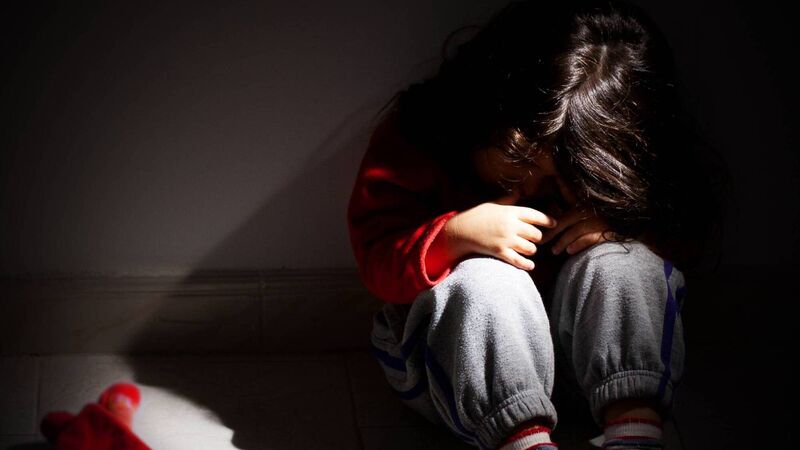
‘It’s impossible for someone who has never been sexually abused or raped as a young child to imagine what the lifelong effects of such merciless brutality can be like.’ File picture: iStock

“Our schools should be places of haven, not horror”.
The words of Minister for Education Norma Foley reacting to the scoping inquiry, which revealed that there were almost 2,400 allegations of sexual abuse of children in almost 300 schools run by religious orders.
According to the findings of barrister Mary O’Toole, there were 884 alleged abusers in 42 orders which ran or still run schools. Some 590 of those were recorded in special schools involving 190 alleged abusers. These were not places of haven, they were battlefields, and there was only ever one winner.
When it’s all reported as mere statistics and numbers, it somewhat cushions and detracts from the reality of the personal horror and depravity of the alleged abuses, when of course it shouldn’t.
Like many thousands of men and women my age, and many both younger and older, I spent hours this week scrolling through the orders named and the locations; perhaps in the hope that my own secondary school might not be there. I was surprised but not shocked when it appeared on the screen.
I went to the Christian Brothers. Many of their schools are named in the report. I wasn’t sexually abused, but there are three allegations directed at three alleged abusers at my old school. My mind went into recall mode, like a pack of flash cards, trying to recall who they might have been.
While this is an inquiry that focuses specifically on sexual abuse, let’s not allow the physical violence of those days to go unchecked: the sheer horror of witnessing attacks on young boys on a scale I could never have imagined has stayed with me all my life.
I can recall a 14-year-old boy in my class being punched unconscious by one teacher, another flung against the blackboard so hard he arrived into school the following morning with his arm in a sling. A leather strap, often with sewn-in coins to deliver a harder blow, was mostly the preferred choice of punishment.
I recall one boy taking a swipe of it across the face. Another boy who wet his shorts while being slapped — so many times I lost count — was made take off his crested pullover and wipe up the urine, only then to be told by the teacher to put the jumper back on. The insatiable desire by some teachers to punish at every opportunity knew no bounds.
Scrolling further through the schools and colleges listed in the 700-page report, I was searching for the name of another religious order, for a college where I was sexually abused. And there it was — a college I had visited in the midlands one summer in the early 1970s on a boy scout holiday. My abuser told me that if I divulged “our little secret” to anyone, that I would die a horrible death and would “spend eternity burning in the flames of hell”.
Around the time of my abuse, Canon Sydney MacEwan and the Cork Children’s Choir were in the charts with a song called ‘Suffer Little Children’, based on lines from the gospel of Matthew. I hated it so much it made me weep every time I heard it on radio. Its haunting tones of children’s voices made me cringe, ironically at a time when Gary Glitter was captivating audiences with ‘I’m The Leader of the Gang (I Am)’.
It’s impossible for someone who has never been sexually abused or raped as a young child to imagine what the lifelong effects of such merciless brutality can be like.
Apart from the physical pain, abuse reshapes how a young child’s mind develops, and these shifts are life-changing. It affects their sense of self-worth and their ability to trust others — in many cases everyone. There’s a huge sense of betrayal felt, and this often manifests itself in their relationships for the rest of their lives.
Perhaps the worst aftermath of sexual abuse is the deep prolonged shame and guilt. When you’re forced into keeping your abuse a secret, with damning consequences if you break the silence, the invisible pain you carry can push you over the edge, which is why suicide is often the end result of an abuse victim’s misery.
“Many spoke with very real sadness of the impact of telling their elderly parents of their experiences,” according to the inquiry.
As US lawyer and life coach Iyanla Vanzant says: “Family is supposed to be our safe haven. Very often, it’s where we find the deepest heartache.” Living within a family setting can often become impossible for someone who has experienced sexual abuse, because often other members of the family don’t know how to react, or are simply getting on with their own lives.
“Participants described being molested, stripped naked, raped, and drugged amidst an atmosphere of terror and silence,” the report says.
Many of those who spoke to the inquiry believe that what was happening at that time was so pervasive that it could not possibly have gone unnoticed by other staff, or other members and leaders of religious orders.
It’s even more shocking to think that so many of these sexual abuse allegations took place in special schools, where some of those young children were both deaf and non-verbal. There are no words to describe how such vunerable children could possibly deal with the depraved double-bind perversion.
Would I want to be a young child again, if I was given a clean slate to replace those years of my youth that were stolen from me by abuse? Never.
Have I forgiven my abuser? Of course not. Why should I? He never apologised to me.
He died many years ago, a chronic alcoholic alone in London.
In her book , psychologist Anna Salter says: “We mute the realisation of malevolence — which is too threatening to bear — by turning offenders into victims themselves and by describing their behavior as the result of forces beyond their control.”
There has been a trend in some circles in recent years to push the argument that many abusers are victims of abuse themselves, and therefore should be seen in that light. I don’t buy into that because it appears to encourage a form of selective sympathy towards predators who have a predilection for children.
Despite some arguments to the contrary, there is no effective rehabilitation for paedophiles. Instead of spending money on therapy that has consistently failed to reverse their sick depravity, there should be more resources made available to support their victims towards a more restorative life.
Speaking at a meeting with Jesuits in May last year, Pope Francis stated that sexually abusive clerics were “children of God” who must be loved. They “deserve punishment but also deserve pastoral care”.
A contradiction that makes no sense. Even though he has promised to aggressively track down and punish Catholic clerics who abuse children, his words are not helpful to abuse victims.
As someone who has experienced abuse, whose beliefs in an unconventional god and some form of afterlife have somehow remained intact, I don’t believe a benevolent deity would share such views, not when all they’re attempting to do is mollify the anger of those whose childhoods have been destroyed in the cruellest way.
Schools were never havens. For all those victims of child abuse they were the closest thing to a living hell imaginable.
CONNECT WITH US TODAY



Be the first to know the latest news and updates