Given the season that’s in it, and the fact that this is my last offering before Christmas, I shouldn’t start with a whinge, but I will. What’s this bilge about “making memories”?
Every other day, you read about parents “making memories” with their children. As if it wasn’t enough, in and of itself, to take the trip, visit the playground, write to Santa, or listen to a particular track. No, it has to be categorised under “making memories”. Memories are like happiness, grief, and falling trees. They just happen and the more energy anybody puts into confecting them, the less productive it is. Plus, who needs the paediatric brainwashing implicit in the determination to implant memories in the brains of your offspring? Just do the thing, bake the cake, sing the song for its own sake, and to hell with manufactured memories, particularly at Christmas.
Children never remember what we want them to remember, anyway. Or if they do, they remember it as nothing more than an irritant. People of a certain age in Ireland, for example, can vividly recall their mother or father instructing them to close the door and not be letting draughts in or turn off the light in a room they’re not occupying. The implication was that by letting a draught in, you could kill the entire household and by leaving lights on, you were wasting money that could be used to save starving children overseas.
The familial nags certainly implanted memories in their children’s heads but not good ones.
It was unintended, but yesterday I made memories for one of my cats by setting him on fire. I was using a poker on the wood-burning stove when a little bit of paper became impaled on the poker and, when I withdrew it, it unimpaled itself and fell on Dino, who was sitting, heat-worshipping, directly in front of the stove. His fur ignited and I scooped fire, paper, and scorched fur off him in one decisive sweep of the shovel. He yelled imprecations at me and fled. Now you will say that I can’t be sure it was imprecations he yelled, but I have owned this cat for 16 years and am qualified as his interpreter.
I then began to worry that I mightn’t have excised all of the flame and that his fur might harbour an ember that would surge into postponed action and immolate him slightly later, so I grabbed a facecloth, wet it under the tap, and pursued him. He wasn’t having any of it, and you have to hand it to him, why would he sit down and be touched by someone who had just lightly seared him? Food bribery stilled him long enough to allow his back to be fully soaked, which he quite liked, and it was clear that I wasn’t going to have a feline bonfire in the middle of the kitchen. It was also clear that I had made him a memory he didn’t appreciate, because for the rest of the day, every time our eyes met, he muttered an imprecation.
Some of the memories my seniors made for me at Christmas were not happy. My uncle Dermot, on Christmas Day when I was about four, invited me to taste his pint of Guinness, which I’d been watching enviously because I was sure the black part was chocolate and the white bit at the top was whipped cream. When he told me to have at it, I thought I was made up. The vile taste filling my mouth was made worse by my mother noticing what was going on and instructing me to swallow it, which I did, causing an earthquake-like shudder but at least getting rid of the stuff.
It also has to be stated that, even today, the memories I lay down tend to be related to other people doing Christmas stuff I’m no good at.
Visiting a friend last week, I found her restored early 18th-century mansion lit from the outside by a hidden projector, while standing in the hall was a golden reindeer. This genius even upholsters her own auction-bought antique furniture, lying that anybody could do the same, because the principles are the same as those governing present-wrapping.
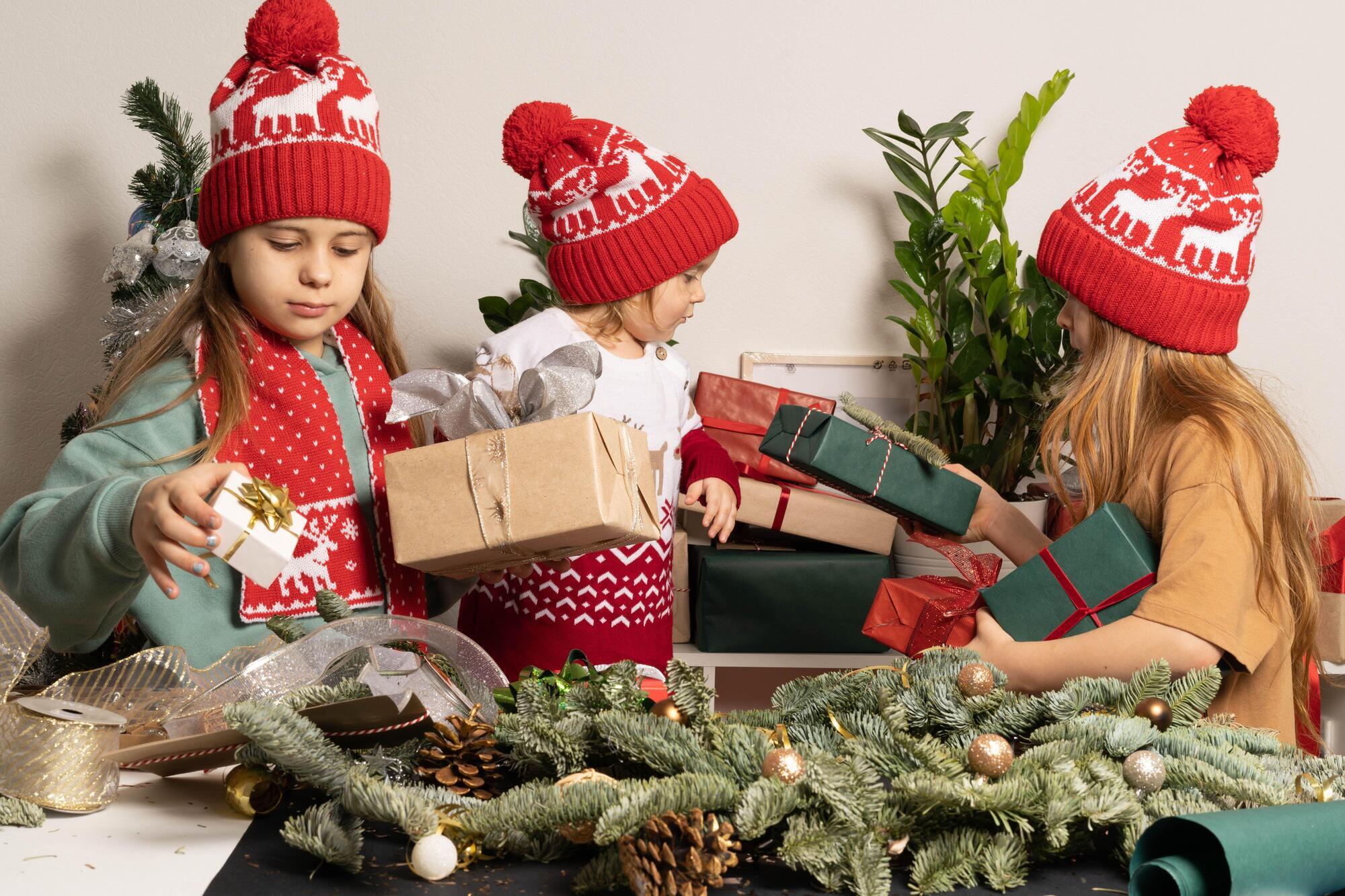
That lets me off, then, because my Christmas presents always look as if they’ve been spatchcocked like a chicken, tossed down a flight of stairs, left out in the rain, and then squashed so firmly their (bought) bows end up as flat as if someone had ironed them. That’s after enough Pritt and Sellotape to secure Fort Knox, and I’m not going to deny that I have resorted to Superglue (which is why my thumb and forefinger are semi-permanently stuck to each other as if I were delicately dosing a dish with salt). We must also mention duct tape, commonly called duck tape for its capacity to shrug off liquids. Duct tape is the trailer-trash approach to exigencies better dealt with using precision and a hammer and no day goes by in our house without its deployment.
Some people, like my upholstering friend, just have the Christmas gene, and some people don’t. The latter are the kind of folk who are so convinced of their own genius that they never read instructions. Which in turn means that they insist on assembling children’s battery-powered gifts so that not even later intervention by a genius assembler can get them going. But that applies to cookery, too. If you don’t read the instructions, you cook the giblets and their plastic bag inside the turkey, which is confusing (because you’ve punctiliously cooked the stuffing separately) and probably a health hazard, because cooked plastic has to be bad for you.
Of course, sometimes the food item doesn’t come with instructions, other than half-remembered motherly guidance — “just a little” brandy nestled into a little volcano-hole created in the top of the Christmas pudding, for example. “Just a little” is too vague for me. One year the blue flames spread to the napkins and threatened the flower arrangement at the centre of the table.
The best Yuletide memories actually happen before Christmas.
When you release the ornaments from the box brought down from the attic. When you get the tall traditional red candle firmly nestled in its candlestick, not the smallest tilt to it. When you secrete the baby Jesus in kitchen paper behind the crib for insertion between Joseph and Mary on Christmas Day. When you re-read O. Henry’s ‘The Gift of the Magi’, his short story about an impoverished couple in New York more than a century ago, each of whom sacrifices their most treasured possession in order to afford a gift for the other. When you watch the flames in the wood-burning stove, the scent of the Christmas tree just perceptible, listening to an old Christmas CD of the Maynooth choir or the Mormon Tabernacle singers.
Those are the unmade, recurring memories that make Christmas the wonder it is.