Elaine Loughlin: Budget 2024 is building a future beyond next year's finances
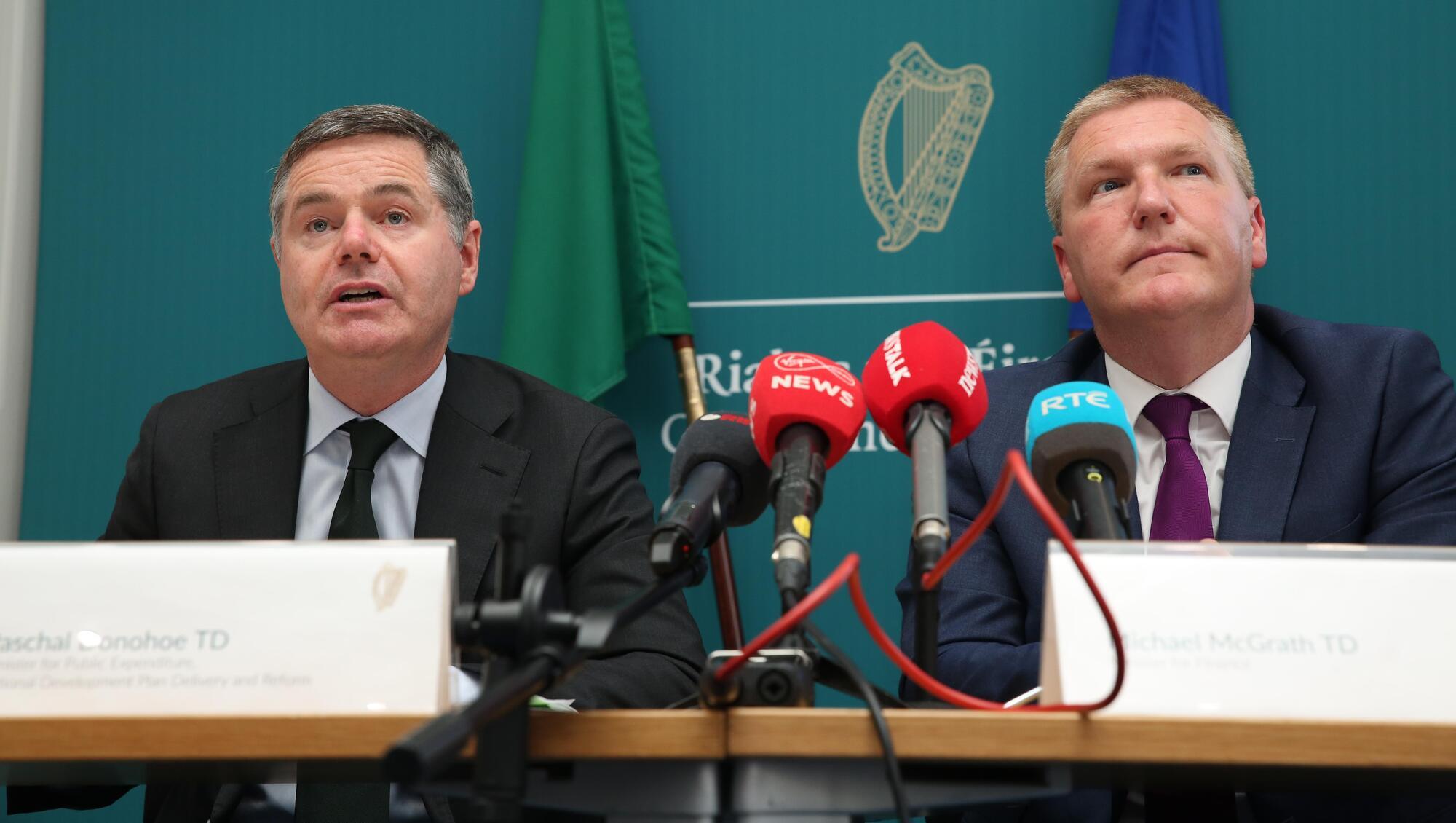
Ministers Michael McGrath and Paschal Donohoe may be working together on an overall package of €6.4bn, but this year both men will be acutely aware that they must set themselves apart
This week, as ministers Paschal Donohoe and Michael McGrath held a conveyor belt of bilateral meetings, there were solemn faces seen in Leinster House. Picture: Gareth Chaney/Collins
AT a private meeting of the Fianna Fáil parliamentary party this week, Micheál Martin was giving little away on the budget, but one phrase pricked the ears of some in the room.
“Building for the future.”
It’s the type of slogan that could easily appear on an election poster.
Ministers Michael McGrath and Paschal Donohoe may be working together on an overall package of €6.4bn that will include €5.25bn in extra expenditure as well as an additional pot for once-off cost-of-living measures, but this year both men will be acutely aware that they must set themselves apart.
Budget 2024 is indeed building for the future, but it is more about a time beyond this coalition rather than next year’s finances.
McGrath also has a lot to prove. He is the first Fianna Fáil minister to preside over finance since the economy went into freefall.
It’s a history that Higher Education Minister Simon Harris recently pointed back to claiming that Fine Gael had been left to “repair those deep scars from the economic crash and economic mismanagement of this country”.
It’s also a history that both McGrath and Martin understandably want to distance themselves from.
This week, as Donohoe and McGrath held a conveyor belt of bilateral meetings, there were more than a few solemn ministerial faces seen in the corridors of Leinster House.
Many around the current Cabinet table know that their own personal political futures could be dictated by how much or how little they deliver next week.
Children’s Minister Roderic O’Gorman, for example, has committed to halving childcare costs over two budgets. He got part of the way there last year, but in recent months and weeks expectations of getting fully across the 50% threshold have diminished.
Delivering a 30%, 40%, or even 45% reduction in creche fees would make a real difference in the pockets of parents, but having promised more it would be seen as a failure for the Green Party minister.
Negotiations will of course continue over the weekend, with the final shape of the once-off package still unclear.
Publicly members of Cabinet have in recent days been referring to how “tight” the scope is given inflation, a drop in corporation taxes, and an eye-watering €1.1bn overspend in health.
After publishing the final exchequer returns before the budget, which revealed a lower-than-expected corporation tax take for the second month in a row, McGrath and Donohoe moved to stress the need for prudence.
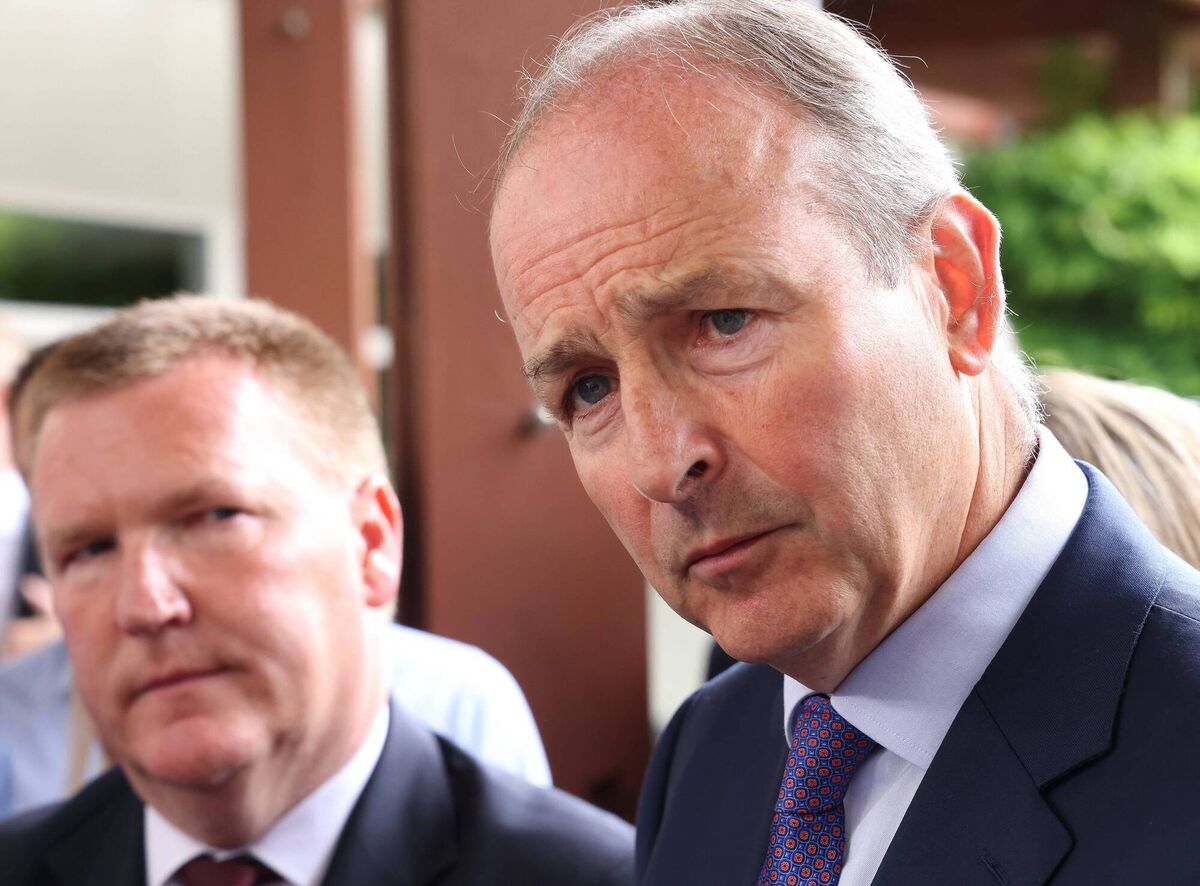
McGrath also has a lot to prove. He is the first Fianna Fáil minister to preside over finance since the economy went into freefall, a history that both McGrath and Martin understandably want to distance themselves from. Picture: Damien Eagers
“The days of corporation tax receipts growing at a really high rate, year in, year out, we believe are over,” McGrath told reporters on Tuesday.
A day later an ESRI report warned of the possibility of Ireland entering a technical recession with a 1.6% fall in GDP now anticipated for this year.
But privately, both Fine Gael and Fianna Fáil have been pointing to some scope to deliver items that will go down well with the electorate.
McGrath told party colleagues that the coalition should take the opportunity to “give the country a boost”.
At a meeting of the Fine Gael parliamentary party, Donohoe was also keeping somewhat upbeat, telling members that the drop in corporation taxes in August and September would not change budget planning due to the work already undertaken, including setting up a reserve fund.
He stressed that the Government will be going into next week with a surplus.
The actual leeway both ministers have to pull out a few surprises on Tuesday is still unclear.
“It’s always hard to know in the budget dance — there are genuine dark clouds around corporation tax that’s not untrue — but it’s hard to know how much of this is DPER [the Department of Public Expenditure and Reform] doing their job,” one minister said.
Time to split
But one thing is certain, Fianna Fáil and Fine Gael want to pull away from each other.
The most obvious area where this can be seen is on tax, with Varadkar’s party focusing on income tax adjustments and Martin wanting changes to USC.
While all three coalition parties have, at least publicly, insisted that they have another budget in them, politicians know this year must be used as a starting point by Fianna Fáil and Fine Gael to untangle what has been a relatively cohesive approach in Government.
It’s perhaps the reason why the “building for the future” line, which was used twice by Martin in quick succession, was noted as “interesting” by some members of the party.
“It could be something you hear again or see again,” said one senior member, suggesting that this messaging will be used as a hook to hang perceived Fianna Fáil budget wins off.
Building for the future points to what Fianna Fáil will say it has achieved through record investment across health, housing, and education. Of course, the opposition will pick holes in this narrative, but from Martin’s point of view, it illustrates a mature political stance of investment and improvements that will serve generations to come.
This, coupled with a gradual axing of the hated USC over a number of budgets and perhaps into subsequent Governments is what Fianna Fáil will be pushing.
McGrath also picked up on this theme when he briefed Fianna Fáil colleagues at the same meeting on Wednesday night.
He told members that in an election environment, parties will be judged on “who has a plan”.
One senior Fine Gael source said: “You could imagine Fianna Fáil going into the next general election saying the first time there was a Fianna Fáil Finance minister we reduced it [USC}.
I don’t agree with this, but they could say Fianna Fáil does the USC, Fine Gael does the tax bands. Again, this is not my view, but they could argue it’s a point of differentiation.
While this is the first time Fianna Fáil has held the finance portfolio in 12 years, it may also be the last for a while depending on the timing of the general election.
McGrath’s plan, in stark contrast to Charlie McCreevy’s mantra of ‘when I have it, I will spend it’, is to future-proof for the decades to come.
“McCreevy, before he went, was kind of getting a bit cocky and used to talk about ‘this is chapter three’, it was his third budget but for him it was chapter three. Michael isn’t like McCreevy, but I suspect he will want to deliver two budgets,” said one senior Fianna Fáil member.
McGrath’s chapter three, members suspect, will be a Fianna Fáil election manifesto continuing on from what he will begin next Tuesday.