Ireland’s homeless population reaches record 17,885 as Cork figures hit new high
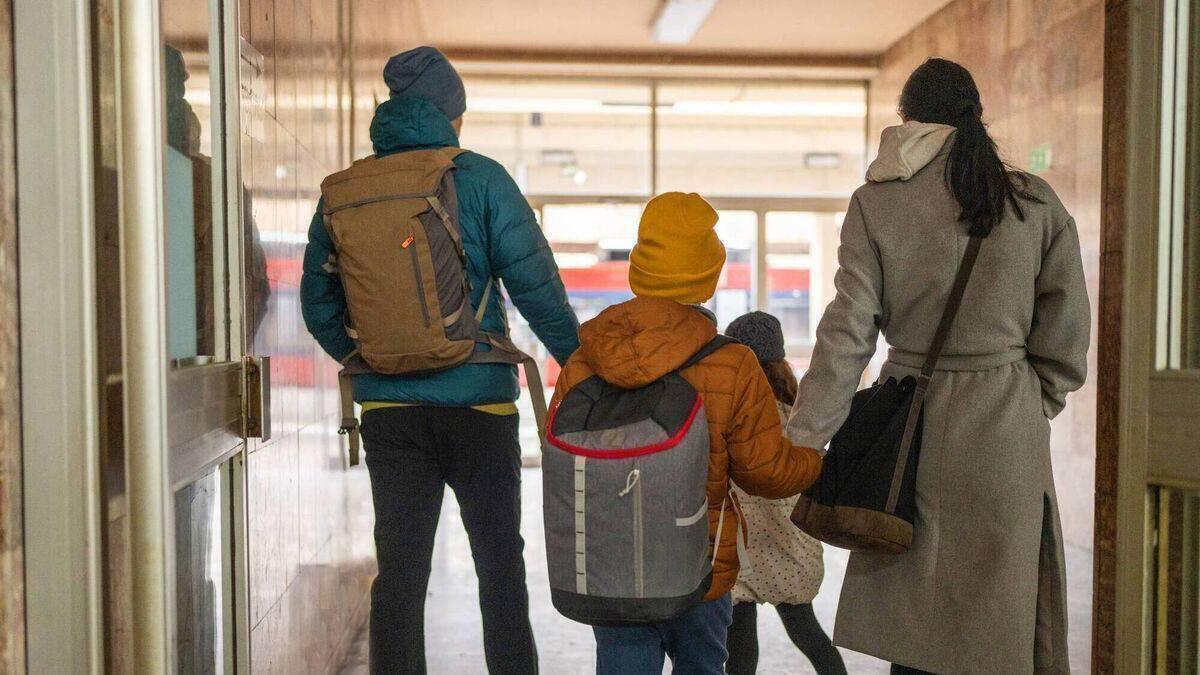
Homelessness hits new record as more than 17,000 people in emergency accommodation
A total of 17,885 people were homeless in Ireland at the end of August, a new record, according to figures released on Friday.
The figures show that 5,830 children were homeless during the month, along with 12,055 adults.
The total is up slightly from 17,527 in July, which was itself a small increase on June’s figure.
Homelessness in Cork has also hit a new record high, with sharp increases in the number of children in emergency accommodation.
Some 851 adults were in emergency accommodation in August, according to the latest Government data.
This is up more than 28% since August 2025, when the figure was 663, and is nearly a 4% increase from July, when the Government reported 820 people in Cork without homes.
The latest homelessness report also reveals that in the South-West region, covering Cork and Kerry, there were 157 families with 276 children in emergency accommodation last month.
This marks an increase of 6% from the respective July figures.
The figures come as a new report into the joint Good Shepherd Cork and Tusla Family Agency youth club project for children who are homeless was launched on Friday.
The findings are based on anonymous surveys of 48 children and 33 parents or carers of children who use the Cork city club. The report is the first time such surveys have been carried out within this vulnerable group.
Asked what support they value most from youth club staff, 65% of children cited simply being listened to, ahead of any single-named activity, including the club’s most popular outing.
Some 54% of children and 55% of parents said that children found it easier to make friends since attending the youth club.
Dr Niamh Sheridan, the independent researcher who carried out the evaluation, also found that 61% of parents surveyed said the club “gives me a break”, while 42% described being able to privately process their own emotions during that time.
Children aged 10 to 13 accounted for all of the more critical feedback recorded in the survey, citing overcrowding, repetitive programming and a lack of same-age peers.
Geraldine Grant, director of service development at Good Shepherd Cork, said: “As more families are spending longer periods in emergency accommodation, these findings show the importance of building trusting relationships.
“The child and youth support is key to helping children and families cope with some of the most challenging circumstances.”
The report’s authors recommend that dedicated, age-appropriate provision be developed for older children, and called for continuity in staffing and for the way the club supports parents to be recognised and funded in its own right.
Social Democrats spokesperson on housing Rory Hearne accused the Government of creating an environment where homelessness is growing.
“Allowing rents to rise year after year, removing rent controls between tenancies, and an entire suite of other failed Government housing policies have created, and continue to sustain, the ever-expanding homelessness crisis in Ireland.
“This Government has made an active effort to normalise homelessness by claiming that it is a complex phenomenon, the solution to which has yet to be identified, when in reality, it is solvable with the right policies and degree of political will."
Dublin Simon Community said it is calling on the Government to provide the necessary resources across housing, health and social care to see 2,000 individuals and families in Dublin leave homelessness next year.
A total of 12,429 people experiencing homelessness are in Dublin alone, amounting to a 5.5% year-on-year increase.
The charity wants to see those in power set "specific, accountable targets to begin consistently reducing the number of people in emergency accommodation, which has grown by thousands in recent years".
Catherine Kenny, CEO of Dublin Simon Community, said: "Emergency accommodation should be a short-term response to a crisis, not a long-term substitute for a home. We need to judge our progress by how many people we help leave homelessness behind for good.”
“Budget 2027 provides the Government with an opportunity to set a clear and ambitious goal: 2,000 households exiting homelessness into permanent homes in Dublin next year. That target must be matched with the capital funding for building social housing and the necessary supports required to make those exits sustainable."
Homelessness charity Depaul has increased funding for homelessness services focusing on mental health and addiction, including a national network of specific mental health services for those in temporary accommodation.
David Carroll, chief executive of Depaul, said of the monthly figures: “There is a tangible frustration among those working on the frontline – at what is starting to feel like an acceptance and business as usual attitude by those with the responsibility and power to bring about change.
“We are strongly advocating for the need to intervene earlier to prevent homelessness, reduce reliance on temporary accommodation and ensure people have a clear pathway into permanent housing.
“We believe to truly end homelessness, we must combine increased housing supply with the mental health, addiction and community supports people need to build stable lives and become part of thriving communities.
“Without bold and immediate action in Budget 2027, homelessness will deepen further and thousands more people will be locked into cycles of crisis.”
CONNECT WITH US TODAY



Be the first to know the latest news and updates