Thunderstorm warning for the West extended as 8,000 properties without power
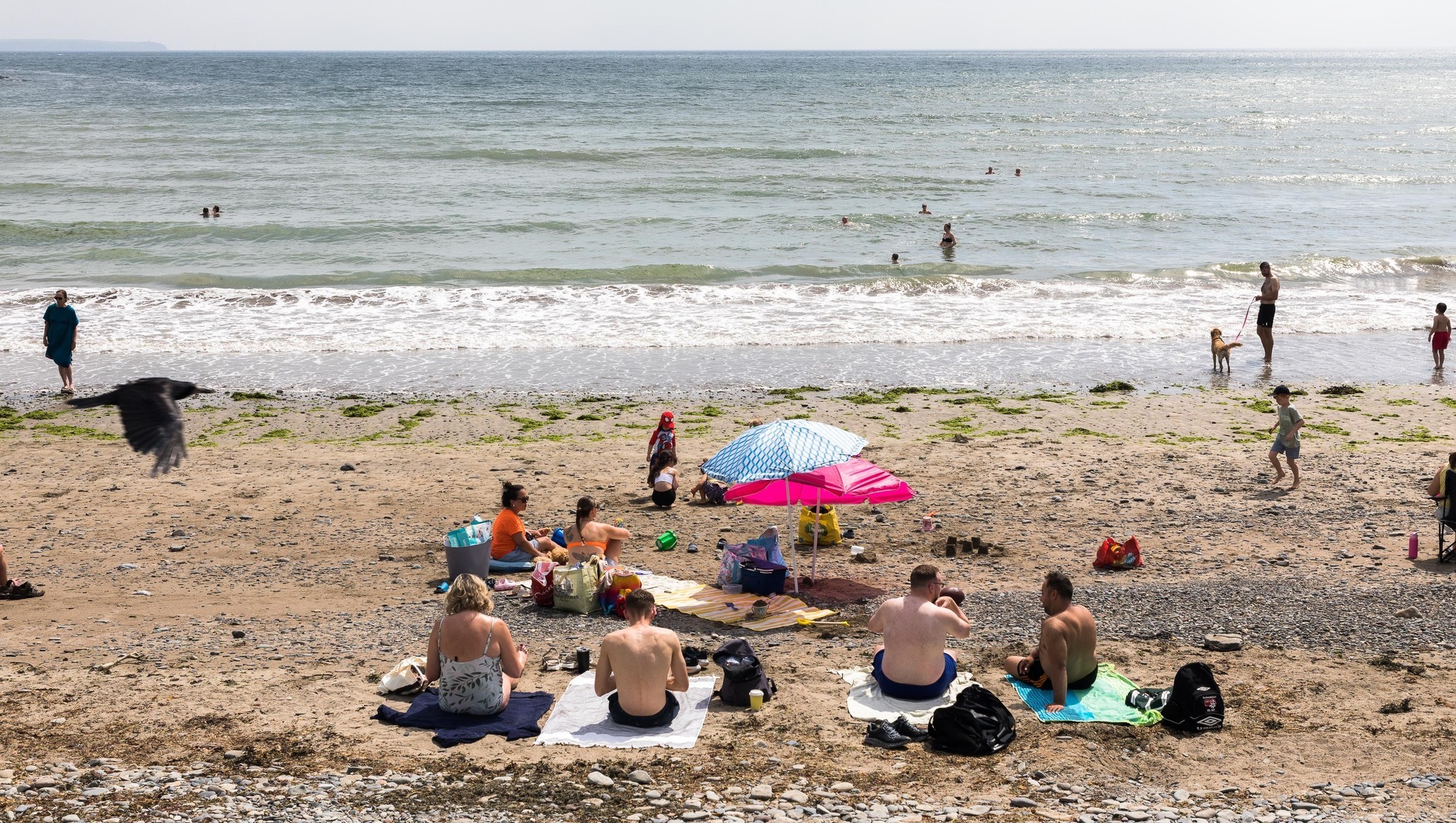
Met Éireann upgraded to a status orange thunderstorm warning for Galway, Roscommon, and Mayo, which was set to expire at 8pm.
The yellow warning is in place for Cavan, Donegal, Monaghan, Clare, Tipperary, Connacht, Kildare, Laois, Longford, Meath, Offaly, Westmeath.
In the north, counties Antrim, Armagh, Down, Fermanagh, Tyrone, Derry are also under the thunderstorm warning.
A spokesperson for ESB said its crews are working to restore power to affected areas since early on Friday morning.
"We acknowledge the disruption to family and commercial life this causes and thank impacted customers for their patience as our crews work to safely restore power," they added.
Another yellow warning is currently in place for high-temperature across the entire country, as maximum temperatures will remain in excess of 27C.
Met Éireann said the high temperature brings water safety issues due to increased use of lakes and beaches, uncomfortable sleeping conditions, heat stress and possible forest fires.
It comes as Met Éireann had earlier speculated that Ireland's all-time temperature record could be broken on Thursday.
Ahead of Thursday's heat, Met Éireann meteorologist Gerry Murphy said temperatures would be in the high 20s everywhere and potentially into the 30s in the Midlands and Connacht.
Read More
He told RTÉ’s on Thursday morning: “There is potential for the record to be challenged but it’s not in any way certain that it’s going to be broken”.
He added: “There’s a number of factors.
“The temperatures yesterday in the west didn’t get up as high, because it was a fair amount of clouds so that means today is not starting at a high of base as it might be.
“And secondly, as we go through the day, there are actually thunderstorms off the west coast at the moment, and if the cloud moves in a bit more further inland and those thunderstorms begin to develop later, that may keep a cap on the temperature.”
The Government said the public is advised to stay in the shade, avoid going out or partaking in strenuous activities during the hottest part of the day, drink plenty of fluids, and apply sunscreen to uncovered skin.
Ireland’s climate is projected to get warmer, with average temperature increasing across all seasons and on an annual basis – while the number of heatwaves is also projected to increase.
In its annual climate statement, Met Éireann said Ireland’s overall warming continues in line with the global warming trend, with seven of the top 10 warmest years in the country happening since 2005 and last year being the second warmest year on record.
Further warming means the likelihood of extreme weather events has increased.
In the rest of Europe, Britain recorded its hottest ever June day on Wednesday as temperatures reached 35.7C in parts of Surrey. In France, Nantes and Bordeaux both went into the 40s, while Paris reached 39C along with Toulouse.
The fierce heatwave affecting large parts of Europe is known as an Omega block, because it takes the shape of the Greek letter, with a bulge of hot air in the middle and cooler air on either side, according to an expert.
“It’s drawing warm air up from North Africa, from the Sahara, and that’s why we have this really intense heat,” said Clair Barnes, a climate scientist at Imperial College in London, quoted by .
Friday will continue to be warm, with sunny spells and showers, with temperatures hitting highs of 23C to 29C.
Some of the showers "will be heavy and thundery, merging to longer spells of rain at times with spot flooding and frequent lightning possible, particularly across the midlands, west and north".
Most of the showers will die out on Friday evening and night leaving clear spells for many, according to Met Éireann, with another hot night in store. Temperatures will hit lows of just 15C to 17C.
Saturday and Sunday will see more mixed conditions with temperatures becoming less warm than the past week. Saturday will see highs of 17C to 23C, while this will fall back to 15C to 20C on Sunday. Both days are expected to see both sunny spells and outbreaks of rain.
Check out the Irish Examiner's WEATHER CENTRE for regularly updated short and long range forecasts wherever you are.
CONNECT WITH US TODAY



Be the first to know the latest news and updates