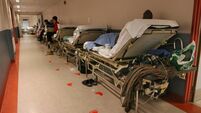
Nationwide ambulance 24-hour strike begins as paramedics demand pay recognition
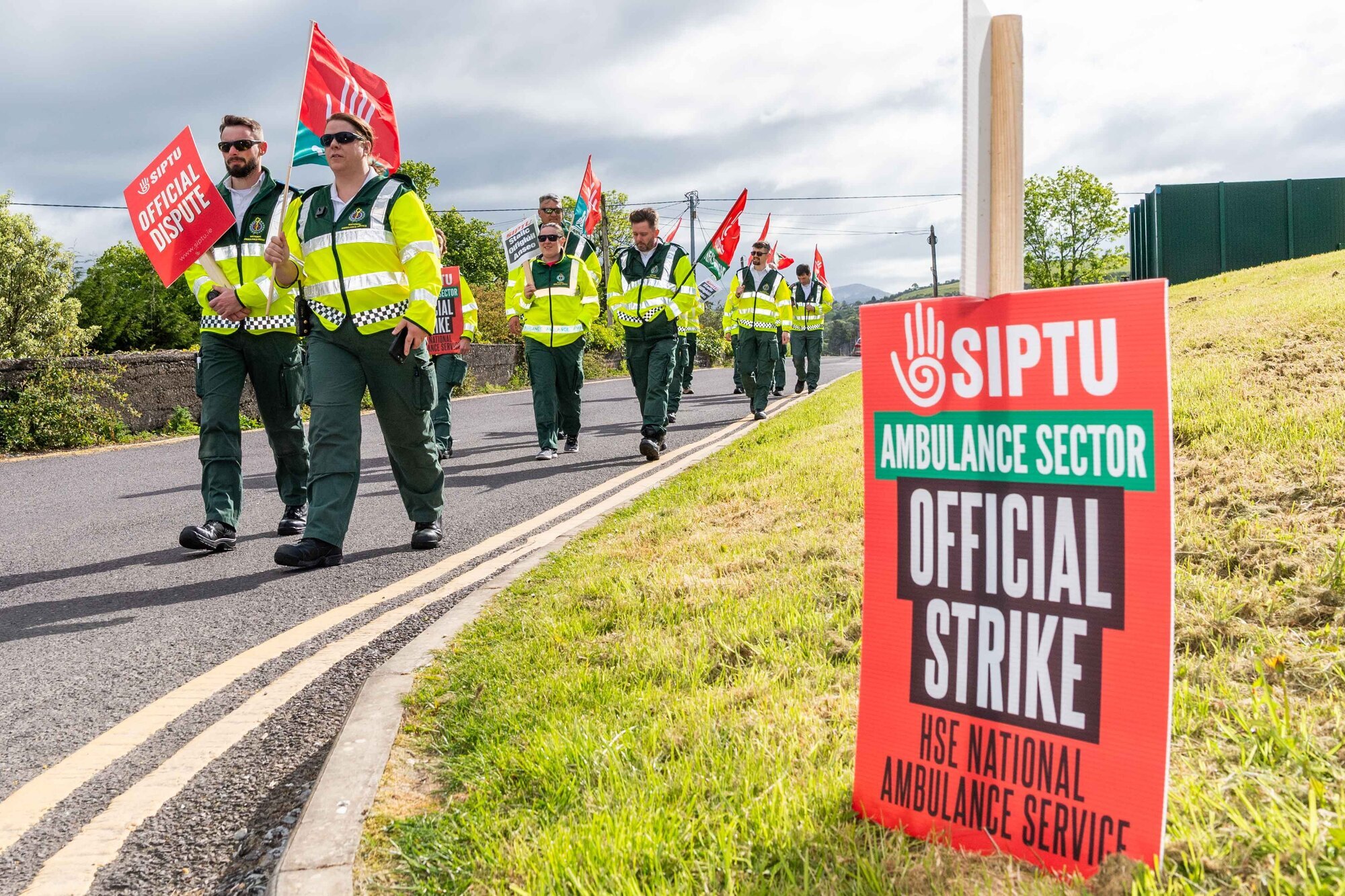
There was a strong presence on the picket line in Bantry, West Cork this morning. Picture: Andy Gibson.
Trade union SIPTU has denied that lives will be put at risk as some 2,000 ambulance staff have taken strike action on Tuesday, with significant disruption expected.
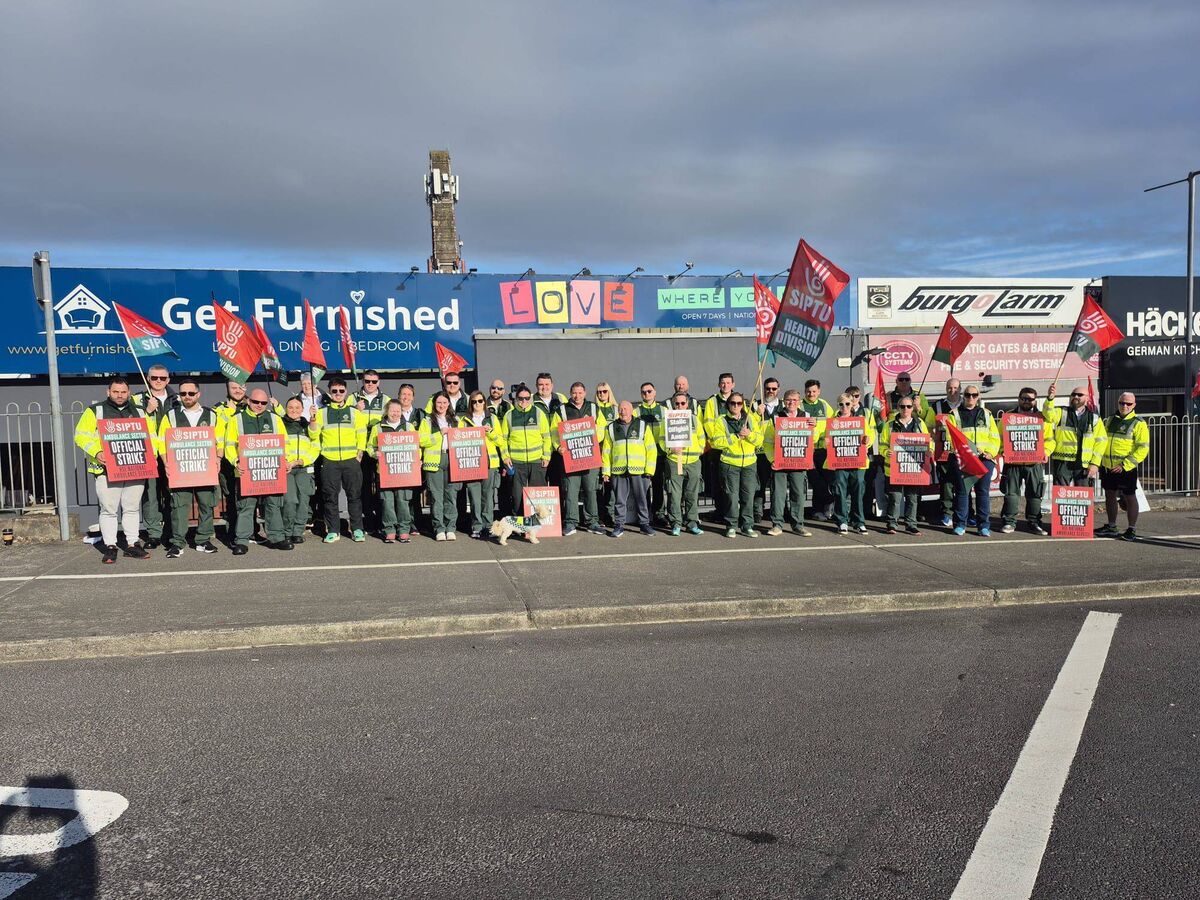
Pickets will be placed at ambulance bases around the country as part of the action by ambulance crews who are members of SIPTU and Unite, who are engaged in a dispute over pay.
The HSE has said that its 999 service is "fully operational" and under its contingency plan, priority will be given to "patients facing emergencies such as cardiac or respiratory arrest, and those experiencing serious trauma such as that arising from road traffic accidents."
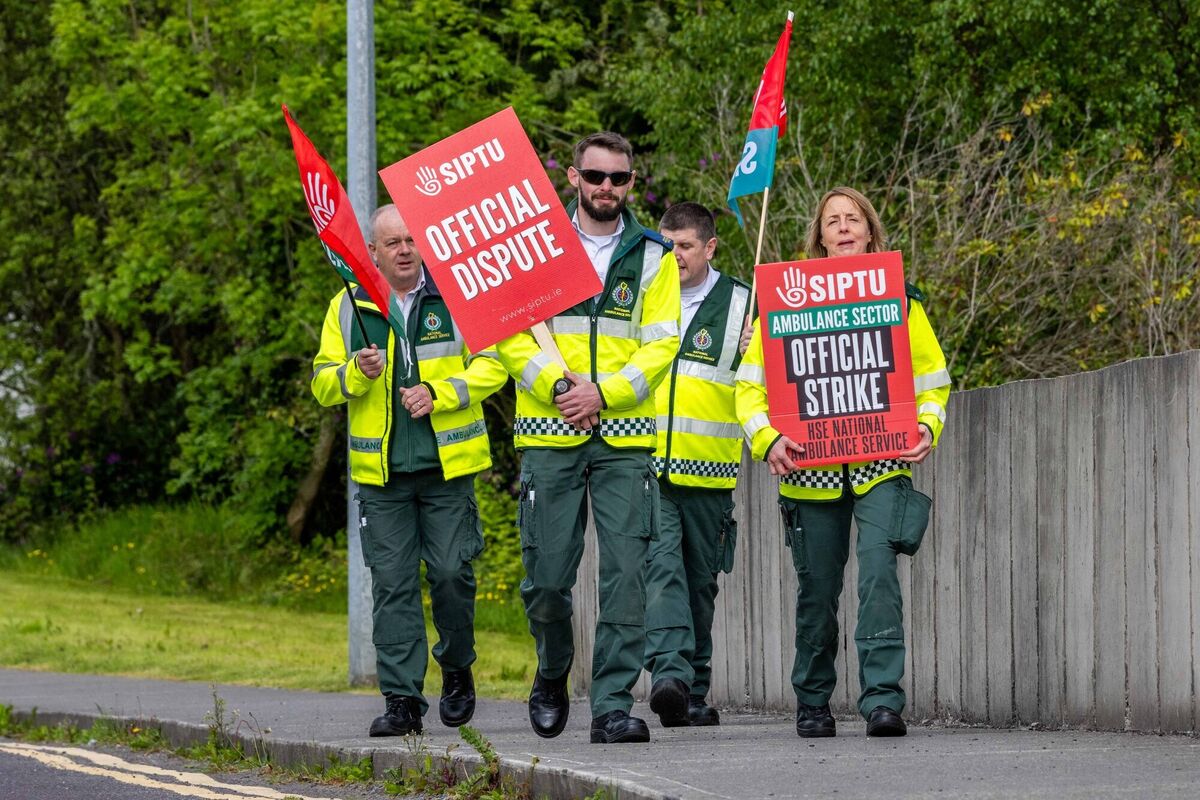
Health Division organiser Ciarán Sheridan called on the health minister and the HSE to “come to the table” for talks.
Read More
“The Minister for Health and the HSE need to intervene," he told on Tuesday.
Mr Sheridan said his members were disappointed that they had to take such action, but they were “absolutely resolute in ensuring that the additional responsibilities and roles they've taken on, in the interest of enhanced patient care, will be recognised.”
His members had been left with no choice and they were also disappointed that the Minister for Health of the HSE did not intervene.
“We removed preconditions to get into the table and resolve these issues. It's with the greatest of reluctance that, with no option, our members are actually on strike today.”
Mr Sheridan pointed out that while some of their members were on the picket line, others were providing emergency care for the most time-critical, high-acuity calls.
“So we are providing cover to the time-critical, high-acuity calls (1:10) as in the cardiac arrest, the respiratory arrest, the strokes, etc. And that is being triaged through the control centre based in Tallaght and Ballyshannon," he said.
“So critical services are being provided. In addition to that, we're providing the helicopter service and on top of that, we are providing cover for emergency paediatric responses. But again, our members do call on the HSE and the Minister for Health to intervene because this has to be resolved.
“Our members in the ambulance service went from a patient transport service to a pre-hospital emergency care service with the expert clinical care provided on scene at the back of an ambulance and during those paid cuts we continued to develop and transform and modernise the ambulance service.
"And now all the promises were people would be looked after and people would be recognised and that's where the genesis of the independent report, which is recommending enhanced pay scales for all the members, comes from.”
Mr Sheridan said the ball was now in the court of the Department of Health, the Health Minister to intervene and resolve this issue.
“We're available for talks.”
The President of the Irish Association of Emergency Medicine, Professor Conor Deasy, has warned that the strike will pose “a significant risk” to lives.
“Look, we need this dispute to be resolved very quickly. It should never have gotten to this point. It's dangerous for patients. There's no question,” Mr Deasy told Newstalk Breakfast on Tuesday.
“We wouldn't have provided ambulance services across the world globally with these interventions were they not seen to be evidence-based and seen to produce better patient outcomes.
“We wouldn't have gone to the effort of educating paramedics if we thought that these weren't going to bring better patient outcomes. So it is a necessity now to resolve this strike, to avoid putting patients in jeopardy, avoid playing Russian roulette with our patients. It's not fair to them.”
When asked if the strike posed a risk to life, Mr Deasy replied: “I think there is a significant risk. There is no way of dressing this up.”
It comes as Health unions say the HSE has not engaged in efforts to resolve a pay dispute which will see paramedics picketing hospitals in strike action from early today.
The HSE says it expects “a very challenging day”, with a National Ambulance Service official warning that people may need to make their own way to hospitals.
The strike follows frustration for Siptu and Unite trade union members at “ongoing failures” to act on recommendations made in a 2020 independent review, which looked at changes to the roles of ambulance workers.
The unions say qualifications, clinical responsibilities, and operational duties of personnel have expanded significantly over the last two decades.
The ‘Roles and Responsibilities Review’ “recommended enhanced pay scales to reflect the growing professionalisation of the service, but “those recommendations have not been implemented”, according to the unions.
Eoin Drummey, Unite regional officer in Waterford, said: “The 24-hour strike action is commencing nationally at 8am.
“And in terms of any approach or intervention [from the HSE], there hasn’t been any attempts made. There is not one of our members who actually want to be on picket lines. But given the consistent position from the Government and the minister for health, they have been given no choice.”
He said ambulance staff are paid “substantially less” than other healthcare workers at a comparable level: “Our members have helped transform the ambulance service from what was primarily a patient transport model to a modern pre-hospital emergency care service.”
Paramedics often treat people at accident scenes or in the patients’ homes. Many have completed degrees, including at University College Cork.
“The 2020 review recognised that upskilling and modernisation,” Mr Drummey said.
The review was jointly commissioned by the National Ambulance Service, Siptu, and the HSE in 2018.
About 2,000 Siptu members are taking part in the action, which began with a rolling work-to-rule yesterday.
Siptu ambulance sector organiser John McCamley said: “All we are asking is that, like other health professionals, their training and qualifications are respected and recognised in an appropriate pay and grading structure which takes account of the major workplace changes which have taken place over the last 20 years.”
Further stoppages are scheduled for May 19 and 26, as well as June, Siptu said.
The HSE said it and the Government accepted Workplace Relations Commission and Labour court recommendations last summer, but union members rejected the terms. Proposals included 3% to 14% pay improvements, on top of 9.25% under the public service agreement linked to agreed reforms, the HSE said.
National Ambulance Service clinical director Cathal O’Donnell told RTÉ people should call 999 “but it may be the case that they will get there quicker if they make their own way”.
Labour health spokeswoman Marie Sherlock described the ambulance service as “creaking at the seams because of understaffing and under-capacity”.
- Niamh Griffin, Health Correspondent
CONNECT WITH US TODAY



Be the first to know the latest news and updates