What a Difference a Day Makes: A phone call with my mam gave me focus when I needed it
Luke Thomas tells Helen O’Callaghan about a phone call he made to his mum in a moment of crisis and how her words steadied him – keeping him on course in a way that had a far-reaching impact, both personally and professionally.
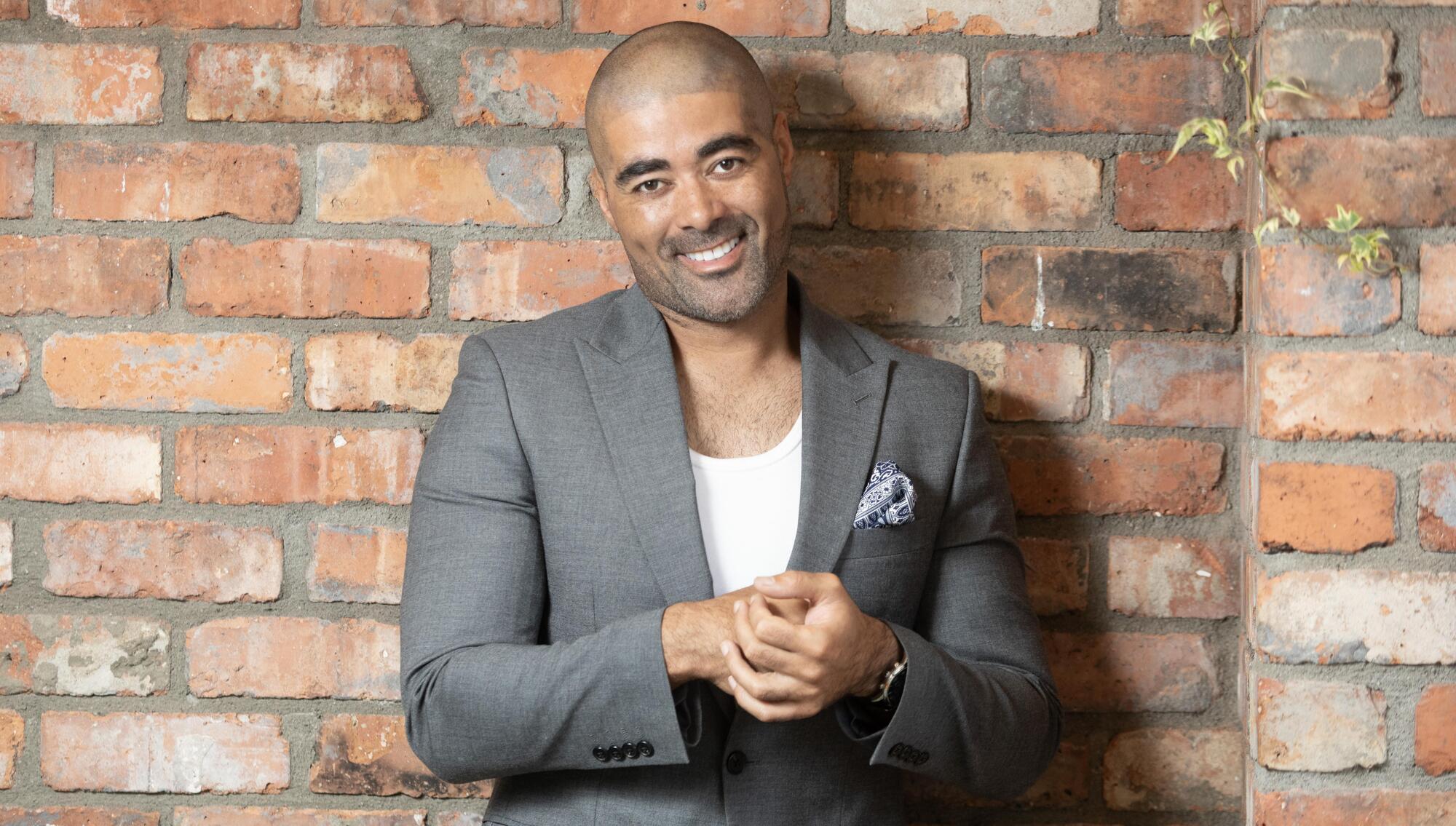
Luke Thomas at House Dublin on Leeson Street, Dublin. Photo: Gareth Chaney
Tue, 27 Aug, 2024 - 11:45
Everybody has these moments, like a fork in the road. Mine was a phone call with my mam, the first day of my first job after college, when I started working in the Guinness Storehouse.
I’d been very unhappy for a while coming up to that. My parents had separated a few years earlier, an amicable separation, but I had a lot of feelings about it that I’d buried. Music as a teen had been a distraction from my feelings.
I won a Meteor award for my music. I thought everything was going to work out — music would be my career. I had a manager but there was no huge structure around it all. And it kind of fizzled out.
One year I was sitting next to Bono and Westlife at the 2003 Meteor awards — the next it seemed I had no prospects in the music industry. I’d gone from releasing two top 10 singles in a year, doing Childline concerts in the 3Arena, to having no gigs or direction.
As a 20-year-old I was left rudderless. Emotionally, going from such a high was a huge step down to absorb. I was angry, frustrated — I had moments I broke down in tears.
Seeing other bands getting ahead — Westlife doing this, Samantha Mumba doing that, I’d known them when I was a teen — I couldn’t compute it: Why them and not me? As a young adult, I didn’t understand all the parameters of the music industry at the time.
So in the year following that really high situation, where I’d been supporting big artists coming over from the US, to having, as I thought, no musical prospects — I had to change course.
And then also the emotional outpouring about my parents separating. I thought I should have been able to internalise it. I was blaming one parent more than the other — at that age you don’t understand relationships have many layers. I just couldn’t deal with it all.
My girlfriend said go for counselling. I thought: What? Some old person talking to me about my situation? I went. The first session was this outpouring of emotion. It cleansed me somewhat. I went for two months.
There was a suggestion I get a job. To me that meant my musical career was over before it started. Yet music was all I wanted to do. It takes a lot to re-adjust your outlook at an age when you think you know everything.
Two of my uncles worked in Guinness’s. I thought maybe I could do something there. Something back of house, not tours — my confidence had been knocked. They were recruiting for store assistants, helping to move things in the yard, stocking up in the storehouse. I got a job, a few mornings a week.
The first day I went in very timidly, my insides spinning, praying no-one would recognise me. I’d been on The Lyrics Board on TV with Red Hurley — it was a popular show, the re-runs were being shown on RTÉ. A lorry driver, looking at me a while, asked ‘were you on The Lyrics Board last night?’ I said ‘yeah’.
Around 20 years ago there’d have been only a handful of mixed race people in entertainment — you stood out more. There was no social media — people consumed media from traditional sources. If you’d been on The Den a year earlier, if you’d played at a concert with Girls Aloud, it impacted more — people remembered.
After he said that, I kept the head down, tried to get on with things. At lunchtime I ended up bursting out crying. I rang my mother. Among the kegs at the back of the brewery, in my overalls, worlds away from sitting next to Bono, I said to my mam ‘I don’t think I can do this. It’s not for me… a fella recognised me… I got embarrassed’.
Mam just listened. She said ‘Son, give it a week’. It was enough to get me through that day, to go back the next. I knew the right thing to do was to face back. Mothers know the right words.
As the weeks progressed I got more confident. I was healing, building character. I wasn’t trying to be anybody else, just raw me growing as myself. The managers noticed I was a people person, a performer. They said I’d be better off upstairs. Within a year or two I moved up — that’s when I blossomed.
At the Guinness Storehouse I met my manager, she was my manager for six years as I moved up the ranks. They put me on management courses, brought me into marketing meetings. I ultimately became manager in the front-of-house department.
I became able to manage my emotions better, my personal relationships. I was able to articulate emotions. If I was in bad form, I knew not to bring it to the table. I had more self-awareness.
My mother’s from Trinidad. She’s a strong woman. Mam was always about ‘follow through’… without lecturing — she’d just say enough, and you’d listen.
That phone call is very vivid in my life. The decision to continue in the job… I still use the learnings I got while working there. If I hadn’t gone back that day, I know I’d have missed out on a huge chunk of my development as a man.
Luke Thomas and his band The Swing Cats team up with Una Healy for a headline performance at this year’s Cork Jazz Festival on October 26 at The Everyman theatre. Expect to hear all-time swing classics like ‘Fly Me to the Moon’ and ‘Beyond the Sea’. Tickets from Ticketmaster.