'They’re like extended family': Cobh mum on how LauraLynn children’s hospice became a lifeline
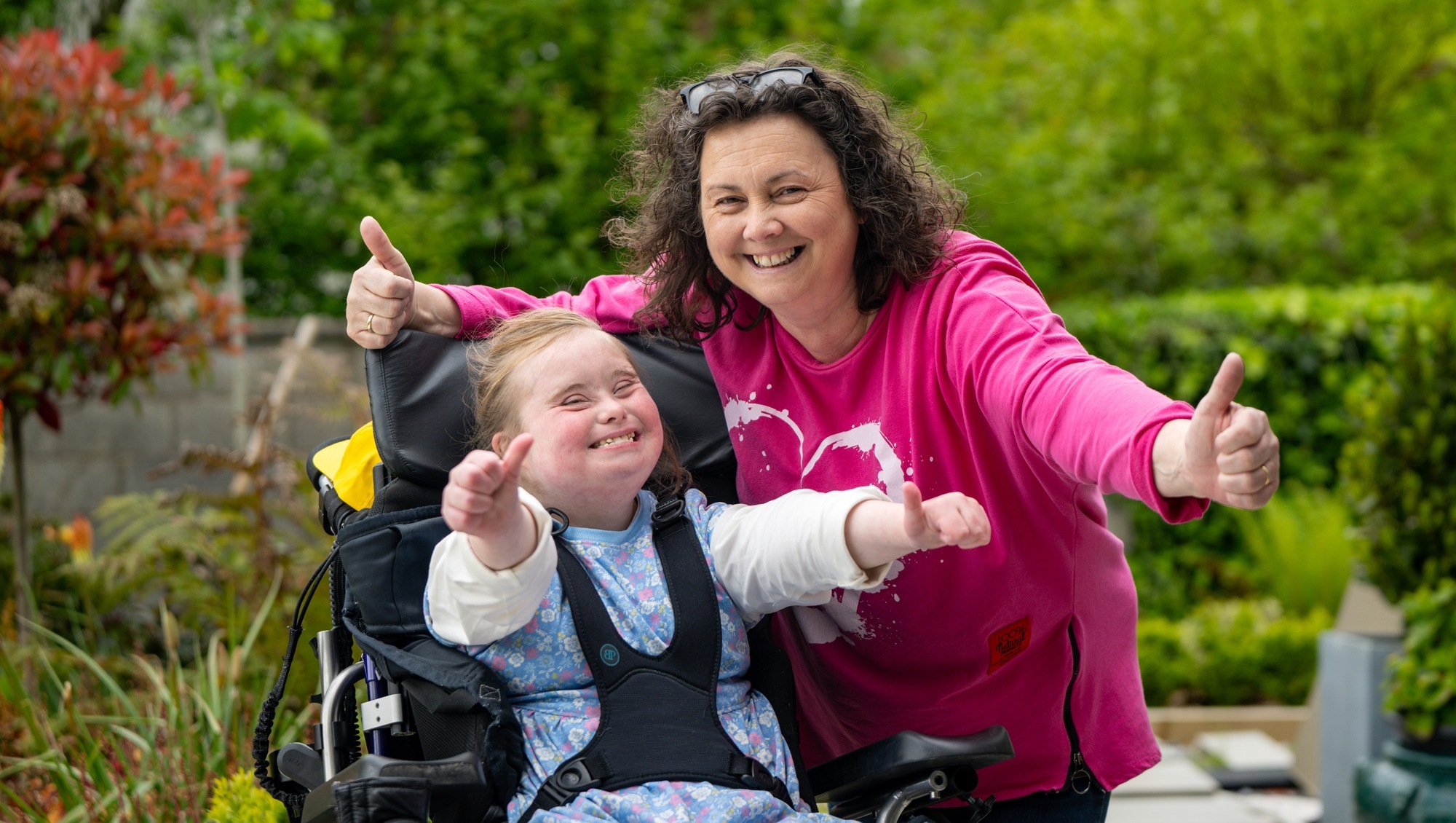
Sharon Lehane with her 14-year-old daughter Kate, who receives support from LauraLynn Children’s Hospice, at their home in Cobh. Picture: Chani Anderson
Kate has Down syndrome, is wheelchair-bound and has a life-limiting condition. That weekend, she was spending three nights in her “happy place” — LauraLynn in Dublin.
“Niall and I went for coffee and then I said ‘we’ll go to Dún Laoghaire’ — because I wanted to see her get up on that bike,” says the Cobh-based mum. The bike in question is a wheelchair platform, accessible bike.
“We walked onto the pier, wondering ‘where is she’ — and then we could see her way down at the end. She was coming up with the nurses, hands spread out like an airplane and the smile on her face — it was just electric.
LauraLynn — Ireland’s only children’s hospice — came into the family’s life just after covid. “They’ve made an awful lot possible for us,” says Sharon.
Aside from Kate’s regular stays with LauraLynn in Dublin — “From the second we go in, she’s in the playroom, she doesn’t want to see us” — the family receive support from the community team based out of Mallow, one of three such LauraLynn community teams working across the country.
The community teams are multi-disciplinary and provide care and support to children and families in their own homes, in the community, or in hospital. In 2025, they provided 3,898 such visits. “They’ve come out to help me with Kate’s medical stuff and Kate is thrilled to see them — she addresses them all by name. They’ve come with music therapy, with games — they get her to do things I can’t.
“Even them saying, ‘Take a break Sharon, we’re here, just relax’ is such a support.”
To say Kate has been through a lot in her 14 years is a huge understatement. At three-and-a-half months and weighing just 7.5lbs, she had open heart surgery — afterwards she experienced vocal cord paralysis, which made eating very difficult. “We tried to orally feed her but she had constant issues with aspiration and she’d end up in hospital with pneumonia. She had massive problems with constipation.”
After undergoing tests, Kate was diagnosed with chronic intestinal pseudo-obstruction, a rare disease. “It means her brain is telling her that her gut is obstructing all the time, though it isn’t really,” explains Sharon.
Kate has battled sepsis five times — the first bout when she was six, and she experienced two instances in 2024. “It has taken a huge toll on her body,” says Sharon, describing how Kate is fed through a central line in her heart.
“She has a jejunal tube into her bowel, a PEG tube to her stomach and an ileostomy bag. She has a lot of tubes and bags. That’s her life — she knows she has them and she has nicknames for them.
“She calls her central line her boob tube. The ileostomy is the smelly belly. The PEG tube is Peggy, and the jejunal is Jej. Kate’s speech isn’t great — you’d need to know her to understand what she’s saying, sometimes even I don’t know. But the nicknames make it easier for her to indicate if she has a problem with the tubes or bag.”
Read More
The reality for Sharon and Niall — parents also to Lauren, Conor, and Rachel, all in their early 20s — is that Kate requires 24-hour care.
“What makes it more challenging is she has no comprehension of what all those tubes are for. She doesn’t understand, the danger, the severity, if she pulled them out. For example, if the central line into her heart gets infected, it brings the infection right into her blood supply and around her body.”
Prior to visiting LauraLynn for the first time, Sharon expected it to be “something like a hospital” — it couldn’t have been more different, she says.
“And we did go for a walk. And I started feeling ‘we’re gone too long, we have to get back’ — and when we did, Kate was in great form. She stayed in LauraLynn that first night. She was downstairs — we were in a room upstairs, wondering how she was going to be. It wasn’t a bother to her.
“It was great to have the space, to be able to relax, and know Kate was being looked after. To be able to go out with Niall, or go to the cinema with the other kids — normal simple things, these are what I enjoy.”
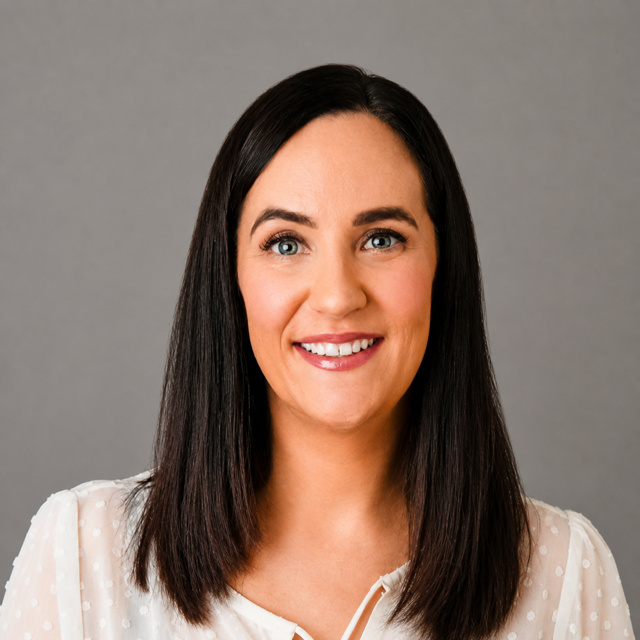
Aishling McCormack is a clinical nurse specialist with LauraLynn’s Mallow-based community team. The 15-member team includes seven staff nurses, as well as a music and play therapist. They cover Cork, Kerry, Limerick, Waterford, and South Tipperary — nurses do about 30 home visits weekly in the region.
McCormack says children with life-limiting conditions experience many bumps along the road. “We provide specialist nursing care in the home. We could be supporting with symptom management, changes in medication, and managing any feeding tubes.
“We provide step-down nursing support, for example, if a child is discharged from hospital they can be quite fragile, McCormack says.
“Our role is to lighten the burden for parents, to work with them and to give them some sort of a break.”
McCormack explains that for children unable to manage the journey to the hospice in Dublin, the Mallow team provides hospice care in the home.
LauraLynn, now in its 15th year, provides symptom-management, planned short breaks, emergency and end-of-life care, as well as family supports and bereavement care to children with life-limiting conditions and their families across Ireland.
A big part of LauraLynn’s work is supporting siblings of a child with a life-limiting condition — through targeted sibling camps, one-to-one play therapy sessions and other therapeutic interventions.
Connecting siblings with other children in similar situations creates a strong relationship and network through which they can explore their feelings and lived experiences.
In 2025, LauraLynn Children’s Hospice cared for 771 families. Relying primarily on fundraised income to fund its hospice services, LauraLynn care is completely free of charge to families.
Sharon Lehane says LauraLynn is a lifeline.
“They’re totally there for Kate, and for us as a family. They’ve helped us make so many fantastic memories, things I never thought I’d be able to do with Kate. They get the best and most out of her. They’re like extended family to us.”
- Children’s Hospice Week runs until May 24 — the theme is: ‘Every minute matters, every child counts — because every little life deserves big moments.’
- For events/awareness taking place during the week, visit lauralynn.ie or donate at lauralynn.ie/donate
CONNECT WITH US TODAY



Be the first to know the latest news and updates