Dr Phil Kieran: My three-year-old picked up an eye infection at playschool
Eye infections occur frequently in children.

Eye infections occur frequently in children. The most common is conjunctivitis, an inflammation of the transparent layer covering the white part of the eye and the inside of the eyelid. It usually shows up as a pink or bloodshot discolouration of the white of the eye and an increase in secretions coming from the eye itself — or 'eye snot' as my kids call it.
Conjunctivitis can be caused by viral or bacterial infections, irritation by something getting into the eye like dust or sand, or allergies such as hayfever. Most cases will last a day or two and settle on their own without treatment.
Infectious conjunctivitis (bacterial or viral) tends to produce pus, often crusting the eye. With infection, the white of the eye is usually pink, and the eye can look puffy. It is not typically painful, so if the child complains, you should get the eye checked out quickly.
Conjunctivitis in children is most commonly caused by the same viruses that cause a cough, cold, or runny nose. Often, the only treatment needed is to clean the eye with cotton wool dipped in cooled boiled water. Remember to clean from the nose side towards the ear and not use the same piece of cotton wool on both eyes.
If your child is complaining of pain or difficulty seeing, you should take them to the doctor as this could be a sign of a more serious infection which could damage the eye.
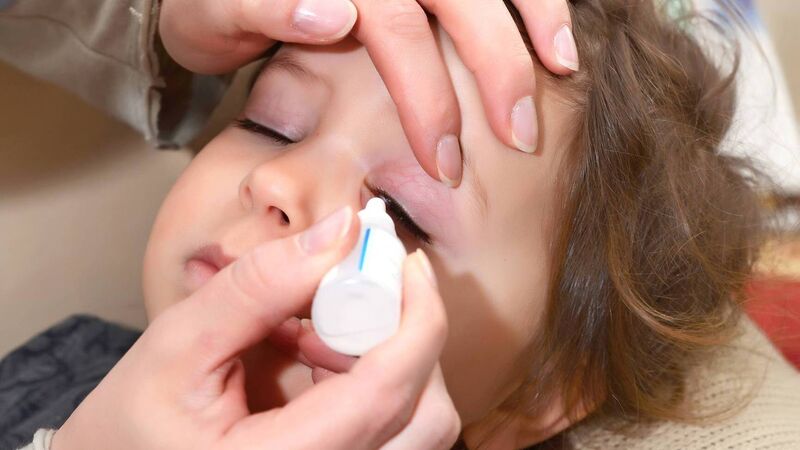
Bacterial conjunctivitis is treated with eye drops. These often need to be used four to five times per day. The best way to do this is to get the child lying flat and looking as far back as possible. Gently pull down the lower eyelid and put the drop onto the 'pocket' this creates rather than the eyeball itself. If the child is distressed with this method, a trick is to lie the child on their back and place the drop on the closed eyelid, creating a small pool of medication in the inner corner. Then, when they open their eye, the medication will flow in.
There is no guaranteed way to prevent conjunctivitis. It is highly contagious and can be spread if you touch your eye after covering your mouth or nose when coughing or sneezing.
If your child is in creche or pre-school and they have conjunctivitis, it is vital that you keep them at home as they will almost definitely spread it to other kids. Hand hygiene is key for older children. If they cough or sneeze, encourage them to wash their hands immediately afterwards. Encourage them not to touch or rub their eyes.
- If you have a question for Dr Phil, please send it to parenting@examiner.ie
CONNECT WITH US TODAY



Be the first to know the latest news and updates