Why are our marine 'protected' areas still nothing more than lines on maps?
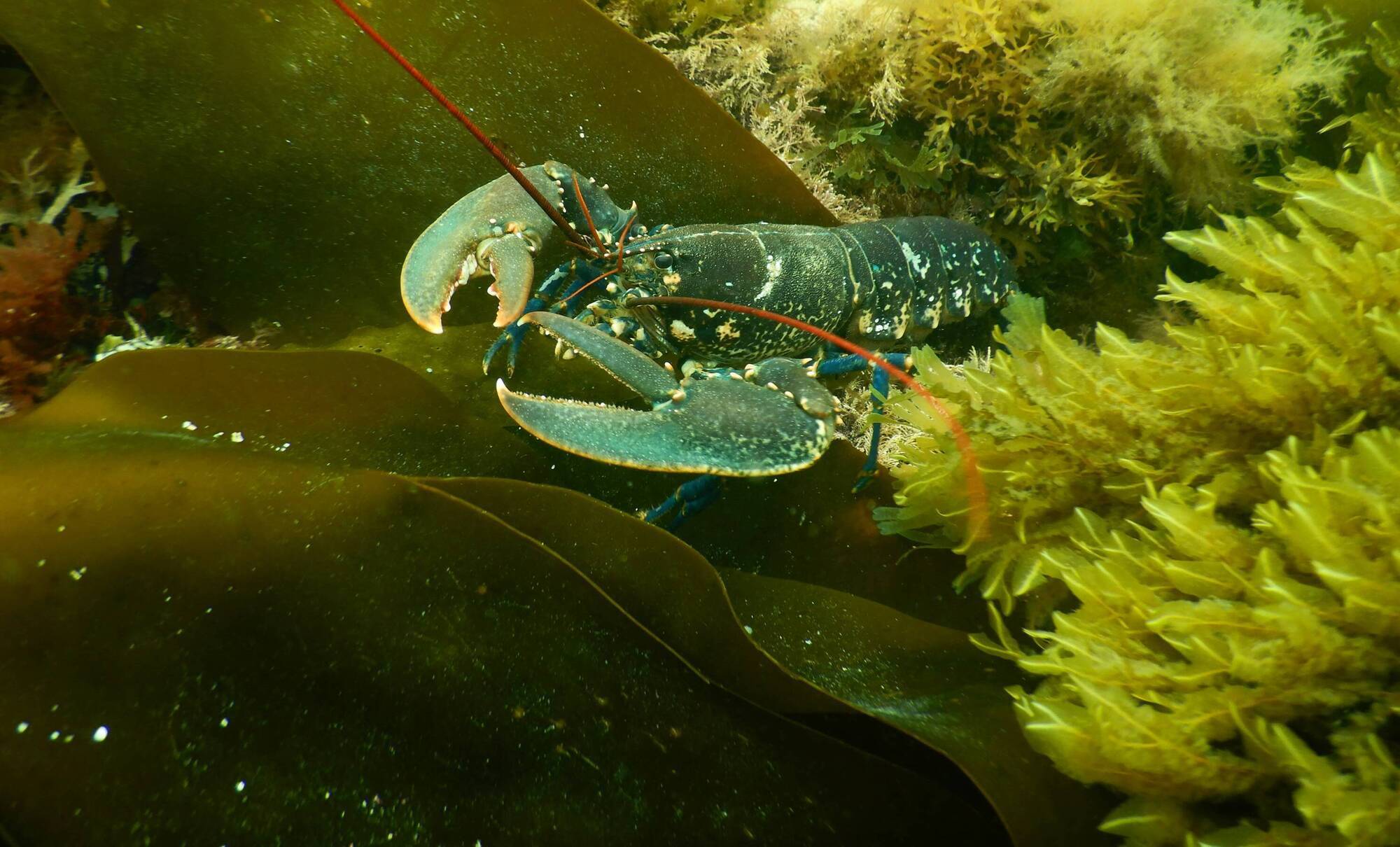
Lobster. The limitations of Natura 2000 have been apparent for some time: the lists are too short; whole groups of endangered species, such as sharks and rays, or rare shellfish, are ignored. Fish species are completely absent. Picture: Pádraic Fogarty
In 2008 the Irish government, in adopting the EU’s Marine Strategy Framework Directive, signed up to “establishing and maintaining ecologically representative systems of marine protected areas [MPAs] by 2012”.
However, unlike most European countries, Ireland still lacks the basic legislation for the creation of MPAs in Irish waters.
Yes, we have areas designated under existing EU law, referred to as the Natura 2000 network, which now cover about 10% of our seas. This requires that certain features, such as particular species and habitats, meet ‘favourable status’. These lists include seals, dolphins, whales, a range of sea birds — plus important seabed habitats such as reefs, sand banks and meadows of sea grass.
If we were meeting the requirements of the Natura 2000 network we would be well on our way to restoring sea life. However, these areas remain no more than ‘paper parks’... lines on maps that have achieved little more than annoying local fishermen.
- Firstly, the lists are too short; whole groups of endangered species, such as sharks and rays, or rare shellfish, are ignored. Fish species are completely absent.
- Secondly, this features-based approach ignores the fact species do not live in isolation but are part of interconnected ecosystems which frequently operate over large areas.
Natura 2000 sites are, on their own, too small to deliver the rebound in marine life that is needed. This is reflected, for instance, in work from BirdWatch Ireland in identifying ‘important bird areas’ around our coast which are much bigger than many of the Natura 2000 sites that have been so far designated.
For this reason, MPAs need to go a lot further than Natura 2000, not only in expanding the list of features that need protection and restoration, but in adopting a ‘whole site approach’.
An important academic review published in 2019, recommended that we “consider management of damaging fishing and industrial activities over widely distributed mosaics of habitats within the marine environment” which would “allow slow-growing and long-lived species to survive, and greater complexities of seabed life to flourish in a suite of different physical habitats, and even – over time, result in positive change in ecosystem function".
In other words, this approach doesn’t just hold on to the remnants that are left but allows nature the time and space to recover according to its own dynamic.
It’s why blanket bans on certain activities, such as towing trawls and dredges across the seafloor, or fixing nets for long periods, something which results in high levels of harm to non-target species, or even prohibiting all kinds of fishing or extractive activities from some areas, are urgently needed.
This is good for fishermen too, as without a general lift in the health of the marine ecosystem, we will not see a rebound in commercially important fish species. Where MPAs work, they have adopted this ‘whole of site’ approach, with no-take areas, and devolution of powers that allow fishermen to participate in management, putting their knowledge of the sea on an equal footing to scientific surveys and broader government policies.
However, despite all the time and effort that have gone into developing legislation for MPAs, the indications are that this approach is being set aside in favour of a minimalist view, repeating the errors of the Natura 2000 system.
At an event in Brussels recently, Fianna Fáil’s Timmy Dooley, the Minister of State with special responsibility for Fisheries told an audience that “it’s not always about a one size fits all, it’s about understanding what it is your seeking to protect in that particular zone. So, it’s not an exclusive ‘get out of there’, it’s to end that which is destroying that which you want to protect”.
This minimalism is reflected in the leaked draft MPA Bill from May 2024, which very nearly passed during the term of the previous government.
It envisaged the establishment of an MPA advisory body and stakeholder working groups and the publication of an ‘ocean environment policy statement’. It didn’t include a list of features to be protected but says one would be prepared “as soon as practicable”.
It empowered the managing authority for MPAs to “make recommendations” and to “prepare, adopt and implement” management plans, although failed to identify who that authority would be.
Management plans would be approved by the Minister, “as soon as practicable” after their submission, meaning the minister would have a veto on every detail, ruling out any ability of local collectives to make decisions and leaving the process open to the chronic inaction and prevarication that we have become accustomed to by central government.
Critically, the draft Bill contained no definition of an MPA, set no standards against which they would be measured, set no bar to be met in terms of the health of species or habitats. There was no mention of a prohibition on the use of inherently harmful gear or destructive activities that are incompatible with international standards on MPAs, and there was no mention of no-take zones or ‘strictly protected areas’.
The Government seems to be designing the process to claim success at international conferences while discommoding virtually no one at home. They may feel that hollowing any ambition out of the new law is the safe thing to avoid a scrap but this will be cold comfort to fishermen who are increasingly left with nothing to fish.
All this may be moot as the Government has since said it is going back to the drawing board, abandoning the idea of stand-alone legislation and shoehorning the provisions for MPAs in to the Maritime Area Planning Act.
Campaign group Fair Seas has criticised the pace in bringing forward legislation as “painfully slow”.
In a statement they said: “Fair Seas is increasingly concerned that MPA legislation has slipped down the Government’s priority list. Any further delays will make it extremely difficult, if not impossible for Ireland to meet its national and international target to protect 30% of our seas by 2030.”
CONNECT WITH US TODAY



Be the first to know the latest news and updates