An outing to the abbey built for banished monks
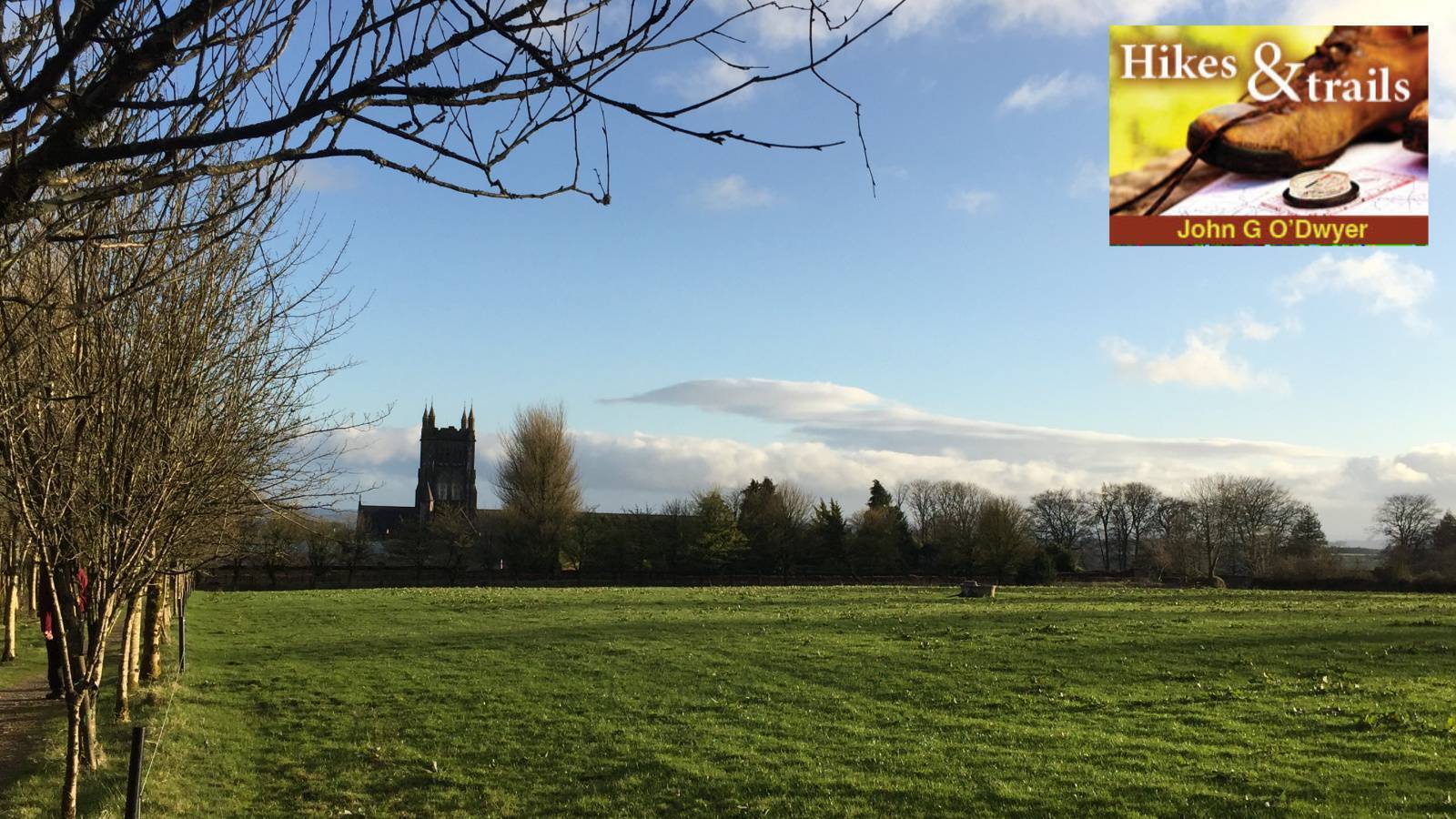
Mount Melleray Abbey. Picture: John G O'Dwyer
Magnetically attractive, abbeys are islands of serenity in a chaotic world. And so it is that the dreamy spires of Mount Melleray Abbey, County Waterford, act as an almost irresistible attraction for travellers crossing the famous Vee Gap of the Knockmealdown Mountains.
Working with the maxim that what is useful should also be beautiful, the monks have created a place of tranquillity and peace with the result that, for almost two centuries, people have come to pray, meditate, and reflect. Yet, it was by chance that this renowned abbey came to exist.
The story began in 1830 when a Waterford man arrived back in Ireland. Originally from Ballybricken, he was a Cistercian priest at Melleray Abbey in Brittany and had returned because an anti-clerical government had decreed that foreign religious should be exiled from France.
Since there were no monasteries in Ireland at the beginning of the 19th century, Vincent Ryan had been forced to leave Ireland when joining the Cistercians. He had, however, long held a dream of restoring the order to Ireland almost three centuries after it had been dissolved by Henry VIII. Now the French Government had provided an urgent reason to do so. Ryan was dispatched to Ireland with the mission to find a suitable place for the soon-to-be expelled monks.
Farmland was urgently required as a source of income for the arriving Cistercians, but patrons happy to endow large tracks of land to the incoming Cistercians were thin on the ground. With monastic diligence, Vincent Ryan checked sites in Kildare, Mayo, and Galway that all proved unsuitable. In desperation, he then rented a small holding at Rathmore, County Kerry. Soon after, 64 monks, who had been ejected from France, arrived in Cobh. Quickly discovering that the holding at Rathmore was inadequate for such a large community, Fr Ryan was obliged to renew his search.
The difficulties experienced by the Cistercians returning to Ireland in the 19th century contrast starkly with the medieval period. Obtaining the best quality land would then have presented few difficulties. Irish chiefs and Norman lords queued up with bequests of their best property for the prestige of having a monastic establishment. In the 19th century, by contrast, the Irish countryside was largely in the hands of Protestant landowners, who were understandably less well-disposed towards the returning monks.
Mount Melleray today with a light dusting of sneachta on the Knockmealdowns. pic.twitter.com/0S8nuiwRRI
— Muddyboots (@muddybootsguide) January 22, 2019
Eventually, Fr Ryan became aware of 600 acres at Scrahan, County Waterford. The fact that this land had remained underused amid the huge population pressures in the lead-up to the Great Famine spoke for itself — it formed part of a mountainside and was covered with heather, furze, and rushes. With their situation becoming increasingly desperate, the Cistercians decided, however, that this was the best holding on offer.
The landowner, Sir Richard Keane, believed the coming of the industrious Cistercians to County Waterford would attract business, so a price was agreed. The local communities then rallied to the monks’ aid. From the surrounding parishes, thousands of men arrived to donate a day’s labour towards rendering the unforgiving mountainside productive. Work went ahead at a frenetic pace, and 1838 saw the dedication of the new monastic church — the first in Ireland since the Reformation. Soon after, Vincent Ryan became the abbot of what had now become Mount Melleray Abbey — the initial person to hold such office in Ireland for more than two centuries.
A golden era followed as the Abbey grew with the rising tide of Catholicism in 19th-century Ireland. At its peak, there were almost 150 monks and lay brothers, along with a prestigious boarding school and seminary. One of the principal roles of the monastic community was, however, providing comfort and support to many troubled souls coming to seek consolation in an era when counselling and therapy were unknown.
Towards the end of the 20th century, however, the Abbey met strong headwinds. Declining numbers of students meant the boarding school closed in 1974, while an increasingly secular society meant vocations to monastic life fell steeply. Now there are just seven monks remaining in the Abbey, but this small community remains relevant to the area it serves.
Lovely day in Mount Melleray for the launch of St Declan’s Way, a 115km walking trail between Cashel and Ardmore pic.twitter.com/r8MRdKN9Hu
— Conor Kane (@ConorKane0909) September 29, 2021
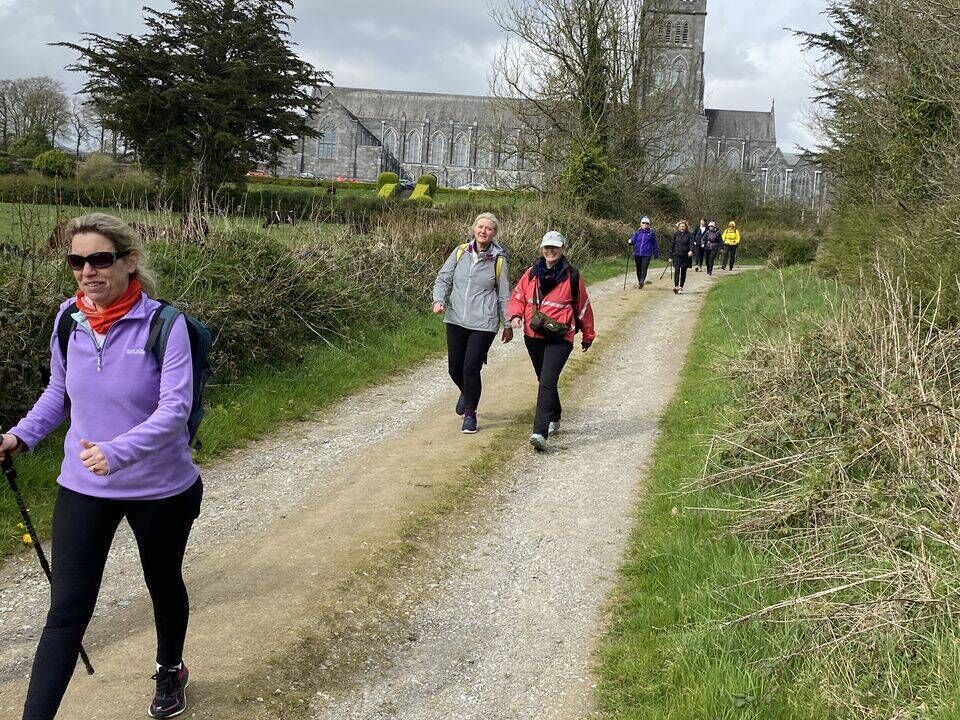
The newly reopened St Declan’s Way passes through the Abbey grounds, and the remaining monks have responded to this by repurposing one of the buildings as a state-of-the-art pilgrim hostel. They have also created a network of walking trails centering on the Abbey. Following the same paths trodden by Cistercians since the 1800s, they offer 30 kilometres of sublimely meandering lanes, forest trails, and mountain paths.
Visitors to Mount Melleray can now sample solitude on one of the waymarked walks, visit the Abbey Church with its magnificent stained-glass east window, browse through the Cistercian Heritage Centre, and top off with a coffee in the volunteer-run café. It makes for a memorable outing.
- John G O'Dwyer's book contains a fuller account of the history of Mount Melleray Abbey and is available from currachbooks.com
CONNECT WITH US TODAY



Be the first to know the latest news and updates