'The history of Ireland is preserved on the backs of calves': Calligraphy expert Timothy O'Neill
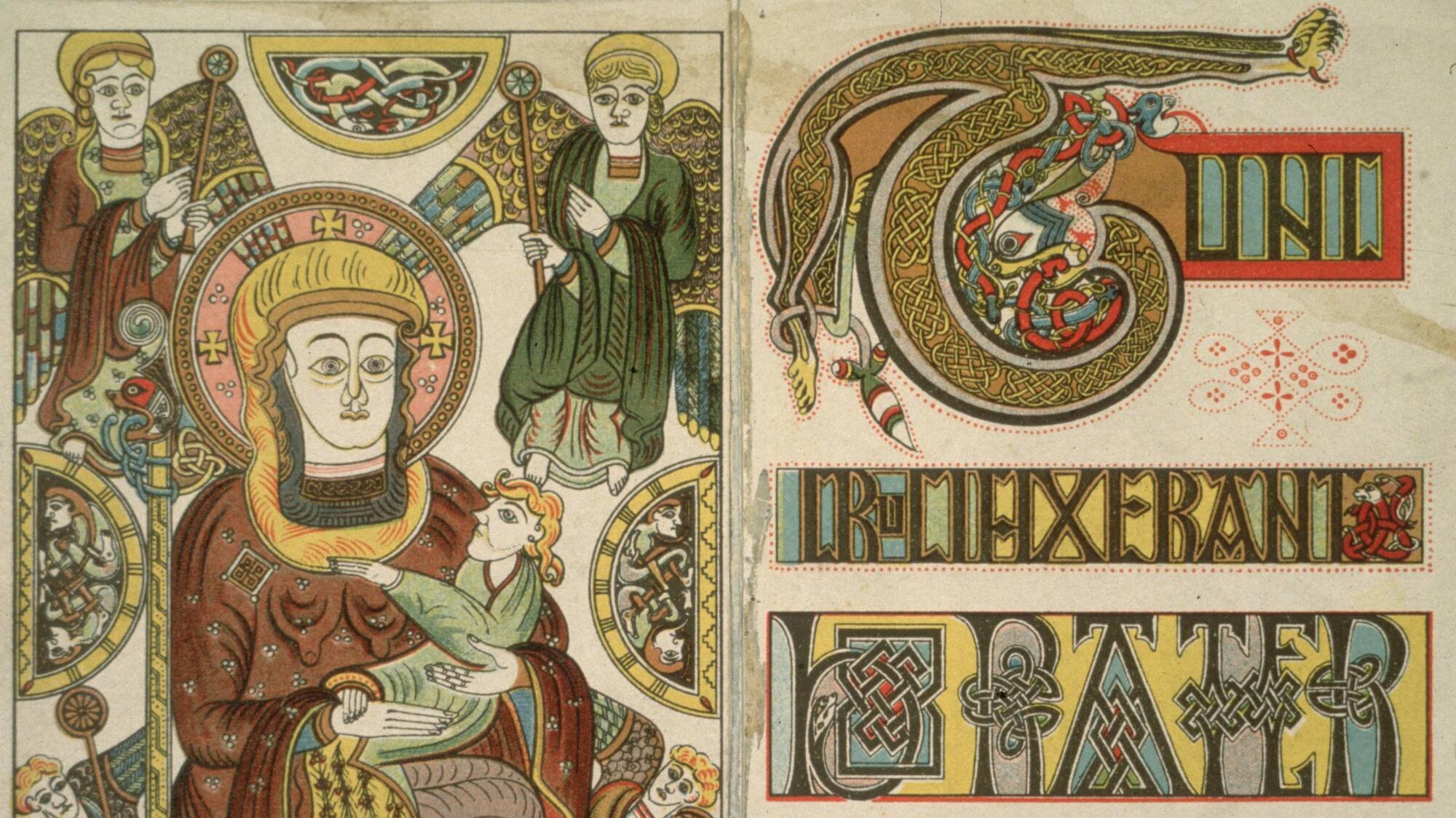
The Book of Kells is the most famous Irish manuscript, and Timothy O'Neill's book explains how it was part of hugely important practice among the clergy. Picture: Hulton Archive/Getty Images
For a small island on the periphery of Europe, early medieval Ireland wielded a substantial cultural influence on the continent, largely through the monks who carried their ideas and artistic traditions there.
The evidence of their significant impact can be seen in the manuscripts they produced, many of which are held abroad. When the National Museum of Ireland hosted its Words on the Wave exhibition in Dublin from May to October of last year, at its centre were 17 manuscripts loaned by the Abbey of St Gall, a Swiss monastery. St Gall was an associate of St Columbanus, another Irish monk who made a lasting impact on Europe in the 6th century.
The exhibition marked the largest ever loan of the manuscripts, some of which were returning to Ireland for the first time in over 1,000 years. It was a big hit with the public, attracting more than 120,000 visitors, and will open in Zurich in January.
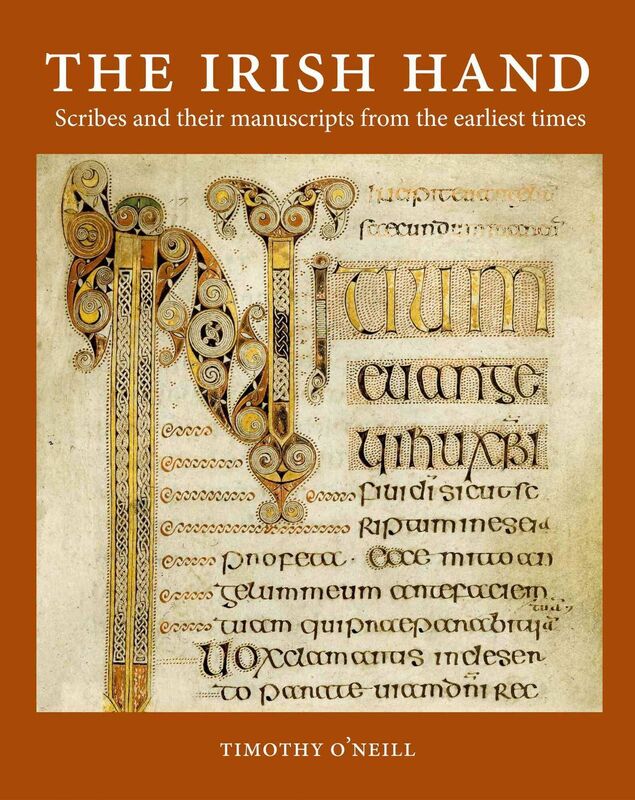
In a reflection of this upsurge in interest, Cork University Press has reissued an illustrated paperback that explores the works of Irish scribes through the centuries. The book was originally published in 1984 and in a later CUP edition in 2014; having previously been out of print, the time was ripe for its reissue, says its author, historian Timothy O’Neill.
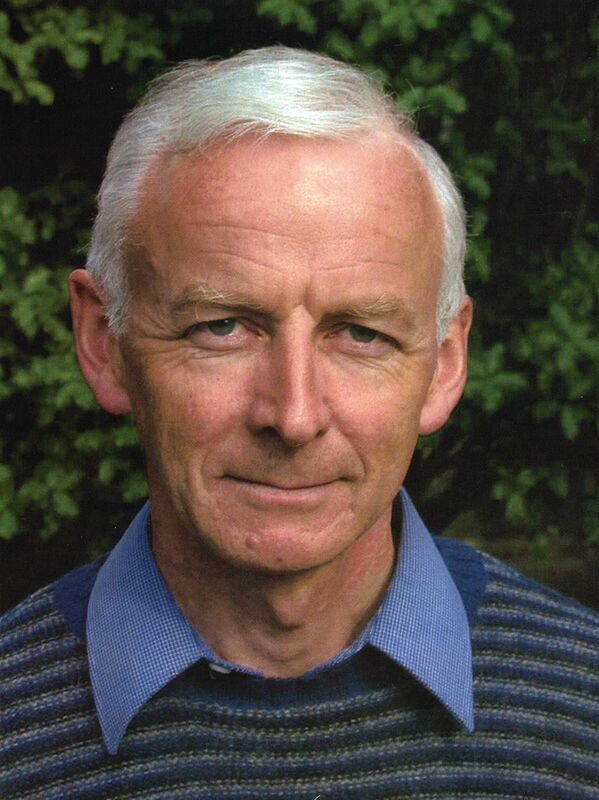
“There is a great interest in the manuscripts. It is definitely trickling down. The number of people who went to the St Gall exhibition was remarkable,” he says.
O’Neill’s expertise in the practice of calligraphy brought an extra dimension to his interest in the manuscripts and how they were produced. His book has sold thousands of copies since it was published by the Royal Irish Academy in 2024.
“It wasn’t an academic topic for me, I understood the nuts and bolts of it, how books are made, the materials, parchments and all of that,” he says.
features essays on 31 of the great books of Ireland, including The Book of Kells, The Book of Durrow and the Cathach, the oldest Irish manuscript, used as a battle talisman. O’Neill also takes a detailed look at the script and lettering of a selection of manuscripts.
While The Book of Kells justifiably gets a lot of attention not only as a cultural artefact but as an object of beauty, O’Neill has a particular fascination for some of the lesser known manuscripts which offer a glimpse into the lives of ordinary people.
“There were no books except hand-written ones — if you wanted a book you had to get someone to write it. You had kings, princes and popes commissioning books but then you had ordinary everyday books as well.”
He cites an example which is featured in a 9th-century book called Priscian’s Latin Grammar, used for teaching. Annotations show the men working on it were using it to communicate with each other.
“It is the most amazing thing. Five men wrote it, and there are a lot of marginal notes in it — one of them talking to the other and saying how long until their holidays, and how many days are left until Easter, all of that kind of stuff.
"When they were finished, they gave it to the teacher and he then wrote all his explanations of advanced Latin for the Irish students. It is the most prodigious thing. That man was a genius, he knew his Virgil backwards.”
The importance of vellum, typically made from calfskin, as the chosen material for scribes cannot be underestimated, he says.
“The entire history of Ireland is preserved on the backs of young calves less than 12 weeks old — without those calves we would have no history. Effectively, paper wasn’t in use in Ireland until the 16th or 17th centuries. Everything before that was written on vellum, a simple but amazing material which is virtually indestructible.”
O’Neill gives the example of the Faddan More Psalter, which was discovered 20 years ago by a peat-harvesting machine driver in a Tipperary bog. A 1,200-year-old book of Christian psalms, its leather cover was found to have been lined with papyrus, demonstrating the far-reaching contacts of the early Irish church.
A great deal of work on medieval manuscripts has been carried out in Cork. O’Neill cites the work of the late Donnchadh Ó Corráin, a professor of medieval history at UCC and the Inks and Skins project there, overseen by Professor Pádraig Ó Macháin. It uses technology to analyse the composition of inks and pigments used by the secular scholars who created hand-written books in the late medieval period.
“They have even taken it a step further, with the genomes of the skins they can identify where the animals came from that were used in the manuscripts a thousand years ago. It is phenomenal,” says O’Neill.
also highlights the importance of later secular manuscripts, often commissioned from learned families by chieftains or wealthy patrons and treated as status objects. An outstanding example is the Book of Lismore, which is believed to have been created in Kilbrittain, Co Cork, for Finghín MacCarthaigh, Lord of Carbery, and his wife Caitlin, daughter of Thomas, Eighth Earl of Desmond.
It was rediscovered at Lismore Castle in 1814 and kept for many years at Chatsworth House, the English seat of the Cavendishes, the castle’s owners, before it was donated to UCC in October 2020.
On the question of ownership, there were renewed calls for the permanent return of one of Ireland's most significant historical records, the Annals of Inisfallen, when it recently went on display at the Glucksman Gallery in UCC, on loan from Oxford’s Bodleian Library. O’Neill says it is an “emotive” topic, but the Bodleian has played a central role in the manuscript’s preservation and study.
“I was at a conference recently where it was raised and people were saying that if they didn’t have it, it would be gone like so much stuff that has disappeared. They have cared for it and have made it freely available to scholars; since the technology came along, anyone can download it and make a copy for themselves.”
Ultimately, provides a valuable lesson about the importance of the written word in telling the stories of the past.
“Irish people are very proud of the manuscript tradition. If you go abroad, you can say we don’t have a Mona Lisa but we have the Book of Kells.
"Culturally and historically, these manuscripts are terribly important. I keep coming back to the fact that our history is what is written down, and if it wasn’t written on parchment, we just wouldn’t have it.”
- by Timothy O’Neill, published by Cork University Press, is out now
Read More