Cork artists for Gaza: Why we're raising our voices at the weekly marches
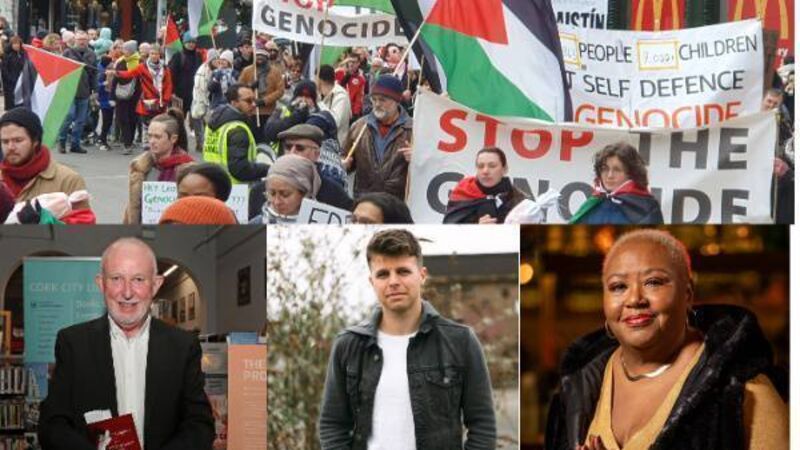
Poet William Wall, the Accidental Rapper, and singer Karen Underwood are among the artists who've performed at the Cork marches for Gaza.
Singer-songwriter Martin Leahy is no stranger to protest songs. He’s the self-same musician that has travelled to Dublin every week for the past 90 weeks to sing his ‘Everyone Should Have A Home’ song outside the Dáil, to protest the Irish housing situation.
As a session musician, Leahy played and toured for many years with acts including Christy Moore, John Spillane, and trad band North Cregg, until he started releasing his own music four years ago.
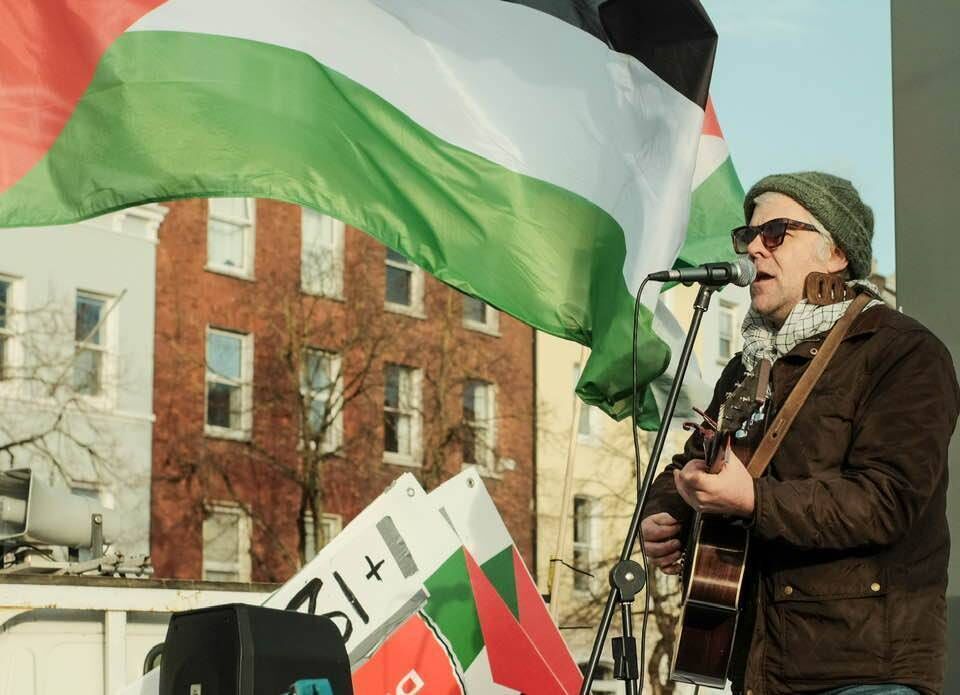
Leahy penned his song, simply titled ‘Palestine’, in the days immediately after the onset of the current Gaza war on October 7 and has been playing it at Cork’s Saturday protests each week since.
“I think protest songs are useful,” he says. “I do believe that they can have an impact, that it’s a strong way of getting a point across, that it can vibrate in a different way.”
Leahy’s song contains the oft-used but contentious slogan ‘From the river to the sea/Palestine will be free’. In the wake of the October 7 attacks by Hamas, Israel’s allies and supporters have characterised this slogan as itself genocidal, claiming that it is calling for the obliteration of the state of Israel.
Leahy dismisses such sentiments. He quotes US congresswoman Rashida Tlaib: “'From the river to the sea is an aspirational call for freedom, human rights, and peaceful coexistence, not death, destruction, or hate.’ That’s the way I mean it. If music communicates feelings or emotions, in the context of my song it has nothing aggressive or antisemitic about it.”
Despite no end in sight to bombardment of Gaza and the incursions of Israeli ground troops, Leahy says he is trying to remain optimistic, and that the now-global reach of small protests like those taking place in Cork city helps.
“Clips of my song were shared on Al Jazeera and got 200,000 views,” he says. “When I put clips up online of the protests in Cork, I have anything between 40,000 and 400,000 views: the reach is far beyond the thousand people that are there in Cork. To my mind, that makes it very worthwhile to do these protests and to take a stand against the mass murder that’s taking place in front of our eyes.”
Singer Karen Underwood, originally from Chicago, has been a fixture on the Cork music scene for many years, performing her one-woman show The Nina In Me as well as popular residencies at Guinness Cork Jazz Festival each year.
At a recent march for Palestine in Cork, Underwood spoke with passion about the history of black civil rights movements in the US, and drew parallels with injustices, indignities and human rights abuses being suffered by Palestinians today.
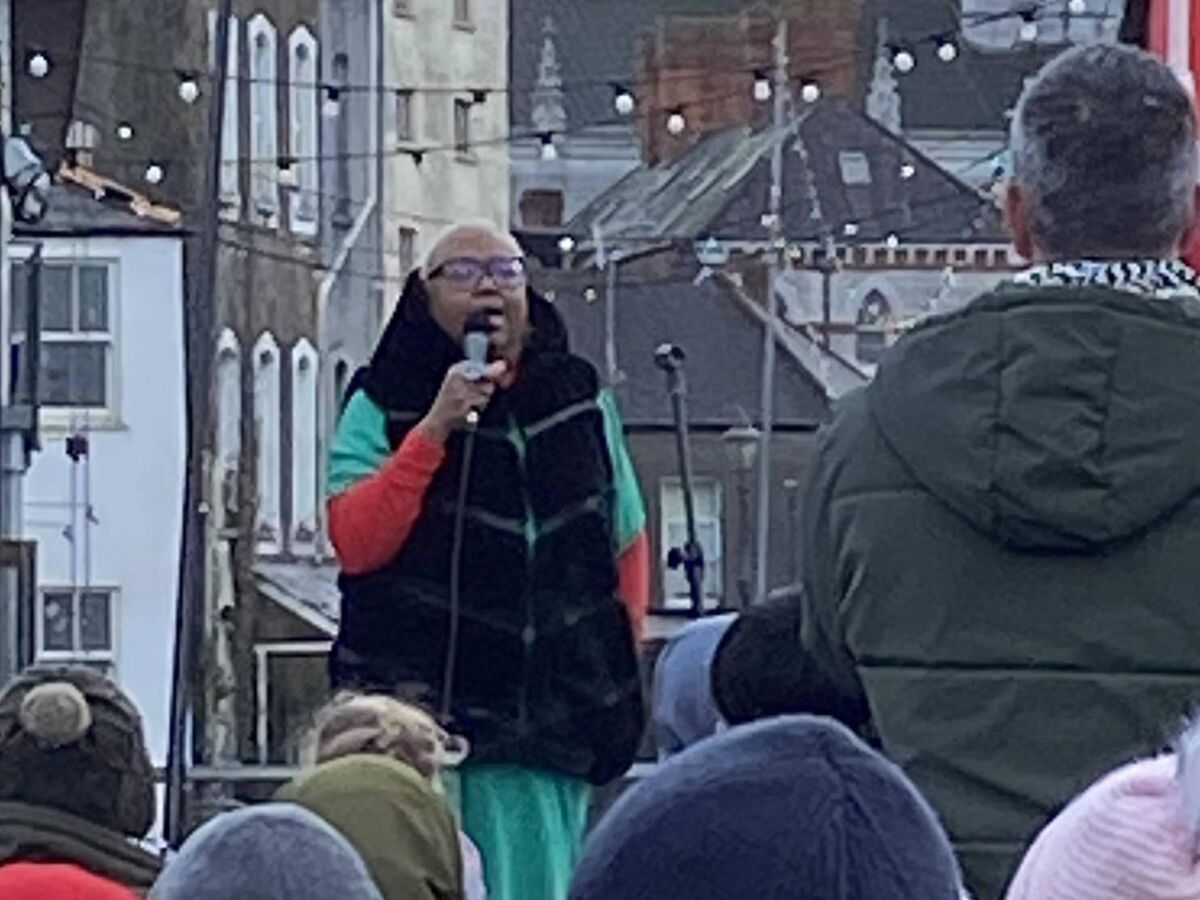
She sang a rousing version of ’Lift Every Voice and Sing', a song often hailed as the 'black national anthem' which was penned by civil rights activist James Weldon Johnson at the time that the infamous US Jim Crow segregation laws were being introduced.
Performed through the years by many African-American singers, it contains such lines as: "Lift every voice and sing, 'til earth and Heaven ring Ring with the harmonies of liberty."
“James Baldwin said that we, as artists, have a platform to say things that other people can’t say and we need to use that power in a way that is beneficial to humanity,” Underwood says.
Deciding to lift her voice at the protest was, she says, partially triggered by memories of joining marches against Apartheid South Africa in the 1980s.
“To me, there is no difference here,” she says. “We need a ceasefire right now, and I want to see Palestinians not blamed for what Hamas is doing. I can’t stand it. You can’t tell me that anyone in their right mind would think it’s ok to fight against a country that has been oppressed for 75 years. This story did not begin on October 7.”
Underwood is scathing about her native country’s response to the war on Gaza, blaming a combination of religious fundamentalism and business interests for what she feels is mere lip service by US politicians.
Novelist and poet William Wall, author of seven novels, one long-listed for the Man Booker prize, as well as five volumes of poetry and three short story collections, started attending Cork’s Saturday protests several weeks after they started. An organiser who knew he had penned poetry about Palestine asked him to read at the event.
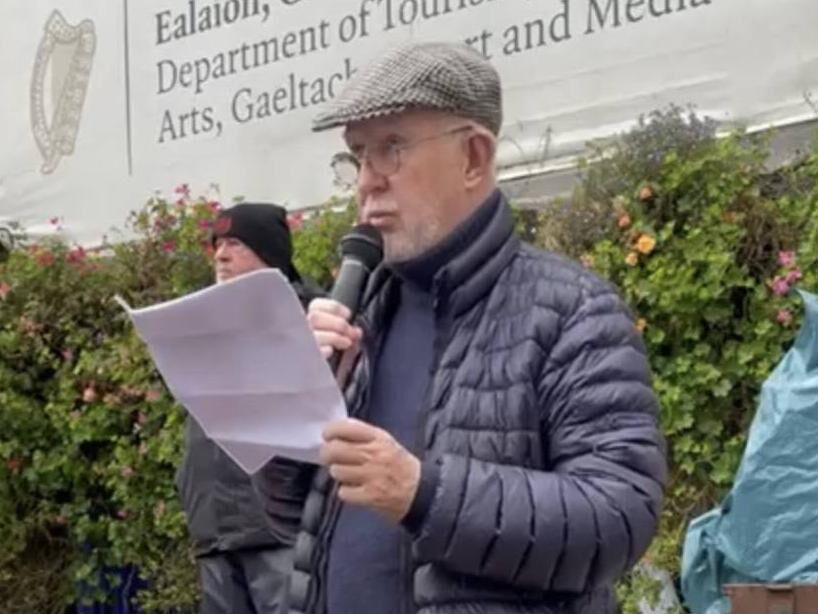
The crowd, he says, goes “absolutely silent” as he reads. “One of the poems has the refrain ‘from the river to the sea’ in it, and after I repeat it a couple of times, some people join in, but to be honest with you, I tend not to be aware of much when I am reading.
“I’m not someone who claims magical powers through poetry or anything like that; for me, writing poetry is a compulsion that expresses how I feel about certain things. And maybe for other people, a poem sometimes expresses things in ways they feel they can’t express themselves.”
Wall says he has followed the Israel-Palestine situation over the course of many years; one of the poems that he has read pre-dates the current conflict. It is titled ‘Say Her Name’ and commemorates two women, Nayfa al-Kaabna, 50, and Hadeel al-Hashlamon, 18, killed by Israeli gunfire in previous rounds of violence.
‘One Child Every Ten Minutes’ is a new poem, written in response to some of the horrifying statistics on child injury and mortality in Gaza since the Israeli onslaught.
To Wall, a teacher for many years, the killing and traumatising of children is “really a self-defeating strategy in the sense that every child that survives their classmates being killed by bombs or their family being wiped out in front of their eyes, how are they going to feel about Israel in the future?” “It’s not going to stop terrorism,” he says. “It’s going to make it worse: we have experience of that in Ireland. Oppression does not make the oppressed feel good about you. It promotes and creates extremism.”
By these fifteen thousand murders
One child every ten minutes
One child
Every ten minutes
Because they come
From the world’s most
Moral army
And that makes everything OK
But Comrades
Even from here
We can see
From the river to the sea
Palestine will be free
Hailing from Douglas but now living in Dublin, the Accidental Rapper (he prefers to stick to his stage name) has travelled to Cork on several occasions to perform his song, simply titled ‘An Phalaistín’, at the protests.
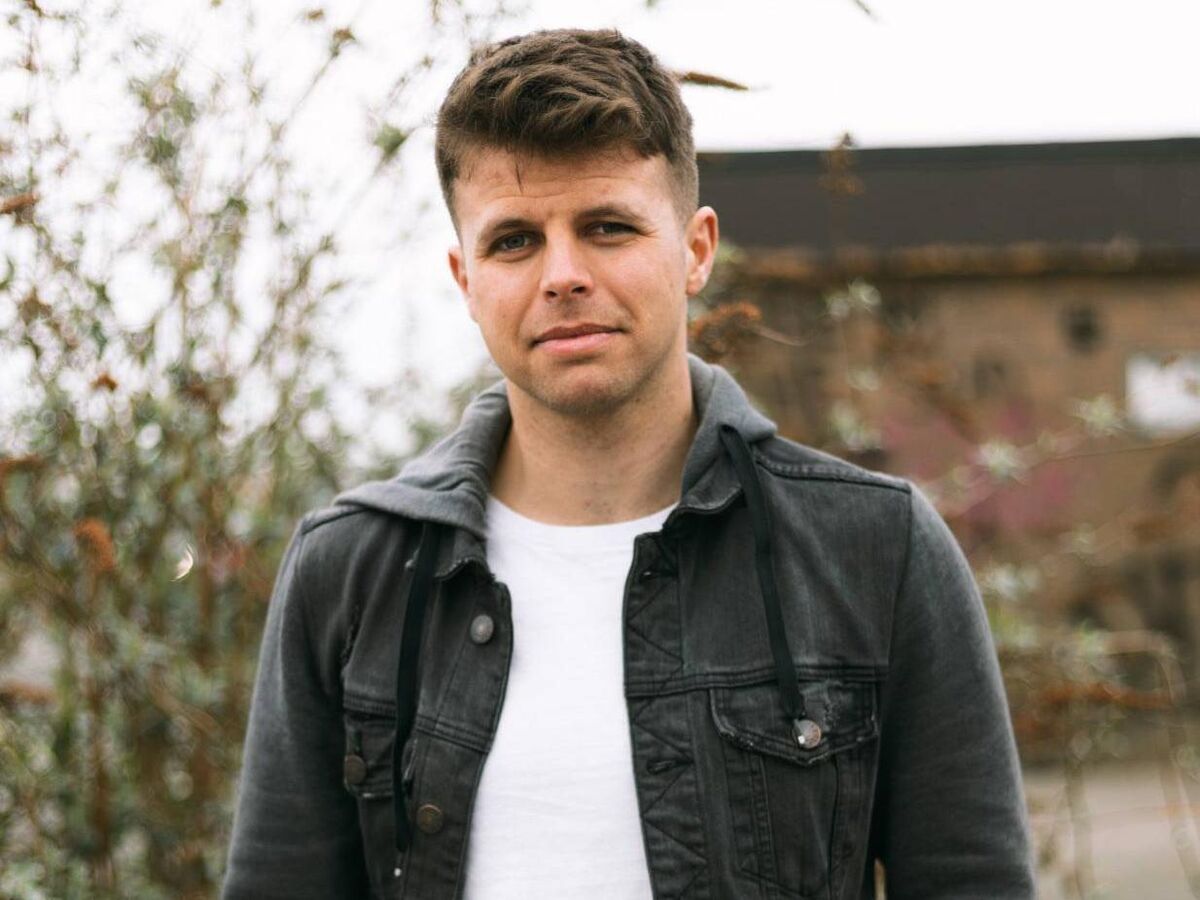
Having started writing hip hop songs about various activist causes, the Accidental Rapper penned 'An Phalaistín' last year when he was asked to support British-Iraqi rapper Lowkey, a prominent UK voice in support of Gaza in recent months, when he played in Belfast in August.
“A friend of mine was involved in organising the gig and she asked me to open for him and to write a song about Irish solidarity with Palestine,” he says.
The bilingual rap, which he has released on Spotify with accompaniment from Palestinian Oud player Abdullah Al Bayyari, delves into history to draw a strong parallel between the Palestinian experience and the Irish one, with the Irish lyrics ‘áit eile/ troid céana’ (different place, same fight) becoming a refrain in his rap.
One of the verses reads: “We coined the term 'boycott' down around Westport
Ironically it might just be our proudest export
Call for BDS and more trade embargoes
For stevedores in ports not to take their cargo.”
The Accidental Rapper explains: ““There’s so much overlap in our histories that the song almost wrote itself in a way. The response has been massive and it’s been nice to come back to Cork to play it.”
He says he thinks the Rebel County’s response over the past 14 weeks is part of a “mass awakening of Irish people” to the ongoing atrocities and that Palestinian people he knows are taking solace in Irish support.
“It is a desperate situation, but we are seeing small wins,” he says. “Like Cork County Council unanimously passing a Boycott, Divestment and Sanctions motion that they will no longer buy goods and services produced by Israel or corporations that support the Israeli government.
“We’ve had 1,000 people turn up every Saturday for the last 14 weeks. That’s a testament to the solidarity Irish people have.”