Meet Lewis Barker, the Terre chef putting his stamp on East Cork's two-star Michelin restaurant
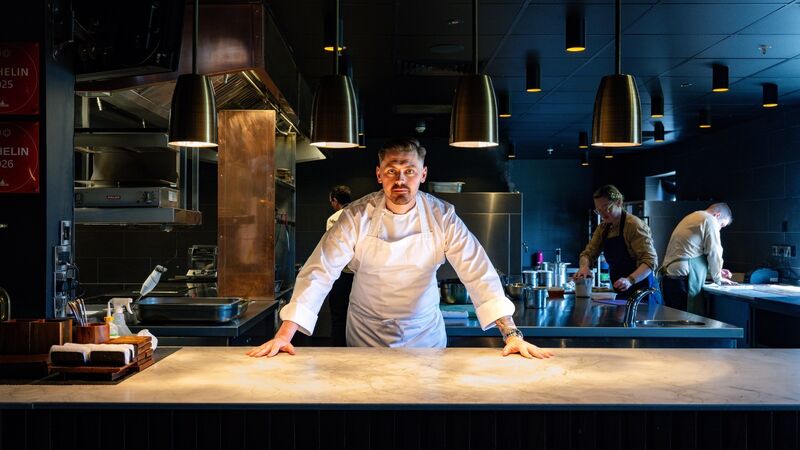
Executive Chef Lewis Barker at the Michelin starred restaurant ‘Terre’ in The Castlemartyr resort. Picture Chani Anderson
As dusk falls over the Liffey on a crisp, cold Monday evening in February, the lights in the curvaceous glass and steel atrium of Dublin’s Convention Centre assume a stellar twinkle, as befits the venue for the Michelin Guide awards 2026.
Inside, the atmosphere is electric, as Ireland’s and Britain’s top chefs mingle in an upstairs foyer, swilling premium champagne from the free bar.
Among them is Lewis Barker, executive head chef at Michelin two-starred Terre, in Cork’s Castlemartyr Resort. He recognises some faces but mostly from social media. Only arrived in Ireland the previous September, he hasn’t ventured far beyond his new East Cork base. The atmosphere is electric, many convinced this inaugural Irish Michelin awards ceremony will also herald Ireland’s first Michelin three-starred restaurant. Barker and restaurant director, Aisling Shanahan, however, are too busy fretting over the fate of Terre and whether it will retain the two Michelin stars earned by Barker’s predecessor. The champagne tap switched off, we are all hustled into the auditorium for the ceremony.
Read More
Barker grew up in Leeds, in West Yorkshire, where his parents worked for the council.
“My first introduction to cooking started on TV, Saturday Morning Kitchen after Match of the Day,” he says. “I have a very early memory, my German grandma would make an oxtail stew which was great and had little macaroni pasta, a real hearty broth. But there was no real German food, she was a converted English woman. She’d make a trifle after Sunday roast and always cook the Sunday dinner. After she passed on, my dad would do it, but besides that, it was simple pastas, straightforward stuff.
“So, it was pretty much cooking on TV and messing around in the kitchen that started it for me. Obviously [Gordon] Ramsay, Rick Stein — I loved the travel aspect. Keith Floyd was always great fun, he’d get wasted and fall overboard. Rachel [Allen], which is a bit of a full circle moment, her now being ‘next door’. Jamie, definitely, the first ever cookbook I got was Jamie at Home.”
Although food was initially fuel to young Barker, he loved eating and also began to note the culinary artistry.
“I was super interested in the creativity. I couldn’t do the worksheets in school,” he recalls. “I couldn’t do the computer. It just bored me. I had to be adrenaline-based and moving. I started going into the kitchens at school and cooking. At 13, I took hospitality and catering as an option. I saw the adrenaline and the fast-paced environment. And I loved it.”
Barker badgered a local restaurant, Anthony’s, for a job: “I started peeling potatoes, chopping chives, peeling carrots, cleaning mussels, picking salad leaves, all the shite jobs many people would walk away from. But I’d do that whilst watching service going on and seeing the rush and trying to get involved before I got very quickly told to get out of the way. But I just kept picking up things and eventually started to cook.”
After finishing school, Lewis studied hospitality and catering in college. Combining full-time college with a job is the appetite for the grind you often find in the early CVs of the most driven and successful chefs.
“I was doing full time [at college] for the week and then I’d finish and go to work all weekend, go back to college on a Monday,” he says. “In summer, I’d work right through — every single holiday, I worked. In a sense, I regret it, I think I would have learned a lot faster and a lot more on the job. Saying that, I used to work enough to make sure it was all coming together. After college, I went full time.
“[The owner] Anthony [Flinn] was the first British paid chef to work at El Bulli, and he was the first person that guided and helped me, and still is a big inspiration. We were doing foams, and gels, it was a molecular gastronomy restaurant — [chuckling] I learned how to make a gel before I did a fucking lasagna. But when you start as young [15] as I did, over such a long career, you eventually get there. My cooking style’s not molecular, it’s very contemporary French, based on premium produce and creativity.”
After a year working full time, Barker hit the road.
“I was drawn to the travel aspect and Melbourne looked cool, very European,” he says.
“It was very sport-oriented as well, so I knew I would always connect with that. Formula One, tennis, cricket. And the Australian cuisine does have its own identity and very unique indigenous produce, stuff you can’t get anywhere else. And the country is so vast. In Melbourne, you can have four seasons every day, yet you still can grow a pineapple in Queensland. I was seeing produce I’d never seen before. Obviously, kangaroo is a big thing, indigenous herbs and spices. I cooked lemon-myrtle kangaroo, fillet of shark, lean wallaby. And cooked over saltbush, eucalyptus — live fire was a big part of it.
“Up to then, I was very much solid-top, plancha pan, butter, thyme, garlic. It was the first time I’d seen fish done on a barbecue in a professional kitchen. It was super interesting.
“Of course, you had the French restaurants and all that, but they were just so much about Australian produce and didn’t want to do anything else, it was so inspiring. I’ve always tried to use that, bringing my own style as my base and adapting it to wherever I go.”
Barker worked for a number of top restaurants but bureaucracy was thwarting his ambitions.
“I was chef de partie all the way — you couldn’t really climb the ladder on a working holiday visa at the time, you could only stay in one place for six months,” he says.
![Lewis Barker: "When you start as young [15] as I did, over such a long career, you eventually get there."](/cms_media/module_img/10120/5060291_14_articleinline_EXM_0074.jpeg "Lewis Barker: \"When you start as young [15] as I did, over such a long career, you eventually get there.\"")
Barker returned to England and, while home, met the woman who is now his wife, Jessica. He decided to take a gap year and the pair headed to Barcelona.
“I just switched off and caught up on the years that I never had [because of working] and condensed it all
down,” he recalls. “A friend had an Australian kind of cafe there, and I was just cooking breakfast and then I’d go to the beach and enjoy hanging out with all my friends. I’d never done the whole kind of, 18, let’s go out and party all weekend. After one year to the dot, I wanted to get serious again, so I went to Singapore.”
Singapore was a revelation: “We were very taken with Singapore, it is so interesting, the modern style and that big city life feel.”
He began working for Irish chef Andrew Walsh, in Walsh’s Michelin-starred restaurant, Cure, before taking up his first sous chef position, aged 23, in another Michelin-starred restaurant. Aged 27, he opened his own restaurant, Sommer. Six months later, it had a Michelin star.
“I evolved there as a chef, bringing in Asian flavours. I’ve always been into seafood — that comes from the restaurants I’ve worked in — and the incredible seafood ingredients we could get, especially from Japan,” he explains.
“I ended up pivoting, trying to modernise my classical French cooking style. We try to do the same here and I think that’s where it all started.”
The pandemic changed his relationship with Singapore: “After covid, it just wasn’t the place it once was, it became extremely expensive, staff became extremely hard to get. It became more headache than enjoyment.”
Stanley Quek and Peng Loh were neighbours of Barker, and regular diners at his restaurants over the years. Also owners of an Irish hospitality portfolio, they happened to be looking for a new head chef for their Castlemartyr Resort restaurant.
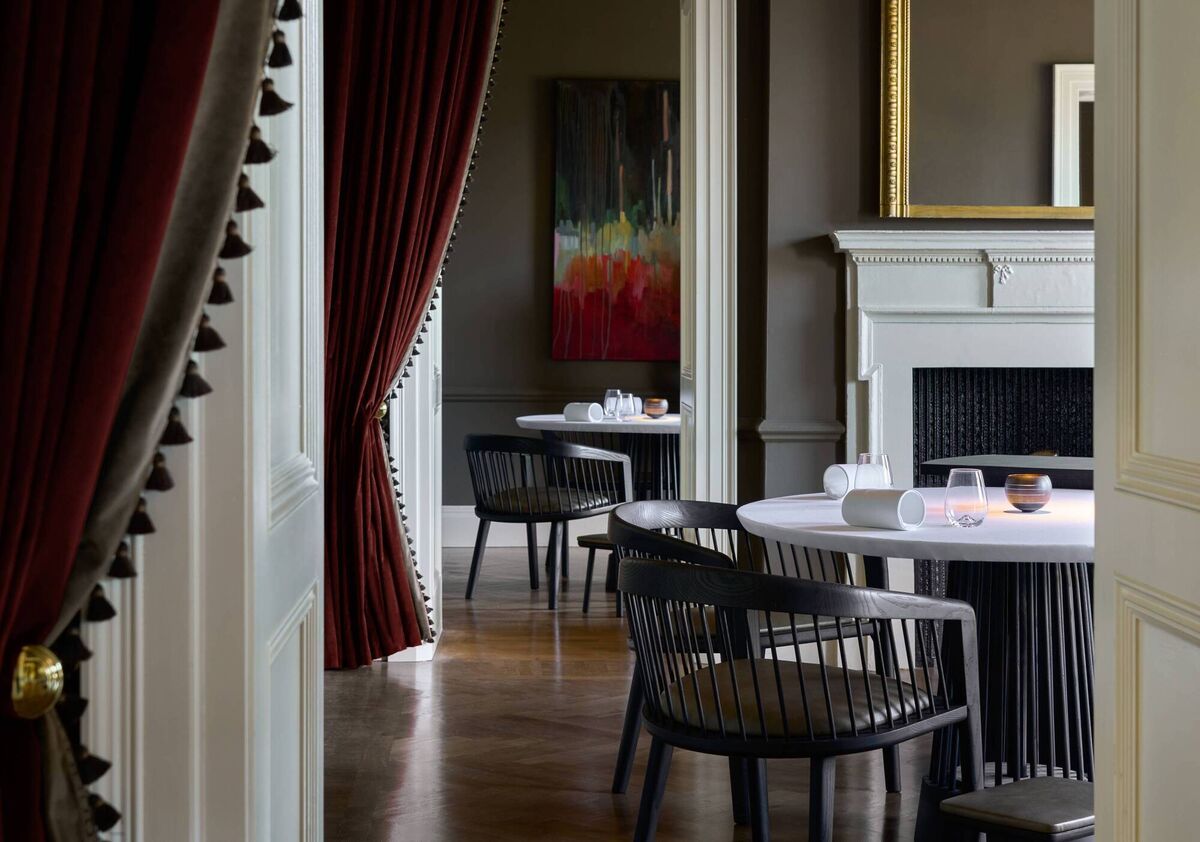
“From a family point of view, we had been looking at moving back to this part of the world,” he says. “We only ever moved to Singapore for a year and in the end did almost 10. It was a great place to be and good for learning and opportunity. We got married and had our first child there. But when there’s grandparents involved, it just becomes too far.”
However, Jessica’s employment contract ran until June 2026. Barker moved to East Cork on his own, leaving his wife and infant child behind.
“We had to make that decision: I have a five-month- old son, but we also still have to be serious about work and this opportunity,” he says. “It’s been hard but you’ve got to make that decision in your career sometimes. If he was any older, I wouldn’t have done it. But an opportunity like this, you don’t see every day, it’s probably never going to come around again and I had to do it.”
Barker had visited Ireland but never Cork.
“I came for the first time last May. It’s stunning, it’s beautiful, Also, my wife’s from Cheshire, from the countryside, and it’s that kind of life that we were searching for, leaving the ‘big city’ after all those years. By the end of September, I was here. It was fast.”
Taking over another chef’s kitchen was daunting.
“Obviously, there was a lot a lot to live up to,” he notes. “Because the team were working for someone else and came here for that person, you need to win them over to your work ethic, your concept, making sure you’re there morning, noon, and night with the guys, nurturing them, teaching them, and making them feel a part of it all, which they 100% are.
“The previous team made the foundations of this restaurant and you have to respect that. So my job is to try and take Terre in my direction, what I foresee it as being. The team are great, fully on board, and I think we’ve taken this restaurant so far in a short amount of time. I feel like my stamp is on the restaurant now.”
When Barker was hired, the remit was crystal clear: Retain the two Michelin Stars earned by his predecessor. He and Shanahan can feel the tension rising as they find their seats in the auditorium and the ceremony begins. Barely an hour later, and all is done and dusted, but they are still none the wiser as no mention is made from the stage of anything other than newly-awarded stars.
“It was strange, it was a case of refreshing the [Michelin Guide] app and seeing if [Terre] was still [a two-starred restaurant],” he says. “We only knew for certain five minutes after the ceremony was finished. Obviously, it was a massive moment of relief and also a great achievement, even more so for the team because they’ve done a full run around the sun.”
Dining in Terre, Barker’s predilection for seafood is obviously to the fore. He is already a sublime chef and culinary practitioner, and it should be genuinely exciting to dine in Terre once he comes to properly know the local larder after cooking through several growing seasons.
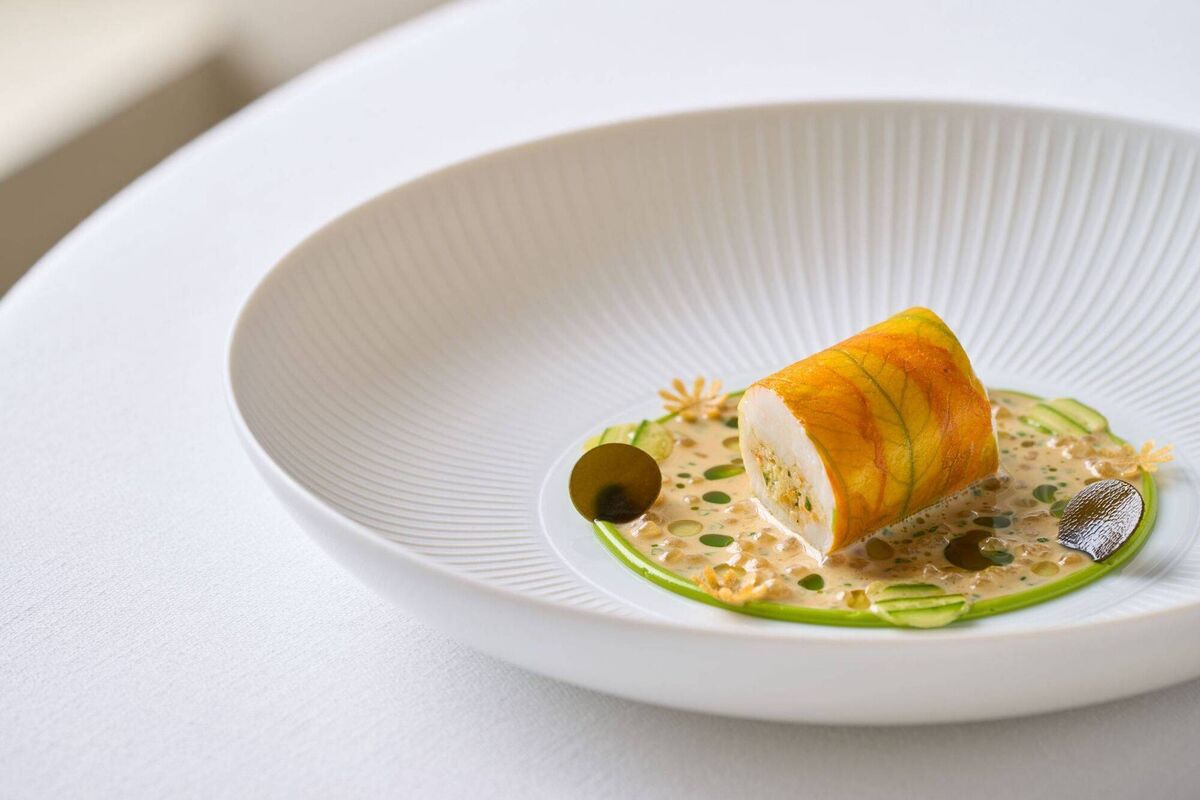
“There’ll be a lot of hard work, to have that full year at it but I’m already happy with what we do now,” he says. “It was already a great restaurant but I’m so happy and proud that I’ve been able to transition that into what I foresee it as being in the future.”
When Jessica and Elliot are properly settled in, he’ll hit the road on a grand eating tour of Ireland.
“I’ve only really been to The Glass Curtain and Elbow Lane, which were really good,” he says.
“I feel bad that I haven’t got to all these other places yet but I want to go and experience them with the family as well — waiting for them to get here is a big part for me, once we get grounded and stable here, that’s when we’ll start venturing out.”