Darina Allen: Cheap food is a myth — the real cost is simply too high

We’re almost out of the ‘hungry gap’, that’s the six or eight weeks between mid-March and early June, depending on the year. The gap happens when the weather begins to warm up and the overwintered vegetables start to ‘bolt’ (go to seed) but the spring plantings aren’t yet mature enough to eat.
Historically, this was a time of genuine scarcity and often hunger, but today, most people in their busy lives are totally unaware of a ‘hungry gap’, because the supermarket shelves are packed with produce year-round.
At present, between 80% and 85% of the fruit and vegetables on the shop shelves in this country are imported, including significant quantities of crops that can easily be locally grown such as potatoes, onions, carrots, and even lettuce. In the region of 70% of organic vegetables bought by Irish consumers are also imported, while at the same time, Ireland is a major food exporter — how crazy is that! It’s certainly worth reminding ourselves in the present global situation that this high reliance on food imports makes Ireland extremely vulnerable to shocks. There are now fewer than 70 commercial Irish vegetable growers as opposed to 600 in the year 2000. A disastrous drop, make no mistake about it, this is a crisis. Recently, a large vegetable grower from Co Kilkenny, who supplied 12% of carrots for the Irish market, went into liquidation.
As long as the cheap food policy introduced by the government in 2006, which allows ‘below-cost’ selling exists, this situation will continue. There is unquestionably a cost-of-living crisis, but how irresponsible is it to sacrifice one sector for another, particularly the sector that we rely on to feed and nourish us? At this stage, we all seem to think that cheap food is our right but how dare we expect the very people who feed us to produce food below an economic level.
Cheap food is a myth; the cost is simply too high in health terms and socio-economic terms.
Apart from the unfairness, it’s incredibly shortsighted, we are all losers in the end.
This is an issue that affects all of us. We need to make our voices heard and demand that the Government brings in supports for the Irish horticultural sector as a matter of urgency. Meanwhile, back to the end of the ‘hungry gap’. For those of us who grow some of our own produce, this is a hugely exciting time of the year.
We’ve already enjoyed the outdoor seakale and are still harvesting asparagus. We have dug and given thanks for the first of the new potatoes which were sown in early January and grown without any chemicals or sprays in our greenhouse. The brilliant purple sprouting broccoli has also sustained us for the past few weeks. Beets are already golf ball size and so sweet and delicious. The first of the mang tout are ready to eat. Yesterday evening, we had a feast of broad bean tops, which we picked off the plants to discourage black flies from munching them. One can, of course, enjoy them raw in salads but we cooked them in plenty of boiling salted water, tossed them with a dollop of butter and a generous drizzle of extra-virgin olive oil.
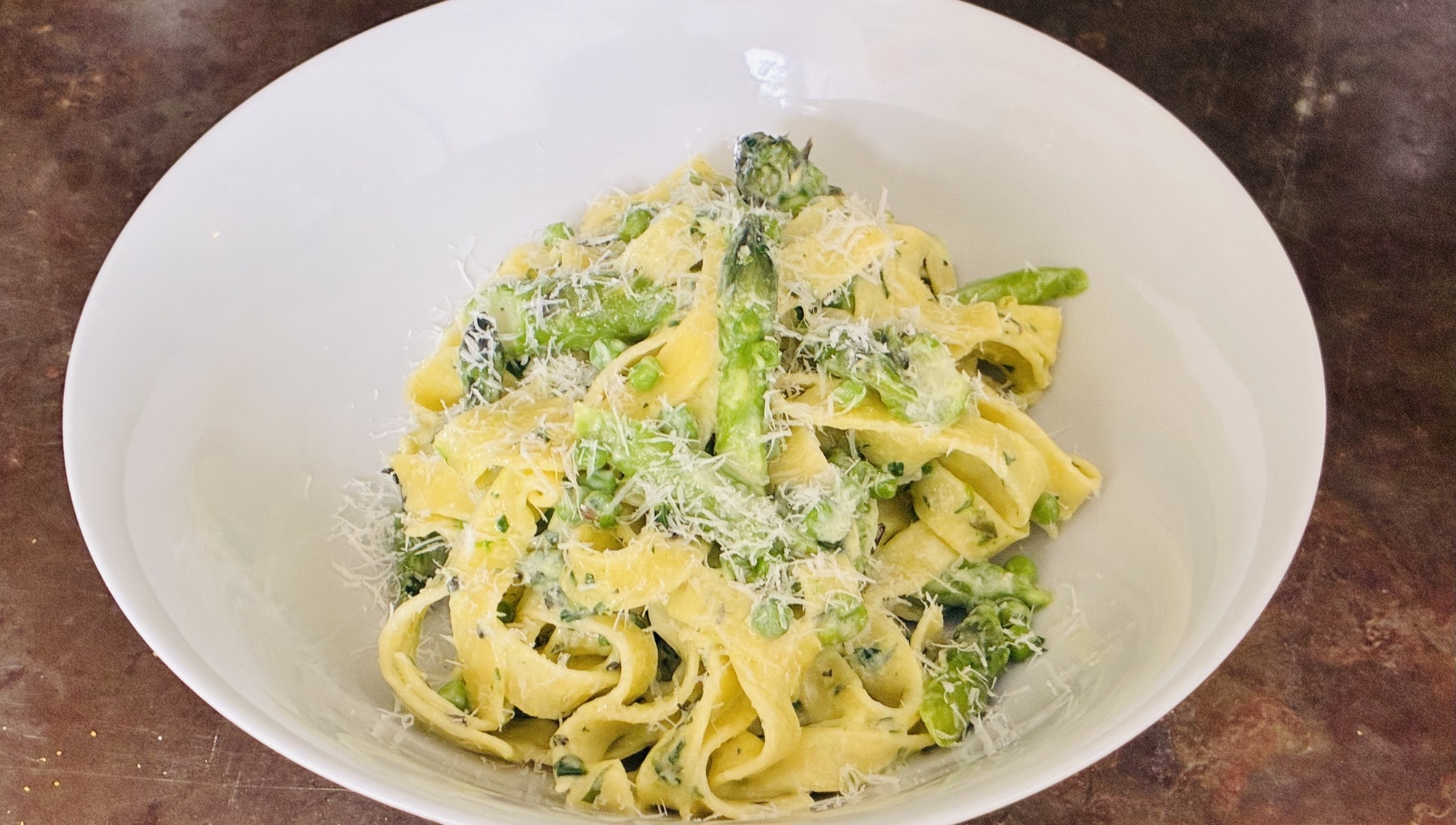
We served them as a side with a little spring lamb, but they’re also so good tossed with pasta or included in a frittata. Love this pasta dish with asparagus and peas, but of course one can do many riffs on this recipe with sprouting broccoli, mangetout, beet greens, or broad bean tops.
Sorry to sound like a broken record, but I can’t help urging you all, yet again to think about growing a little of your own food, even if it’s only a seed tray of salad leaves on your windowsill, you can snip it over and over; hence the name ‘Cut and Come’. You’ll enjoy the magic of sowing a seed, wait for it to germinate and eventually grow into tender flavourful leaves to fill your salad bowl.
You won’t want to waste a scrap, and it’ll be chemical-free as opposed to the majority of non-organic salad leaves.
Pasta with Asparagus and Peas
A perfect spring pasta dish, made in minutes. Also delicious with the first broad beans or courgette in summer. If you don’t have fresh peas, use the best quality frozen peas.

Servings
4Cooking Time
20 minsTotal Time
20 minsCourse
MainIngredients
250g asparagus
200g tagliatelle
200g peas
5g fresh mint leaves
10g fresh parsley leaves
300ml double cream (not single)
30g butter
2 tbsp extra virgin olive oil
75g Parmesan (keep
25g for grating before serving)
Flaky sea salt and
freshly ground black pepper
Lemon zest
Method
Bring two saucepans of water to the boil. Salt the large pan generously, the smaller one slightly less.
Trim the asparagus ends. Cut the spears into short lengths (about 3cm) at an angle.
When the water in the large pan is boiling, add the pasta and let it cook for 8-9 minutes or until al dente.
Add the asparagus to the smaller pan and let it cook for 5-6 minutes until almost tender, then remove with a slotted spoon, set aside.
Bring the water back to the boil and tip in the peas, 2-3 minutes should be enough.
Finely chop the mint and parsley. Drain the peas and add to the asparagus.
Drain the pasta lightly. Pour the cream back into the saucepan, bring to the boil and reduce by half.
Add the butter and olive oil, tip back in the pasta, add the peas and asparagus and herbs. Stir in the Parmesan, season generously with flaky sea salt and freshly ground black pepper.
Taste and serve immediately in shallow bowls. with a little grating of lemon zest and Parmesan.
Asparagus, Wild Garlic, Rocket and Broad Bean Tops Frittata
This is an example of how we incorporate seasonal ingredients into a frittata. Asparagus is an extra treat here; you can use any asparagus, but I tend to use the thin, weedy, but still delicious spears in frittata and to add to scrambled eggs.

Servings
6Preparation Time
30 minsCooking Time
45 minsTotal Time
1 hours 15 minsCourse
MainIngredients
225g asparagus
8 organic eggs
50g Parmesan or Pecorino
or a mixture, freshly grated
2-3 tbsp roughly chopped wild garlic,
rocket leaves, broad bean shoots or a combination
Sea salt and freshly ground black pepper
2 tbsp extra virgin olive oil
110g fresh Ardsallagh or
St. Tola goat’s Cheese
To serve
salad leaves, wild garlic and rocket
a sprinkling of freshly grated
Parmesan cheese
wild garlic flowers (optional)
non-stick frying pan – 19cm bottom, 23cm top rim
Method
Bring about 2.5cm of water to the boil in an oval casserole. Break off the tough ends of the asparagus, add 1 teaspoon of salt and blanch for 2-3 minutes until al dente. Drain. Slice the spears at an angle, keeping 4cm at the top intact. Save for later.
Whisk the eggs together into a bowl. Add the blanched asparagus, except the tops, most of the Parmesan and the chopped wild garlic, rocket leaves and/or broad bean shoots. Season well with salt and freshly ground black pepper.
Heat the oil in a frying pan over a medium heat, add the egg mixture and reduce the heat to the bare minimum – use a heat diffuser mat if necessary.
Drop little blobs of the goat’s cheese evenly around the surface of the frittata. Arrange the asparagus tops into the frittata and sprinkle with the remaining Parmesan. Continue to cook over a gentle heat for about 15 minutes until just set.
Alternatively, after an initial 4 or 5 minutes on the hob you can transfer the pan to an oven (this is my preferred option), preheated to 170°C/Gas Mark 3 for 10-15 minutes until just set.
Pop under a grill for a few minutes but make sure it is at least 12.5cm from the element. It should be set and slightly golden.
Turn out onto a warm plate, cut into wedges and serve immediately with a salad of organic leaves, including wild garlic and rocket.
Grate some fresh Parmesan over the top just before serving. Garnish with wild garlic flowers, if available.
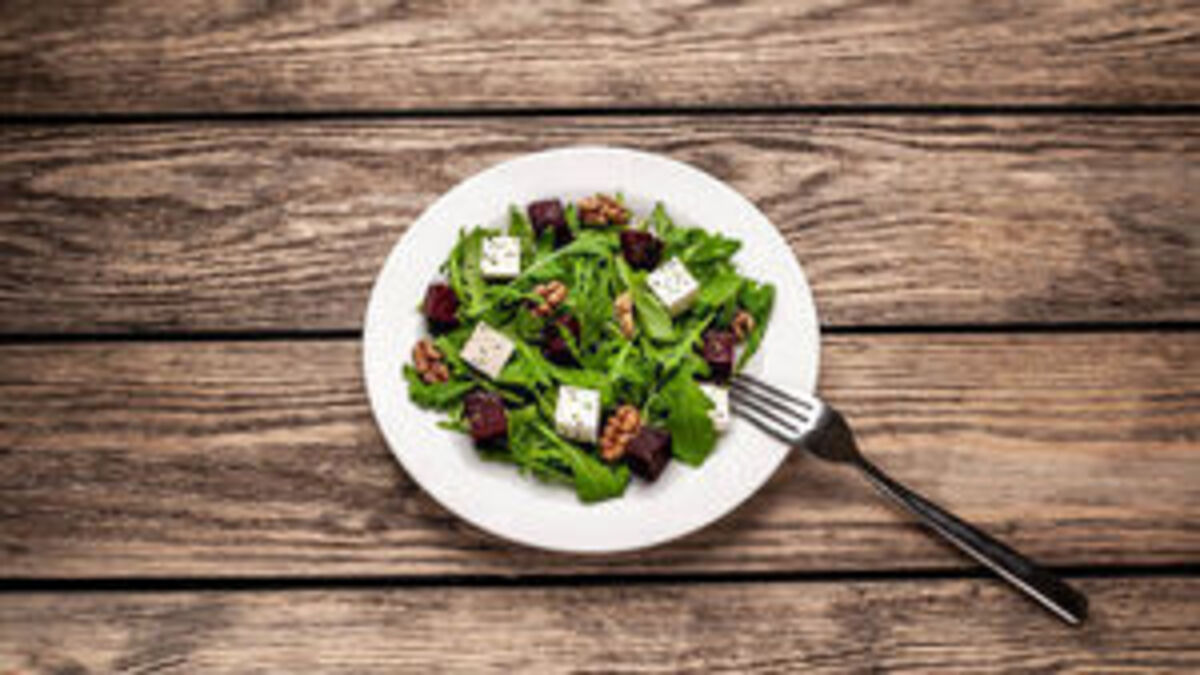
Roast Beetroot with Ardsallagh Goat Cheese and Balsamic Dressing and Wild Garlic Flowers
This recipe is a great use for our home grown baby beetroot
Servings
4Preparation Time
20 minsCooking Time
30 minsTotal Time
50 minsCourse
SideIngredients
6-12 baby beetroot, a mixture of red, golden and Chioggia would be wonderful
rocket and beetroot leaves
extra virgin olive oil
Balsamic vinegar
175g goat cheese — Ardsallagh or St. Tola
Maldon Sea Salt
Freshly cracked pepper
tiny beet greens or wild garlic leaves
and flowers if available
A few walnut halves (optional)
Method
Preheat the oven to 230°C/Gas Mark 8
Roast the beetroot in the preheated oven until soft and cooked through – 30 minutes to an hour depending on size.
To serve, rub off the skins of the beetroot, keep whole or cut into quarters. Toss in extra virgin olive oil.
Scatter a few rocket and tiny beetroot leaves on each serving plate. Arrange a selection of warm beetroot on top. Drizzle with extra virgin olive oil and balsamic vinegar.
Put a dessert spoonful of goat cheese beside the beetroot. Sprinkle with sea salt and freshly ground pepper.
Garnish with tiny beet greens or wild garlic flowers and a few walnuts if using. Serve.
Taught by Ireland’s Natural Farming pioneer, Tom Stack, alongside a diverse team of teachers and soil smiths, this will be a 5-day intensive training programme in person in south Limerick. The course will be based on the pioneering techniques of Korean Natural Farming (KNF), developed by Master Cho and advanced by Chris Trump.
The trainers will share their knowledge about the Korean Natural Farming technology, technique, and philosophies across 5 days, including tips to increase your profits and improve your sustainability.
A coming together of chefs to listen, talk and debate about the future of food in our industry and on our planet, Food on the Edge celebrated 10 Years of #FOTE in 2025 and announced that the 2026 edition will take place in Malta.
Read More