Worker awarded €67,500 for repeated late salary payments by Cork firm
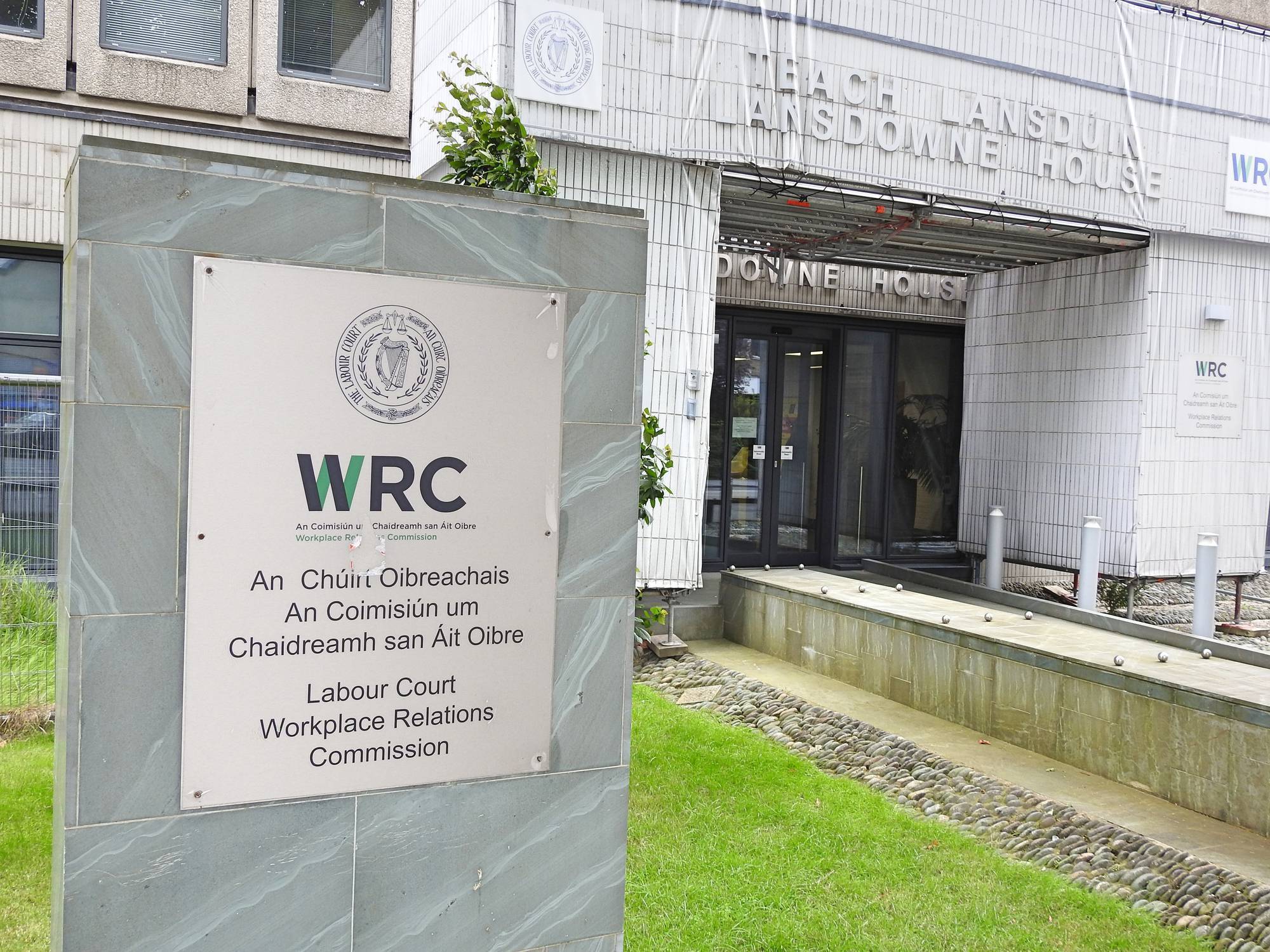
The WRC found the worker acted reasonably by resigning and was entitled to consider himself constructively dismissed.
An employee who was repeatedly paid late by his Cork employer has been awarded €67,500 after the Workplace Relations Commission (WRC) found that the failure to pay his wages on time amounted to constructive dismissal.
In a decision, the WRC found that pay was a fundamental term of the employee’s contract and that the repeated failure to pay him in accordance with that contract amounted to a fundamental breach.
The case was brought by Robert Donovan against Indeff Ltd, based on Cork's Monahan Road, where he had worked as a senior project manager since 2017. His contract provided for a basic salary of €67,500 a year, payable each month.
However, he told the WRC that his wages were frequently paid late after global engineering and Luxembourg-headquartered firm Indeff took over his previous employer, ONG Automation, in 2019.
In October 2023, Mr Donovan wrote to senior management complaining that his September salary had not been paid and saying that he had been paid on time only once in the previous seven months.
The following day, he was contacted by a senior director and subsequently summoned to a meeting with the company’s HR director and managing director for Ireland and the UK, where he was told he was being placed on a performance improvement plan (PIP).
Read More
Mr Donovan told the WRC that he was not given any explanation for the PIP and that he regarded it as a mechanism to remove him from the company.
He resigned that day and served a three-month notice period but said the late salary payments continued during this period.
On one occasion, Mr Donovan received €2,963.52 when he said he should have received at least €3,994. He also complained that he was not consistently provided with payslips, making it difficult to establish what payments related to.
In December 2023, the company said a payroll error had caused an incorrect payment and assured him that he would be paid on December 28, but he was not paid until January 4.
Mr Donovan told the WRC he eventually secured new employment but that his former employer had incorrectly recorded his employment as having ended in January 2023 rather than January 2024, which caused problems with his application for Jobseeker’s Benefit.
Indeff Ltd did not attend the WRC hearing. They sought a postponement four days prior to the hearing, but the application was declined.
In her decision, adjudication officer Lefre de Burgh said the employee’s evidence that his salary was “frequently late, sometimes short, and on occasion unpaid” was uncontested.
“Pay is a fundamental term of any employment contract,” she said, finding that the employer’s conduct constituted a fundamental breach of the employment contract.
The adjudicator said the company’s response to Mr Donovan’s October 2023 complaint was to summon him to a meeting outside his normal line of management and put him on a performance improvement plan the day after he had complained about late, non-payment and under-payment of wages.
She accepted the Complainant’s evidence that the PIP plan was in response to him raising the issue of late payment and non-payment and underpayment of wages, and this "was an orchestrated response with exit in mind by the employer.
She found that Mr Donovan had acted reasonably by resigning and was entitled to consider himself constructively dismissed.
The WRC found the complaint of unfair constructive dismissal to be well founded and ordered Indeff Ltd to pay Mr Donovan €67,500 net within 42 days.
A collection of the latest business articles and business analysis from Cork.
CONNECT WITH US TODAY



Be the first to know the latest news and updates