European leader refuses to join EU's tariff increase on Chinese EVs
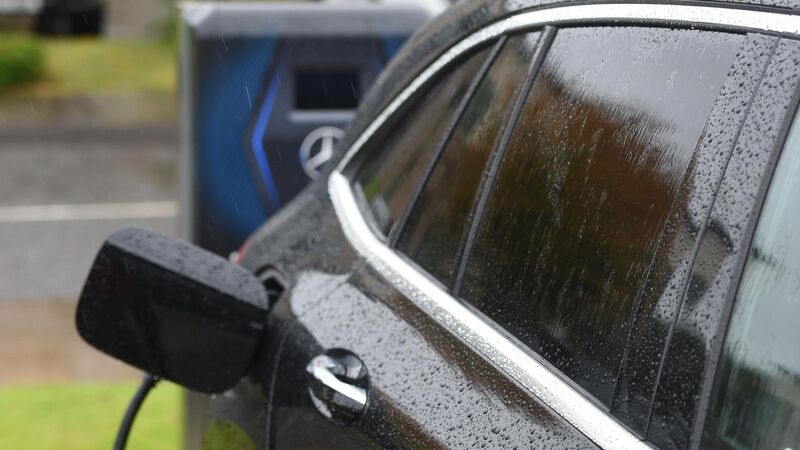
More than 12% of EVs imported into Norway are made by Chinese brands, according to The Norwegian Road Federation, OFV. Picture Larry Cummins
The EU Commission provided details of their sanctions on Chinese electric car exports, as European carmakers fear retaliation in key market.
However, Norway — a trailblaser in the uptake on plug-in vehicles — said it won’t join the EU’s increase in tariffs on Chinese electric cars, finance minister Trygve Slagsvold Vedum said.
“Introducing tariffs on Chinese cars is neither relevant nor desirable for this government,” Mr Vedum said.
Norway has the highest density of electric vehicles (EVs) in the world. Of all personal cars in the Nordic country last year, 24% were electric, while more than 80% of cars sold in 2022 were EVs, according to Statistics Norway.
More than 12% of EVs imported into Norway are made by Chinese brands, according to The Norwegian Road Federation, OFV. That figure includes Polestar, but not cars built by Volvo Car.
The steep additional duties on imported Chinese EVs from July is the latest move in an effort to protect home-grown manufacturers.
It has also launched several probes into whether Chinese clean tech producers are dumping subsidised goods on EU markets, and whether Chinese-owned companies unfairly benefit from subsidies while operating inside the EU.
The European Commission, which is carrying out the investigations, says its aim is to prevent unfair competition and market distortion.
Others in the eurozone have backed the commission’s decision. Kus Ferber, a German member of the European Parliament, said: “If the EU is serious about building up a competitive EV industry, we need to fight back.”
"We cannot expect European carmakers to invest massively into new capacities while they are undercut by Chinese dumping practices.
"We would be wise not make the same mistake twice,” he said.
The provisional duties are set to apply by July 4, with the anti-subsidy investigation set to continue until November, when definitive duties — typically for five years — could apply.
The individual duties vary depending on the level of cooperation with the probe, the EU said, and will hit SAIC Motor hardest.
The state-owned company owns the British brand MG, whose mass-market models like the MG4 are among those leading the charge into Europe.
While the probe targeted Chinese-owned EVs, Western carmakers — including Tesla, BMW, and Renault — that produce in China and ship to the EU also face higher costs.
The measures are “a speeding ticket aimed to slow China,” the founder and chief executive officer of Shanghai-based advisory firm Automobility, Bill Russo, said.
The EU’s move comes as the outlook for EV sales dims, with BloombergNEF reducing its battery-electric sales projections by 6.7m vehicles through 2026 in a report out Wednesday.
BloombergNEF sees China continuing to dominate EVs, batteries and the global supply chains for raw materials and components.
China has urged Brussels to refrain from imposing the penalties, and indicated it’s prepared to levy tariffs as high as 25% on imported cars with large engines — hitting the likes of Porsche, Mercedes and BMW.
- Bloomberg and Reuters
CONNECT WITH US TODAY



Be the first to know the latest news and updates