Christy O'Connor Talking Points: Tipp and Waterford already dangling close to the precipice
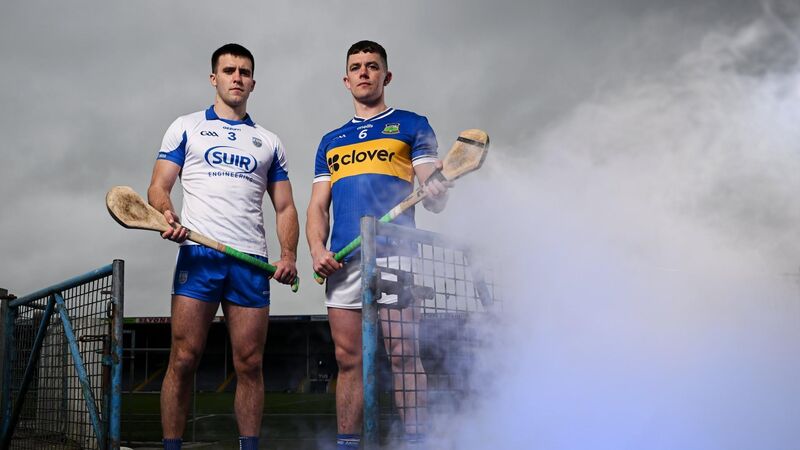
NO SMOKE WITHOUT FIRE: Waterford's Mark Fitzgerald and Tipperary's Ronan Maher in attendance for the Munster GAA Senior Hurling and Football Championship launch. Pic: David Fitzgerald/Sportsfile.

Fine margins. Huge risk. Massive reward. Three months before Clare and Cork stood on the edge of utopia ahead of the 2024 All-Ireland final, both sides were perilously dangling over a completely different kind of an edge – a cliff face with a deadly drop beneath them.
On this exact weekend two years ago, Clare and Cork were fully aware of where the cliff edge was. Lose and the summer was hanging on the precipice just seven days into their championship season.
At the outset of every Munster round robin campaign, every team is only focussed on what’s in front of them, on that first climb up the mountain. Yet that ascent is steeper again when the first two expeditions come so close together.
On that opening weekend in 2024, Clare faced Limerick in Ennis, Cork travelled to Walsh Park to take on Waterford. After both sides lost, Clare and Cork knew what was potentially coming next; barring a draw, one of them would be dangling over the edge before the championship had even warmed up.
Cork happened to be that team. Two defeats didn’t necessarily mean anything. Cork lost their opening two matches to Clare and Limerick in 2022 and still qualified from the province.
Cork’s position looked even more perilous again in 2024 though, not just because they were facing Limerick in round 3 – but because of the head-to-head rule.
Cork’s season would have effectively been over a week before they even played Limerick. It would have been if Waterford had beaten Tipperary in Walsh Park the previous week. Half an hour before Cork played Tipp that May, a controversial ’65, which gave Clare a one-point win against Waterford, kept Cork in the championship.
Cork and Tipp both drew their first game last year and ended up in the All-Ireland final. Clare and Cork were the only two teams in history to lose their opening championship game in 2024 and still contest an All-Ireland final.
Since the introduction of the qualifier and the round robin format, only nine teams have reached an All-Ireland final after losing their first championship game; Clare (2002 and 2024), Kilkenny (2004), Waterford (2008 and 2017), Tipperary (2010 and 2014), Cork (2021 and 2024). The only teams to win an All-Ireland after that opening day defeat was Tipp in 2010 and Clare in 2024.
Clare are the only team to have managed it in the round robin era but their success two years ago was even more unique as they were the first side in history to lose two championship games and still walk away with the Liam MacCarthy. Clare’s season turned in that round 2 match in Munster against Cork. But it had to when they were under such huge pressure, especially in an away venue.
Two years on, and Tipp find themselves in a similarly tricky predicament, having to go to Walsh Park on Sunday. With games to come against Clare and Limerick, and with Tipp having never beaten Clare in the round robin in Thurles or overcome Limerick in the Gaelic Grounds under the same format, defeat now could effectively sunder the All-Ireland champions’ season in just seven days.
Waterford are in the same situation with games still to come against Cork and Limerick. It’s even more perilous for them because of their history in the round robin. Waterford have never qualified but anytime they lost their opening game under this system (2018, 2019, 2023), their chances of qualification was done by round 3.
It’s similarly always been a struggle for Tipp after a difficult opening day. Anytime they have lost their first-round robin game (2018, 2022 and 2024), Tipp failed to emerge from the province.
Are those trends relevant? They are when compared to the other three Munster sides. Clare, Limerick or Cork have still always managed to qualify from the province any time they lost their first game. Despite losing their opening game in three of those years (2018, 2023 and 2024), Clare still reached the Munster final in each of those seasons.
Apart from Cork in 2022 and 2024, no other team in Munster or Leinster has lost their opening two games and survived. And in both of those seasons, Cork needed other teams to do them a huge favour. Cork needed to rely on those good deeds twice two years ago.
Heat is constantly coming from somewhere, but four points has still been enough to ensure qualification in four of the previous six iterations of the round robin system.
No matter what happens on Sunday, four points is still on offer for Tipp and Waterford. Yet the pressure has really ratcheted up for both teams considering their poor history in the round robin from this position.
Going off recent trends, defeat for either Tipp or Waterford now will see their season dead in the water after just seven days.
In the storied history of players playing hurling and football at inter-county level, the decision to switch codes, as opposed to trying to play both has always been based on circumstance; players feel they have a better chance of success in the other code; they think their days under a certain manager are numbered; they are forced to make a decision.
Just over a year after being nominated for Hurler-of-the-Year and Young Hurler-of-the-Year in 2013, Podge Collins committed to the Clare footballers (who were managed by his father Colm) for the 2015 season.
Collins had tried to play both codes in 2014 but then Clare manager Davy Fitzgerald told Collins he had to pick one for 2015. And Collins choose football. So did Cathal McInerney, another All-Ireland winner in 2013.
For Keith Higgins, it was a different context. An iconic figure on the Mayo teams that lost five All-Ireland finals between 2006-’17, Higgins still played hurling with Mayo during most of that era.
Higgins had begun his inter-county senior career with the hurlers at just 17. Hurling was always his first love, but Higgins was such a good footballer that Mayo managers were willing to compromise.
In the majority of cases, not just for those playing both codes at inter-county, players have primarily switched from football to focus on hurling, especially in Cork - from Jimmy Barry-Murphy to Eoin Cadogan to Aidan Walsh.
Cadogan and Walsh’s careers though, were distinctive in how much they oscillated between both codes during their time with Cork. Cadogan went from hurling to football, to combining both, before focussing solely on football, then committing fully to hurling.
Walsh started as a footballer, then tried both, before committing to the hurlers, returning to the footballers, and finishing his inter-county career as a hurler.
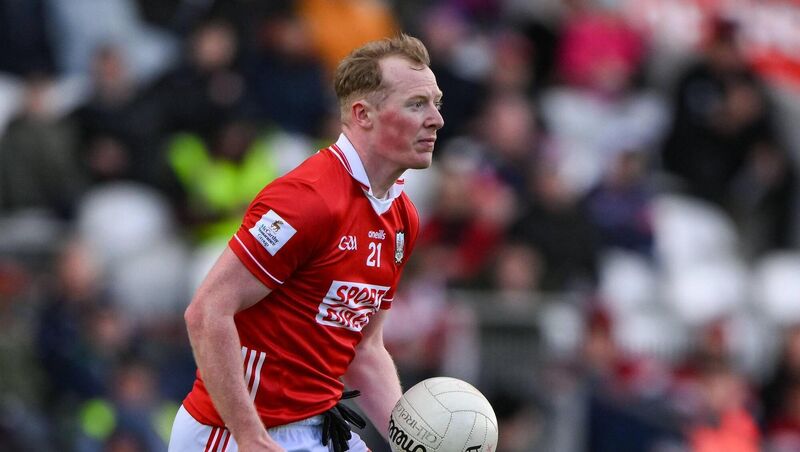
Conor Cahalane doesn’t have anything like the same profile as those players, but his reasoning for opting for football last year was based on him being let go from the Cork senior hurling squad in February 2025.
Cahalane joined the football panel a few days later. At the time, he was swapping places with his younger brother Jack, who had been playing football for Cork, but who was listed in the 37-man hurling panel last season.
Yet Conor Cahalane’s situation was even more unique again as he had never played underage football for Cork, having always been a hurler at inter-county. On the other hand, Cahalane has been one of Castlehaven’s best players in the club senior championship for years.
It wasn’t as if Cahalane wasn’t aware of what’s required to survive at this level either, having been an inter-county senor hurler for the previous six years.
The only current member of the football panel to have played in an All-Ireland senior final (he started at midfield in the 2021 hurling final against Limerick), Cahalane is more than well equipped to make his first championship start for the footballers against Tipperary now at 28.
At the end of Round 4 in the football league, Roscommon’s impressive form at that stage of the campaign, having won three games and only lost to Kerry by one point in Killarney, was reflected in the scoring charts.
The top two in both charts – overall and from play - were Diarmuid Murtagh and Daire Cregg, while Enda Smith was at number 5 from play, and 7th overall.
By the end of the regular league, David Clifford had overtaken Murtagh and Cregg at the top of both charts, but they still finished as 2 and 3 overall and were joint third from play.
Smith had been bumped out of the top 10 overall but still managed to finish joint-sixth from play. Across the entire campaign, Cregg, Murtagh and Smith racked up a staggering 10-74, 9-47 of which came from play.
Accounting for 49 per cent of Roscommon’s total scores during the spring underlined the reliance on Cregg, Murtagh and Smith but that dependency has been diluted now by the loss of Cregg to suspension for the Connacht semi-final against Mayo on Sunday after he was red carded against New York.
Roscommon’s chances have been further hampered by the injuries to Ruaidhrí Fallon and Brian Stack. Both are outstanding defenders, but Fallon showcased his attacking pedigree for St Brigid’s in the All-Ireland club final against Dingle when bagging 1-6 from play.
Roscommon need other players to stand up now but the dependency on Murtagh and Smith for scores has never been greater.
CONNECT WITH US TODAY



Be the first to know the latest news and updates