Revealed: How to bag a vintage furniture bargain for your home
There’s never been a better time to go shopping for vintage or antique pieces. Here is your essential guide 
Revealed: How to bag a vintage furniture bargain for your home

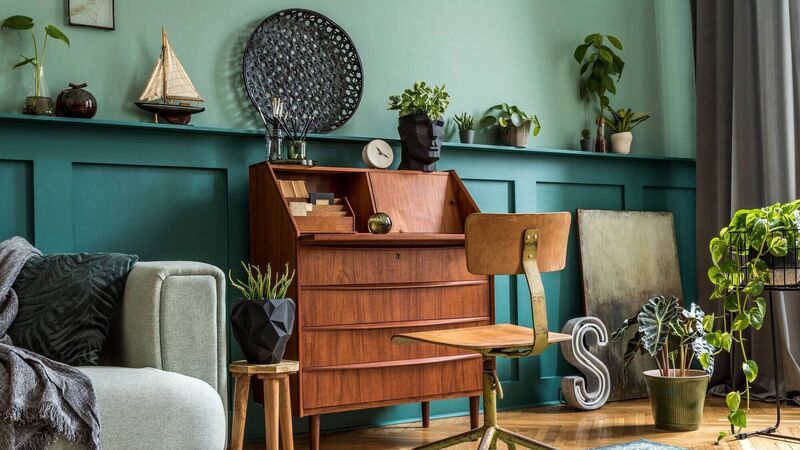
A mid-century secretaire and factory worker’s swivel chair form an eclectic but only occasional work-spot. Ensure your vintage buys meet function, not simply form. File picture
One of the great joys of home styling today is how we are embracing the past in a new, trending transitional style.

Vintage and even truly old antiques are still finding new life. Picking up buys in vintage and antique furniture? In some respects, there’s never been a better time to smugly carry home a bargain. Still, there is some basic guidance you should always keep in mind before whipping out the credit card for an online auction or heaving something across the grass at a boot sale.

First of all, that massive opus of mid-century design. We’re not jaded (yet), but its cool expression has trickled down to McDonald’s and every high-street hairdresser. Our enthusiasm for the low-slung, kick-legged object has naturally led to wide-scale reproduction. 

Not everyone is troubled by the blithe attitude to licence-holders’ rights as laid down by Europe (our copyright laws only extend to design pieces under 25 years old in Ireland). 

A fertile industry has been producing close copies of everything from Eames to Saarinen since the 1990s to “democratise design”. 

When buying something second-hand, you could be picking up a table or lamp purportedly from the 1950s to 1970s, that was made six years ago (probably in the Far East). Unscrupulous resellers can feign ignorance.

Most of these copycat pieces were not made to deceive. As honest new stock, they cannot be branded as fakes. The mid-century style fits our modern interiors so well. Stores that would be restricted from trading in the UK can legally sell “inspired” 20th-century items here in Ireland, and they are widely featured in Irish home magazine shoots. 

Some retailers offer genuine high quality (CA Design in Dublin springs instantly to mind). Get to know the marks and labels associated with the authentic thing you’re after. Otherwise — shrug, go repro’ and choose the best calibre you can, measured against the real thing.

Our modest housing stock is getting smaller, and when it comes to larger pieces of elderly, antique stuff, size really matters. Mighty period cabinet-making was not created for the 85 square metres — 115 square metres of a typical urban development. First of all, there’s height. 

Great house auctions can include soaring linen presses, gentlemen’s bedroom sets and chiffoniers with towering mirrors that can push right into the 2.5 metres of a standard ceiling. These were intended for rooms with altitudes fit for cloud formations.

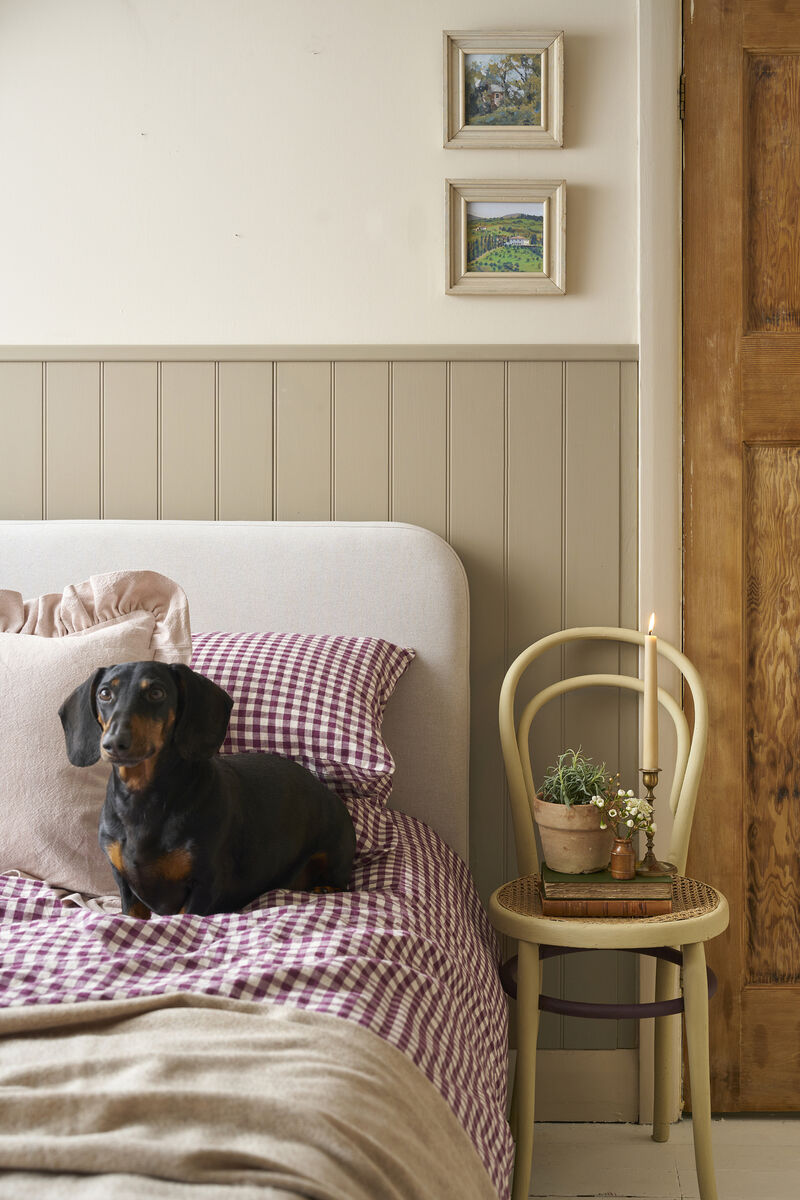
Start small when introducing old pieces to small spaces. A single café chair plays bedside table. Annie Sloan chalk paint in Versailles, Annie Sloan.

Even where they come apart to make them possible to crate up in a trailer, big lumps of flaming mahogany may bully the scale of your room once reassembled. Always carry a measuring tape, and if it’s something likely to go upstairs, ask yourself — will it go upstairs, or will I be lifting it by crane through an upper window?

Condition is not everything with old dears, but there are a few caveats. First of all, there’s structural stability. A piece of furniture of any kind needs to stand up straight without a wobble every time you pass it or open it, and to deliver a level surface if there is one. 

There are a few things you can check. With a chair or small table, lightly place your hand on one corner of the chair back, or the corner of the table-top, and give it a slight push diagonally across the seat or surface. 

Does it slightly collapse at the knees? At the very least, you’ll be putting in some sort of timber blocks under the frame of the piece, and depending on its value, weight and complexity, further restoration may be necessary. “As is” in an auction catalogue can describe something that’s lightly damaged or teetering to its end.

Brown furniture is ridiculously cheap at auction right now. This covers a huge range of very approachable wood items from the late 19th century right through to reproduction Georgian, Victorian and Edwardian stuff made up into the 1950s. 

With dovetail joints, carved decoration, and an unrepeatable patina to solid wood or exotic veneers (not possible to even obtain today), brown furniture is a fantastic way to stir in character and charm on a small budget. 

What we don’t want is extensive woodworm (you can treat small or dead colonies), rockers and rollers (see above) or something that’s been “cut-down” from its original height. Use a pocket torch or the torch on your phone to eyeball the inside of cabinets and drawers, and examine softwood linings and the back panels of larger furniture.

Something is not automatically “good” just because it’s old. There are some really awful early 20th-century (English-made) utilitarian furnishings around the salesrooms. If you fancy slapping on the chalk paint, these stout “fuglies” can be transformed from lodger bedroom dreary to French country dandies with a quick sand, two coats of paint and a buff of wax. 

Even antique furniture has some unfortunate redundancies that are hard to upcycle as inclusions in a typically hard-working family home. If you’re caught for space and not simply staging something because it’s beautiful, ask yourself - what can this furniture do for me? 

Various forms of bureaux and desks with top hutch sections and drop-down writing sections are a good example. If you fancy posing around working on a Pembroke table or a mighty Victorian roll-top, you may find it is actually too low, too cramped and that the desk section bounces every time you hit the laptop keys with meaning. Some choices will simply never meet today’s function — they are decorator’s pieces.

Eclectic jumbles can be hard to achieve, although some people love the curious layering of various eras of furniture and accessorising. If wild maximalism or even a single, crazy object makes you happy, trust your eye and go for it. An inherited furnishing loaded with sentiment can lead an entire scheme. Follow the lead of every champion of curated clutter and leave just a little space for everything to “breathe” and come forward. 

Another tip for creating a harmonious mix of old and new is to take more time to find and place the right pieces. The random, shifting stock of auctions, vintage shops, and salvage yards, together with the excitement of coming across something that’s a complete surprise, can tease us into errant, spontaneous buys.

I still struggle to keep my decision-making and wallet under control. Let’s honour what we already have (unless it’s about to shuffle off). If everything in the house is in a pale, tonal timber, will something in a rich rosewood figuring really work? It might. 
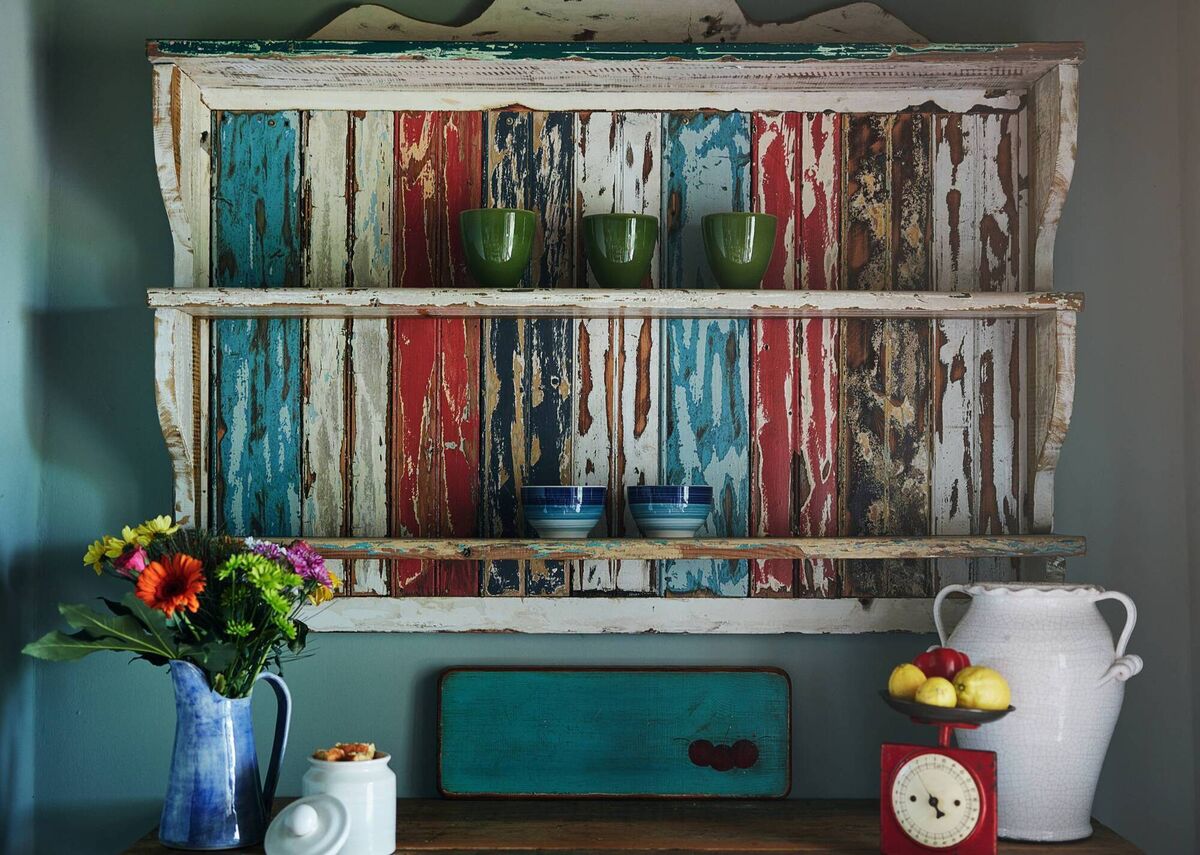
A very old European pine plate rack is left largely “in the paint” with some added creative stain, creating an eye-catching artwork in its own right. File picture

What’s harder to reconcile is a very busy, frothy antiques bursting into a formerly spare modern room. It doesn’t come over as intentional. The expressive, ancient object just landed there from outer space, and now it’s the accidental, confusing focus of an entire room. My guess is its individuality is hitting the garage within six months and DoneDeal within eight. Been there, done that.

Think about the word — line. There are some genres of vintage and antique with more restrained lines than others. It’s that style, form, and silhouette that etches out its overall look. Most contemporary furniture has exceptionally light, unfussy and easy lines. 

Just like that mid-century ballast we all adore, art deco can be very restrained in shape, but gorgeous with fabulous veneers and inlay. Today, a piece of affordable deco like a cloud-backed chair or a clock garniture is likely to be a century old. 

Great interiors often combine majestic abstract art, juicy with colour that’s very now, arm-in-arm with a range of slightly creaky antiques. Look for some smaller, unique, older pieces that can softly make their mark. That might be just an interesting picture frame or a small sculpture to start.
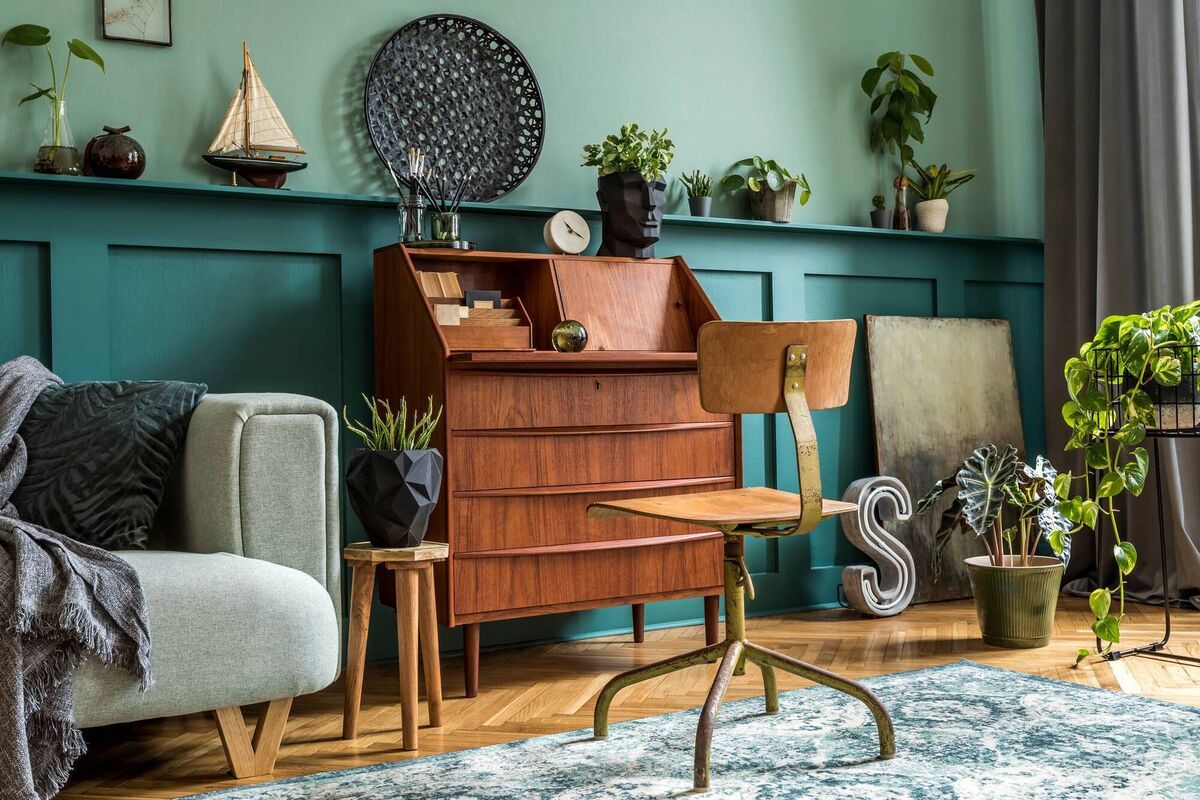
Ensure your vintage buys meet function, not simply form. File picture

Finally, sticking with say all Georgian and even mid-century classics can deliver a stiff, unfriendly museum that makes one blank statement. Frankly, it’s all about the ability to spend oodles of money and make it as conspicuous as possible. 

Don’t be afraid to mix up eras of antiques and vintage with your new buys, even cheaper things hunted down from boot sales and flea markets. This is exactly how amazing, unrepeatable old homes inhabited by the same family for generations evolved.

Eclectic jumbles can be hard to achieve, although some people love the curious layering of various eras of furniture and accessorising.


More in this section