Gareth O'Callaghan: ‘No room at the inn’ as history repeats itself

A little girl visiting the crib at St Catherine's Church next to the Church of the Nativity in the West Bank city of Bethlehem in 2003. Picture: Musa Al-Shaer/AFP/Getty

As a young boy, the 8th of December, or simply “the eighth” as my Cork relations called it over the years, signalled the real start of Christmas.
It was a day they would plan for weeks, and then it would arrive: up in the pitch dark for the early train to Dublin, ahead of hours of shopping and sightseeing; and then they would arrive in the early afternoon to meet my mother whom they hadn’t seen since the previous December, hugs and gifts exchanged, laughter filling the house, sandwiches and mince pies, a glass of sherry, and then back to Heuston for the last train home.
It was as though they brought the first real sense of the season with them every year.
Those relations might be long gone, but their memories live on. My mother still enjoys the real sense of a season filled with traditional music, the tree, the crib, handwritten cards, and the important reminder of a story that is more relevant this year than ever before — the birth of a small baby called Jesus, or Yeshua, as he would have been known to his family and friends.
While many of the old traditions are forgotten, the relevance of how the birth of a tiny boy in shocking circumstances over 2,000 years ago continues to give us hope is now more important than ever, and still a reminder of how our children are our most precious gifts.
For most children, central to the Christmas season is the same story we learned at school, that Joseph led his wife Mary into Bethlehem on a donkey, and knocked on doors looking for a safe and warm place for her to give birth to her child, only to be turned away each time, before eventually finding a stable.
Its simplicity — a biblical parable told as a children’s Christmas story — masks the awful reality of a time in history that is not unlike what we are witnessing in the Middle East right now.
Unlike any other place in the world, the Middle East has always been a region where the endless yearning for peace has only been matched by centuries of warring conflicts.
Part of us has always believed that the Holy Land was a place of peace, filled with beautiful villages and fertile oases, dotted with quaintly-named towns like Somaria, Capernaum, Bethany, Bersheeba, and Cana of Galilee, but the historical truth is different.
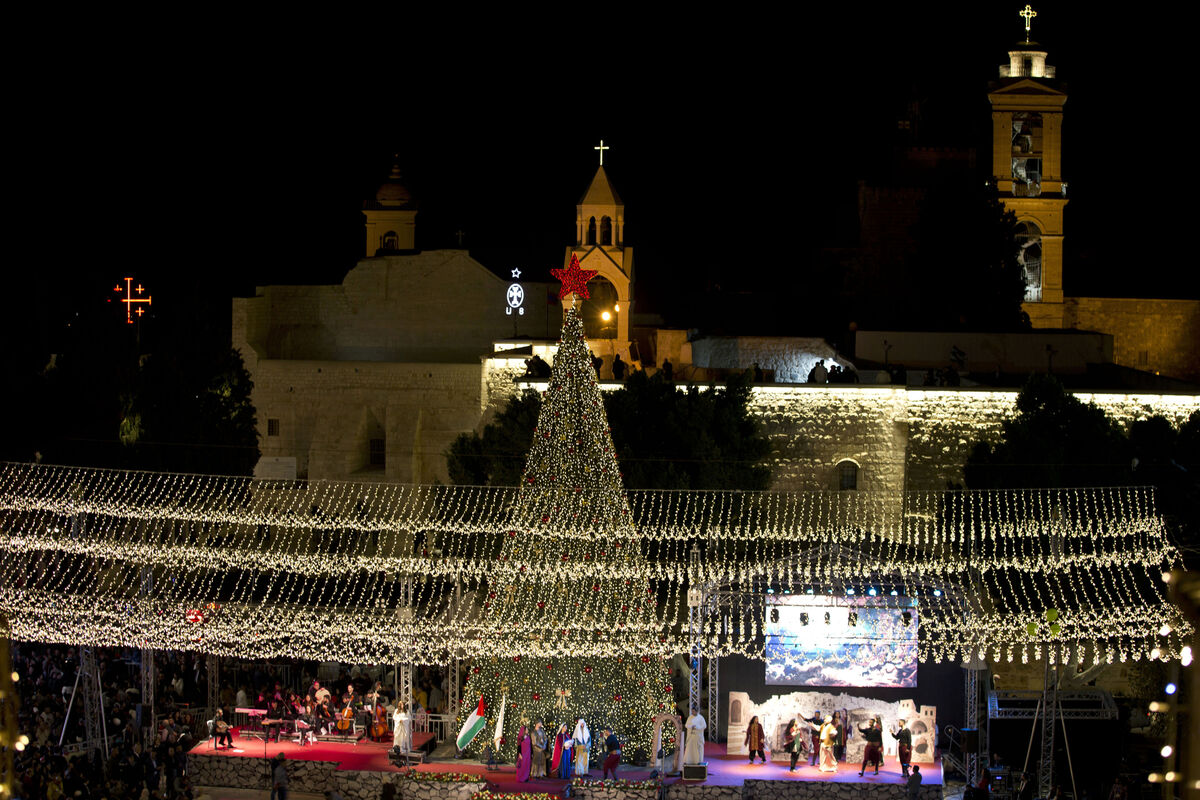
Wars have been centre stage in its violent history, where religious factions, conquests, and mass killings were as common two thousand years ago as they are now.
For over a hundred years leading up to the birth of Christ, hostility was a part of everyday life. By the time of his birth, Josephus reports, almost every new year heralded an outbreak of religious war, and as a result of how those wars were documented and retold, the true story of the real Christ was virtually lost among historians and writers for hundreds of generations that followed.
In light of the bitter war that rages in Gaza right now, it’s timely to remind ourselves that Jesus was a Jewish Palestinian refugee, the founding figure of Christianity as the son of God, and a beloved prophet for Muslims.
Everything beyond that principle has been added to by historians trying to create a profile of this elusive crusader.
It’s hard to get our heads around how a child saviour could be the cause of such conflict for so long between two nations, Israel and Palestine, who both hold contrasting beliefs in his message but can’t agree on much of his background.
This month 10 years ago, the Israeli foreign ministry issued a sharp rebuke to the Christian message of Palestinian president Mahmoud Abbas. They were furious that Abbas who had attended Christmas Midnight Mass in the Church of the Nativity in Bethlehem had laid claim to the birth of Jesus.
Rewriting the life of Jesus has become a subject of academia, with what’s known about him going through successive regenerations. In his study, , historian, and theologian Jaroslav Pelikan describes how the image of Christ has remained a foundation of peace and leadership for so many, including Tolstoy, Gandhi, and Martin Luther King, Jr.
However, the biographer AN Wilson, in his book, , tells how his disciples apparently carried swords in the Garden of Gethsemane despite our long-held belief that he was a pacifist. He taught us that the poor of the world would be blessed; however archaeological digs have unearthed evidence that he lived for most of his life in a comfortable home.
As Wilson says: “If it makes sense, it’s wrong.”
The more we’re told about this individual, the less we know.
Whatever our life experiences have done to our traditional beliefs, this year more than any other in recent memory makes the Christmas story more poignant and relevant for all of us.
Bible stories are timeless because they are parables, not meant to be understood literally.
The ‘no room at the inn’ story is as relevant right now as it was 2,000 years ago, back at a time when a pregnant woman about to give birth was refused a safe place to stay.
Mary and Joseph were essentially refugees in their own country. They had to search for a place to give birth and then flee to safety.
“...because there was no room for them in the inn,” from Luke’s gospel, was a metaphor for “You don’t belong here, so you’re not welcome.” How history repeats itself.
The inn described in the gospel is a metaphor for the world, reflecting the lack of protection and care given to those most vulnerable, the homeless and the exiled, such as a safe place to live, proper care for small children, along with the belief by many today that reaching out to those who have nothing to call their own and nowhere to go is someone else’s job.
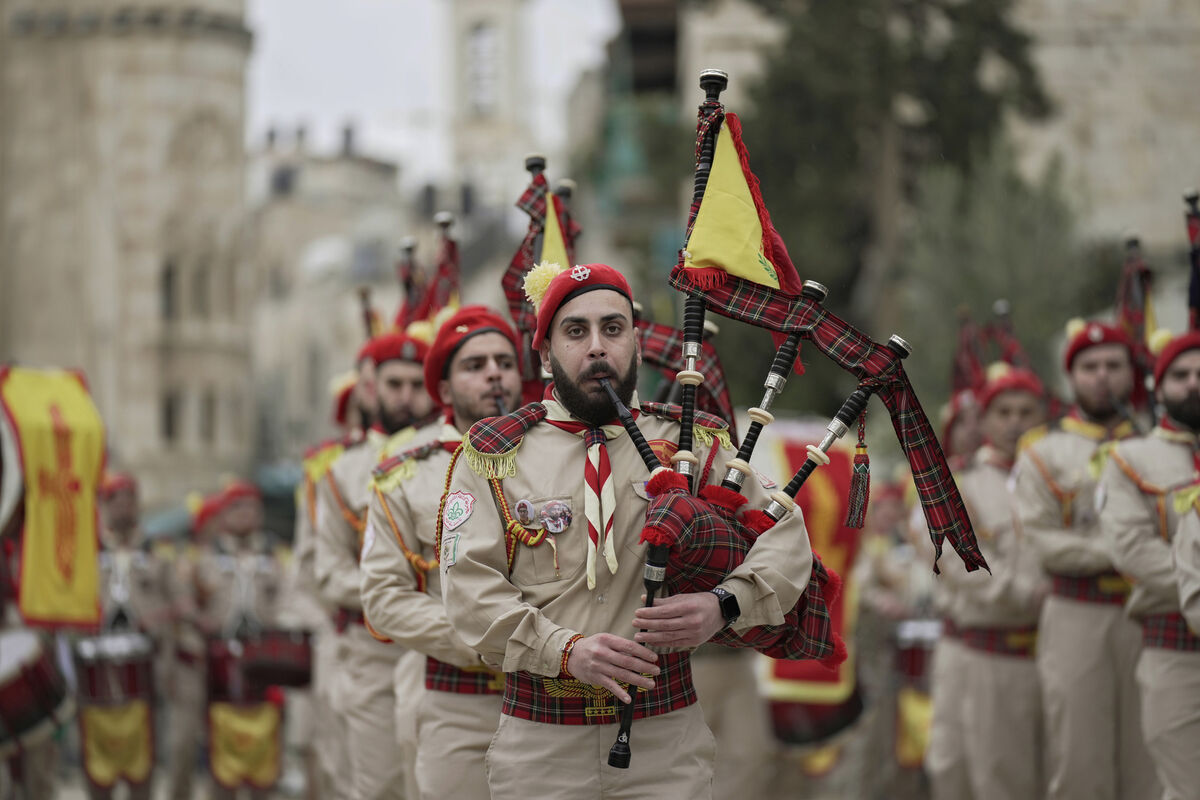
According to the second chapter of Matthew’s Gospel, Mary and Joseph flee to Egypt shortly after the birth of Jesus to keep their newborn son safe from Herod’s murder decree.
It’s only been weeks since the Rafah border crossing from Gaza into Egypt was opened briefly to allow refugees fleeing the persecution of the Israeli army escape to safety.
Nazareth-born Palestinian filmmaker Elia Suleiman made a short but very powerful film called in 1999, in which he depicts a modern-day Mary and Joseph as they attempt to cross from Gaza into Bethlehem. As a parable of the Palestinian plight in their own homeland, it’s a timely reminder.
For a film made almost 25 years ago, it’s a timely reminder of the terrified faces of children we have seen these past weeks who have ended up in Gaza’s besieged Nasser Hospital.
The fact that Palestinians have historically been Jews, Christians, and Muslims is still a bridge too far for many people to digest in our modern culture because it makes an already volatile history even more so.
Sadly, as we have witnessed recently, not much has changed about how many of our governments and leaders understand the needs of others.
Our immigrants and our homeless are a reminder that the Christmas story is not as cute as we would like to think.
We once were guardians of age-old traditions that underpinned our unique heritage.
On Christmas Eve, our ancestors would light a candle in the front window, while leaving the front door unlocked to allow priests a safe hiding place from Cromwell’s men.
In turn, the priest would say Mass for the family. If the British forces questioned the householder about the candles, they said it was a welcome to the Holy Family during Christmas time.
Christmas is about counting our blessings; it’s about children everywhere, without whom there would be no future. It’s a reminder that we have survived another year, while others weren’t so blessed.
A child is born whose message to us all is the priceless value of love; but the message has become meaningless for those agitators who nowadays might regard Herod as the hero, a society that’s turning its back on the homeless, and on immigrants who are fleeing war much like the Family at the heart of the Christmas story.
Like much of what was once important, like our traditions that urge us to share and to care for others, Christmas has become so obscured by other people’s noise that its true spirit goes by almost unnoticed.
It used to be a time that brought people together; now, for so many, there’s no longer a room at the inn.
CONNECT WITH US TODAY



Be the first to know the latest news and updates