UCC abandons business school: How millions in public money were spent with little to show
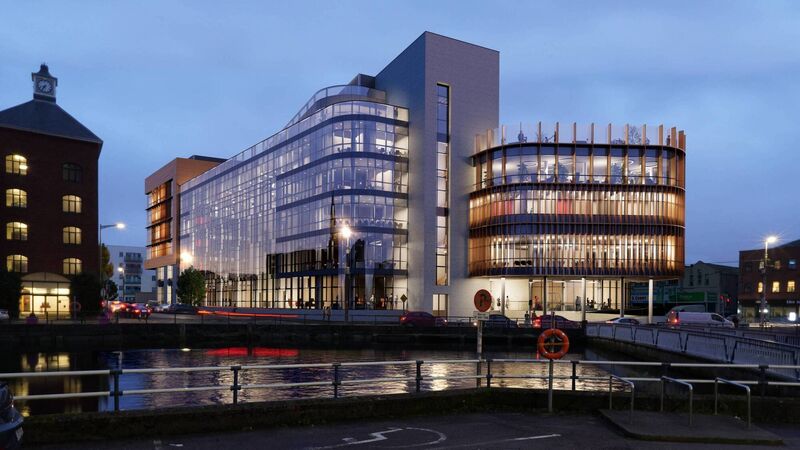
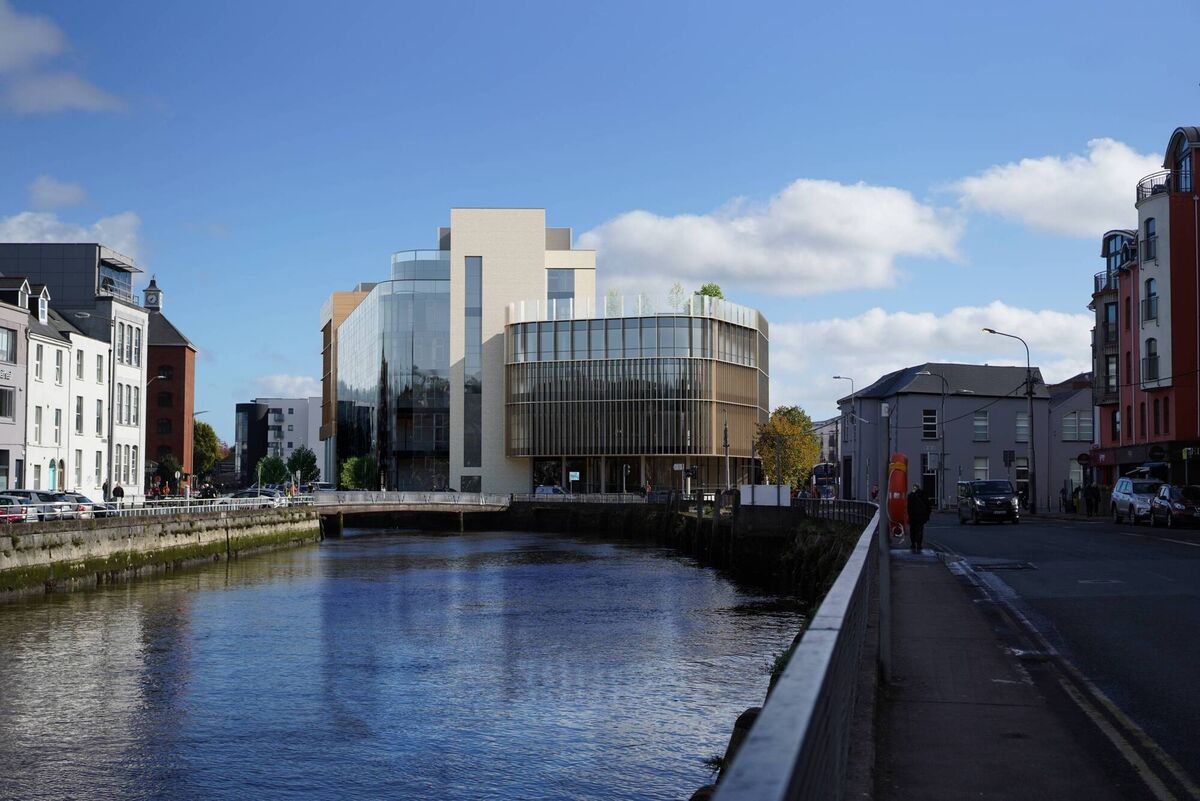
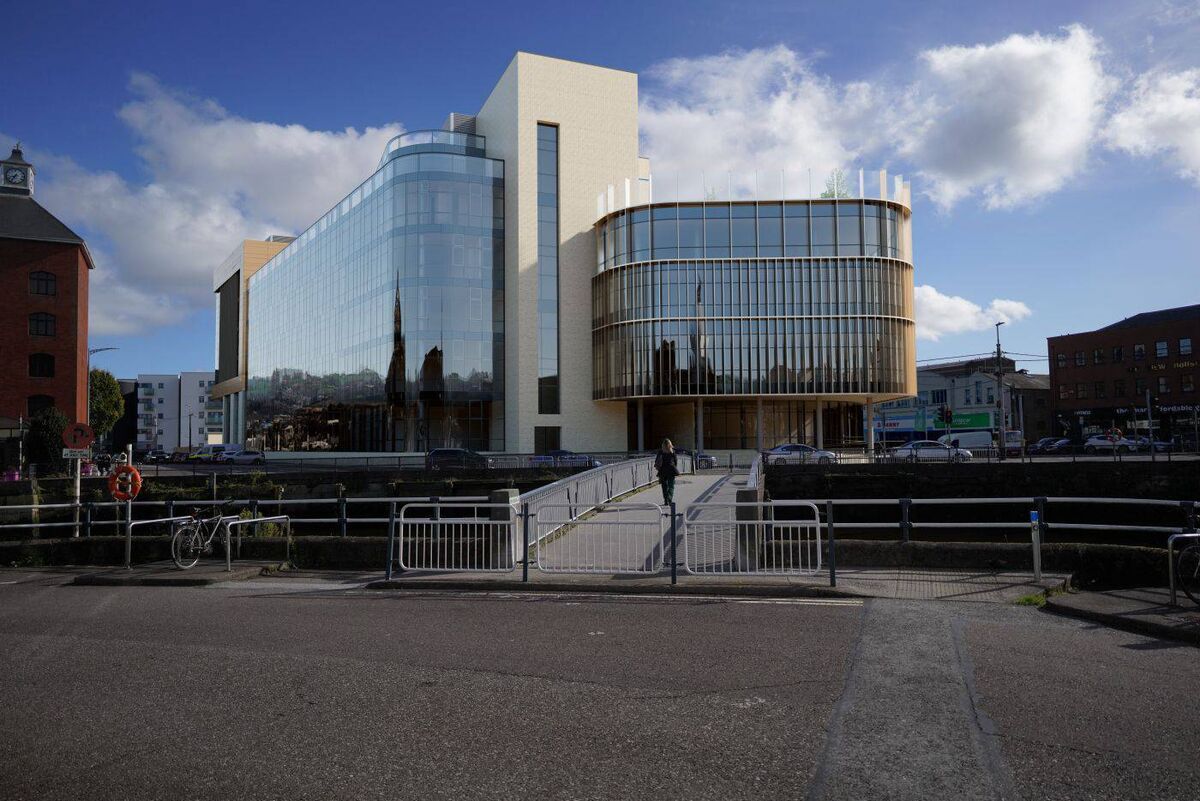
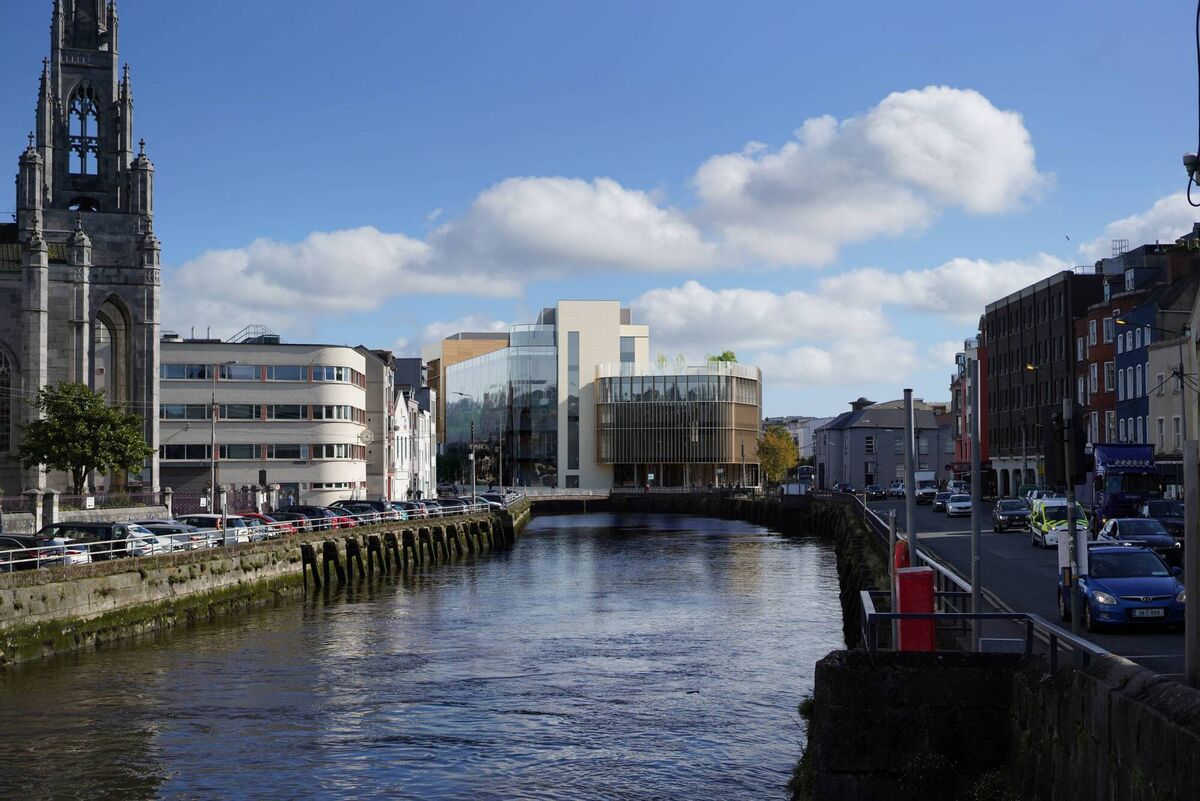
The proposed development was to be “one of Ireland’s largest academic buildings” with space for teaching, laboratories, meeting facilities, offices and catering facilities. Photo: G-Net 3D
Losing one business school may be a misfortune, losing two is surely careless.
According to multiple sources, plans by UCC to build a much-heralded new Cork University Business School in the city have been shelved. The university has refused to confirm this to be the case, referencing in a statement that it is “fully committed to developing a building for its business school and will provide an update in the New Year”.
The statement issued to the notably did not deny that the plans for the Brooks Haughton site have been permanently shelved. The college may well be developing a building, but it won’t be the 17,000 sq m one that was to be built on a site that cost €17m.
In January 2022, Sean Murray reported in this newspaper that an architect firm had signed a contract for €3.5m for design and associated services.
The proposed development was to be “one of Ireland’s largest academic buildings” with space for teaching, laboratories, meeting facilities, offices and catering facilities. The development was to contribute hugely to the “redevelopment and regeneration” of the city centre.
As of this month, around €2m of that is believed to have been spent. The bright shining futuristic building, as projected by the college, is no more. Now a question arises about the loss of another huge chunk of public money. The amount at issue, for instance, represents over twice the €8.2m losses acquired by the University of Limerick on property deals in recent years.
This isn’t the first time that UCC has seen its ambitious plans to be a leading provider in business education go up in flames. Earlier this year, the college sold the Irish Management Institute to the Kilcullen Business Post Group.
The institute was bought, in a deal that attracted a lot of controversy, for around €20m in 2016. It was the repository of dreams of plenty but turned out to be a bit of a dud. The abandoned CUBS plan is a much bigger farrago.
One of the issues that sunk the proposed CUBS project was funding. The college obtained a loan from the European Investment Bank to partially fund it.
But a big element to the plan was the expected income to the business school from foreign students. Increasingly, the Irish university sector has been relying on foreign students, and principally those from China and India, in order to survive and develop.
Third-level funding has been a major policy problem for the best part of 30 years since fees were abolished. Certainly, the registration fee as it is now termed represents fees by the back door, but the amounts being charged are a fraction of what would be accrued by the third-level institutions under the former regime.
Without an independent stream of funding, and with multiple calls on the central exchequer, third-level institutions have had to scramble for money where they can find it. Enter foreign students.
In UCC and other colleges the big money is in attracting foreign students to a masters degree programme, usually in the business faculty. Fees for these courses can be up to €20,000.
Relying on this income stream is, in some ways, similar to the national government relying on the continuation of bountiful corporate tax receipts. The strategy is vulnerable to winds of change beyond these shores.
In the first post-pandemic year of 2022, there were 52,805 student visas authorised in the State, which increased to 60,901 last year, according to statistics provided to the Dáil in May.
Figures for this year are not in yet, but the indications are that there has been a drop off, particularly in Chinese students coming here. Much of this is due to the weak economic conditions that now prevail in China.
However, UCC has a further problem in attracting Chinese students this year following a major controversy in 2024, as reported in the . A group of Chinese students who had failed in their post graduate business exam, alleged that they had been the victims of racism.
There was absolutely no evidence to back up such a claim. Instead there was evidence that the allegation was being drummed up to mask the real reason why this group of students failed their exam.
That was, the learned, largely attributable to a lack of proficiency in English among the Chinese students which left them ill equipped to properly study the course. The inference from the whole issue was that the students were not subjected to a proper test for their proficiency in English when applying, because the college was just eager to get in the numbers and the revenue.
Beyond the reduced income from foreign students, questions will now be raised as to the prudence of what was a major expansion of the university’s capacity and property estate.
The business school is currently spread across different locations, some within the main campus, others not. But while an ambition to have everything under the same roof was understandable, it is also the case that there is some accommodation within the campus.
The statement from UCC about the business school said that the college is now finalising it’s long-term plans for its capital projects.
“UCC will submit this Capital Plan for consideration by the Governing Authority in the coming months. UCC is fully committed to developing a building for its business school and will provide an update on Cork University Business School in the New Year,” the statement read.
If the school is to have its own building it is now likely to be on the main campus. All of which leads to disturbing questions about how another large sum of public money appears to have been dispatched down the drain.
A collection of the latest business articles and business analysis from Cork.
CONNECT WITH US TODAY



Be the first to know the latest news and updates